



الصفحة 42
الصفحة 42

Automotive Lighting and Human Vision
Visual perception is the most important of the human senses. Lack of visual perception is one of the main causes of accidents. The safety of vehicle traffic depends on how well automotive lighting supports the visual perception of the driver. This book explains the fundamentals of visual perception, like e.g. physiology of eye and brain, as well as those of automotive lighting technology, like e.g. design of headlamps and signal lights. It is an interdiciplinary approach to a fastly evolving field of science and technology, answering questions like "How does information enter our brain when driving a car?" and "What are the benefits and dangers of LED signal lighting?"

Automatic customizable e-commerce mobile app generator
Our project would give anyone who would like to start an E-business to Customize their app and generate their own E-market without the need of any programming skills with just a button click and within some hours, the generating process is based on three main steps, First our customer can login to our main website and start customizing his app the customized data is sent through an Api to the generator database, Second ,the generation process takes customer choices and apply some CMD commands to open specific dart files inside our and product and change the values of design attributes based on user choices, third, the generation process uses patch scripts and ends by generating an empty database for the App and returning the app as an Apk file that the user can install on his device in addition to an app dashboard to manage the app database.
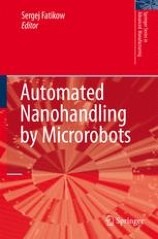
Automated nanohandling by microrobots
Automated Nanohandling by Microrobots introduces an actuation principle for such microrobots and presents a new robot design. Different aspects of this research field regarding the hardware and software implementation of the system components, including the sensory feedback for automated nanohandling, are discussed in detail. Extensive applications of the microrobot station for nanohandling, nano-characterization and nanostructuring are provided, together with the experimental results.

Automated deduction – CADE-20 ; 20th International Conference on automated deduction, Tallinn, Estonia, July 22-27, 2005, Proceedings
This book constitutes the refereed proceedings of the 20th International Conference on Automated Deduction, CADE-20, held in Tallinn, Estonia, in July 2005. The 25 revised full papers and 5 system descriptions presented were carefully reviewed and selected from 78 submissions. All current aspects of automated deduction are addressed, ranging from theoretical and methodological issues to presentation and evaluation of theorem provers and logical reasoning systems.

Automata, languages and programming ; Vol. 4052 : 33rd International Colloquium, ICALP 2006, Venice, Italy, July 10-14, 2006, Proceedings, Part II
a series of annual conferences of the European Association for Theoretical Computer Science (EATCS) which frsttookplacein 1972.Thisyear,. ICALP 2006 consisted of four invited lectures and the contributed papers. This volume of the proceedings contains all contributed papers presented at the conference in Track A, together with the paper by the invited speaker Noga Alon , A companion volume contains all contributed papers presented inTrack Band TrackCtogetherwiththepapersbytheinvited speakers Cynthia Dwork (Microsoft Research, USA) and Prakash Panangaden (Mc Gill University, Canada). The programhad an additional invited lecture by Simon Peyton Jones (Microsoft Research, UK), which does not appear in the proceedings.

Automata, languages and programming ; Vol. 4051 : 33rd International Colloquium, ICALP 2006, Venice, Italy, July 10-14, 2006, Proceedings, Part I
ICALP is a series of annual conferences of the European Association for Theoretical Computer Science (EATCS) which frsttookplacein1972 .Thisyear, ICALP 2006 consisted of four invited lectures and the contributed papers. This volume of the proceedings contains all contributed papers presented at the conference in Track A, together with the paper by the invited speaker Noga Alon (Tel Aviv University, Israel). A companion volume contains all contributed paper spresentedinTrackBandTrackCtogetherwiththepapersbytheinvited speakers Cynthia Dwork (Microsoft Research, USA) and Prakash Panangaden (Mc Gill University, Canada).

Automata, languages and programming ; Vol. 3580 ; 32nd International Colloquim, ICALP 2005, Lisbon, Portugal, July 11-15, 2005, Proceedings
This book constitutes the refereed proceedings of 32nd International Colloquium on Automata, Languages and Programming ICALP 2005, Lisbon, Portugal, July 11-15, 2005. including Topics Computer Science, general Mathematical Logic and Foundations Theory of Computation Software Engineering/Programming and Operating Systems Data Structures and Information Theory Data Structures
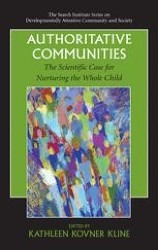
Authoritative communities : The scientific case for nurturing the whole child
Authoritative Communities: The Scientific Case for Nurturing the Whole Child introduces innovative solutions based firmly in the children’s mental health and resilience literature and in the hypothesis that humans are "hardwired to connect." These "authoritative communities" consist of such individuals and institutions as parents, teachers, coaches, elders, and a variety of organizations that are committed to each other’s well-being over the long-term and who instill children with prosocial values such as empathy and compassion. Living within these communities enables children and youth to develop a consistent sense of purpose and meaning, so that they, in turn, are able to grow up to be responsible, productive, and nurturing adults.
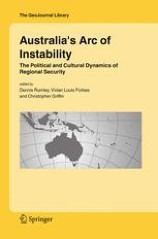
Australias arc of Instability : The political and cultural dynamics of regional security
The idea for this book emerged from a conversation between Vivian Forbes and Charles Eaton following two seminars held in the Department of Geography at the University of Western Australia given by Trevor So?eld and Christopher Grif?n more than ?ve years ago. One seminar involved papers from Charles Eaton and Christopher Grif?n on the recent Speight coup in Fiji; the other, given by Trevor So?eld, was on the Solomon Islands. The seminars were attended by, among others, Dennis Rumley, who on getting involved in the conversation, suggested the idea of a book and then followed through on its scope, structure, planning, and possible contributors. Looking back now, we owe a special debt of gratitude to Charles Eaton both for his enthusiasm and his ideas then, and for his continued support throughout the whole project. Since that time ?ve years ago, many people have boarded and have left the Arc.

Austenitic TRIP/TWIP steels and steel-zirconia composites : Design of tough, transformation-strengthened composites and structures
This book presents a collection of the most up-to-date research results in the field of steel development with a focus on pioneering alloy concepts that result in previously unattainable materials properties.
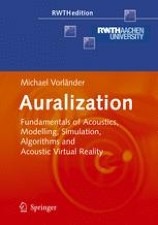
Auralization : Fundamentals of acoustics, modelling, simulation, algorithms and acoustic virtual reality
"Auralization" is the technique of creation and reproduction of sound on the basis of computer data. With this tool is it possible to predict the character of sound signals which are generated at the source and modified by reinforcement, propagation and transmission in systems such as rooms, buildings, vehicles or other technical devices. This book is organized as a comprehensive collection of the basics of sound and vibration, acoustic modelling, simulation, signal processing and audio reproduction. Implementations of the auralization technique are described using examples drawn from various fields in acoustic’s research and engineering, architecture, sound design and virtual reality.

Augmented reality, virtual reality, and computer graphics ; 7th International Conference, AVR 2020, Lecce, Italy, September 7–10, 2020, Proceedings, Part II
The 2-volume set LNCS 12242 and 12243 constitutes the refereed proceedings of the 7th International Conference on Augmented Reality, Virtual Reality, and Computer Graphics, AVR 2020, held in Lecce, Italy, in September 2020.* The 45 full papers and 14 short papers presented were carefully reviewed and selected from 99 submissions. The papers discuss key issues, approaches, ideas, open problems, innovative applications and trends in virtual reality, augmented reality, mixed reality, 3D reconstruction visualization, and applications in the areas of cultural heritage, medicine, education, and industry.

Augmented reality, virtual reality, and computer graphics ; 7th International conference, AVR 2020, Lecce, Italy, September 7–10, 2020, Proceedings, Part I
he 2-volume set LNCS 12242 and 12243 constitutes the refereed proceedings of the 7th International Conference on Augmented Reality, Virtual Reality, and Computer Graphics, AVR 2020, held in Lecce, Italy, in September 2020.* The 45 full papers and 14 short papers presented were carefully reviewed and selected from 99 submissions. The papers discuss key issues, approaches, ideas, open problems, innovative applications and trends in virtual reality, augmented reality, mixed reality, 3D reconstruction visualization, and applications in the areas of cultural heritage, medicine, education, and industry.
Augmented Humanity : Being and Remaining Agentic in a Digitalized World
This book will examine the implications of digitalization for the understanding of humanity, conceived as a community of intelligent agency. It addresses important topics across a range of social and behavioral theories and identifies a range of novel mechanisms and their social behavioral effects. Across the book, the author highlights the expansion of intelligent processing capability brought about by digitalization and the challenges this exposes for integrating artificial and human capabilities
Assistive technologies, robotics, and automated machines in the health domain
The field of healthcare is constantly evolving and advancing with new technologies and innovations. Among these, assistive technologies, robotics, and automated machines are rapidly gaining ground as powerful tools to improve the quality of care and enhance patient outcomes. From wearable devices that monitor vital signs to surgical robots that assist in complex procedures, these technologies have the potential to revolutionize the way we deliver healthcare. The development and the integration of assistive technologies, care robots, and automated machines are strategic both as single components, when paired together, and when interconnected in the health domain.This reprint explores the latest developments in assistive technologies, robotics, and automated machines in the health domain, providing a comprehensive overview of their applications and potential impact. The reprint is for the benefit of healthcare professionals, researchers, engineers, and students interested in these rapidly evolving fields.

Asian Digital Libraries. Looking Back 10 Years and Forging New Frontiers ; 10th International Conference on Asian Digital Libraries, ICADL 2007, Hanoi, Vietnam, December 10-13, 2007. Proceedings
The theme reflects upon the growth of the digital libraries community and explores new areas that the community could delve into in the coming years.

Artificial neural networks : Formal Models and Their Applications – ICANN 2005 ; 15th International Conference, Warsaw, Poland, September 11-15, 2005, Proceedings, Part II
The second volume contains 162 contributions related to Formal Models and their Applications and deals with new neural network models, supervised learning algorithms, ensemble-based learning, unsupervised learning, recurent neural networks, reinforcement learning, bayesian approaches to learning, learning theory, artificial neural networks for system modeling, decision making, optimalization and control, knowledge extraction from neural networks, temporal data analysis, prediction and forecasting, support vector machines and kernel-based methods, soft computing methods for data representation, analysis and processing, data fusion for industrial, medical and environmental applications, non-linear predictive models for speech processing, intelligent multimedia and semantics, applications to natural language processing, various applications, computational intelligence in games, and issues in hardware implementation.
Artificial life models in software
Artificial Life Models in Software presents software tools, environments and realities dealing with creation, imitation and analysis of artefactual, virtual and living forms, written by those who personally design and produce software, hardware and art installations in artificial life, simulated complex systems and virtual worlds. This timely volume offers a nearly exhaustive overview and original analysis of major non-profit artificial life software packages. The carefully selected topics include: · simulation of real and imaginary life forms and their evolution · self-organization · emergent behaviours · swarm intelligence · evolutionary robotics · agent-based simulations · adaptive, complex and biologically inspired ecosystems · creative computer art There has long been a need within the academic and research community for an informal introduction and guidance to modern software tools for modelling and simulation of life-like phenomena – Artificial Life Models in Software fills this gap and provides invaluable information to both professional and amateur readers, offering detailed reviews of contemporary software for artificial life.

Artificial intelligence techniques in hydrology and water resources management
The sustainable management of water cycles is crucial in the context of climate change and global warming. It involves managing global, regional, and local water cycles, as well as urban, agricultural, and industrial water cycles, to conserve water resources and their relationships with energy, food, microclimates, biodiversity, ecosystem functioning, and anthropogenic activities. Hydrological modeling is indispensable for achieving this goal, as it is essential for water resources management and the mitigation of natural disasters. In recent decades, the application of artificial intelligence (AI) techniques in hydrology and water resources management has led to notable advances. In the face of hydro-geo-meteorological uncertainty, AI approaches have proven to be powerful tools for accurately modeling complex, nonlinear hydrological processes and effectively utilizing various digital and imaging data sources, such as ground gauges, remote sensing tools, and in situ Internet of Things (IoT) devices.
Artificial intelligence techniques for satellite image analysis
The main objective of this book is to provide a common platform for diverse concepts in satellite image processing. In particular it presents the state-of-the-art in Artificial Intelligence (AI) methodologies and shares findings that can be translated into real-time applications to benefit humankind. Interdisciplinary in its scope, the book will be of interest to both newcomers and experienced scientists working in the fields of satellite image processing, geo-engineering, remote sensing and Artificial Intelligence. It can be also used as a supplementary textbook for graduate students in various engineering branches related to image processing.
