



الصفحة 42
الصفحة 42

Fire-fighter robot
Firefighting is an important but dangerous career that can potentially cause the loss of life, property damage and permanent disability to the victim. Robots are designed to find a fire, before it rages out of control, could one day work with fire fighters greatly reducing the risk of injury to victims. In this report we will focus on each phase of the project one by one and demonstrate them.

Finite-state methods and natural language processing ; 5th International Workshop, FSMNLP 2005, Helsinki, Finland, September 1-2, 2005, Revised Papers
This book constitutes the thoroughly refereed post-proceedings of the 5th International Workshop on Finite-State Methods in Natural Language Processing, FSMNLP 2005, held in Helsinki, Finland, September 2005. The book presents 24 revised full papers and seven revised poster papers together with two invited contributions and abstracts of six software demos. Topics include morphology, optimality theory, some special FSM families, weighted FSM algorithms, FSM representations, exploration, ordered structures, and surface parsing.

Finite Elements III : First-Order and Time-Dependent PDEs
Volume III is divided into 28 chapters. The first eight chapters focus on the symmetric positive systems of first-order PDEs called Friedrichs' systems. This part of the book presents a comprehensive and unified treatment of various stabilization techniques from the existing literature. It discusses applications to advection and advection-diffusion equations and various PDEs written in mixed form such as Darcy and Stokes flows and Maxwell's equations. The remainder of Volume III addresses time-dependent problems: parabolic equations (such as the heat equation), evolution equations without coercivity (Stokes flows, Friedrichs' systems), and nonlinear hyperbolic equations (scalar conservation equations, hyperbolic systems). It offers a fresh perspective on the analysis of well-known time-stepping methods. The last five chapters discuss the approximation of hyperbolic equations with finite elements. Here again a new perspective is proposed.
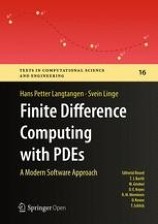
Finite Difference Computing with PDEs : A Modern Software Approach
This easy-to-read book introduces the basics of solving partial differential equations by means of finite difference methods. Unlike many of the traditional academic works on the topic, this book was written for practitioners. Accordingly, it especially addresses: the construction of finite difference schemes, formulation and implementation of algorithms, verification of implementations, analyses of physical behavior as implied by the numerical solutions, and how to apply the methods and software to solve problems in the fields of physics and biology.

Finite Difference Computing with Exponential Decay Models
This text provides a very simple, initial introduction to the complete scientific computing pipeline: models, discretization, algorithms, programming, verification, and visualization. The pedagogical strategy is to use one case study – an ordinary differential equation describing exponential decay processes – to illustrate fundamental concepts in mathematics and computer science. The book is easy to read and only requires a command of one-variable calculus and some very basic knowledge about computer programming. Contrary to similar texts on numerical methods and programming, this text has a much stronger focus on implementation and teaches testing and software engineering in particular.

Financial cryptography and data security Vol. 3570 ; 9th International Conference, FC 2005, Roseau, The Commonwealth Of Dominica, February 28 - March 3, 2005, Revised Papers
The 9th International Conference on Financial Cryptography and Data Security (FC 2005) was held in the Commonwealth of Dominica from February 28 to March 3, 2005. This conference, organized by the International Financial Cryptography Association (IFCA), continues to be the premier international forum for research, exploration, and debate regarding security in the context of finance and commerce. The conference title and scope was expanded this year to cover all aspects of securing transactions and systems. The goal is to build an interdisciplinary meeting, bringing together cryptographers, data-security specialists, business and economy researchers, as well as economists, IT professionals, implementers, and policy makers. We think that this goal was met this year. The conference received 90 submissions and 24 papers were accepted, 22 in the Research track and 2 in the Systems and Applications track. In addition, the conference featured two distinguished invited speakers, Bezalel Gavish and Lynne Coventry, and two interesting panel sessions, one on phishing and the other on economics and information security. Also, for the first time, some of the papers that were judged to be very strong but did not make the final program were selected for special invitation to our Works in Progress (Rump) Session that took place on Wednesday evening.

Finance 4.0 - towards a socio-ecological finance system : A participatory framework to promote sustainability
The first is Bitcoin that infamously pursues a state-independent, decentralized conception of money. The second is Finance 4.0, a system that proposes a participatory multi-dimensional money system with built-in incentives for sustainable behavior

Fifth World Conference on Information Security Education ; Proceedings of the IFIP TC 11 WG 11.8, WISE 5, 19 to 21 June 2007, United States Military Academy, West Point, NY, USA
The scope of This book includes: foundations of computer science; software theory and practice; education; computer applications in technology; communication systems; systems modeling and optimization; information systems; computers and society; computer systems technology; security and protection in information processing systems; artificial intelligence; and human-computer interaction. Proceedings and post-proceedings of referred international conferences in computer science and interdisciplinary fields are featured. These results often precede journal publication and represent the most current research.

Fifth IFIP International Conference On Theoretical Computer Science - Tcs 2008 ; IFIP 20th World Computer Congress, TC 1, Foundations of Computer Science, September 7-10, 2008, Milano, Italy
Includes: foundations of computer science; software theory and practice; education; computer applications in technology; communication systems; systems modeling and optimization; information systems; computers and society; computer systems technology; security and protection in information processing systems; artificial intelligence; and human-computer interaction. Proceedings and post-proceedings of refereed international conferences in computer science and interdisciplinary fields are featured. These results often precede journal publication and represent the most current research. The principal aim of the IFIP series is to encourage education and the dissemination and exchange of information about all aspects of computing.

Fieldwork for Design : Theory and Practice
Fieldwork for Design looks at why ethnographic approaches have been turned to in the design of computing devices for the workplace, for the home and elsewhere. It presents a history of ethnography, both as it was practiced before computer science picked it up and since, most especially in the CSCW and HCI domains. It examines, further, the various ethnographic or ‘fieldwork’ frameworks currently popular, explaining and examining what each claims and entails. The focus of the book throughout is on the practical relationship between theory and practice, a relationship that is often misunderstood yet fundamental to successful design.

Fiber-Optic Communication Systems
Contains substantial additions covering the topics of coherence detection, space division multiplexing, and more advanced subjects. You'll learn about topics like fiber’s losses, dispersion, and nonlinearities, as well as coherent lightwave systems. The latter subject has undergone major changes due to the extensive development of digital coherent systems over the last decade. Space-division multiplexing is covered as well, including multimode and multicore fibers developed in just the last ten years.
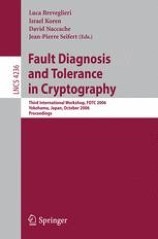
Fault Diagnosis and Tolerance in Cryptography ; 3rd International Workshop, FDTC 2006, Yokohama, Japan, October 10, 2006, Proceedings
The sophistication of the underlying cryptographic algorithms, the high complexity of the implementations, and the easy access and low cost of cryptographic devices resulted in increased concerns regarding the reliability and security of crypto-devices. The effectiveness of side channel attacks on cryptographic devices, like timing and power-based attacks, has been known for some time. Several recent investigations have demonstrated the need to develop methodologies and techniques for designing robust cryptographic systems (both hardware and software) to protect them against both accidental faults and maliciously injected faults with the purpose of extracting the secret key. This trend has been particularly motivated by the fact that the equipment needed to carry out a successful side channel attack based on fault injection is easily accessible at a relatively low cost (for example, laser beam technology), and that the skills needed to use it are quite common.

Fast software encryption ; Vol. 4047 ; 13th international workshop, FSE 2006, Graz, Austria, March 15-17, 2006, Revised Selected Papers
Fast Software Encryption (FSE) 2006 is the 13th in a series of workshops on symmetric cryptography. It has been sponsored for the last ?ve years by the International Association for Cryptologic Research (IACR), and previous FSE workshops have been held around the world: 1993 Cambridge, UK 1994 Leuven, Belgium 1996 Cambridge, UK 1997 Haifa, Israel 1998 Paris, France 1999 Rome, Italy 2000 New York, USA 2001 Yokohama, Japan 2002 Leuven, Belgium 2003 Lund, Sweden 2004 New Delhi, India 2005 Paris, France The FSE workshop is devoted to research on fast and secure primitives for symmetric cryptography, including the design and analysis of block ciphers, stream ciphers, encryption schemes, analysis and evaluation tools, hash fu- tions, and message authentication codes.

Fast software encryption ; Vol. 3557 ; 12th International Workshop, FSE 2005, Paris, France, February 21-23, 2005, Revised Selected Papers
The Fast Software Encryption 2005 Workshop was the twelfth in a series of annual workshops on symmetric cryptography, sponsored for the fourth year by the International Association for Cryptologic Research (IACR). The workshop concentratedonallaspectsoffastprimitivesforsymmetriccryptology, including thedesign, cryptanalysisandimplementationofblockandstreamciphersaswell as hash functions and message authentication codes. The ?rst FSE workshop was held in Cambridge in 1993, followed by Leuven in 1994, Cambridge in 1996, Haifain1997, Parisin1998, Romein1999, NewYorkin2000, Yokohamain2001, Leuven in 2002, Lund in 2003, and New Delhi in 2004. This year, a total of 96 submissions were received. After an extensive review by the Program Committee, 30 submissions were accepted.

Fast software encryption ; 15th International Workshop, FSE 2008, Lausanne, Switzerland, February 10-13, 2008, Revised Selected Papers
Constitutes the thoroughly refereed proceedings of the 15th International Workshop on Fast Software Encryption, FSE 2008, held in Lausanne, Switzerland in February 2008.The 26 revised full papers presented together with 4 short papers were carefully reviewed and selected from 72 submissions. The papers address all current aspects of fast and secure primitives for symmetric cryptology and are organized in topical sections on SHA collisions, new hash function designs, block cipher cryptanalysis, implementation aspects, hash function cryptanalysis, stream cipher cryptanalysis, security bounds, and entropy.

Fast Software Encryption ; 14th International Workshop, FSE 2007, Luxembourg, Luxembourg, March 26-28, 2007, Revised Selected Papers
It addresses all current aspects of fast and secure primitives for symmetric cryptology, covering hash function cryptanalysis and design, stream ciphers cryptanalysis, theory, block cipher cryptanalysis, block cipher design, theory of stream ciphers, side channel attacks, and macs and small block ciphers.

Fashionity
This project is an AI fashion design system to generate fashion images based on user textual description. The proposed system incorporates advanced technology for dissemination and machine translation with the aim of facilitating a seamless user experience for input in both Arabic and English languages. Moreover, the project encompasses the incorporation of a recommendation system that proposes appropriate visual content based on user style. The primary objective of this project is to develop a robust framework capable of generating high-quality images based on textual descriptions, providing recommendations for similar clothing items, and facilitating the retrieval of photographic and apparel articles through image search.

Fashion forge
"Fashion forge" revolutionizes clothing shopping with a cutting-edge mobile application. This AI-powered platform empowers users to describe their dream garment and visualize it instantly, bridging the gap between imagination and reality for fashion-forward users and designers. A recommendation system tailors clothing suggestions based on user preferences, while stores leverage a dedicated social platform for effective marketing. "Fashion Forge" fosters a connected fashion community, empowering users, designers, and stores alike.

Fadfada
Sharing personal problems and true feeling on social media has a lot of fears and is not likable nowadays, because of bullying, shaming, and making fun of the user by other users, Fadfada is a multi-platform social networking service, that aims to give the users the ability to share their problems or feeling via written newsfeed (posts) or videos (stories) that had an impact on their psychological health without revealing their true identity, by putting a mask on their faces and changing their voices after recording the story. In addition to extracting features from posts and stories to match users based on it.
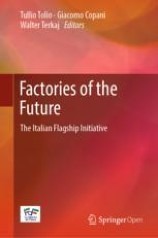
Factories of the Future : The Italian Flagship Initiative
This book presents results relevant in the manufacturing research field, that are mainly aimed at closing the gap between the academic investigation and the industrial application, in collaboration with manufacturing companies. Several hardware and software prototypes represent the key outcome of the scientific contributions that can be grouped into five main areas, representing different perspectives of the factory domain
