



الصفحة 4
الصفحة 4

Machine Learning for Multimodal Interaction ; 5th International Workshop, MLMI 2008, Utrecht, The Netherlands, September 8-10, 2008. Proceedings
The 12 revised full papers and 15 revised poster papers presented together with 5 papers of a special session on user requirements and evaluation of multimodal meeting browsers/assistants were carefully reviewed and selected from 47 submissions. The papers cover a wide range of topics related to human-human communication modeling and processing, as well as to human-computer interaction, using several communication modalities. Special focus is given to the analysis of non-verbal communication cues and social signal processing, the analysis of communicative content, audio-visual scene analysis, speech processing, interactive systems and applications.

Leveraging Applications of Formal Methods ; 1st International Symposium, ISoLA 2004, Paphos, Cyprus, October 30 - November 2, 2004, Revised Selected Papers
This book constitutes the thoroughly refereed post-proceedings of the First International Symposium on Leveraging Applications of Formal Methods, ISoLA 2004, held in Paphos, Cyprus in October/November 2004. The 12 revised full papers presented were carefully selected from more than 70 submissions. The papers discuss issues related to the adoption and use of rigorous tools and methods for the specification, analysis, verification, certification, construction, test, and maintenance of systems. In particular, by discussing common problems, requirements, algorithms, methodologies, and practices, ISoLA aims at supporting researchers in their quest to improve the utility, reliability, flexibility, and efficiency of tools for building systems, and users in their search for adequate solutions to their problems.

Knowledge and Skill Chains in Engineering and Manufacturing : Information Infrastructure in the Era of Global Communications
Explores knowledge and skill chains in engineering and manufacturing in the age of global communications. Information infrastructure involves a range of activities from product planning, engineering, and manufacturing trough transportation, marketing, and repair/upgrade to returns and recycling/disposal. Distinct from the traditional engineering database, life-cycle support information has its own characteristic requirements, -- flexible extensibility, distributed architecture, multiple viewpoints, long-time archiving, and product usage information. Several authors address the architecture of the information infrastructure, its services and its requirements. Other papers focus on the knowledge and skill chains that develop in a variety of situations: the supply chain, the factory floor, the man-system interaction, etc. For each of these, state-of-the-art and state-of-research scenarios for various industrial sectors address both engineering and operations requirements in the current socio-economic environment.

ISSE/SECURE 2007 securing electronic business processes : Highlights of the information security solutions Europe/SECURE 2007 Conference
Presents the most interesting talks given at ISSE/SECURE 2007 - the forum for the interdisciplinary discussion of how to adequately secure electronic business processes. Adequate information security is one of the basic requirements of all electronic business processes. It is crucial for effective solutions that the possibilities offered by security technology can be integrated with the commercial requirements of the applications.

ISSE 2006 — Securing Electronic Busines Processes : Highlights of the Information Security Solutions Europe 2006 Conference
Presents the most interesting talks given at ISSE 2006 - the forum for the interdisciplinary discussion of how to adequately secure electronic business processes. The topics include: Smart Token and e-ID-Card Developments and their Application - Secure Computing and how it will change the way we trust computers - Risk Management and how to quantify security threats - Awareness raising, Data Protection and how we secure corporate information. Adequate information security is one of the basic requirements of all electronic business processes. It is crucial for effective solutions that the possibilities offered by security technology can be integrated with the commercial requirements of the applications. The reader may expect state-of-the-art: best papers of the Conference ISSE 2006.

Business modeling and software design ; 10th International Symposium, BMSD 2020, Berlin, Germany, July 6-8, 2020, Proceedings
This book constitutes the refereed proceedings of the 10th International Symposium on Business Modeling and Software Design, BMSD 2020, which took place in Berlin, Germany, in July 2020. BMSD is a leading international forum that brings together researchers and practitioners interested in business modeling and its relation to software design. Particular areas of interest are: Business Processes and Enterprise Engineering; Business Models and Requirements; Business Models and Services; Business Models and Software; Information Systems Architectures and Paradigms; Data Aspects in Business Modeling and Software Development; Blockchain-Based Business Models and Information Systems; IoT and Implications for Enterprise Information Systems.
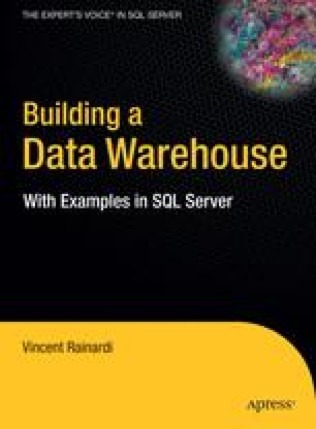
Building a Data Warehouse : With Examples in SQL Server
The book is organized as follows. In the beginning of this book (chapters 1 through 6), you learn how to build a data warehouse, for example, defining the architecture, understanding the methodology, gathering the requirements, designing the data models, and creating the databases. Then in chapters 7 through 10, you learn how to populate the data warehouse, for example, extracting from source systems, loading the data stores, maintaining data quality, and utilizing the metadata. After you populate the data warehouse, in chapters 11 through 15, you explore how to present data to users using reports and multidimensional databases and how to use the data in the data warehouse for business intelligence, customer relationship management, and other purposes. Chapters 16 and 17 wrap up the book: After you have built your data warehouse, before it can be released to production, you need to test it thoroughly. After your application is in production, you need to understand how to administer data warehouse operation.

Brain and Human Body Modeling : Computational Human Modeling at EMBC 2018
This book describes modern applications of computational human modeling with specific emphasis in the areas of neurology and neuroelectromagnetics, depression and cancer treatments, radio-frequency studies and wireless communications. Special consideration is also given to the use of human modeling to the computational assessment of relevant regulatory and safety requirements. Readers working on applications that may expose human subjects to electromagnetic radiation will benefit from this book’s coverage of the latest developments in computational modelling and human phantom development to assess a given technology’s safety and efficacy in a timely manner.

Balanced Website Design : Optimising Aesthetics, Usability and Purpose
Balanced Website Design (BWD) is a new methodology that fuses the strengths of traditional structured, stepped, and iterative approaches with a sharp focus on defining and achieving the desired characteristics of purpose, usability and aesthetics – absolutely essential requirements for any website. The book includes discussions of new perspectives on usability and aesthetics in the special context of website design. BWD is suitable for all types of websites, for individual and/or team projects, and should prove to be of significant value for even the most experienced of website designers. BWD provides guidance, structure and detailed documentation/process support for the activity of designing and implementing your next website – helping you to maximise its effectiveness and relevance.
Artificial neural network-based optimized design of reinforced concrete structures
Introduces AI-based Lagrange optimization techniques that can enable more rational engineering decisions for concrete structures while conforming to codes of practice. It shows how objective functions including cost, CO2 emissions, and structural weight of concrete structures are optimized either separately or simultaneously while satisfying constraining design conditions using an ANN-based Lagrange algorithm. Any design target can be adopted as an objective function. Many optimized design examples are verified by both conventional structural calculations and big datasets. Uniquely applies the new powerful tools of AI to concrete structural design and optimization Multi-objective functions of concrete structures optimized either separately or simultaneously Design requirements imposed by codes are automatically satisfied by constraining conditions Heavily illustrated in color with practical design examples

Artificial intelligence in the financial services industry
Today, the financial services sector is facing a period of rapid disruption and innovation, and artificial intelligence (AI) is at the heart of these changes. Artificial intelligence can be used to gather enormous amounts of data, detect abnormalities, and solve complex problems. Financial institutions are already experimenting extensively with AI strategies to enhance and streamline financial institutions, BSA and AML compliance, CRA requirements, fraud detection, and real estate valuations, all while reducing cost levels. This book looks at how artificial intelligence is affecting the financial services industry.

Architecting Systems with Trustworthy Components ; International Seminar, Dagstuhl Castle, Germany, December 12-17, 2004. Revised Selected Papers
This book constitutes the thoroughly refereed post-proceedings of the International Dagstuhl-Seminar on Architecting Systems with Trustworthy Components, held in Dagstuhl Castle, Germany, in December 2004. The 10 revised full papers presented together with 5 invited papers contributed by outstanding researchers were carefully selected and included in the book reflecting ongoing impovement from the seminar. Core problems addressed by the seminar are measurement and normalization of non-functional properties, modular reasoning over non-functional properties, capture of component requirements in interfaces and protocols, interference and synergy of top-down and bottom-up aspects, duality of componentization and architecture, system properties, and opportunities for correctness by construction/static checking.

Anti-Spam Measures : Analysis and Design
The goal of this book is the methodical analysis of the potential, limitations, advantages, and drawbacks of anti-spam measures. These determine to which extent the measures can contribute to the reduction of spam in the long run. The range of considered anti-spam measures includes legislative, organizational, behavioral and technological ones. Furthermore, the conceptual development and analysis of an infrastructural email framework that features such a complementary application, is pointed out. The technological and organizational facets, the framework is analyzed twofold: its theoretical effectiveness is assessed with the aid of the formal model mentioned above, its storage and traffic requirements are analyzed quantitatively.

An Introduction to Optical Wireless Mobile Communications
Discusses existing conventional radio frequency (RF)-based wireless access technology and presents the challenges that can impact the requirements of the future wave of new wireless services in the context of artificial intelligence (AI) driven autonomous systems and machine-type communications. The relationship between visible light communications (VLC) and light fidelity (LiFi), is explored, and the major advantages of VLC and LiFi such as security and data density, and discuss existing research challenges are also introduced. Channel modeling techniques are provided for mobile multiuser scenarios, and will introduce key building blocks to achieve LiFi cellular networks achieving orders of magnitude improvements of area spectral efficiency compared to state-of-the-art. Challenges that arise from moving from a static point-to-point visible light link to a LiFi network that is capable of serving hundreds of mobile and fixed nodes are discussed. An overview of recent standardization activities and the commercialization challenges of this disruptive technology is also provided.

An Introduction to Kolmogorov Complexity and Its Applications
Written by two experts in the field, this book is ideal for advanced undergraduate students, graduate students, and researchers in all fields of science. It is self-contained: it contains the basic requirements from mathematics, probability theory, statistics, information theory, and computer science. Included are history, theory, new developments, a wide range of applications, numerous (new) problem sets, comments, source references, and hints to solutions of problems. This is the only comprehensive treatment of the central ideas of Kolmogorov complexity and their applications.

An Integrated Approach to Software Engineering
An Integrated Approach to Software Engineering introduces software engineering to advanced-level undergraduate and graduate students of computer science. It emphasizes a case-study approach whereby a project is developed through the course of the book, illustrating the different activities of software development. The sequence of chapters is essentially the same as the sequence of activities performed during a typical software project. All activities, including quality assurance and control activities, are described in each chapter as integral activities for that phase of development. Similarly, the author carefully introduces appropriate metrics for controlling and assessing the software process. Chapters in this revised edition, updated for today’s standards, include these new features: Software Process, Requirements Analysis and Specification, Software Architecture, Project Planning, Object Oriented Design, Coding,Testing,

Algorithmic Aspects of Wireless Sensor Networks ; 2nd International Workshop, ALGOSENSORS 2006, Venice, Italy, July 15, 2006, Revised Selected Papers
This volume contains the contributed papers and invited talks presented at the 1stInternational Workshop on Algorithmic Aspect sof Wireless Sensor Networks (ALGOSENSORS 2004), which was held July 16, 2004, in Turku, Finland, - located with the 31st International Colloquium on Automata, Languages, and Programming (ICALP 2004). Wireless ad hoc sensor networks have become a very important research subject due to their potential to provide diverse services in numerous appli- tions. The realization of sensor networks requires intensive technical research and development e?orts, especially in power-aware scalable wireless ad hoc c- munications protocols, due to their unusual application requirements and severe constraints. On the other hand, a solid theoretical background seems necessary for sensor networks to achieve their full potential. It is an algorithmic challenge to achieve e?cient and robust realizations of such large, highly dynamic, complex, n- conventional networking environments
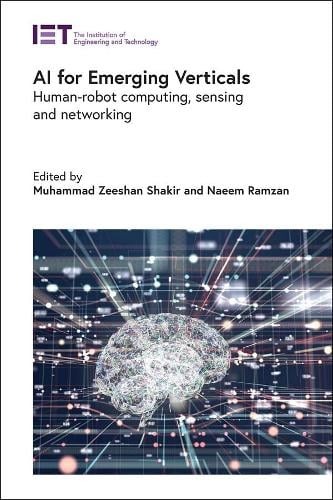
AI For Emerging Verticals : Human-robot computing, sensing and networking
Artificial intelligence (AI) and machine learning (ML) will play a major role. By adopting AI software and services, businesses can create predictive strategies, enhance their capabilities, better interact with customers, and streamline their business processes. Explores novel concepts and cutting-edge research and developments towards designing these fully automated advanced digital systems. Fostered by technological advances in artificial intelligence and machine learning, such systems potentially have a wide range of applications in robotics, human computing, sensing and networking. The chapters focus on models and theoretical approaches to guarantee automation in large multi-scale implementations of AI and ML systems; protocol designs to ensure AI systems meet key requirements for future services such as latency; and optimisation algorithms to leverage the trusted distributed and efficient complex architectures.

Agile software construction
Agile software is a means of putting the software first while at the same time reacting to these user requirements in a flexible and agile way.Agile Software Construction covers the emerging methods and approaches (including extreme programming, feature-driven development and adaptive software development), that are loosely described as "Agile" and shows how to apply them effectively to software development projects. It shows how to plan, organise and develop systems using agile techniques, and highlights some of the problems that may be encountered.
Agile processes in software engineering and extreme programming ; 19th International Conference, XP 2018, Porto, Portugal, May 21–25, 2018, Proceedings
This open access book constitutes the proceedings of the 19th International Conference on Agile Software Development, XP 2018, held in Porto, Portugal, in May 2018. XP is the premier agile software development conference combining research and practice, and XP 2018 provided a playful and informal environment to learn and trigger discussions around its main theme – make, inspect, adapt. The 21 papers presented in this volume were carefully reviewed and selected from 62 submissions. They were organized in topical sections named: agile requirements; agile testing; agile transformation; scaling agile; human-centric agile; and continuous experimentation.
