



الصفحة 4
الصفحة 4

New Frontiers in Artificial Intelligence ; JSAI 2006 Conference andWorkshops
The objectives of this book are to present the award papers of the 20th annual conference of JSAI 2006 and selected papers from the three co-located international workshops and to promote the study exchange among researchers worldwide.

New Frontiers in Artificial Intelligence ; JSAI 2003 and JSAI 2004 Conferences and Workshops, Niigata, Japan, June 23-27, 2003, Kanazawa, Japan, May 31-June 4, 2004, Revised Selected Papers
This book constitutes the thoroughly refereed joint post-proceedings of the 17th and 18th annual conferences of the Japanese Society for Artificial Intelligence, JSAI 2003 and JSAI 2004, and co-located international workshops, held in Niigata, Japan in June 2003 and in Kanazawa, Japan in May/June 2004 respectively.

New Frontiers in Artificial Intelligence ; Joint JSAI 2005 Workshop Post-Proceedings
The objectives of this book are to present the award papers from the 19th annual conference of JSAI 2005 and the selected papers from the ?ve co-located international workshops and to promote the study exchange among worldwide researchers. Five papers received awards among more than 200 presentations in the conference, and 40 papers were selected from the workshops of Logic and Engineering of Natural Language Semantics 2005 (LENLS 2005), Learning with Logics and Logics for Learning (LLLL 2005), Agent Network Dynamics and Intelligence (ANDI 2005), Conversational Informatics (CI 2005) and Risk Management Systems with Intelligent Data Analysis (RMSIDA 2005).

New Frontiers in Applied Artificial Intelligence ; 21st International Conference on Industrial, Engineering and Other Applications of Applied Intelligent Systems, IEA/AIE 2008 Wrocław, Poland, June 18-20, 2008 Proceedings
The 75 revised full papers presented were carefully reviewed and selected from 302 submissions. The papers are organized in topical sections on computer vision, fuzzy system applications, robot and manufacturing, data mining and KDS, neural networks, machine learning, natural language processing, internet application and education, heuristic search, application systems, agent-based system, evolutionary and genetic algorithms, knowledge management, and other applications. The book concludes with 15 contributions from the following special sessions: knowledge driven manufacturing systems, joint session on adaptive networked systems and fuzzy knowledge bases, and software agents and multi-agent systems.

New Frontiers for Entertainment Computing ; IFIP 20th World Computer Congress, First IFIP Entertainment Computing Symposium (ECS 2008), September 7-10, 2008, Milano, Italy
The IFIP series publishes state-of-the-art results in the sciences and technologies of information and communication. The scope of the series includes: foundations of computer science; software theory and practice; education; computer applications in technology; communication systems; systems modeling and optimization; information systems; computers and society; computer systems technology; security and protection in information processing systems; artificial intelligence; and human-computer interaction. Proceedings and post-proceedings of refereed international conferences in computer science and interdisciplinary fields are featured. These results often precede journal publication and represent the most current research.

New Directions in Human Information Behavior
The book presents chapters by an interdisciplinary range of scholars who show new directions that often challenge the established views and paradigms of information behavior studies. Beginning with an evolutionary framework, the book examines information behaviors over various epochs of human existence from the Palaeolithic Era and within pre-literate societies, to contemporary behaviors by 21st century humans. Drawing upon social and psychological science theories the book presents a more integrated and holistic approach to the understanding of information behaviors that include multitasking and non-linear longitudinal processes, individuals’ information ground, information practices and information sharing, digital behaviors and human information organizing behaviors. The final chapter of the book integrates these new approaches and presents an overview of the key trends, theories and models for further research.

New Directions in Cognitive Information Retrieval
New Directions in Cognitive Information Retrieval presents an exciting new direction for research into cognitive oriented information retrieval (IR) research, a direction based on an analysis of the user’s problem situation and cognitive behavior when using the IR system. This contrasts with the current dominant IR research paradigm which concentrates on improving IR system matching performance. The chapters describe the leading edge concepts and models of cognitive IR that explore the nexus between human cognition, information and the social conditions that drive humans to seek information using IR systems. Chapter topics include: Polyrepresentation, cognitive overlap and the boomerang effect, Multitasking while conducting the search, Knowledge Diagram Visualizations of the topic space to facilitate user assimilation of information, Task, relevance, selection state, knowledge need and knowledge behavior, search training built into the search, children’s collaboration for school projects, and other cognitive perspectives on IR concepts and issues.

New Developments in Parsing Technology
Parsing can be defined as the decomposition of complex structures into their constituent parts, and parsing technology as the methods, the tools, and the software to parse automatically. Parsing is a central area of research in the automatic processing of human language. Parsers are being used in many application areas, for example question answering, extraction of information from text, speech recognition and understanding, and machine translation. New developments in parsing technology are thus widely applicable. This book contains contributions from many of today's leading researchers in the area of natural language parsing technology. The contributors describe their most recent work and a diverse range of techniques and results. This collection provides an excellent picture of the current state of affairs in this area. This volume is the third in a series of such collections, and its breadth of coverage should make it suitable both as an overview of the current state of the field for graduate students, and as a reference for established researchers.

New Computational Paradigms ; 1st Conference on Computability in Europe, CiE 2005, Amsterdam, The Netherlands, June 8-12, 2005, Proceedings
This book constitutes the refereed proceedings of the first International Conference on Computability in Europe, CiE 2005, held in Amsterdam, The Netherlands in June 2005. The 68 revised full papers presented were carefully reviewed and selected from 144 submissions. Among them are papers corresponding to two tutorials, six plenary talks and papers of six special sessions involving mathematical logic and computer science at the same time as offering the methodological foundations for models of computation. The papers address many aspects of computability in Europe with a special focus on new computational paradigms. These include first of all connections between computation and physical systems (e.g., quantum and analog computation, neural nets, molecular computation), but also cover new perspectives on models of computation arising from basic research in mathematical logic and theoretical computer science.

New Computational Paradigms : Changing Conceptions of What is Computable
This book examines new developments in the theory and practice of computation from a mathematical perspective, with topics ranging from classical computability to complexity, from biocomputing to quantum computing. The book opens with an introduction by Andrew Hodges, the Turing biographer, who analyzes the pioneering work that anticipated recent developments concerning computation’s allegedly new paradigms. The remaining material covers traditional topics in computability theory such as relative computability, theory of numberings, and domain theory, in addition to topics on the relationships between proof theory, computability, and complexity theory.

New approaches for security, privacy and trust in complex environments ; Proceedings of the IFIP TC 11 22nd International Information Security Conference (SEC 2007), 14-16 May 2007, Sandton, South Africa
The IFIP series publishes state-of-the-art results in the sciences and technologies of information and communication. The principal aim of the IFIP series is to encourage education and the dissemination and exchange of information about all aspects of computing.

New Algorithms for Macromolecular Simulation
Molecular simulation is a widely used tool in biology, chemistry, physics and engineering. This book contains a collection of articles by leading researchers who are developing new methods for molecular modelling and simulation. Topics addressed here include: multiscale formulations for biomolecular modelling, such as quantum-classical methods and advanced solvation techniques; protein folding methods and schemes for sampling complex landscapes; membrane simulations; free energy calculation; and techniques for improving ergodicity. The book is meant to be useful for practitioners in the simulation community and for those new to molecular simulation who require a broad introduction to the state of the art.

New advances in audio signal processing
In the era of digitalization, audio signal processing is gaining peculiar relevance as an automation and remote analysis means, also considering its enhancement by novel artificial intelligence (AI) techniques. This Reprint aims to offer an overview of the current developments in all fields that revolve around audio processing: from advancements in the acoustic domain to deep learning architectures for the audio-based analysis of real-world problems such as pitch detection or pathology identification.

Neural Preprocessing and Control of Reactive Walking Machines: Towards Versatile Artificial Perception-Action Systems
This book presents biologically inspired walking machines interacting with their physical environment. It describes how the designs of the morphology and the behavior control of walking machines can benefit from biological studies. The purpose of this book is to develop a modular structure of neural control generating different reactive behaviors of the physical walking machines, to analyze the neural mechanisms underlying the reactive behaviors, and to demonstrate the sensor fusion technique leading to smooth switching between appropriate behaviors, like obstacle avoidance and sound tropism.

Neural networks and deep learning
Covers both classical and modern models in deep learning. The primary focus is on the theory and algorithms of deep learning. The theory and algorithms of neural networks are particularly important for understanding important concepts, so that one can understand the important design concepts of neural architectures in different applications. Why do neural networks work? When do they work better than off-the-shelf machine-learning models? When is depth useful? Why is training neural networks so hard? What are the pitfalls? The book is also rich in discussing different applications in order to give the practitioner a flavor of how neural architectures are designed for different types of problems.

Neural Network Driven Artificial Intelligence : Decision Making Based On Fuzzy Logic
Artificial Intelligence, Computer Science and Internet, Computer Science, Technology and Applications, Mathematics Research Developments
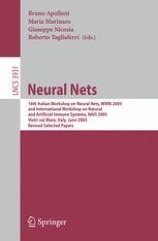
Neural Nets ; 16th Italian Workshop on Neural Nets, WIRN 2005, International workshop on natural and artificial immune systems, NAIS 2005, Vietri sul Mare, Italy, June 8-11, 2005, Revised Selected Papers
This book constitutes the thoroughly refereed postproceedings of the 16th Italian Workshop on Neural Nets, WIRN 2005, as well as the satellite International Workshop on Natural and Artificial Immune Systems, NAIS 2005, held in Vietri sul Mare, Italy in June 2005. The 41 revised papers presented together with a lecture by the winner of the Premio Caianiello award were carefully reviewed and improved during two rounds of selection and refereeing.

Neural Information Processing ; Vol. 4234 ; 13th International Conference, ICONIP 2006, Hong Kong, China, October 3-6, 2006, Proceedings, Part III
This book and its companion volumes constitute the Proceedings of the 13th - ternationalConferenceonNeuralInformationProcessing(ICONIP2006)heldin Hong Kong during October 3–6,2006. ICONIP is the annual ?agship conference oftheAsiaPaci?cNeuralNetworkAssembly(APNNA)withthepasteventsheld in Seoul (1994), Beijing (1995), Hong Kong (1996), Dunedin (1997), Kitakyushu (1998), Perth(1999), Taejon(2000), Shanghai(2001), Singapore(2002), Istanbul (2003), Calcutta(2004), andTaipei(2005). Overtheyears, ICONIPhasmatured into a well-established series of international conference on neural information processing and related ?elds in the Asia and Paci?cregions. Following the tra- tion, ICONIP 2006 provided an academic forum for the participants to diss- inate their new research ?ndings and discuss emerging areas of research.

Neural Information Processing ; Vol. 4233 ; 13th International Conference, ICONIP 2006, Hong Kong, China, October 3-6, 2006, Proceedings, Part II
The three volume set LNCS 4232, LNCS 4233, and LNCS 4234 constitutes the refereed proceedings of the 13th International Conference on Neural Information Processing, ICONIP 2006, held in Hong Kong, China in October 2006. The 386 revised full papers presented were carefully reviewed and selected from 1175 submissions.

Neural Information Processing ; Vol. 4232 ; 13th International Conference, ICONIP 2006, Hong Kong, China, October 3-6, 2006, Proceedings, Part I
This book and its companion volumes constitute the Proceedings of the 13th - ternationalConferenceonNeuralInformationProcessing(ICONIP2006)heldin Hong Kong during October 3–6,2006. ICONIP is the annual ?agship conference oftheAsiaPaci?cNeuralNetworkAssembly(APNNA)withthepasteventsheld in Seoul (1994), Beijing (1995), Hong Kong (1996), Dunedin (1997), Kitakyushu (1998), Perth(1999), Taejon(2000), Shanghai(2001), Singapore(2002), Istanbul (2003), Calcutta(2004), andTaipei(2005). Overtheyears, ICONIPhasmatured into a well-established series of international conference on neural information processing and related ?elds in the Asia and Paci?cregions. Following the tra- tion, ICONIP 2006 provided an academic forum for the participants to diss- inate their new research ?ndings and discuss emerging areas of research.
