



الصفحة 37
الصفحة 37
Beginning CakePHP : From novice to professional
CakePHP is a leading PHP–based web app development framework. When asking a question on forums or chat rooms, many CakePHP beginners get little help from the experts. Simple questions can get a response like, “Well, just read the online manual and API.” Unfortunately, the online manual is depreciated, and who wants to absorb a programming language or framework from an API? Beginning CakePHP will do the following: Lead you from a basic setup of CakePHP to building a couple applications that will highlight CakePHP’s functionality and capabilities without delving too deeply into the PHP language, but rather what the CakePHP framework can offer the developer. Teach you to use CakePHP by incorporating advanced features into your web development projects.
Beginning C# 2008 Databases : From novice to professional
Assuming only basic knowledge of C# 2008, Beginning C# 2008 Databases teaches all the fundamentals of database technology and database programming readers need to quickly become highly proficient database users and application developers. A comprehensive tutorial on both SQL Server 2005 and ADO.NET 3.0, Beginning C# 2008 Databases explains and demonstrates how to create database objects and program against them in both T–SQL and C#. Full of practical, detailed examples, it's been fully revised and updated for C# 2008 and offers the most complete, detailed, and gentle introduction to database technology for all C# programmers at any level of experience.
Beginning Apache Struts: From novice to professional
Beginning Apache Struts will provide you a working knowledge of Apache Struts 1.2. This book is ideal for you Java programmers who have some JSP familiarity, but little or no prior experience with Servlet technology. Organized in a condensed tutorial and lab format, the material in this book has been tested in real classroom environments. It takes a step-by-step, hands-on approach to teaching you Struts. The book even previews the next generation of Struts, the Apache Shale. The overall result is that you can quickly apply Struts to your work settings with confidence.
Becoming an urban physics and math teacher : Infinite potential
What happens as beginning urban teachers transition through their first few years in the classroom? This book captures one teacher's journey through the first three years of teaching science and mathematics in a large urban district in the US. The authors focus on Ian's agency as a beginning teacher and explore his success in working with diverse students. Using critical ethnography combined with first-person narrative, they investigate Ian's teaching practices in four contexts: his student teaching experience, his work with students on a summer curriculum development project, his first year of teaching in a small, urban high school, and his second year of teaching in a large, comprehensive high school. In each field, the authors describe the structural changes Ian encounters and the ways in which he re-utilizes the practices he used successfully in previous fields.

Becoming a world-class university : The case of King Abdulaziz University
This book written by international experts in the field of educational innovation is a guide for universities to become world-class universities. It contributes to the current international intellectual debate on the future of higher education. It also tells the story of King Abdulaziz University in Jeddah (Saudi Arabia) and its effort to become a world-class university. The book discusses excellence in different aspects such as education, research, community services, strategic planning, knowledge economy and international cooperation.
Becoming a teacher educator : Theory and practice for teacher educators
It is the first book that addresses a range of important topics related to the work of teacher educators, the induction of teacher educators and their further professional development.Becoming a Teacher Educator has a practical focus and it provides theoretical insights, experiences of experts and practical recommendations. The book is rooted in the Association of Teacher Education in Europe (ATEE) and many of the chapters are written by authors who are active members of the ATEE. Distinguished researchers and practitioners from different parts of Europe, and beyond, joined their efforts to write a book that is truly international and combines research, practice and reflection.

Beauty’s Appeal : Measure and Excess
Beauty fulfils human existence. As it registers in our aesthetic experience, beauty enhances nature’s enchantment around us and our inward experience lifting our soul toward moral elevation. Carried by creative imagination (Imaginatio Creatrix), beauty participates in the moulding of the forms of the intellective constitution of the mind in tandem with praxis and seeks deeper enigmas of the real in the labyrinth of the cosmos. Yet with the evolution of human development and in technological inventions, beauty, while suffusing all modalities of experience, seems to undergo transformations and expansion. Are there perduring norms and modalities of beauty or are we carried along blindly by human development? Is there a measure intrinsic to our human ontopoietic unfolding and the growth of human life that we may follow instead of the whim of fancy and excess? The present collection of art-explorations seeks the elemental ties of Human Condition. Together, the authors aim to answer the questions posed above.

Beam Instrumentation and Diagnostics
This treatise covers all aspects of the design and the daily operations of a beam diagnostic system for a large particle accelerator. A very interdisciplinary field, it involves contributions from physicists, electrical and mechanical engineers and computer experts alike so as to satisfy the ever-increasing demands for beam parameter variability for a vast range of operation modi and particles. The author draws upon 40 years of research and work, most of them spent as the head of the beam diagnostics group at GSI. He has illustrated the more theoretical aspects with many real-life examples that will provide beam instrumentation designers with ideas and tools for their work.
Bayesian reliability
Bayesian Reliability presents modern methods and techniques for analyzing reliability data from a Bayesian perspective. The adoption and application of Bayesian methods in virtually all branches of science and engineering have significantly increased over the past few decades. This increase is largely due to advances in simulation-based computational tools for implementing Bayesian methods. The authors extensively use such tools throughout this book, focusing on assessing the reliability of components and systems with particular attention to hierarchical models and models incorporating explanatory variables. Such models include failure time regression models, accelerated testing models, and degradation models. The authors pay special attention to Bayesian goodness-of-fit testing, model validation, reliability test design, and assurance test planning. Throughout the book, the authors use Markov chain Monte Carlo (MCMC) algorithms for implementing Bayesian analyses--algorithms that make the Bayesian approach to reliability computationally feasible and conceptually straightforward.

Bayesian Networks and Decision Graphs
Probabilistic graphical models and decision graphs are powerful modeling tools for reasoning and decision making under uncertainty. As modeling languages they allow a natural specification of problem domains with inherent uncertainty, and from a computational perspective they support efficient algorithms for automatic construction and query answering. This includes belief updating, finding the most probable explanation for the observed evidence, detecting conflicts in the evidence entered into the network, determining optimal strategies, analyzing for relevance, and performing sensitivity analysis. The book introduces probabilistic graphical models and decision graphs, including Bayesian networks and influence diagrams.It contians two parts. The first part focuses on probabilistic graphical models. Compared with the previous book, the new edition also includes a thorough description of recent extensions to the Bayesian network modeling language, advances in exact and approximate belief updating algorithms, and methods for learning both the structure and the parameters of a Bayesian network. The second part deals with decision graphs, and in addition to the frameworks described in the previous edition, it also introduces Markov decision processes and partially ordered decision problems.

Basic principles and applications of probability theory
This introductory chapter discusses such notions as determinism, chaos and randomness, p- dictibility and unpredictibility, some initial approaches to formalizing r- domness and it surveys certain problems that can be solved by probability theory. This will perhaps give one an idea to what extent the theory can - swer questions arising in speci?c random occurrences and the character of the answers provided by the theory. 1. 1 The Nature of Randomness The phrase “by chance” has no single meaning in ordinary language. For instance, it may mean unpremeditated, nonobligatory, unexpected, and so on. Its opposite sense is simpler: “not by chance” signi?es obliged to or bound to (happen). In philosophy, necessity counteracts randomness. Necessity signi?es conforming to law – it can be expressed by an exact law. The basic laws of mechanics, physics and astronomy can be formulated in terms of precise quantitativerelationswhichmustholdwithironcladnecessity.
Barriers and Biases in Computer-Mediated Knowledge Communication : And How They May Be Overcome
This books deals with computer-mediated cooperation and communication scenarios in teaching and learning situations, leisure activities (e.g. laypersons looking for expert information on the internet), and net-based communication at work. Such scenarios will become increasingly important. But the successful use of such computer-mediated settings is not trivial. Cooperative learning and work itself requires special skills and strategies. And the technical settings with sometimes restricted, sometimes new possibilities for communication add problems on top of the cooperation itself. What are the barriers in computer-mediated communication for cooperative learning and work? Which are the most relevant biases in computer-mediated information processing? Based on empirical research the contributors from psychology, education and computer sciences offer different perspectives on the nature and causes of such barriers.

Balanced Website Design : Optimising Aesthetics, Usability and Purpose
Balanced Website Design (BWD) is a new methodology that fuses the strengths of traditional structured, stepped, and iterative approaches with a sharp focus on defining and achieving the desired characteristics of purpose, usability and aesthetics – absolutely essential requirements for any website. The book includes discussions of new perspectives on usability and aesthetics in the special context of website design. BWD is suitable for all types of websites, for individual and/or team projects, and should prove to be of significant value for even the most experienced of website designers. BWD provides guidance, structure and detailed documentation/process support for the activity of designing and implementing your next website – helping you to maximise its effectiveness and relevance.

Azaheterocycles Based on -, ß-Unsaturated Carbonyls
Devoted to heterocyclizations of aliphatic and aromatic, -unsaturated carbonyls with various binucleophiles leading to three-, five-, six and seven-membered partially hydrogenated nitrogen-containing heterocycles. During the last decade interest in these classes of organic c- pounds has been experiencing a scientific renaissance owing to their significant role in biological processes in living cells and diverse effects on physiological activities. In addition, such compounds are also more prevalent from the vi- point of ''classical'' problems of organic chemistry, among them reactivity, chemo- and regioselectivity, tautomerism, conformational analysis and features of their electronic structure. The character of these problems in the case of partially hydrogenated heterocycles differs sufficiently from that for hetero- omatized and perhydrogenated heterocyclic compounds and investigations in this field very often lead to interesting and unusual results. Extensively characterized cyclocondensations of, -unsaturated carbonyls, their synthetic equivalents and their precursors are the most widespread, facile and generally valid pathway to dihydroazaheterocycles.

Axions : Theory, Cosmology, and Experimental Searches
Axions are peculiar hypothetical particles that could both solve the CP problem of quantum chromodynamics and at the same time account for the dark matter of the universe. Based on a series of lectures by world experts in this field held at CERN (Geneva), this volume provides a pedagogical introduction to the theory, cosmology and astrophysics of these fascinating particles and gives an up-to-date account of the status and prospect of ongoing and planned experimental searches. Learners and practitioners of astroparticle physics will find in this book both a concise introduction and a current reference work to a showcase topic that connects the "inner space" of the elementary particle world with the "outer space" of the universe at large.

Average-Cost Control of Stochastic Manufacturing Systems
This book is concerned with hierarchical control of manufacturing systems under uncertainty. It focuses on system performance measured in long-run average cost criteria, exploring the relationship between control problems with a discounted cost and that with a long-run average cost in connection with hierarchical control. A new theory is articulated that shows that hierarchical decision making in the context of a goal-seeking manufacturing system can lead to a near optimization of its objective. The approach in the book considers manufacturing systems in which events occur at different time scales.
Autonomy oriented computing : From problem solving to complex systems modeling
Autonomy Oriented Computing explores the important theoretical and practical issues in AOC, by analyzing methodologies and presenting experimental case studies. The book serves as a comprehensive reference source for researchers, scientists, engineers, and professionals in all fields concerned with this promising new development in computer science. It can also be used as a main or supplementary text in graduate and undergraduate programs across a broad range of computer-related disciplines, including Robotics and Automation, Amorphous Computing, Image Processing and Computer Vision, Programming Paradigms, Computational Biology, and many others. The first part of the book, Fundamentals, describes the basic concepts and characteristics of an AOC system, and then it enumerates the critical design and engineering issues faced in AOC system development. The second part of the book, AOC in Depth, provides a detailed analysis of methodologies and case studies to evaluate the use of AOC in problem solving and complex system modeling. The final chapter reviews the essential features of the AOC paradigm and outlines a number of possibilities for future research and development.
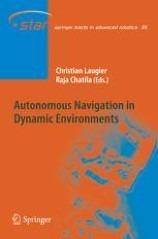
Autonomous Navigation in Dynamic Environments
The purpose of this book is to address the challenging problem of Autonomous Navigation in Dynamic Environments, and to present new ideas and approaches in this newly emerging technical domain. The book surveys the state-of-the-art, discusses in detail various related challenging technical aspects, and addresses upcoming technologies in this field. The aim of the book is to establish a foundation for a broad class of mobile robot mapping and navigation methodologies for indoor, outdoor, and exploratory missions.Three main topics located on the cutting edge of the state of the art are addressed, from both the theoretical and technological point of views: Dynamic world understanding and modelling for safe navigation, Obstacle avoidance and motion planning in dynamic environments, and Human-robot physical interactions. Several models and approaches are proposed for solving problems such as Simultaneous Localization and Mapping (SLAM) in dynamic environments, Mobile obstacle detection and tracking, World state estimation and motion prediction, Safe navigation in dynamic environments, Motion planning in dynamic environments, Robust decision making under uncertainty, and Human-Robot physical interactions.

Autonomous intelligent systems : Multi-agents and data mining ; 2nd International workshop, AIS-ADM 2007, St. Petersburg, Russia, June 3-5, 2007, Proceedings
MAS offiers powerful metaphors for information system conceptualization, a range of new techniques, and technologies specifically focused on the design and implementation of lar- scale open distributed intelligent systems. KDD also provides intelligent inf- mation technology with powerful ideas, algorithms, and software means to help cope with the main problem of artificial intelligence, formulated in the we- known question “Where does the knowledge come from?”, thus actually making modern applications intelligent and adaptive. The evident recent trend in both science and industry is to integrate and take advantage of both technologies. The existing experience with combined application of multi-agent technology to design architectures of distributed (- erarchical and peer-to-peer) data mining and KDD systems, as well as the u- lization of data mining and KDD achievements to provide enhanced intelligence of MAS, confirms the fact that both technologies are capable of mutual enri- ment and their integrateduse may result in intelligent information systems with new emergent properties.
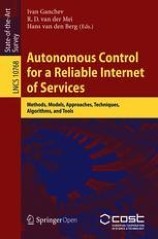
Autonomous control for a reliable internet of services : Methods, models, approaches, techniques, algorithms, and tools
This open access book was prepared as a Final Publication of the COST Action IC1304 “Autonomous Control for a Reliable Internet of Services (ACROSS)”. The book contains 14 chapters and constitutes a show-case of the main outcome of the Action in line with its scientific goals. It will serve as a valuable reference for undergraduate and post-graduate students, educators, faculty members, researchers, engineers, and research strategists working in this field. The objective of this book is, by applying a systematic approach, to assess the state-of-the-art and consolidate the main research results achieved in this area.
