



الصفحة 36
الصفحة 36

Focused Access to XML Documents ; 6th International Workshop of the Initiative for the Evaluation of XML Retrieval, INEX 2007 Dagstuhl Castle, Germany, December 17-19, 2007. Selected Papers
This book constitutes the thoroughly refereed post-conference proceedings of the 6th International Workshop of the Initiative for the Evaluation of XML Retrieval, INEX 2007, held at Dagstuhl Castle, Germany, in December 2007.The 37 revised full papers presented were carefully reviewed and selected for presentation at the workshop from 50 initial submissions. The papers are organized in an ad hoc track and 6 topical sections on book search, XML-mining, entity ranking, interactive, link-the-wiki, and multimedia.
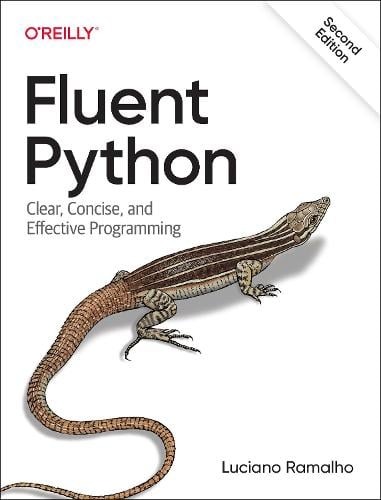
Fluent Python : Clear, Concise, and Effective Programming
You’ll learn how to write effective, modern Python 3 code by leveraging its best ideas. Don’t waste time bending Python to fit patterns you learned in other languages. Discover and apply idiomatic Python 3 features beyond your past experience. Author Luciano Ramalho guides you through Python’s core language features and libraries and teaches you how to make your code shorter, faster, and more readable.

Flex solutions : Essential techniques for Flex 2 and 3 developers
Flex Solutions: Essential Techniques for Flex 2 and Flex 3 Developers faces problems and provides solutions that can be applied to any project, from the most simple to the most complex. Solutions are also provided for enhancing the security of Flex applications, and techniques are offered for optimizing the actual work environment by increasing the performance of Flex Builder, adding video content, and creating an AIR project to bring your web application onto the desktop.
Flash Application Design Solutions : The Flash Usability Handbook
In this book, you’ll find a number of concrete Flash usability solutions that use elements such as navigation menus, data filtering, forms, content loaders, Flash liquid layouts, help tips, and many other features. You’ll learn how each of these solutions actually improves on what is possible with HTML and JavaScript. In each case, you’ll see how users interact with the website feature, and how it gives users the most intuitive, enjoyable experience possible while using your application. You’ll get a step-by-step analysis of how to program and build each solution, and how to make it scalable, maintainable, and reusable.

Flash 8 Essentials
As a creative professional or interactive developer, you’ll be amazed at the exciting possibilities presented to you by the features available in Flash 8; but as a busy designer, we know you won't have as much time as you’d like to explore these new additions. Never fear; this book wastes no time looking at timeline basics, tweens, or movie-publishing options—it focuses exclusively on the new Flash 8 features, getting you quickly up to speed with a combination of illustrative tutorials, handy references, and inspirational examples. By the end of the book, you’ll know that there’s no shortage of new tools to enhance and inspire your Flash development; and since this book is written by some of the community's leading Flash experts, you’ll know you’re in good hands.

FitBuddy : An artificial intelligence powered personal trainer
FitBuddy App is a sports application that employs artificial intelligence in its job as a personal trainer that enables users to exercise anywhere with convenience, tremendous benefit, and high accuracy. The user can exercise with or without weights, in addition to cycling and running. The user must first provide the application with the personal data it has asked for in order to create an appropriate sports program for the user. After that, the user may explore the sports program's weeks and day's sections.

First Steps : Developing BizTalk Applications
First Steps: Developing BizTalk Applications is a primer to most other introductory BizTalk books. If you feel like traditional beginning books are too abstract, and that you are mired in detail and missing the “big picture,” check out this book. It's a jumpstart to learning BizTalk. You'll learn about the product in a phased approach.

First course on fuzzy theory and applications
This basic textbook gives an easily accessible introduction to Fuzzy theory and its applications. It provides basic and concrete concepts of the field in a self-contained, condensed and understandable style. This "First Course on Fuzzy Theory and Applications" includes numerous examples, descriptive illustrations and figures of the basic concepts, as well as exercises at the end of each chapter. The author has long time experience in teaching on fuzzy theory and its applications and continuously developed and summarized his didactic lecture notes into this book. This book can be used in introductory graduate and undergraduate courses in Fuzziness and Soft Computing and is recommendable to students, scientists, engineers, or professionals in the field for self-study.
Finite model theory and its applications
This book gives a broad overview of core topics of finite model theory: expressive power, descriptive complexity, and zero-one laws, together with selected applications to database theory and artificial intelligence, especially, constraint databases and constraint satisfaction problems. The final chapter provides a concise modern introduction to modal logic, which emphasizes the continuity in spirit and technique with finite model theory. This underlying spirit involves the use of various fragments of, and hierarchies within, first order, second order, fixed point, and infinitary logics to gain insight into phenomena in complexity theory and combinatorics.

Finite Elements III : First-Order and Time-Dependent PDEs
Volume III is divided into 28 chapters. The first eight chapters focus on the symmetric positive systems of first-order PDEs called Friedrichs' systems. This part of the book presents a comprehensive and unified treatment of various stabilization techniques from the existing literature. It discusses applications to advection and advection-diffusion equations and various PDEs written in mixed form such as Darcy and Stokes flows and Maxwell's equations. The remainder of Volume III addresses time-dependent problems: parabolic equations (such as the heat equation), evolution equations without coercivity (Stokes flows, Friedrichs' systems), and nonlinear hyperbolic equations (scalar conservation equations, hyperbolic systems). It offers a fresh perspective on the analysis of well-known time-stepping methods. The last five chapters discuss the approximation of hyperbolic equations with finite elements. Here again a new perspective is proposed.
Finite Difference Computing with PDEs : A Modern Software Approach
This easy-to-read book introduces the basics of solving partial differential equations by means of finite difference methods. Unlike many of the traditional academic works on the topic, this book was written for practitioners. Accordingly, it especially addresses: the construction of finite difference schemes, formulation and implementation of algorithms, verification of implementations, analyses of physical behavior as implied by the numerical solutions, and how to apply the methods and software to solve problems in the fields of physics and biology.

Financial cryptography and data security Vol. 3570 ; 9th International Conference, FC 2005, Roseau, The Commonwealth Of Dominica, February 28 - March 3, 2005, Revised Papers
The 9th International Conference on Financial Cryptography and Data Security (FC 2005) was held in the Commonwealth of Dominica from February 28 to March 3, 2005. This conference, organized by the International Financial Cryptography Association (IFCA), continues to be the premier international forum for research, exploration, and debate regarding security in the context of finance and commerce. The conference title and scope was expanded this year to cover all aspects of securing transactions and systems. The goal is to build an interdisciplinary meeting, bringing together cryptographers, data-security specialists, business and economy researchers, as well as economists, IT professionals, implementers, and policy makers. We think that this goal was met this year. The conference received 90 submissions and 24 papers were accepted, 22 in the Research track and 2 in the Systems and Applications track. In addition, the conference featured two distinguished invited speakers, Bezalel Gavish and Lynne Coventry, and two interesting panel sessions, one on phishing and the other on economics and information security. Also, for the first time, some of the papers that were judged to be very strong but did not make the final program were selected for special invitation to our Works in Progress (Rump) Session that took place on Wednesday evening.

Finance 4.0 - towards a socio-ecological finance system : A participatory framework to promote sustainability
The first is Bitcoin that infamously pursues a state-independent, decentralized conception of money. The second is Finance 4.0, a system that proposes a participatory multi-dimensional money system with built-in incentives for sustainable behavior

Fifth World Conference on Information Security Education ; Proceedings of the IFIP TC 11 WG 11.8, WISE 5, 19 to 21 June 2007, United States Military Academy, West Point, NY, USA
The scope of This book includes: foundations of computer science; software theory and practice; education; computer applications in technology; communication systems; systems modeling and optimization; information systems; computers and society; computer systems technology; security and protection in information processing systems; artificial intelligence; and human-computer interaction. Proceedings and post-proceedings of referred international conferences in computer science and interdisciplinary fields are featured. These results often precede journal publication and represent the most current research.

Fifth IFIP International Conference On Theoretical Computer Science - Tcs 2008 ; IFIP 20th World Computer Congress, TC 1, Foundations of Computer Science, September 7-10, 2008, Milano, Italy
Includes: foundations of computer science; software theory and practice; education; computer applications in technology; communication systems; systems modeling and optimization; information systems; computers and society; computer systems technology; security and protection in information processing systems; artificial intelligence; and human-computer interaction. Proceedings and post-proceedings of refereed international conferences in computer science and interdisciplinary fields are featured. These results often precede journal publication and represent the most current research. The principal aim of the IFIP series is to encourage education and the dissemination and exchange of information about all aspects of computing.

Fieldwork for Design : Theory and Practice
Fieldwork for Design looks at why ethnographic approaches have been turned to in the design of computing devices for the workplace, for the home and elsewhere. It presents a history of ethnography, both as it was practiced before computer science picked it up and since, most especially in the CSCW and HCI domains. It examines, further, the various ethnographic or ‘fieldwork’ frameworks currently popular, explaining and examining what each claims and entails. The focus of the book throughout is on the practical relationship between theory and practice, a relationship that is often misunderstood yet fundamental to successful design.

Field-Based Coordination for Pervasive Multiagent Systems
Software systems involve autonomous and distributed software components that have to execute and interact in open and dynamic environments, such as in pervasive, autonomous, and mobile applications. The requirements with respect to dynamics, openness, scalability, and decentralization call for new approaches to software design and development, capable of supporting spontaneous configuration, tolerating partial failures, or arranging adaptive reorganization of the whole system.

Federation over the Web ; International Workshop, Dagstuhl Castle, Germany, May 1-6, 2005, Revised Selected Papers
The lives of people all around the world, especially in industrialized nations, continue to be changed by the presence and growth of the Internet. Its in?uence is felt at scales ranging from private lifestyles to national economies, boosting thepaceatwhichmoderninformationandcommunicationtechnologiesin?uence personal choices along with business processes and scienti?c endeavors. In addition to its billions of HTML pages, the Web can now be seen as an open repository of computing resources. These resources provide access to computational services as well as data repositories, through a rapidly growing variety of Web applications and Web services.

Fashionity
This project is an AI fashion design system to generate fashion images based on user textual description. The proposed system incorporates advanced technology for dissemination and machine translation with the aim of facilitating a seamless user experience for input in both Arabic and English languages. Moreover, the project encompasses the incorporation of a recommendation system that proposes appropriate visual content based on user style. The primary objective of this project is to develop a robust framework capable of generating high-quality images based on textual descriptions, providing recommendations for similar clothing items, and facilitating the retrieval of photographic and apparel articles through image search.

Fashion forge
"Fashion forge" revolutionizes clothing shopping with a cutting-edge mobile application. This AI-powered platform empowers users to describe their dream garment and visualize it instantly, bridging the gap between imagination and reality for fashion-forward users and designers. A recommendation system tailors clothing suggestions based on user preferences, while stores leverage a dedicated social platform for effective marketing. "Fashion Forge" fosters a connected fashion community, empowering users, designers, and stores alike.
