



الصفحة 32
الصفحة 32
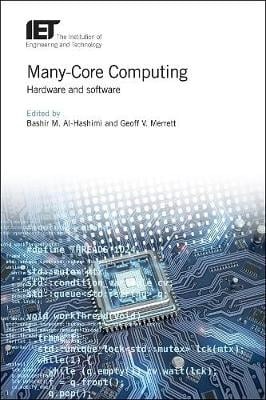
Many-Core Computing : Hardware and software
Provides a timely and coherent account of the recent advances in many-core computing research. Starting with programming models, operating systems and their applications; it presents runtime management techniques, followed by system modelling, verification and testing methods, and architectures and systems. Computing has moved away from a focus on performance-centric serial computation, instead towards energy-efficient parallel computation. This provides continued performance increases without increasing clock frequencies, and overcomes the thermal and power limitations of the dark-silicon era. As the number of parallel cores increases, we transition into the many-core computing era. There is considerable interest in developing methods, tools, architectures and applications to support many-core computing.
Managing Humans : Biting and Humorous Tales of a Software Engineering Manager
Managing Humans is a selection of the best essays from Michael Lopp's web site, Rands in Repose. Drawing on Lopp's management experiences at Apple, Netscape, Symantec, and Borland, this book is full of stories based on companies in the Silicon Valley where people have been known to yell at each other. It is a place full of dysfunctional bright people who are in an incredible hurry to find the next big thing so they can strike it rich and then do it all over again. Among these people are managers, a strange breed of people who through a mystical organizational ritual have been given power over your future and your bank account.
Managing Cyber Threats : Issues, Approaches, and Challenges
Brings together the latest techniques for managing cyber threats, developed by some of the world’s leading experts in the area. The book includes broad surveys on a number of topics, as well as specific techniques. It provides an excellent reference point for researchers and practitioners in the government, academic, and industrial communities who want to understand the issues and challenges in this area of growing worldwide importance.

Making Grids Work ; Proceedings of the CoreGRID Workshop on Programming Models Grid and P2P System Architecture Grid Systems, Tools and Environments 12-13 June 2007, Heraklion, Crete, Greece
Making Grids Work includes selected articles from the CoreGRID Workshop on Grid Programming Models, Grid and P2P Systems Architecture, Grid Systems, Tools and Environments held at the Institute of Computer Science, Foundation for Research and Technology - Hellas in Crete, Greece, June 2007. This workshop brought together representatives of the academic and industrial communities performing Grid research in Europe. Organized within the context of the CoreGRID Network of Excellence, this workshop provided a forum for the presentation and exchange of views on the latest developments in Grid Technology research. This volume is the 7th in the series of CoreGRID books.
Machine-learning-assisted intelligent processing and optimization of complex systems
Focuses on the most recent developments in intelligent optimization methods and their applications in various test cases. The reprint covers various topics, including distributed multiagent modeling, metaheuristic algorithms, multisource data fusion, mobile computing and mobile sensing, machine learning-based intelligent processing for modeling complex manufacturing systems, and data-driven intelligent modeling

Machine Learning for Cyber Agents : Attack and Defence
The cyber world has been both enhanced and endangered by AI. On the one hand, the performance of many existing security services has been improved, and new tools created. On the other, it entails new cyber threats both through evolved attacking capacities and through its own imperfections and vulnerabilities. Moreover, quantum computers are further pushing the boundaries of what is possible, by making machine learning cyber agents faster and smarter.
Machine learning for brain disorders
Organized into five parts. Part One presents the fundamentals of ML. Part Two looks at the main types of data used to characterize brain disorders, including clinical assessments, neuroimaging, electro- and magnetoencephalography, genetics and omics data, electronic health records, mobile devices, connected objects and sensors. Part Three covers the core methodologies of ML in brain disorders and the latest techniques used to study them. Part Four is dedicated to validation and datasets, and Part Five discusses applications of ML to various neurological and psychiatric disorders.

Machine learning for biomedical application
Biomedicine is a multidisciplinary branch of medical science that consists of many scientific disciplines, e.g., biology, biotechnology, bioinformatics, and genetics; moreover, it covers various medical specialties. In recent years, this field of science has developed rapidly. This means that a large amount of data has been generated, due to (among other reasons) the processing, analysis, and recognition of a wide range of biomedical signals and images obtained through increasingly advanced medical imaging devices. The analysis of these data requires the use of advanced IT methods, which include those related to the use of artificial intelligence, and in particular machine learning. It is a summary of the Special Issue “Machine Learning for Biomedical Application”, briefly outlining selected applications of machine learning in the processing, analysis, and recognition of biomedical data, mostly regarding biosignals and medical images.
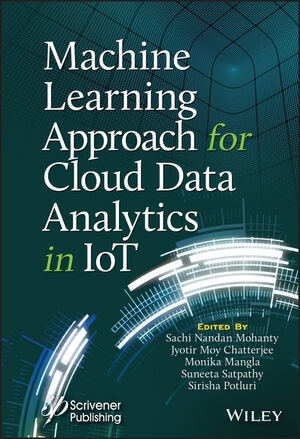
Machine learning approach for cloud data analytics in IoT
Covers the multidimensional perspective of machine learning through the perspective of cloud computing and Internet of Things ranging from fundamentals to advanced applications. Elucidates some of the best practices and their respective outcomes in cloud and fog computing environments. It focuses on all the various research issues related to big data storage and analysis, large-scale data processing, knowledge discovery and knowledge management, computational intelligence, data security and privacy, data representation and visualization, and data analytics. The featured technologies presented in the book optimizes various industry processes using business intelligence in engineering and technology. Light is also shed on cloud-based embedded software development practices to integrate complex machines so as to increase productivity and reduce operational costs. The various practices of data science and analytics which are used in all sectors to understand big data and analyze massive data patterns are also detailed in the book.

Machine Learning and Data Mining in Pattern Recognition ; 5th International Conference, MLDM 2007, Leipzig, Germany, July 18-20, 2007, Proceedings
MLDM / ICDM Medaillie Meissner Porcellan, the “White Gold” of King August the Strongest of Saxonia Gottfried Wilhelm von Leibniz. This was the fifth MLDM in Pattern Recognition event held in Leipzig (www.mldm.de). This meeting from the very first event has focused on aspects of machine learning and data mining in pattern recognition problems.

Machine Learning and Data Mining in Pattern Recognition ; 4th International Conference, MLDM 2005, Leipzig, Germany, July 9-11, 2005, Proceedings
Today, artificial intelligence deals with large amounts of data and knowledge and finds new information using machine learning and data mining. Machine learning and data mining are irreplaceable subjects and tools for the theory of pattern recognition and in applications of pattern recognition such as bioinformatics and data retrieval. This was the fourth edition of MLDM in Pattern Recognition which is the main event of Technical Committee 17 of the International Association for Pattern Recognition; it started out as a workshop and continued as a conference in 2003. Today, there are many international meetings which are titled “machine learning” and “data mining”, whose topics are text mining, knowledge discovery, and applications. This meeting from the first focused on aspects of machine learning and data mining in pattern recognition problems. We planned to reorganize classical and well-established pattern recognition paradigms from the viewpoints of machine learning and data mining. Though it was a challenging program in the late 1990s, the idea has inspired new starting points in pattern recognition and effects in other areas such as cognitive computer vision.
Machine Learning and Data Mining for Computer Security : Methods and Applications
Presents research conducted in academia and industry on methods and applications of machine learning and data mining for problems in computer security and will be of interest to researchers and practitioners, as well students.
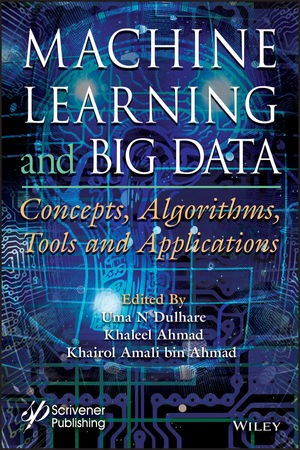
Machine learning and big data : Concepts, algorithms, tools and applications
Showcase novel use-cases and applications, present empirical research results from user-centered qualitative and quantitative experiments of these new applications, and facilitate a discussion forum to explore the latest trends in big data and machine learning by providing algorithms which can be trained to perform interdisciplinary techniques such as statistics, linear algebra, and optimization and also create automated systems that can sift through large volumes of data at high speed to make predictions or decisions without human intervention
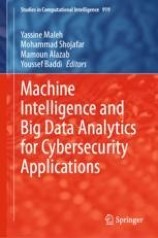
Machine Intelligence and Big Data Analytics for Cybersecurity Applications
Presents the latest advances in machine intelligence and big data analytics to improve early warning of cyber-attacks, for cybersecurity intrusion detection and monitoring, and malware analysis. Cyber-attacks have posed real and wide-ranging threats for the information society. Detecting cyber-attacks becomes a challenge, not only because of the sophistication of attacks but also because of the large scale and complex nature of today’s IT infrastructures. It discusses novel trends and achievements in machine intelligence and their role in the development of secure systems and identifies open and future research issues related to the application of machine intelligence in the cybersecurity field.

Machine Ethics : From Machine Morals to the Machinery of Morality
Offers the first systematic guide to machine ethics, bridging between computer science, social sciences and philosophy. Based on a dialogue between an AI scientist and a novelist philosopher, the book discusses important findings on which moral values machines can be taught and how. In turn, it investigates what kind of artificial intelligence (AI) people do actually want.

Mac OS X Leopard : Beyond the Manual
Good computer books make assumptions about the reader: what they do and don't know when they pick up the book, and what they want to know when they put it down. For each reader this could be very different; therefore, a book that suits one person may not be the best for another. Mac OS X Leopard: Beyond the Manual makes some assumptions too, ones that tend to differ from other Mac OS X books. First of all, we assume that you have used a computer in that past: that you know how to use a mouse and you know the proper place to stick a DVD to get it to play in your computer. We won't be showing you these things. (We will, however, demonstrate to our Mac converts how to “right click” on a trackpad with only one button!).

Logic, language, information and computation ; 15th International Workshop, WoLLIC 2008 Edinburgh, UK, July 1-4, 2008 Proceedings
The papers cover all pertinent subjects in computer science with particular interest in cross-disciplinary topics. Typical areas of interest are: foundations of computing and programming; novel computation models and paradigms; broad notions of proof and belief; formal methods in software and hardware development; logical approach to natural language and reasoning; logics of programs, actions and resources; foundational aspects of information organization, search, flow, sharing, and protection.

Logic, language, information and computation ; 14th International Workshop, WoLLIC 2007, Rio de Janeiro, Brazil, July 2-5, 2007, Proceedings
The Workshop on Logic, Language, Information and Computation (WoLLIC) is an annual international forum on inter-disciplinary research involving formal logic, computing and programming theory, and natural language and reasoning. The WoLLIC meetings alternate between Brazil (and Latin America) and other countries, with the aim of fostering interest in applied logic among Latin Am- ican scientists and students, and facilitating their interaction with the international - plied logic community.

Logic Programming and Nonmonotonic Reasoning ; 8th International Conference, LPNMR 2005, Diamante, Italy, September 5-8, 2005, Proceedings
Thesearetheproceedingsofthe8thInternational Conference on Logic Progr- mingandNonmonotonicReasoning (LPNMR2005).Followingthepreviousones held in Washington, DC, USA (1991), Lisbon, Portugal (1993), Lexington, KY, USA(1995), Dagstuhl, Germany(1997), ElPaso, TX, USA(1999), Vienna, A- tria (2001) and Ft. Lauderdale, FL, USA (2004), the eighth conference was held in Diamante, Italy, from 5th to 8th of September 2005. TheaimoftheLPNMRconferencesistobringtogetherandfacilitateinter- tions between active researchers interested in all aspects concerning declarative logic programming, nonmonotonic reasoning, knowledge representation, and the design of logic-based systems and database systems. LPNMR strives to enc- pass theoretical and experimental studies that lead to the implementation of practi...

Logic Programming ; Vol. 4079 ; 22nd International Conference, ICLP 2006, Seattle, WA, USA, August 17-20, 2006, Proceedings
This book constitutes the refereed proceedings of the 22nd International Conference on Logic Programming, ICLP 2006, held in Seattle, WA, USA, in August 2006. The 20 revised full papers and 6 application papers presented together with 2 invited talks, 2 tutorials and special interest papers, as well as 17 poster presentations and the abstracts of 7 doctoral consortium articles, were carefully reviewed and selected from 83 initial submissions. The papers cover all issues of current research in logic programming - they are organized in topical sections on theory, functional and constraint logic programming, program analysis, answer-set programming, semantics, and applications.
