



الصفحة 30
الصفحة 30
Macroscopic Transport Equations for Rarefied Gas Flows : Approximation Methods in Kinetic Theory
This book discusses classical and modern methods to derive macroscopic transport equations for rarefied gases from the Boltzmann equation, for small and moderate Knudsen numbers, i.e.as well as the new order of magnitude method, which avoids the short-comings of the classical methods, but retains their benefits.

Machine Learning Techniques for Multimedia : Case Studies on Organization and Retrieval
This book provides a comprehensive coverage of the most important machine learning techniques used and their application in this domain. Arising from the EU MUSCLE network, a program that drew together multidisciplinary teams with expertise in machine learning, pattern recognition, artificial intelligence, and image, video, text and crossmedia processing, the book first introduces the machine learning principles and techniques that are applied in multimedia data processing and analysis. The second part focuses on multimedia data processing applications, with chapters examining specific machine learning issues in domains .
Machine Learning in Computer Vision
The goal of this book is to address the use of several important machine learning techniques into computer vision applications. An innovative combination of computer vision and machine learning techniques has the promise of advancing the field of computer vision, which contributes to better understanding of complex real-world applications. The effective usage of machine learning technology in real-world computer vision problems requires understanding the domain of application, abstraction of a learning problem from a given computer vision task, and the selection of appropriate representations for the learnable (input) and learned (internal) entities of the system. In this book, we address all these important aspects from a new perspective: that the key element in the current computer revolution is the use of machine learning to capture the variations in visual appearance, rather than having the designer of the model accomplish this. As a bonus, models learned from large datasets are likely to be more robust and more realistic than the brittle all-design models.
Machine Learning for Cyber Physical Systems : Selected papers from the International Conference ML4CPS 2020
Presents new approaches to Machine Learning for Cyber Physical Systems, experiences and visions. It contains selected papers from the fifth international Conference ML4CPS – Machine Learning for Cyber Physical Systems, which was held in Berlin, March 12-13, 2020.

Machine Learning for Cyber Physical Systems : Selected papers from the International Conference ML4CPS 2018
Presents new approaches to Machine Learning for Cyber Physical Systems, experiences and visions. Cyber Physical Systems are characterized by their ability to adapt and to learn: They analyze their environment and, based on observations, they learn patterns, correlations and predictive models. Typical applications are condition monitoring, predictive maintenance, image processing and diagnosis. Machine Learning is the key technology for these developments.
Machine Learning Approaches in Cyber Security Analytics
Introduces various machine learning methods for cyber security analytics. With an overwhelming amount of data being generated and transferred over various networks, monitoring everything that is exchanged and identifying potential cyber threats and attacks poses a serious challenge for cyber experts. Further, as cyber attacks become more frequent and sophisticated, there is a requirement for machines to predict, detect, and identify them more rapidly. Machine learning offers various tools and techniques to automate and quickly predict, detect, and identify cyber attacks.
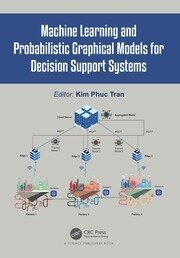
Machine Learning and Probabilistic Graphical Models for Decision Support Systems
Presents recent advancements in research, a review of new methods and techniques, and applications in decision support systems (DSS) with Machine Learning and Probabilistic Graphical Models, which are very effective techniques in gaining knowledge from Big Data and in interpreting decisions. It explores Bayesian network learning, Control Chart, Reinforcement Learning for multicriteria DSS, Anomaly Detection in Smart Manufacturing with Federated Learning, DSS in healthcare, DSS for supply chain management, etc. Researchers and practitioners alike will benefit from this book to enhance the understanding of machine learning, Probabilistic Graphical Models, and their uses in DSS in the context of decision making with uncertainty. The real-world case studies in various fields with guidance and recommendations for the practical applications of these studies are introduced in each chapter.
Machine learning and its application to reacting flows: ml and combustion
These two fields, ML and turbulent combustion, have large body of work and knowledge on their own, and this book brings them together and explain the complexities and challenges involved in applying ML techniques to simulate and study reacting flows. This is important as to the world’s total primary energy supply (TPES), since more than 90% of this supply is through combustion technologies and the non-negligible effects of combustion on environment. Although alternative technologies based on renewable energies are coming up, their shares for the TPES is are less than 5% currently and one needs a complete paradigm shift to replace combustion sources. The book covers the current state of the art in these two topics and outlines the challenges involved, merits and drawbacks of using ML for turbulent combustion simulations including avenues which can be explored to overcome the challenges.
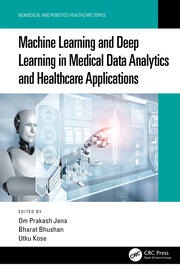
Machine learning and deep learning in medical data analytics and healthcare applications
Introduces and explores a variety of schemes designed to empower, enhance, and represent multi-institutional and multi-disciplinary machine learning (ML) and deep learning (DL) research in healthcare paradigms. Serving as a unique compendium of existing and emerging ML/DL paradigms for the healthcare sector, this book demonstrates the depth, breadth, complexity, and diversity of this multi-disciplinary area. It provides a comprehensive overview of ML/DL algorithms and explores the related use cases in enterprises such as computer-aided medical diagnostics, drug discovery and development, medical imaging, automation, robotic surgery, electronic smart records creation, outbreak prediction, medical image analysis, and radiation treatments.
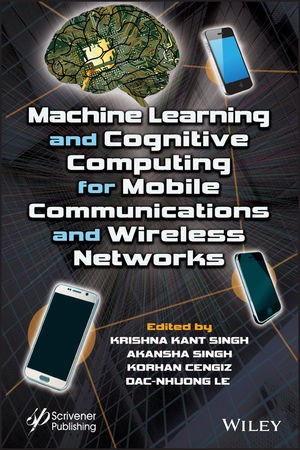
Machine Learning and Cognitive Computing for Mobile Communications and Wireless Networks
Communication and network technology has witnessed recent rapid development and numerous information services and applications have been developed globally. These technologies have high impact on society and the way people are leading their lives. The advancement in technology has undoubtedly improved the quality of service and user experience yet a lot needs to be still done. Some areas that still need improvement include seamless wide-area coverage, high-capacity hot-spots, low-power massive-connections, low-latency and high-reliability and so on. Thus, it is highly desirable to develop smart technologies for communication to improve the overall services and management of wireless communication. Machine learning and cognitive computing have converged to give some groundbreaking solutions for smart machines. With these two technologies coming together, the machines can acquire the ability to reason similar to the human brain. The research area of machine learning and cognitive computing cover many fields like psychology, biology, signal processing, physics, information theory, mathematics, and statistics that can be used effectively for topology management. Therefore, the utilization of machine learning techniques like data analytics and cognitive power will lead to better performance of communication and wireless systems.
Machine learning and big data : Concepts, algorithms, tools and applications
Showcase novel use-cases and applications, present empirical research results from user-centered qualitative and quantitative experiments of these new applications, and facilitate a discussion forum to explore the latest trends in big data and machine learning by providing algorithms which can be trained to perform interdisciplinary techniques such as statistics, linear algebra, and optimization and also create automated systems that can sift through large volumes of data at high speed to make predictions or decisions without human intervention
Machine Learning Algorithms Using Python Programming
Presents the key concepts of Machine Learning which includes Python concepts and Interpreter, Foundation of Machine Learning, Data Pre-processing, Supervised Machine Learning, Unsupervised Machine Learning, Reinforcement Learning, Kernel Machine, Design and analysis of Machine Learning experiment and Data visualization. The theoretical concepts along with coding implementation are covered. This book aims to pursue a middle ground between a theoretical textbook and one that focuses on applications. The book concentrates on the important ideas in machine learning.
Long-Term Preservation of Digital Documents : Principles and Practices
Key to our culture is that we can disseminate information, and then maintain and access it over time. While we are rapidly advancing from vulnerable physical solutions to superior, digital media, preserving and using data over the long term involves complicated research challenges and organization efforts. Uwe Borghoff and his coauthors address the problem of storing, reading, and using digital data for periods longer than 50 years. They briefly describe several markup and document description languages like TIFF, PDF, HTML, and XML, explain the most important techniques such as migration and emulation, and present the OAIS (Open Archival Information System) Reference Model. To complement this background information on the technology issues the authors present the most relevant international preservation projects, such as the Dublin Core Metadata Initiative, and experiences from sample projects run by the Cornell University Library and the National Library of the Netherlands. A rated survey list of available systems and tools completes the book.
Logical Data Modeling : What it is and How to do it
LOGICAL DATA MODELING: What It Is and How To Do IT is directed toward three groups of people: (1) Business subject matter experts, (2) information technology professionals, (3) advanced students in Computer Science, Management Information Systems, and e-Business. Its purpose is to outline the basics of logical data modeling—specifically, data modeling for relational database management systems—in simple, practical terms and in a business context. The focus on relational data modeling is consciously made because it is superior in modeling real business activities.
Logic Programming with Prolog
Logic Programming is the name given to a distinctive style of programming, very different from that of conventional programming languages such as C++ and Java. By far the most widely used Logic Programming language is Prolog. Prolog is a good choice for developing complex applications, especially in the field of Artificial Intelligence. This book does not assume that the reader is an experienced programmer or has a background in Mathematics, Logic or Artificial Intelligence. It starts from scratch and aims to arrive at the point where quite powerful programs can be written in the language. It is intended both as a textbook for an introductory course and as a self-study book. On completion the reader will know enough to use Prolog in their own research or practical projects. Each chapter has self-assessment exercises so that the reader may check their own progress. A glossary of the technical terms used completes the book.

Logic Programming and Nonmonotonic Reasoning ; 8th International Conference, LPNMR 2005, Diamante, Italy, September 5-8, 2005, Proceedings
Thesearetheproceedingsofthe8thInternational Conference on Logic Progr- mingandNonmonotonicReasoning (LPNMR2005).Followingthepreviousones held in Washington, DC, USA (1991), Lisbon, Portugal (1993), Lexington, KY, USA(1995), Dagstuhl, Germany(1997), ElPaso, TX, USA(1999), Vienna, A- tria (2001) and Ft. Lauderdale, FL, USA (2004), the eighth conference was held in Diamante, Italy, from 5th to 8th of September 2005. TheaimoftheLPNMRconferencesistobringtogetherandfacilitateinter- tions between active researchers interested in all aspects concerning declarative logic programming, nonmonotonic reasoning, knowledge representation, and the design of logic-based systems and database systems. LPNMR strives to enc- pass theoretical and experimental studies that lead to the implementation of practi...

Logic for Programming, Artificial Intelligence, and Reasoning ; Vol. 3452 : 11th International Workshop, LPAR 2004, Montevideo, Uruguay, March 14-18, 2005, Proceedings
Contains the papers presented at the 11th International Conference on Logic for Programming, Arti'cial Intelligence, and Reasoning (LPAR), held from March 14 to 18, 2005, in Montevideo, Uruguay, together with the 5th - ternational Workshop on the Implementation of Logics (organized by Stephan Schulz and Boris Konev) and the Workshop on Analytic Proof Systems (or- nized by Matthias Baaz). The call for papers attracted 77 paper submissions, each of which was - viewed by at least three expert reviewers. The ?nal decisions on the papers were taken during an electronic Program Committee meeting held on the Internet. The Internet-based submission, reviewing, and discussion software EasyChair, provided by the second PC co-chair, supported each stage of the reviewing p- cess.
Logging in Java with the JDK 1.4 Logging API and Apache log4j
In development scenarios where things can't be run in a debugger, or when you run the risk of masking the problem, logs are the greatest source of information about running a program. Pro Apache Log4j, Second Edition provides best practices guidelines and comprehensive coverage of the most recent release. Step by step, the book explains core concepts, from basic to advanced. Code samples are in Java and include guidelines for different application-specific needs. You'll also learn how to extend the API to write custom components and best practices for using the feature-rich log4j API. This book concludes with enterprise Java applications using log4j with JSP and J2EE.

Location- and Context-Awareness ; Vol. 3987 ; 2nd International Workshop, LoCA 2006, Dublin, Ireland, May 10-11, 2006, Proceedings
Contain the papers presented at the 2 International Workshop on Location- and Context-Awareness in May of 2006. As computing moves increasingly into the everyday world, the importance of location and context knowledge grows. The range of contexts encountered while sitting at a desk working on a computer is very limited compared to the large variety of situations experienced away from the desktop. For computing to be relevant and useful in these situations, the computers must have knowledge of the user’s activity, resources, state of mind, and goals, i.e., the user’s context, of which location is an important indicator. This workshop was intended to present research aimed at sensing, inferring, and using location and context data in ways that help the user.

Location- and context-awareness ; 3rd International Symposium, LoCA 2007, Oberpfaffenhofen, Germany, September 20-21, 2007, Proceedings
These proceedings contain the papers presented at the 3rd International S- posium on Location- and Context-Awareness in September of 2007. Computing has become mobile, wireless, and portable. The rangeof contexts encountered while sitting at a desk working on a computer is very limited c- pared to the large variety of situations experienced away from the desktop.
