



الصفحة 30
الصفحة 30

Machine Learning for Cyber Agents : Attack and Defence
The cyber world has been both enhanced and endangered by AI. On the one hand, the performance of many existing security services has been improved, and new tools created. On the other, it entails new cyber threats both through evolved attacking capacities and through its own imperfections and vulnerabilities. Moreover, quantum computers are further pushing the boundaries of what is possible, by making machine learning cyber agents faster and smarter.

Machine learning for biomedical application
Biomedicine is a multidisciplinary branch of medical science that consists of many scientific disciplines, e.g., biology, biotechnology, bioinformatics, and genetics; moreover, it covers various medical specialties. In recent years, this field of science has developed rapidly. This means that a large amount of data has been generated, due to (among other reasons) the processing, analysis, and recognition of a wide range of biomedical signals and images obtained through increasingly advanced medical imaging devices. The analysis of these data requires the use of advanced IT methods, which include those related to the use of artificial intelligence, and in particular machine learning. It is a summary of the Special Issue “Machine Learning for Biomedical Application”, briefly outlining selected applications of machine learning in the processing, analysis, and recognition of biomedical data, mostly regarding biosignals and medical images.
Machine Learning for Audio, Image and Video Analysis : Theory and Applications
The book is organized in four parts: The first focuses on technical aspects, basic mathematical notions and elementary machine learning techniques. The second provides an extensive survey of most relevant machine learning techniques for media processing, while the third part focuses on applications and shows how techniques are applied in actual problems. The fourth part contains detailed appendices that provide notions about the main mathematical instruments used throughout the text
Machine Learning Approaches in Cyber Security Analytics
Introduces various machine learning methods for cyber security analytics. With an overwhelming amount of data being generated and transferred over various networks, monitoring everything that is exchanged and identifying potential cyber threats and attacks poses a serious challenge for cyber experts. Further, as cyber attacks become more frequent and sophisticated, there is a requirement for machines to predict, detect, and identify them more rapidly. Machine learning offers various tools and techniques to automate and quickly predict, detect, and identify cyber attacks.
Machine learning approach for cloud data analytics in IoT
Covers the multidimensional perspective of machine learning through the perspective of cloud computing and Internet of Things ranging from fundamentals to advanced applications. Elucidates some of the best practices and their respective outcomes in cloud and fog computing environments. It focuses on all the various research issues related to big data storage and analysis, large-scale data processing, knowledge discovery and knowledge management, computational intelligence, data security and privacy, data representation and visualization, and data analytics. The featured technologies presented in the book optimizes various industry processes using business intelligence in engineering and technology. Light is also shed on cloud-based embedded software development practices to integrate complex machines so as to increase productivity and reduce operational costs. The various practices of data science and analytics which are used in all sectors to understand big data and analyze massive data patterns are also detailed in the book.
Machine Learning and Robot Perception
Presents some of the most recent research results in the area of machine learning and robot perception. The chapters represent new ways of solving real-world problems. This book will appeal to researchers, senior undergraduate/postgraduate students, application engineers and scientists.
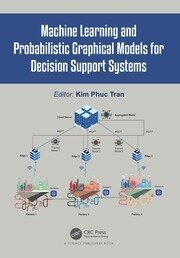
Machine Learning and Probabilistic Graphical Models for Decision Support Systems
Presents recent advancements in research, a review of new methods and techniques, and applications in decision support systems (DSS) with Machine Learning and Probabilistic Graphical Models, which are very effective techniques in gaining knowledge from Big Data and in interpreting decisions. It explores Bayesian network learning, Control Chart, Reinforcement Learning for multicriteria DSS, Anomaly Detection in Smart Manufacturing with Federated Learning, DSS in healthcare, DSS for supply chain management, etc. Researchers and practitioners alike will benefit from this book to enhance the understanding of machine learning, Probabilistic Graphical Models, and their uses in DSS in the context of decision making with uncertainty. The real-world case studies in various fields with guidance and recommendations for the practical applications of these studies are introduced in each chapter.

Machine Learning and Knowledge Extraction ; 5th IFIP TC 5, TC 12, WG 8.4, WG 8.9, WG 12.9 International Cross-Domain Conference, CD-MAKE 2021, Virtual Event, August 17–20, 2021, Proceedings
Constitutes the refereed proceedings of the 5th IFIP TC 5, TC 12, WG 8.4, WG 8.9, WG 12.9 International Cross-Domain Conference, CD-MAKE 2021, held in virtually in August 2021. The 20 full papers and 2 short papers presented were carefully reviewed and selected from 48 submissions. The cross-domain integration and appraisal of different fields provides an atmosphere to foster different perspectives and opinions; it will offer a platform for novel ideas and a fresh look on the methodologies to put these ideas into business for the benefit of humanity.

Machine Learning and Knowledge Discovery in Databases ; European Conference, ECML PKDD 2008, Antwerp, Belgium, September 15-19, 2008, Proceedings, Part II
Constitutes the refereed proceedings of the joint conference on Machine Learning and Knowledge Discovery in Databases: ECML PKDD 2008, held in Antwerp, Belgium, in September 2008.The 100 papers presented in two volumes, together with 5 invited talks, were carefully reviewed and selected from 521 submissions. In addition to the regular papers the volume contains 14 abstracts of papers appearing in full version in the Machine Learning Journal and the Knowledge Discovery and Databases Journal of Springer.

Machine learning and its application to reacting flows: ml and combustion
These two fields, ML and turbulent combustion, have large body of work and knowledge on their own, and this book brings them together and explain the complexities and challenges involved in applying ML techniques to simulate and study reacting flows. This is important as to the world’s total primary energy supply (TPES), since more than 90% of this supply is through combustion technologies and the non-negligible effects of combustion on environment. Although alternative technologies based on renewable energies are coming up, their shares for the TPES is are less than 5% currently and one needs a complete paradigm shift to replace combustion sources. The book covers the current state of the art in these two topics and outlines the challenges involved, merits and drawbacks of using ML for turbulent combustion simulations including avenues which can be explored to overcome the challenges.
Machine learning and deep learning in medical data analytics and healthcare applications
Introduces and explores a variety of schemes designed to empower, enhance, and represent multi-institutional and multi-disciplinary machine learning (ML) and deep learning (DL) research in healthcare paradigms. Serving as a unique compendium of existing and emerging ML/DL paradigms for the healthcare sector, this book demonstrates the depth, breadth, complexity, and diversity of this multi-disciplinary area. It provides a comprehensive overview of ML/DL algorithms and explores the related use cases in enterprises such as computer-aided medical diagnostics, drug discovery and development, medical imaging, automation, robotic surgery, electronic smart records creation, outbreak prediction, medical image analysis, and radiation treatments.

Machine Learning and Data Mining in Pattern Recognition ; 4th International Conference, MLDM 2005, Leipzig, Germany, July 9-11, 2005, Proceedings
Today, artificial intelligence deals with large amounts of data and knowledge and finds new information using machine learning and data mining. Machine learning and data mining are irreplaceable subjects and tools for the theory of pattern recognition and in applications of pattern recognition such as bioinformatics and data retrieval. This was the fourth edition of MLDM in Pattern Recognition which is the main event of Technical Committee 17 of the International Association for Pattern Recognition; it started out as a workshop and continued as a conference in 2003. Today, there are many international meetings which are titled “machine learning” and “data mining”, whose topics are text mining, knowledge discovery, and applications. This meeting from the first focused on aspects of machine learning and data mining in pattern recognition problems. We planned to reorganize classical and well-established pattern recognition paradigms from the viewpoints of machine learning and data mining. Though it was a challenging program in the late 1990s, the idea has inspired new starting points in pattern recognition and effects in other areas such as cognitive computer vision.

Machine learning and data mining for sports analytics ; 7th international workshop, MLSA 2020, Co-located with ECML/PKDD 2020, Ghent, Belgium, September 14–18, 2020, Proceedings
Constitutes the refereed post-conference proceedings of the 7th International Workshop on Machine Learning and Data Mining for Sports Analytics, MLSA 2020, colocated with ECML/PKDD 2020, in Ghent, Belgium, in September 2020. The 11 papers presented were carefully reviewed and selected from 22 submissions. The papers present a variety of topics within the area of sports analytics, including tactical analysis, outcome predictions, data acquisition, performance optimization, and player evaluation.
Machine Learning and Big Data Analytics Paradigms : Analysis, Applications and Challenges
Intended to present the state of the art in research on machine learning and big data analytics. The accepted chapters covered many themes including artificial intelligence and data mining applications, machine learning and applications, deep learning technology for big data analytics, and modeling, simulation, and security with big data. It is a valuable resource for researchers in the area of big data analytics and its applications.
Machine Learning : The Basics
Approaches ML as the computational implementation of the scientific principle. This principle consists of continuously adapting a model of a given data-generating phenomenon by minimizing some form of loss incurred by its predictions. Trains readers to break down various ML applications and methods in terms of data, model, and loss, thus helping them to choose from the vast range of ready-made ML methods.
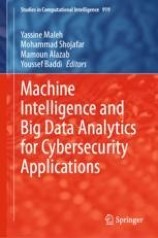
Machine Intelligence and Big Data Analytics for Cybersecurity Applications
Presents the latest advances in machine intelligence and big data analytics to improve early warning of cyber-attacks, for cybersecurity intrusion detection and monitoring, and malware analysis. Cyber-attacks have posed real and wide-ranging threats for the information society. Detecting cyber-attacks becomes a challenge, not only because of the sophistication of attacks but also because of the large scale and complex nature of today’s IT infrastructures. It discusses novel trends and achievements in machine intelligence and their role in the development of secure systems and identifies open and future research issues related to the application of machine intelligence in the cybersecurity field.

Machine Ethics : From Machine Morals to the Machinery of Morality
Offers the first systematic guide to machine ethics, bridging between computer science, social sciences and philosophy. Based on a dialogue between an AI scientist and a novelist philosopher, the book discusses important findings on which moral values machines can be taught and how. In turn, it investigates what kind of artificial intelligence (AI) people do actually want.

Logics in Artificial Intelligence ; 11th European Conference, JELIA 2008, Dresden, Germany, September 28-October 1, 2008. Proceedings
Constitutes the refereed proceedings of the 11th European Conference on Logics in Artificial Intelligence, JELIA 2008, held in Dresden, Germany, Liverpool, in September/October 2008.The 32 revised full papers presented together with 2 invited talks were carefully reviewed and selected from 98 submissions. The papers cover a broad range of topics including belief revision, description logics, non-monotonic reasoning, multi-agent systems, probabilistic logic, and temporal logic.

Logics in artificial intelligence ; 10th European Conference, JELIA 2006, Liverpool, UK, September 13-15, 2006, Proceedings
Constitutes the refereed proceedings of the 10th European Conference on Logics in Artificial Intelligence, JELIA 2006. The 34 revised full papers and 12 revised tool description papers presented together with 3 invited talks were carefully reviewed and selected from 96 submissions. The papers cover a range of topics within the remit of the Conference, such as logic programming, description logics, non-monotonic reasoning, agent theories, automated reasoning, and machine learning.

Logic-Based Program Synthesis and Transformation ; 17th International Symposium, LOPSTR 2007, Kongens Lyngby, Denmark, August 23-24, 2007, Revised Selected Papers
Contains a selectionofthe the paperspresentedatthe 17thInter- tional Symposium on Logic-Based Program Synthesis and Transformation, that was held in Kongens Lyngby, Denmark, August 23-24,2007. LOPSTR thus traditionally solicits papers in the areas of: specification, synthesis, verification, transformation, analysis, optimization, composition, security, reuse, applications andtools, component-baseds of tware development, software architectures, age- based software development and program refnement. Formal proceedings are produced only after the symposium, so that authors can incorporate this feed back in the published papers.
