



الصفحة 3
الصفحة 3

Computational science -- ICCS 2005 ; Vol. 3514 ; 5th International Conference, Atlanta, GA, USA, May 22-25, 2005, Proceedings, Part I
This book constitutes the refereed proceedings of the Fifth International Conference on Computational Science (ICCS 2005) held in Atlanta, Georgia, USA, 2005, Computational science is rapidly maturing as a mainstream discipline. It is central to an ever-expanding variety of ?elds in which computational methods and tools enable new discoveries with greater accuracy and speed. The primary objectives of this conference were to discuss problems and solutions in allareas,toidentifynewissues,toshapefuturedirectionsofresearch,andtohelp users apply various advanced computational techniques. The event highlighted recent developments in algorithms, computational kernels, next generation c- puting systems, tools, advanced numerical methods, data-driven systems, and emerging application ?elds, such as complex systems, ?nance, bioinformatics, computational aspects of wireless and mobile networks, graphics, and hybrid computation.
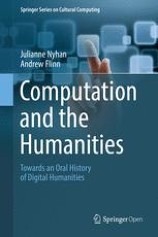
Computation and the humanities : Towards an oral history of digital humanities
This book addresses the application of computing to cultural heritage and the discipline of Digital Humanities that formed around it. Digital Humanities research is transforming how the Human record can be transmitted, shaped, understood, questioned and imagined and it has been ongoing for more than 70 years. However, we have no comprehensive histories of its research trajectory or its disciplinary development. The authors make a first contribution towards remedying this by uncovering, documenting, and analysing a number of the social, intellectual and creative processes that helped to shape this research from the 1950s until the present day.

Communication research into the digital society : Fundamental insights from the Amsterdam School of Communication Research
Media and communication have become ubiquitous in today’s societies andaffect all aspects of life. On an individual level, they impact how we learnabout the world, how we entertain ourselves, and how we interact withothers. On an organisational level, the interactions between media andorganisations, such as political parties, NGOs, businesses and brands, shapeorganisations’ reputation, legitimacy, trust and (financial) performance, aswell as individuals’ consumer, political, social and health behaviours. Atthe societal level, media and communication are crucial for shaping publicopinion on current issues such as climate change, sustainability, diversity,and well-being.

Business agility and information technology diffusion ; IFIP TC8 WG 8.6 International working Conference, May 8-11, 2005, Atlanta, Georgia, USA
Addresses issues related to business agility and the diffusion of Information Technology (IT). Success, even survival, in today's business environment has been made complex and difficult by technologically-based competitive pressure. One promising strategy is to be agile and ready to adapt quickly to changes in the environment or market. Such strategy takes shape as an agile software development, agile manufacturing, agile modeling and agile iterations. In contrast, successful IT diffusion is known to be a process that takes time and careful effort. Many IT projects that succeeded in developing a product have subsequently failed in changing the behavior of the target group when diffusion just didn't happen. Therefore this volume responds to the question: What is the relationship between agility and IT diffusion? The book's scope will cover information systems and technology issues, as well as organizational and managerial issues, related to agility and IT diffusion. The planned perspectives include topics such as diffusion of agile methods, enabling business agility with IT, creating agile environments that facilitate diffusion of IT, theories and frameworks for understanding diffusion and agility issues, best practices relating to business agility and IT diffusion, software process improvement and agility, diffusion studies of specific agile technologies, and impacts of diffusion of IT agile methods.

Brain, vision, and artificial intelligence ; 1st International Symposium, BVAI 2005, Naples, Italy, October 19-21, 2005, Proceedings
This book constitutes the refereed proceedings of the First International Symposium on Brain, Vision and Artificial Intelligence, BVAI 2005, held in Naples, Italy in October 2005. The 48 revised papers presented together with 6 invited lectures were carefully reviewed and selected from more than 80 submissions for inclusion in the book. The papers are addressed to the following main topics and sub-topics: brain basics - neuroanatomy and physiology, development, plasticity and learning, synaptic, neuronic and neural network modelling; natural vision - visual neurosciences, mechanisms and model systems, visual perception, visual cognition; artificial vision - shape perception, shape analysis and recognition, shape understanding; artificial inteligence - hybrid intelligent systems, agents, and cognitive models.

Big Data in Bioeconomy : Results from the European DataBio Project
This book presents the comprehensive outcome of The European DataBio Project, which examined new data-driven methods to shape a bioeconomy. These methods are used to develop new and sustainable ways to use forest, farm and fishery resources.
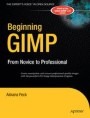
Beginning GIMP : From novice to professional
Beginning GIMP: From Novice to Professional explains how to use the open source image manipulation program, GIMP version 2.4. You'll learn how to install GIMP on Windows, Linux, and MacOS X platforms. Once you've installed the application, you'll learn about the interface and configuration options, and then jump into a quick–and–simple project to familiarize yourself even further. With four–color graphics and screenshots throughout, you'll learn how to prepare camera images for display on web pagesincluding functions like rescaling, cropping, and balancing color. The book also explains with great detail how to utilize layers, paths, and masks. You'll also learn how to draw lines and shapes, use patterns and gradients, and even create your own brushes, patterns, and gradients.

Basic Principles of Fresnel Antenna Arrays
This book provides us a with the basics of the various Fresnel Antenna approaches, in order to achieve low-cost, low-profile, and lightweight antenna in the microwave/millimeter wave band. The book further presents a novel hexagonal FZPL antenna which can be more effectively packed in an array due to its shape.

Architecture of computing systems - ARCS 2006 ; 19th International Conference, Frankfurt / Main, Germany, March 13-16, 2006, Proceedings
Technological progress is one of the driving forces behind the dramatic devel- mentofcomputersystemarchitecturesoverthe pastthreedecades.Eventhough it is quite clear that this development cannot only be measured by the ma- mum number of components on a chip, Moore’s Law may be and is often taken as a simple measure for the non-braked growth of computational power over the years. The more components are realizable on a chip, the more innovative and unconventional ideas can be realized by system architects. As a result, research in computer system architectures is more exciting than ever before. This book coversthe trends that shape the ?eld of computer system archit- tures.

Advances in Mass Data Analysis of Signals and Images in Medicine, Biotechnology and Chemistry ; International Conference, MDA 2006/2007, Leipzig, Germany, July 18, 2007, Selected Papers
The automatic analysis of images and signals in medicine, biotechnology, and chemistry is a challenging and demanding field. Signal-producing procedures by microscopes, spectrometers, and other sensors have found their way into wide fields of medicine, biotechnology, economy, and environmental analysis. With this arises the problem of the automatic mass analysis of signal information. Signal-interpreting systems which generate automatically the desired target statements from the signals are therefore of compelling necessity. The continuation of mass analyses on the basis of classical procedures leads to investments of proportions that are not feasible. New procedures and system architectures are therefore required. The goals of this: Provide a forum for identifying important contributions and opportunities for research on mass data analysis on microscopic images Promote the systematic study of how to apply automatic image analysis and interpretation procedures to that field Show case applications of mass data analysis in biology, medicine, and chemistry Topics of interest include (but are not limited to): Techniques and developments of signal and image producing procedures Object matching and object tracking in microscopic and video microscopic images 1D, 2D, and 3D shape analysis and description

Advances in Information Systems Development : Information Systems Beyond 2020
Features a collection of papers on emerging concepts, significant insights, novel approaches and ideas in information systems development (ISD). It xamines advances in ISD in general and investigates emerging trends that will shape the ISD research agenda beyond 2020. The book gathers selected papers from the 28th International Conference on Information Systems Development held in Toulon, France on August 28-30, 2019.

Advanced concepts for intelligent vision systems ; Vol. 3708 ; 7th International conference, ACIVS 2005, Antwerp, Belgium, September 20-23, 2005, Proceedings
"Thisvolumecollectsthepapersacceptedforpresentationatthe7thInternational Conferenceon Advanced Conceptsfor IntelligentVision Systems (ACIVS 2005). ThoughACIVS is a conference on all areas in image processing, one of its major domains is image and video compression. A third of the selected papers dealt with compression, motion estimation, moving object detection and other video applications. This year, topics related to clustering, pattern recognition and biometrics constituted another third of the conference. The last third was more related to the fundamentals of image processing, namely noise reduction, ?ltering, restorationandimagesegmentation.We wouldliketothankthe invited speakers Fernando Pereira"
Advance Concepts of Image Processing and Pattern Recognition : Effective Solution for Global Challenges
Explains the important concepts and principles of image processing to implement the algorithms and techniques to discover new problems and applications. It contains numerous fundamental and advanced image processing algorithms and pattern recognition techniques to illustrate the framework. It presents essential background theory, shape methods, texture about new methods, and techniques for image processing and pattern recognition. It maintains a good balance between a mathematical background and practical implementation. This book also contains the comparison table and images that are used to show the results of enhanced techniques. This book consists of novel concepts and hybrid methods for providing effective solutions for society. It also includes a detailed explanation of algorithms in various programming languages like MATLAB, Python, etc.

3-D Shape Estimation and Image Restoration : Exploiting Defocus and Motion-Blur
Images contain information about the spatial properties of the scene they depict. When coupled with suitable assumptions, images can be used to infer three-dimensional information. This useful volume concentrates on motion blur and defocus, which can be exploited to infer the 3-D structure of a scene—as well as its radiance properties—and which in turn can be used to generate novel images with better quality. 3-D Shape Estimation and Image Restoration presents a coherent framework for the analysis and design of algorithms to estimate 3-D shape from defocused and motion blurred images, and to eliminate defocus and motion blur to yield "restored" images. It provides a collection of algorithms that are optimal with respect to the chosen model and estimation criterion.
3D Imaging, Analysis and Applications
This textbook is designed for postgraduate studies in the field of 3D Computer Vision. It also provides a useful reference for industrial practitioners; for example, in the areas of 3D data capture, computer-aided geometric modelling and industrial quality assurance. This second edition is a significant upgrade of existing topics with novel findings. Additionally, it has new material covering consumer-grade RGB-D cameras, 3D morphable models, deep learning on 3D datasets, as well as new applications in the 3D digitization of cultural heritage and the 3D phenotyping of crops.
