



الصفحة 3
الصفحة 3

Logic for Programming, Artificial Intelligence, and Reasoning ; Vol. 3835 : 12th International Conference, LPAR 2005, Montego Bay, Jamaica, December 2-6, 2005, Proceedings
Constitutes the refereed proceedings of the 12th International Conference on Logic for Programming, Artificial Intelligence, and Reasoning, LPAR 2005. This book presents 46 revised papers with 3 abstracts, addressing issues in logic programming, logic-based program manipulation, formal method, automated reasoning, and various kinds of AI logics.

Logic for Programming, Artificial Intelligence, and Reasoning ; Vol. 3452 : 11th International Workshop, LPAR 2004, Montevideo, Uruguay, March 14-18, 2005, Proceedings
Contains the papers presented at the 11th International Conference on Logic for Programming, Arti'cial Intelligence, and Reasoning (LPAR), held from March 14 to 18, 2005, in Montevideo, Uruguay, together with the 5th - ternational Workshop on the Implementation of Logics (organized by Stephan Schulz and Boris Konev) and the Workshop on Analytic Proof Systems (or- nized by Matthias Baaz). The call for papers attracted 77 paper submissions, each of which was - viewed by at least three expert reviewers. The ?nal decisions on the papers were taken during an electronic Program Committee meeting held on the Internet. The Internet-based submission, reviewing, and discussion software EasyChair, provided by the second PC co-chair, supported each stage of the reviewing p- cess.

Logic for Programming, Artificial Intelligence, and Reasoning ; 15th International Conference, LPAR 2008, Doha, Qatar, November 22-27, 2008. Proceedings
This book constitutes the refereed proceedings of the 15th International Conference on Logic for Programming, Artificial Intelligence, and Reasoning, LPAR 2008, which took place in Doha, Qatar, during November 22-27, 2008.The 45 revised full papers presented together with 3 invited talks were carefully revised and selected from 153 submissions. The papers address all current issues in automated reasoning, computational logic, programming languages and their applications and are organized in topical sections on automata, linear arithmetic, verification knowledge representation, proof theory, quantified constraints, as well as modal and temporal logics.

Logic for programming, artificial intelligence, and reasoning ; 14th International Conference, LPAR 2007, Yerevan, Armenia, October 15-19, 2007, Proceedings
This book constitutes the refereed proceedings of the 14th International Conference on Logic for Programming, Artificial Intelligence, and Reasoning, LPAR 2007, held in Yerevan, Armenia.

Logic for Programming, Aritficial Intelligence, and Reasoning ; 13th International Conference, LPAR 2006, Phnom Penh, Cambodia, November 13-17, 2006, Proceedings
This book constitutes the refereed proceedings of the 13th International Conference on Logic for Programming, Artificial Intelligence, and Reasoning, LPAR 2006, held in Phnom Penh, Cambodia in November 2006. The 38 revised full papers presented together with one invited talk were carefully reviewed and selected from 96 submissions.

Logic Based Program Synthesis and Transformation ; Vol. 3901 ; 15th International Symposium, LOPSTR 2005, London, UK, September 7-9, 2005, Revised Selected Papers
This book constitutes the thoroughly refereed post-proceedings of the 15th International Symposium on Logic Based Program Synthesis and Transformation, LOPSTR 2005, held in September 2005. The papers are organized in topical sections on tools for program development, program transformations, and software development and program analysis.

Leveraging applications of formal methods, verification and validation : Verification Principles ; 9th International Symposium on Leveraging Applications of Formal Methods, ISoLA 2020, Rhodes, Greece, October 20–30, 2020, Proceedings, Part I
Constitutes the refereed proceedings of the 9th International Symposium on Leveraging Applications of Formal Methods, ISoLA 2020, which was planned to take place during October 20–30, 2020, on Rhodes, Greece. The papers presented were carefully reviewed and selected for inclusion in the proceedings. Each volume focusses on an individual topic with topical section headings within the volume : Part I, Verification Principles : Modularity and (De-)Composition in Verification ; X-by-Construction: Correctness meets Probability ; 30 Years of Statistical Model Checking ; Verification and Validation of Concurrent and Distributed Systems.

Leveraging applications of formal methods, verification and validation : Engineering Principles ; 9th International Symposium on Leveraging Applications of Formal Methods, ISoLA 2020, Rhodes, Greece, October 20–30, 2020, Proceedings, Part II
Constitutes the refereed proceedings of the 9th International Symposium on Leveraging Applications of Formal Methods, ISoLA 2020, which was planned to take place during October 20–30, 2020, on Rhodes, Greece. The event itself was postponed to 2021 due to the COVID-19 pandemic. The papers presented were carefully reviewed and selected for inclusion in the proceedings. Each volume focusses on an individual topic with topical section headings within the volume: Part II, Engineering Principles : Automating Software Re-Engineering ; Rigorous Engineering of Collective Adaptive Systems.

Leveraging applications of formal methods, verification and validation : Applications ; 9th International Symposium on Leveraging Applications of Formal Methods, ISoLA 2020, Rhodes, Greece, October 20–30, 2020, Proceedings, Part III
The three-volume set LNCS 12476 - 12478 constitutes the refereed proceedings of the 9th International Symposium on Leveraging Applications of Formal Methods, ISoLA 2020, which was planned to take place during October 20–30, 2020, on Rhodes, Greece. The event itself was postponed to 2021 due to the COVID-19 pandemic. The papers presented were carefully reviewed and selected for inclusion in the proceedings. Each volume focusses on an individual topic with topical section headings within the volume: Part III, Applications: Reliable Smart Contracts: State-of-the-art, Applications, Challenges and Future Directions; Automated Verification of Embedded Control Software; Formal methods for DIStributed COmputing in future RAILway systems.

Languages and Compilers for Parallel Computing ; 21th International Workshop, LCPC 2008, Edmonton, Canada, July 31 - August 2, 2008, Revised Selected Papers
This book constitutes the thoroughly refereed post-conference proceedings of the 21th International Workshop on Languages and Compilers for Parallel Computing, LCPC 2008, held in Edmonton, Canada, in July/August 2008.The 18 revised full papers and 6 revised short papers presented were carefully reviewed and selected from 35 submissions. The papers address all aspects of languages, compiler techniques, run-time environments, and compiler-related performance evaluation for parallel and high-performance computing and comprise

Knowledge discovery, knowledge engineering and knowledge management ; 10th International Joint Conference, IC3K 2018, Seville, Spain, September 18-20, 2018, Revised Selected Papers
Constitutes the thoroughly refereed proceedings of the 10th International Joint Conference on Knowledge Discovery, Knowledge Engineering and Knowledge Management, IC3K 2018, held in Seville, Spain, in September 2018. The 12 full papers presented were carefully reviewed and selected from 167 submissions. The papers are organized in topical sections on knowledge discovery and information retrieval; knowledge engineering and ontology development; and knowledge management and information sharing.
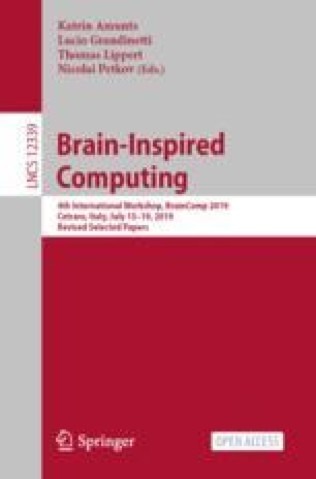
Brain-inspired computing ; 4th International Workshop, BrainComp 2019, Cetraro, Italy, July 15–19, 2019, Revised Selected Papers
The 11 papers presented in this volume were carefully reviewed and selected for inclusion in this book. They deal with research on brain atlasing, multi-scale models and simulation, HPC and data infra-structures for neuroscience as well as artificial and natural neural architectures.
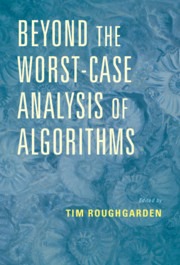
Beyond the Worst-Case Analysis of Algorithms
There are no silver bullets in algorithm design, and no single algorithmic idea is powerful and flexible enough to solve every computational problem. Nor are there silver bullets in algorithm analysis, as the most enlightening method for analyzing an algorithm often depends on the problem and the application. However, typical algorithms courses rely almost entirely on a single analysis framework, that of worst-case analysis, wherein an algorithm is assessed by its worst performance on any input of a given size. The purpose of this book is to popularize several alternatives to worst-case analysis and their most notable algorithmic applications, from clustering to linear programming to neural network training. Forty leading researchers have contributed introductions to different facets of this field, emphasizing the most important models and results, many of which can be taught in lectures to beginning graduate students in theoretical computer science and machine learning.
Beginning SQL Server 2005 for Developers : From novice to professional
SQL Server 2005 will increase your programming options, productivity, analysis, and database management. If you have some basic knowledge of relational databases and want to start a career as a developer using SQL Server, then this book is your ideal first step. It explains the core jobs and roles for developing a database in both SQL Server 2000 and 2005. This book features practical steps to help you overcome issues youre likely to encounter. You'll learn to use SQL for querying, inserting, updating, and deleting data. You'll also learn how to back up and restore databases for basic administration in SQL Server.
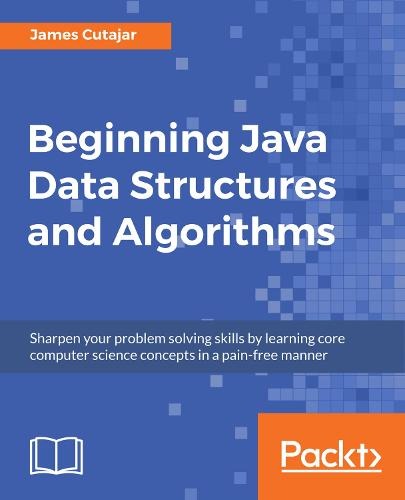
Beginning Java Data Structures and Algorithms : Sharpen your problem solving skills by learning core computer science concepts in a pain-free manner
Teaches you tools that you can use to build efficient applications. It starts with an introduction to algorithms and big O notation, later explains bubble, merge, quicksort, and other popular programming patterns. You’ll also learn about data structures such as binary trees, hash tables, and graphs. The book progresses to advanced concepts, such as algorithm design paradigms and graph theory. By the end of the book, you will know how to correctly implement common algorithms and data structures within your applications.
Beginning J2ME : From novice to professional
Have you thought about building games for your cell phone or other wireless devices? Whether you are a first–time wireless Java developer, or an experienced professional Beginning J2ME, Third Edition brings exciting wireless and mobile Java application development right to your door! This book will empower you with numerous topics: sound HTTPS support, user interface API enhancements, sound/music API, a Game API, 3D graphics, and Bluetooth. Further, this book is easy to read and includes many practical, hands–on, and ready–to–use code examples. You will not be disappointed.

Automatic Quantum Computer Programming : A Genetic Programming Approach
Computer science will be radically transformed if ongoing efforts to build large-scale quantum computers eventually succeed and if the properties of these computers meet optimistic expectations. Nevertheless, computer scientists still lack a thorough understanding of the power of quantum computing, and it is not always clear how best to utilize the power that it is understood. This dilemma exists because quantum algorithms are difficult to grasp and even more difficult to write. Despite large-scale international efforts, only a few important quantum algorithms are documented, leaving many essential questions about the potential of quantum algorithms unanswered.

Automated deduction – CADE 28 ; 28th International Conference on automated deduction, Virtual Event, July 12–15, 2021, Proceedings
This book constitutes the proceeding of the 28th International Conference on Automated Deduction, CADE 28, held virtually in July 2021. The 29 full papers and 7 system descriptions presented together with 2 invited papers were carefully reviewed and selected from 76 submissions. CADE is the major forum for the presentation of research in all aspects of automated deduction, including foundations, applications, implementations, and practical experience. The papers are organized in the following topics: Logical foundations; theory and principles; implementation and application; ATP and AI; and system descriptions.
Architecture of computing systems ; 34th International Conference, ARCS 2021, Virtual Event, June 7–8, 2021, Proceedings
This book constitutes the proceedings of the 34th International Conference on Architecture of Computing Systems, ARCS 2021, held virtually in July 2021. The 12 full papers in this volume were carefully reviewed and selected from 24 submissions. 2 workshop papers (VEFRE) are also included. ARCS has always been a conference attracting leading-edge research outcomes in Computer Architecture and Operating Systems, including a wide spectrum of topics ranging from fully integrated, self-powered embedded systems up to high-performance computing systems. It also provides a platform covering newly emerging and cross-cutting topics, such as autonomous and ubiquitous systems, reconfigurable computing and acceleration, neural networks and artificial intelligence. The selected papers cover a variety of topics from the ARCS core domains, including heterogeneous computing, memory optimizations, and organic computing.
Algorithms – ESA 2005 ; 13th Annual European Symposium, Palma de Mallorca, Spain, October 3-6, 2005, Proceedings
This volume contains the 75 contributed papers and the abstracts of the threeinvited lectures presented at the 13th Annual European Symposium on Algo-rithms (ESA 2005), held in Spain, 2005. respectively.Papers were solicited in all areas of algorithmic research, including but notlimited to algorithmic aspects of networks, approximation and on-line algo-rithms, computational biology, computational geometry, computational financeand algorithmic game theory, data structures, database and information re-trieval, external memory algorithms, graph algorithms, graph drawing, machinelearning, mobile computing, pattern matching and data compression, quantumcomputing, and randomized algorithms. The algorithms could be sequential,distributed, or parallel. Submissions were especially encouraged in the area ofmathematical programming and operations research, including combinatorialoptimization, integer programming, polyhedral combinatorics, and semidefiniteprogramming.Each extended abstract was submitted to one of the two tracks.
