



الصفحة 3
الصفحة 3

Formal Methods and Software Engineering ; 10th International Conference on Formal Engineering Methods, ICFEM 2008, Kitakyushu-City, Japan, October 27-31, 2008. Proceedings
This book constitutes the refereed proceedings of the 10th International Conference on Formal Engineering Methods, ICFEM 2008, held in Kitakyushu-City, Japan, October 2008.The 20 revised full papers together with 3 invited talks presented were carefully reviewed and selected from 62 submissions. The papers address all current issues in formal methods and their applications in software engineering. They are organized in topical sections on specification and verification; testing; verification; model checking and analysis; tools; application of formal methods; semantics.

FM 2008 : Formal methods ; 15th International symposium on formal methods, Turku, Finland, May 26-30, 2008 Proceedings
This book presents the refereed proceedings of the 15th International Symposium on Formal Methods, FM 2008, held in Turku, Finland in May 2008.The 23 revised full papers presented together with 4 invited contributions and extended abstracts of 5 invited industrial presentations were carefully reviewed and selected from 106 submissions. The papers are organized in topical sections on programming language analysis, verification, real-time and concurrency, grand chellenge problems, fm practice, runtime monitoring and analysis, communication, constraint analysis, and design.

Finite Difference Computing with Exponential Decay Models
This text provides a very simple, initial introduction to the complete scientific computing pipeline: models, discretization, algorithms, programming, verification, and visualization. The pedagogical strategy is to use one case study – an ordinary differential equation describing exponential decay processes – to illustrate fundamental concepts in mathematics and computer science. The book is easy to read and only requires a command of one-variable calculus and some very basic knowledge about computer programming. Contrary to similar texts on numerical methods and programming, this text has a much stronger focus on implementation and teaches testing and software engineering in particular.

Fast software encryption ; 15th International Workshop, FSE 2008, Lausanne, Switzerland, February 10-13, 2008, Revised Selected Papers
Constitutes the thoroughly refereed proceedings of the 15th International Workshop on Fast Software Encryption, FSE 2008, held in Lausanne, Switzerland in February 2008.The 26 revised full papers presented together with 4 short papers were carefully reviewed and selected from 72 submissions. The papers address all current aspects of fast and secure primitives for symmetric cryptology and are organized in topical sections on SHA collisions, new hash function designs, block cipher cryptanalysis, implementation aspects, hash function cryptanalysis, stream cipher cryptanalysis, security bounds, and entropy.
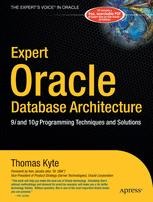
Expert Oracle Database Architecture : 9i and 10g Programming Techniques and Solutions
This is a defining book on the Oracle database for any developer or database administrator who works with Oracle-driven database applications. Tom Kyte has a simple philosophy: you can treat Oracle as a black box and just stick data into it or you can understand how it works and exploit it as a powerful computing environment. If you choose the latter, then you will find that there are few information management problems that you cannot solve quickly and elegantly. Expert Oracle Database Architecture is the first of a three-book series that completely explores and defines the Oracle database. It covers all of the most important Oracle architecture features, including: Files, memory structures and processes / Locking and latching / Transactions, concurrency and multi-versioning / Tables and Indexes / Datatypes / Partitioning and parallelism Each feature is taught in a proof-by-example manner, not only discussing what it is, but also how it works, how to implement software using it, and the common pitfalls associated with it.

Expert Oracle Database 10g Administration
This book covers the new 10g management and performance tools and provides essential primers on Unix, Linux and Windows NT administration and on core SQL and PL/SQL programming techniques. And it provides everything the new and aspring Oracle database administrator needs to build and administer complex Oracle 10g databases.

Experimental Algorithms ; 7th International Workshop, WEA 2008 Provincetown, MA, USA, May 30-June 1, 2008 Proceedings
The Workshop on Experimental Algorithms, WEA, is intended to be an international forum for research on the experimental evaluation and engineering of algorithms, as well as in various aspects of computational optimization and its applications. The emphasis of the workshop is the use of experimental me- ods to guide the design, analysis, implementation, and evaluation of algorithms, heuristics, and optimization programs. WEA 2008 was held at the Provincetown Inn, Provincetown, MA, USA, on May 30 – June 1, 2008. This was the seventh workshop of the series.

Evolvable systems : From biology to hardware ; 8th International Conference, ICES 2008, Prague, Czech Republic, September 21-24, 2008. Proceedings
This book constitutes the refereed proceedings of the 8th International Conference on Evolvable Systems, ICES 2008, held in Prague, Czech Republic, in September 2008.The 28 revised full papers and 14 revised poster papers presented were carefully reviewed and selected from 52 submissions. The papers are organized in topical sections on evolution of analog circuits, evolution of digital circuits, hardware-software codesign and platforms for adaptive systems, evolutionary robotics, development, real-world applications, evolutionary networking, evolvable artificial neural networks, and transistor-level circuit evolution.

Evolutionary computation, machine learning and data mining in bioinformatics ; 6th European Conference, EvoBIO 2008, Naples, Italy, March 26-28, 2008. Proceedings
The feld of bioinformatics has two main objectives: the creation and main- nance of biological databases, and the discovery of knowledge from life sciences data in order to unravel the mysteries of biological function, leading to new drugs and therapies for human disease. Life sciences data come in the form of biological sequences, structures, pathways, or literature. One major aspect of discovering biological knowledge is to search, predict, or model specifc infortioninagivendatasetinorderto generate new in teresting knowledge.Computer science methods such as evolutionary computation, machine learning, and data mining all have a great deal to ofer the feld of bioinformatics.

ECOOP 2008 - Object-Oriented Programming ; 22nd European Conference Paphos, Cyprus, July 7-11, 2008 Proceedings
This book constitutes the refereed proceedings of the 22nd European Conference on Object-Oriented Programming, ECOOP 2008, held in Paphos, Cyprus, in July 2008.
Distributed computing and networking ; 9th International Conference, ICDCN 2008, Kolkata, India, January 5-8, 2008. Proceedings
This book constitutes the refereed proceedings of the 9th International Conference on Distributed Computing and Networking, ICDCN 2008 - formerly known as IWDC (International Workshop on Distributed Computing) - held in Kolkata, India, in January 2008.
Distributed Computing ; 22nd International Symposium, DISC 2008, Arcachon, France, September 22-24, 2008. Proceedings
This book constitutes the refereed proceedings of the 22nd International Symposium on Distributed Computing, DISC 2008, held in Arcachon, France, in September 2008.

Distributed Applications and Interoperable Systems ; 8th IFIP WG 6.1 International Conference, DAIS 2008, Oslo, Norway, June 4-6, 2008. Proceedings
This volume contains the proceedings of DAIS 2008, the 8th IFIP International Conference on Distributed Applications and Interoperable Systems.

Digital watermarking ; 6th International Workshop, IWDW 2007 Guangzhou, China, December 3-5, 2007 Proceedings
This book constitutes the refereed proceedings of the 6th International Workshop, IWDW 2007, held in Guangzhou, China, in December 2007.

Diagrammatic Representation and Inference ; 5th International Conference, Diagrams 2008, Herrsching, Germany, September 19-21, 2008. Proceedings
This book constitutes the refereed proceedings of the 5th International Conference on Theory and Application of Diagrams, Diagrams 2008, held in Herrsching, Germany, in September 2008.

Design Patterns in Modern C++20 : Reusable Approaches for Object-Oriented Software Design
As well as covering traditional design patterns, this book fleshes out new design patterns and approaches that will be useful to modern C++ developers. Author Dmitri Nesteruk presents concepts as a fun investigation of how problems can be solved in different ways, along the way using varying degrees of technical sophistication and explaining different sorts of trade-offs. You will: Use creational patterns such as builder, factories, prototype and singleton / Implement structural patterns such as adapter, bridge, decorator, facade and more / Work with the behavioral patterns such as chain of responsibility, command, iterator, mediator and more / Apply functional design patterns such as the Maybe Monad
Data Management in Grid and Peer-to-Peer Systems ; 1st International Conference, Globe 2008, Turin, Italy, September 3, 2008. Proceedings
This book constitutes the refereed proceedings of the First International Conference on Data Management in Grid and Peer-to-Peer Systems, Globe 2008, held in Turin, Italy, in September 2008.

Coordination, organizations, institutions, and norms in agent system III ; COIN 2007 International Workshops COIN@AAMAS 2007, Honolulu, HI, USA, May 14, 2007 COIN@MALLOW 2007, Durham, UK, September 3-4, 2007 Revised Selected Papers
This book constitutes the refereed post-workshop proceedings of the International Workshop on Coordination, Organization, Institutions and Norms in Agent Systems, COIN 2007.

Coordination models and languages ; 10th International Conference, COORDINATION 2008, Oslo, Norway, June 4-6, 2008. Proceedings
This book constitutes the refereed proceedings of the 10th International Conference on Coordination Models and Languages, COORDINATION 2008, held in Oslo, Norway, in June 2008, as one of the federated conferences on Distributed Computing Techniques, DisCoTec 2008.

Constraint solving and language processing
Contains selected and thoroughly revised papers plus contributions from invited speakers presented at the First International Workshop on C- straint Solving and Language Processing, held in Roskilde, Denmark, September 1–3, 2004. Constraint Programming and Constraint Solving, in particular Constraint Logic Programming, appear to be a very promising platform, perhaps the most promising present platform, for bringing forward the state of the art in natural language processing, this due to the naturalness in speci?cation and the direct relation to e?cient implementation. Language, in the present context, may - fer to written and spoken language, formal and semiformal language, and even general input data to multimodal and pervasive systems, which can be handled in very much the same ways using constraint programming. The notion of constraints, with slightly differing meanings, apply in the characterization of linguistic and cognitive phenomena, in formalized linguistic m- els as well as in implementation-oriented frameworks. Programming techniques for constraint solving have been, and still are, in a period with rapid devel- ment of new eficient methods and paradigms from which language processing can prompt. A common metaphor for human language processing is one big c- straint solving process in which the differently specified linguistic and cognitive phases take place in parallel and with mutual cooperation, which ?ts quite well with current constraint programming paradigms.
