



الصفحة 28
الصفحة 28

Communications and Multimedia Security ; Vol. 175 ; 8th IFIP TC-6 TC-11 Conference on Communications and Multimedia Security, Sept. 15-18, 2004, Windermere, The Lake District, United Kingdom
Communications and Multimedia Security is an essential reference for both academic and professional researchers in the fields of Communications and Multimedia Security. This state-of-the-art volume presents the proceedings of the Eighth Annual IFIP TC-6 TC-11 Conference on Communications and Multimedia Security, September 2004, in Windermere, UK. The papers presented here represent the very latest developments in security research from leading people in the field. The papers explore a wide variety of subjects including privacy protection and trust negotiation, mobile security, applied cryptography, and security of communication protocols. Of special interest are several papers which addressed security in the Microsoft .Net architecture, and the threats that builders of web service applications need to be aware of. The papers were a result of research sponsored by Microsoft at five European University research centers. This collection will be important not only for multimedia security experts and researchers, but also for all teachers and administrators interested in communications security.

Communication research into the digital society : Fundamental insights from the Amsterdam School of Communication Research
Media and communication have become ubiquitous in today’s societies andaffect all aspects of life. On an individual level, they impact how we learnabout the world, how we entertain ourselves, and how we interact withothers. On an organisational level, the interactions between media andorganisations, such as political parties, NGOs, businesses and brands, shapeorganisations’ reputation, legitimacy, trust and (financial) performance, aswell as individuals’ consumer, political, social and health behaviours. Atthe societal level, media and communication are crucial for shaping publicopinion on current issues such as climate change, sustainability, diversity,and well-being.
Communicating science and technology in society
Addresses the engagement between science and society from multiple viewpoints. At a time when trust in experts is being questioned, misinformation is rife and scientific and technological development show growing social impact, the volume examines the challenges in involving the public in scientific debates and decisions. It takes into account societal needs and concerns in research, and analyses the interface between the roles of institutions and individuals. From environmental challenges to science communication, participatory technological design to animal experimentation, and transdisciplinarity to norms and values in science, the volume brings together research on areas in which scientists and citizens interact, across diverse, often understudied, socio-cultural contexts in Europe.

Clear Blogging : How People Blogging Are Changing the World and How You Can Join Them
Clear Blogging sets out to answer in non-technical terms what blogging has to offer, and why and how you should blog. Clear Blogging will show you why blogging has shaken up mainstream media, and how a blogger can end up on CNN.

Classification of covid-19 in lung images
The novel coronavirus 2019 (COVID-2019), which first appeared in Wuhan city of China in December 2019, spread rapidly around the world and became a pandemic. It has caused a devastating effect on both daily lives, public health, and the global economy. It is critical to detect the positive cases as early as possible so as to prevent the further spread of this epidemic and to quickly treat affected patients. The need for auxiliary diagnostic tools has increased as there are no accurate automated toolkits available. Recent findings obtained using radiology imaging techniques suggest that such images contain salient information about the COVID-19 virus. Application of advanced artificial intelligence (AI) techniques coupled with radiological imaging can be helpful for the accurate detection of this disease, and can also be assistive to overcome the problem of a lack of specialized physicians in remote villages.
Classification and Modeling with Linguistic Information Granules : Advanced Approaches to Linguistic Data Mining
Many approaches have already been proposed for classification and modeling in the literature. These approaches are usually based on mathematical mod els. Computer systems can easily handle mathematical models even when they are complicated and nonlinear (e.g., neural networks). On the other hand, it is not always easy for human users to intuitively understand mathe matical models even when they are simple and linear. This is because human information processing is based mainly on linguistic knowledge while com puter systems are designed to handle symbolic and numerical information. A large part of our daily communication is based on words. We learn from various media such as books, newspapers, magazines, TV, and the Inter net through words. We also communicate with others through words. While words play a central role in human information processing, linguistic models are not often used in the fields of classification and modeling. If there is no goal other than the maximization of accuracy in classification and modeling, mathematical models may always be preferred to linguistic models. On the other hand, linguistic models may be chosen if emphasis is placed on interpretability.

Citation Analysis in Research Evaluation
This book is written for members of the scholarly research community, and for persons involved in research evaluation and research policy. More specifically, it is directed towards the following four main groups of readers: – All scientists and scholars who have been or will be subjected to a quantitative assessment of research performance using citation analysis. – Research policy makers and managers who wish to become conversant with the basic features of citation analysis, and about its potentialities and limitations. – Members of peer review committees and other evaluators, who consider the use of citation analysis as a tool in their assessments. – Practitioners and students in the field of quantitative science and technology studies, informetrics, and library and information science. Citation analysis involves the construction and application of a series of indicators of the ‘impact’, ‘influence’ or ‘quality’ of scholarly work, derived from citation data, i.e. data on references cited in footnotes or bibliographies of scholarly research publications. Such indicators are applied both in the study of scholarly communication and in the assessment of research performance. The term ‘scholarly’ comprises all domains of science and scholarship, including not only those fields that are normally denoted as science – the natural and life sciences, mathematical and technical sciences – but also social sciences and humanities.

Chinese Spoken Language, Processing ; 5th International Symposium, ISCSLP 2006, Singapore, December 13-16, 2006, Proceedings
This book contains a selection of refereed papers presented at the Fifth Inter- tionalSymposium on Chinese Spoken Language Processing(ISCSLP 2006), held in Singapore during December 13-16, 2006. ISCSLP is a biennial conference for scientists, researchers, and practitionersto reportand discuss the latest progress in all scientifc and technological aspects of Chinese spoken language processing (CSLP). The previous four conferences were held in Singapore (ISCSLP 1998), Beijing (ISCSLP 2000), Taipei (ISCSLP 2002) and Hong Kong (ISCSLP 2004), respectively.

Chaos and fractals : New frontiers of science
Covers the central ideas and concepts of chaos and fractals as well as many related topics including: the Mandelbrot set, Julia sets, cellular automata, L-systems, percolation and strange attractors.

Certification and security in inter-organizational E-services ; IFIP 18th World Computer Congress, August 22-27, 2004, Toulouse, France
This collection of papers offers real-life application experiences, research results and methodological proposals of direct interest to systems experts and users in governmental, industrial and academic communities. This book also documents several important developments. The uptake of distributed computational infrastructure oriented to service provision, like Web-Services and Grid, is making C&S even more important. E-services based on legacy systems managed by autonomous and independent organizations, a common situation in the public administration sector, increase overall complexity. The increased presence and use of e-service IT-infrastructures depends on the critical ability required for all security issues, from the basic (availability, authentication, integrity, confidentiality) to the more complex (e.g. authorization, non-repudiation).
Case-Based Approximate Reasoning
Case-based reasoning (CBR) has received a great deal of attention in recent years and has established itself as a core methodology in the field of artificial intelligence. The key idea of CBR is to tackle new problems by referring to similar problems that have already been solved in the past. More precisely, CBR proceeds from individual experiences in the form of cases. The generalization beyond these experiences typically relies on a kind of regularity assumption demanding that 'similar problems have similar solutions'. Making use of different frameworks of approximate reasoning and reasoning under uncertainty, notably probabilistic and fuzzy set-based techniques, this book develops formal models of the above inference principle, which is fundamental to CBR. The case-based approximate reasoning methods thus obtained especially emphasize the heuristic nature of case-based inference and aspects of uncertainty in CBR. This way, the book contributes to a solid foundation of CBR which is grounded on formal concepts and techniques from the aforementioned fields. Besides, it establishes interesting relationships between CBR and approximate reasoning, which not only cast new light on existing methods but also enhance the development of novel approaches and hybrid systems.

Calculus : One and several variables
Provides clear calculus content to help them master these concepts and understand its relevance to the real world. Throughout the pages, it offers a perfect balance of theory and applications to elevate their mathematical insights. Readers will also find that the book emphasizes both problem-solving skills and real-world applications.
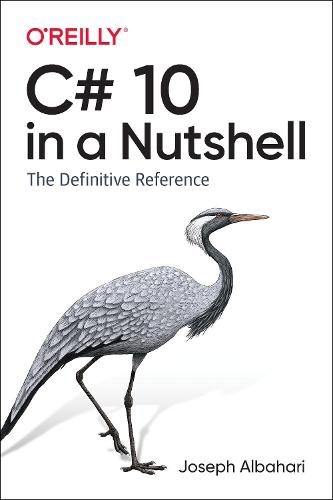
C# 10 in a Nutshell : The Definitive Reference
When you have questions about C# 10.0 or .NET 6, this guide has the answers you need. C# is a language of unusual flexibility and breadth, but with its continual growth, there's so much more to learn. In the tradition of O'Reilly's Nutshell guides, this thoroughly updated edition is simply the best one-volume reference to the C# language available today. Organized around concepts and use cases, this comprehensive and complete reference provides intermediate and advanced programmers with a concise map of C# and .NET that also plumbs significant depths

Business process management ; Vol. 3649 ; 3rd International Conference, BPM 2005, Nancy, France, September 5-8, 2005, Proceedings
This volume contains the proceedings of the 3rd International Conference on Business Process Management (BPM 2005), organized by LORIA in Nancy, France, 2005. This year, BPM included several innovations with respect to previous e- tions, most notably the addition of an industrial program and of co-located workshops. This was the logical result of the signi?cant (and still growing) - dustrial interest in the area and of the broadening of the research communities working on BPM topics, includ Information Systems Applications (incl. Internet) / Information Storage and Retrieval / User Interfaces and Human Computer Interaction / Computers and Society / Management of Computing and Information Systems / IT in Business
Business process management : Concepts, languages, architectures
Business process management is usually treated from two different perspectives: business administration and computer science. While business administration professionals tend to consider information technology as a subordinate aspect for experts to handle, by contrast computer scientists often consider business goals and organizational regulations as terms that do not deserve much thought but require the appropriate level of abstraction.This textbook is ideally suited for classes on business process management, information systems architecture, and workflow management. It is also valuable for project managers and IT professionals working in business process management.
Building XNA 2.0 Games : A Practical Guide for Independent Game Development
Building XNA 2.0 Games: A Practical Guide for Independent Game Development is written by James Silva, who recently won the prestigious Microsoft Dream Build Play game competition with his award–winning game, The Dishwasher: Dead Samurai. Building XNA 2.0 Games: A Practical Guide for Independent Game Development is an in–depth and exclusive look into the entire XNA game development process and includes the creation of a software game masterpiece. James Silva guides you through the process he took to build his award–winning title, from concept to reality. He reveals tips and techniques for creating a polished, high–quality game with very few resources, while bridging the gap between coding and art.

Building the Infrastructure for Cloud Security : A Solutions view
For cloud users and providers alike, security is an everyday concern, yet there are very few books covering cloud security as a main subject. This book will help address this information gap from an Information Technology solution and usage-centric view of cloud infrastructure security. The book highlights the fundamental technology components necessary to build and enable trusted clouds. Here also is an explanation of the security and compliance challenges organizations face as they migrate mission-critical applications to the cloud, and how trusted clouds, that have their integrity rooted in hardware, can address these challenges.

Building a collaborative project management system: (Click)
Speaking on construction projects, we can imagine the huge amount of work, effort and time spent to complete any project. Because of the need for tools that facilitate the process of managing and tracking work and managing huge data and information and making it common to all the stockholder involved in the project, this system has been found to meet those needs of engineers, where it can manage employees, materials ,workers and the huge amount of data and enables it to track the progress of work .This system provides the possibility of communication between managers and this The system is considered a tool of the BIM system, which stands for Building Information Modeling.
Brainlesion: Glioma, Multiple Sclerosis, Stroke and Traumatic Brain Injuries ; 7th International Workshop, BrainLes 2021, Held in Conjunction with MICCAI 2021, Virtual Event, September 27, 2021, Revised Selected Papers, Part I
The content of thebook covers the current state-of-the-art literature on federated learning applications for cancer research and Vclinical oncology analysis, as well as an overview of the deep learning approaches improving the current standard of care for brain lesions and current neuroimaging challenges. It is also focusing on the accepted BrainLes workshop submissions, is to provide an overview of new advances of medical image analysis in all the aforementioned brain pathologies. It brings together researchers from the medical image analysis domain, neurologists, and radiologists working on at least one of these diseases. The aim is to consider neuroimaging biomarkers used for one disease applied to the other diseases.

Brain thoughts recognition
Humans controlling machines with their minds may sound like something from a scifi movie, but it’s becoming a reality through brain-computer interfaces BCI. Where BCI technology allows a human brain and an external device to talk to each other—to exchange signals. It gives humans the ability to directly control machines, without the physical constraints of the body. There are two ways to implement the BCI: Noninvasive tools often use sensors applied on or near the head to track and record brain activity, or Invasive BCI would require surgery. Electronic devices would need to be implanted beneath the skull, directly into the brain, to target specific sets of neurons. In order to implement a non-invasive BCI in a mobile phone, this study developed a mobile application to help paralyzed people who do not have the ability to use their phones to spend their basic daily needs, such as using the keyboard and interacting with PDF, etc.
