



الصفحة 27
الصفحة 27
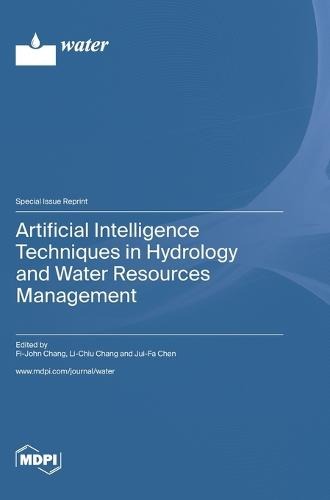
Artificial intelligence techniques in hydrology and water resources management
The sustainable management of water cycles is crucial in the context of climate change and global warming. It involves managing global, regional, and local water cycles, as well as urban, agricultural, and industrial water cycles, to conserve water resources and their relationships with energy, food, microclimates, biodiversity, ecosystem functioning, and anthropogenic activities. Hydrological modeling is indispensable for achieving this goal, as it is essential for water resources management and the mitigation of natural disasters. In recent decades, the application of artificial intelligence (AI) techniques in hydrology and water resources management has led to notable advances. In the face of hydro-geo-meteorological uncertainty, AI approaches have proven to be powerful tools for accurately modeling complex, nonlinear hydrological processes and effectively utilizing various digital and imaging data sources, such as ground gauges, remote sensing tools, and in situ Internet of Things (IoT) devices.

Artificial intelligence in theory and practice ; IFIP 19th World Computer Congress, TC 12: IFIP AI 2006 Stream, August 21-24, 2006, Santiago, Chile
The IFIP series publishes state-of-the-art results in the sciences and technologies of information and communication. The scope of the series includes: foundations of computer science; software theory and practice; education; computer applications in technology; communication systems; systems modeling and optimization; information systems; computers and society; computer systems technology; security and protection in information processing systems; artificial intelligence; and human-computer interaction. Proceedings and post-proceedings of referred international conferences in computer science and interdisciplinary fields are featured.
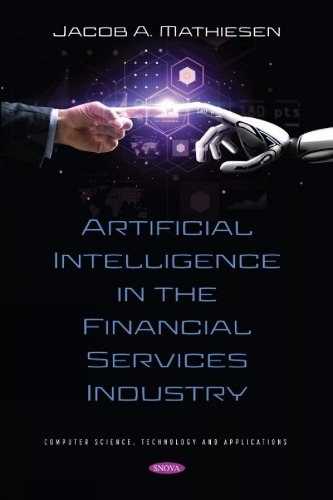
Artificial intelligence in the financial services industry
Today, the financial services sector is facing a period of rapid disruption and innovation, and artificial intelligence (AI) is at the heart of these changes. Artificial intelligence can be used to gather enormous amounts of data, detect abnormalities, and solve complex problems. Financial institutions are already experimenting extensively with AI strategies to enhance and streamline financial institutions, BSA and AML compliance, CRA requirements, fraud detection, and real estate valuations, all while reducing cost levels. This book looks at how artificial intelligence is affecting the financial services industry.
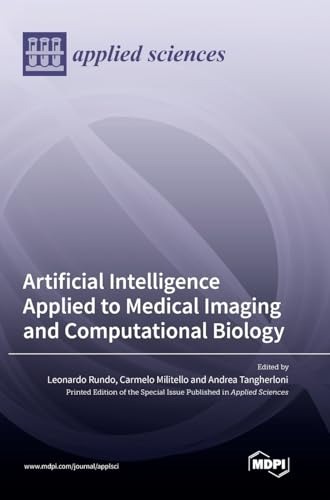
Artificial intelligence applied to medical imaging and computational biology
Medical imaging and computational biology continuously pose new fundamental medical and biological questions that often give rise to novel challenges in Artificial Intelligence. These research fields present an increasing need for the application of cutting-edge computational approaches that generally involve machine learning or computational intelligence techniques, which can effectively perform bioimage and biosignal processing in different clinical areas.

Artificial intelligence and soft computing - ICAISC 2008 ; 9th International Conference Zakopane, Poland, June 22-26, 2008 Proceedings
This book constitutes the refereed proceedings of the 9th International Conference on Artificial Intelligence and Soft Computing, ICAISC 2008, held in Zakopane, Poland, in June 2008.

Artificial intelligence and neural networks ; 14th Turkish Symposium, TAINN 2005, Izmir, Turkey, June 16-17, 2005, Revised Selected Papers
The Turkish Artificial Intelligence and Neural Network Symposium (TAINN) is an annual meeting where scientists present their new ideas and algorithms on artificial intelligence and neural networks with either oral or poster presentation. The TAINN- Turkish Conference on AI and NN Series started in 1992 at Bilkent University in Ankara, envisioned by various researchers in AI and NN then at the Bilkent, Middle East Technical, Bo aziçi and Ege universities as a forum for local researchers to get together and communicate. Since then, TAINN has been held annually around early summer. This year the 14th TAINN conference was organized by the EE and CE departments of the zmir Institute of Technology with an emphasis on international contributions.

Artificial intelligence and knowledge engineering applications : A bioinspired approach ; 1st international work-Conference on the interplay between natural and artificial computation, IWINAC 2005, Las Palmas, Canary Islands, Spain, June 15-18, 2005, Proceedings, Part II
The computational paradigm considered here is a conceptual, theoretical andformal framework situated above machines and living creatures (two instantia-tions), sufficiently solid, and still non-exclusive, that allows us:1. to help neuroscientists to formulate intentions, questions, experiments, meth-ods and explanation mechanisms assuming that neural circuits are the psy-chological support of calculus;2. to help scientists and engineers from the fields of artificial intelligence (AI)and knowledge engineering (KE) to model, formalize and program the com-putable part of human knowledge;3. to establish an interaction framework between natural system computation(NSC) and artificial system computation (ASC) in both directions, fromASC to NSC (in computational neuroscience), and from NSC to ASC (inbioinspired computation).

Artificial intelligence and innovations 2007 : from theory to applications ; Proceedings of the 4th IFIP International Conference on Artificial Intelligence Applications and Innovations (AIAI2007)
This book brings together leading research from engineers and practitioners interested in the technical advances, business and industrial applications of intelligent systems.It is focused on providing insights on how AI can be implemented in real world applications. Intelligent Internet Systems: Emerging Technologies and Applications
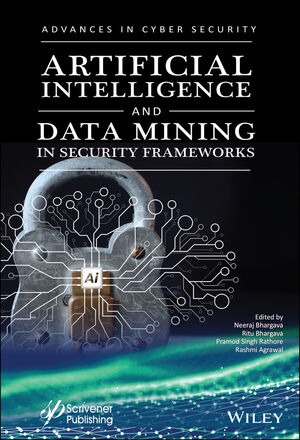
Artificial intelligence and data mining approaches in security frameworks
Offers solutions to the problems of security, outlining the concepts behind allowing computers to learn from experience and understand the world in terms of a hierarchy of concepts, with each concept defined through its relation to simpler concepts. provides state of the art approaches of artificial intelligence and data mining in these areas. It includes areas of detection, prediction, as well as future framework identification, development, building service systems and analytical aspects. In all these topics, applications of AI and data mining, such as artificial neural networks, fuzzy logic, genetic algorithm and hybrid mechanisms, are explained and explored. This book is aimed at the modeling and performance prediction of efficient security framework systems, bringing to light a new dimension in the theory and practice. This groundbreaking new volume presents these topics and trends, bridging the research gap on AI and data mining to enable wide-scale implementation. Whether for the veteran engineer or the student, this is a must-have for any library. This groundbreaking new volume: Clarifies the understanding of certain key mechanisms of technology helpful in the use of artificial intelligence and data mining in security frameworks ; Covers practical approaches to the problems engineers face in working in this field, focusing on the applications used every day ; Contains numerous examples, offering critical solutions to engineers and scientists ; Presents these new applications of AI and data mining that are of prime importance to human civilization as a whole

Artificial immune systems ; Vol. 4163 : 5th International conference, ICARIS 2006, Oeiras, Portugal, September 4-6, 2006, Proceedings
ICARIS 2006 is the ?fth instance of a series of conferences dedicated to the comprehension and the exploitation of immunological principles through their translation into computational terms.Their axis of research tries to stabilize an on-going identity somewhere in the crossroad of engineering (building useful artifacts), natural sciences (biologyor psychology— improving the comprehension and prediction of natural phenomena) and t- oretical computer sciences (developing and mastering the algorithmic world). Accordingly and depending on which of these perspectives receives more s- port, they attempt at attracting di?erent kinds of scientists and at stimul- ing di?erent kinds of scienti?c attitudes. For many years and in the previous ICARIS conferences, it was clearly the “engineering.
Artificial general intelligence
This book focused on engineering general intelligence – autonomous, self-reflective, self-improving, commonsensical intelligence.Each author explains a specific aspect of AGI in detail in each chapter, while also investigating the common themes in the work of diverse groups, and posing the big, open questions in this vital area.

Architecture of computing systems - ARCS 2006 ; 19th International Conference, Frankfurt / Main, Germany, March 13-16, 2006, Proceedings
Technological progress is one of the driving forces behind the dramatic devel- mentofcomputersystemarchitecturesoverthe pastthreedecades.Eventhough it is quite clear that this development cannot only be measured by the ma- mum number of components on a chip, Moore’s Law may be and is often taken as a simple measure for the non-braked growth of computational power over the years. The more components are realizable on a chip, the more innovative and unconventional ideas can be realized by system architects. As a result, research in computer system architectures is more exciting than ever before. This book coversthe trends that shape the ?eld of computer system archit- tures.

Arabic talking heads
The need for someone to talk to about what is going on inside us while ensuring privacy has become a necessary requirement, especially since some people in our Arab societies judge people who visit a psychiatrist as mentally ill. Therefore, in this project, we propose a solution to the previous problem, where an Arabic-speaking robot, through an interactive chat application can mitigate the psychological and negative effects that humans are exposed to in various cases.
Applications of Membrane Computing
Membrane computing is a branch of natural computing which investigates computing models abstracted from the structure and functioning of living cells and from their interactions in tissues or higher-order biological structures. The models considered, called membrane systems (P systems), are parallel, distributed computing models, processing multisets of symbols in cell-like compartmental architectures. In many applications membrane systems have considerable advantages – among these are their inherently discrete nature, parallelism, transparency, scalability and nondeterminism.
Applications of Graph Transformations with Industrial Relevance ; 3rd International Symposium, AGTIVE 2007, Kassel, Germany, October 10-12, 2007, Revised Selected and Invited Papers
This book constitutes the thoroughly refereed post-conference proceedings of the Third International Symposium on Applications of Graph Transformations, AGTIVE 2007, held in Kassel, Germany, in October 2007.

Applications of Fuzzy Sets Theory ; 7th International Workshop on Fuzzy Logic and Applications, WILF 2007, Camogli, Italy, July 7-10, 2007, Proceedings
The book is organized in topical sections on fuzzy set theory, fuzzy information access and retrieval, fuzzy machine learning, fuzzy architectures and systems; and special sessions on intuitionistic fuzzy sets and soft computing in image processing.
Applications of evolutionary computing ; EvoWorkshops 2008 : EvoCOMNET, EvoFIN, EvoHOT, EvoIASP, EvoMUSART, EvoNUM, EvoSTOC, and EvoTransLog, Naples, Italy, March 26-28, 2008. Proceedings
This volume presents a careful selection of relevant EC examples combined with a thorough examination of the techniques used in EC. The papers in the volume illustrate the current state of the art in the application of EC and should help and - spire researchers and professionals to develop e?cient EC methods for design and problem solving.

Applications of declarative programming and knowledge management ; 15th international conference on applications of declarative programming and knowledge management, INAP 2004, and 18th workshop on logic programming, WLP 2004, Potsdam, Germany, March 4-6, 2004, Revised Selected Papers
This volume contains a selection of papers presented at the 15th International Conference on Applications of Declarative Programming and Knowledge M- agement, INAP 2004, and the 18th Workshop on Logic Programming, WLP 2004, Declarative programming is an advanced paradigm for the modeling and solving of complex problems. This speci?cation method has become more and more attractive in recent years, Thetopicsoftheselectedpapersofthisyear’sjointconferenceconcentrateon three currently important ?elds: knowledge management and decision support, constraint programming and constraint solving, and declarative programming and Web-based systems.
Applications of computational intelligence
Computational intelligence (CI) is the theory, design, application, and development of biologically and linguistically motivated computational paradigms. Traditionally, the three main pillars of CI have been neural networks, fuzzy systems, and evolutionary computation. However, in time, many nature-inspired computing paradigms have evolved. Thus, CI is an evolving field, and, at present, in addition to the three main constituents, it encompasses computing paradigms such as ambient intelligence, artificial life, cultural learning, artificial endocrine networks, social reasoning, and artificial hormone networks. CI plays a major role in developing successful intelligent systems, including games and cognitive developmental systems.
Applications of artificial intelligence, big data and internet of things in sustainable development
Focuses on different algorithms and models related to AI, big data and IoT used for various domains. It enables the reader to have a broader and deeper understanding of several perspectives regarding the dynamics, challenges, and opportunities for sustainable development using artificial intelligence, big data and IoT. Applications of Artificial Intelligence, Big Data and Internet of Things (IoT) in Sustainable Development focuses on IT-based advancements in multidisciplinary fields such as healthcare, finance, bioinformatics, industrial automation, and environmental science.
