



الصفحة 26
الصفحة 26
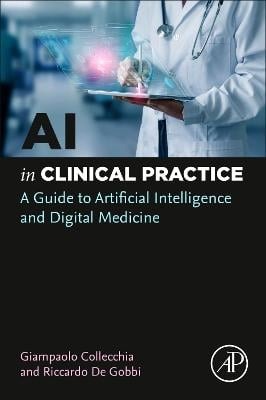
AI in clinical practice : A guide to artificial intelligence and digital medicine
Explains how artificial intelligence is applied to medicine, illustrating not only its enormous potential but also ancillary issues and the limits and risks inherent in its use on a large scale. The book focuses on the intersection between medicine and AI and its implications on the impact of human health care delivery. Topics discussed include wearable devices, health data, Internet of Things, virtual reality, robotic assistance system, and digital intelligence in the health sector. Additionally, sections discuss diagnostics and decision-making systems and machine/deep learning in clinical setting.
Agile software engineering
This textbook presents the crucial issues in software engineering using the agile approach to software development - one of the mainstream paradigms for the management of software projects and one that is being applied more and more extensively.
Agile processes in software engineering and extreme programming ; 20th International Conference, XP 2019, Montréal, QC, Canada, May 21–25, 2019, Proceedings
XP is the premier agile software development conference combining research and practice. It is a hybrid forum where agile researchers, academics, practitioners, thought leaders, coaches, and trainers get together to present and discuss their most recent innovations, research results, experiences, concerns, challenges, and trends. Following this history, for both researchers and seasoned practitioners XP 2019 provided an informal environment to network, share, and discover trends in Agile for the next 20 years.This volume presented agile adoption, agile practices; large-scale agile; agility beyond IT, and the future of agile.
Agile Development with the ICONIX Process : People, Process, and Pragmatism
Describes how to apply ICONIX Process (a minimal, use case-driven modeling process) in an agile software project. It's full of practical advice for avoiding common agile pitfalls. Further, the book defines a core agile subset so those of you who want to get agile need not spend years learning to do it. Instead, you can simply read this book and apply the core subset of techniques. The book follows a real-life .NET/C# project from inception and UML modeling, to working code through several iterations. You can then go on-line to compare the finished product with the initial set of use cases. The book also introduces several extensions to the core ICONIX Process, including combining test-driven development (TDD) with up-front design to maximize both approaches (with examples using Java and JUnit). And the book incorporates persona analysis to drive the projects goals and reduce requirements churn.

Agent-oriented software engineering V ; 5th International workshop, AOSE 2004, New York, NY, USA, July 2004, revised selected papers
The explosive growth of application areas such as electronic commerce, ent- prise resource planning and mobile computing has profoundly and irreversibly changed our views on software systems. Nowadays, software is to be based on open architectures that continuously change and evolve to accommodate new components and meet new requirements. Software must also operate on di?- ent platforms, without recompilation, and with minimal assumptions about its operating environment and its users. Furthermore, software must be robust and ¨ autonomous, capable of serving a naive user with a minimum of overhead and interference. Agent concepts hold great promise for responding to the new realities of software systems. They o?er higher-level abstractions and mechanisms which address issues such as knowledge representation and reasoning, communication, coordination, cooperation among heterogeneous and autonomous parties, p- ception, commitments, goals, beliefs, and intentions, all of which need conceptual modelling. On the one hand, the concrete implementation of these concepts can lead to advanced functionalities.

Agent-oriented information systems II ; 6th International bi-conference workshop, AOIS 2004, Riga, Latvia, June 8, 2004 and New York, NY, USA, July 20, 2004, revised selected papers
Information systems have become the backbone of all kinds of organizations - day. In almost every sector – manufacturing, education, health care, government and businesses large and small – information systems are relied upon for - eryday work, communication, information gathering and decision-making. Yet, the in?exibilities in current technologies and methods have also resulted in poor performance, incompatibilities and obstacles to change. As many organizations are reinventing themselves to meet the challenges of global competition and e-commerce, there is increasing pressure to develop and deploy new technologies that are ?exible, robust and responsive to rapid and unexpected change. Agent concepts hold great promise for responding to the new realities of - formation systems. They o?er higher-level abstractions and mechanisms which address issues such as knowledge representation and reasoning, communication, coordination, cooperation among heterogeneous and autonomous parties, p- ception, commitments, goals, beliefs, intentions, etc., all of which need conc- tual modelling. On the one hand, the concrete implementation of these concepts can lead to advanced functionalities.

Agent-based Supply Network Event Management
Supply Chain Event Management (SCEM)" is one of the major topics in application-oriented Supply Chain Management. However, many solutions lack conceptual precision and currently available client-server SCEM-systems are ill-suited for complex supply networks in today's business environment,In this book a thorough analysis of the event management problem domain is the starting point to develop a generic agent-based approach to Supply Network Event Management. The concept is illustrated with prototypical implementations and assessed in a multi-dimensional evaluation of potential benefits. The main focus lies on practical issues of event management (e.g. semantic interoperability) and economic benefits to be achieved with agent technology in this state-of-the-art problem domain.

Agent Technology from a Formal Perspective
The field of agent & multi-agent systems is experiencing tremendous growth. At the same time the field of formal methods is blossoming and has proven its importance in industrial and government applications. The FAABS (Formal Approaches to Agent-Based Systems) workshops, merging the concerns of the two fields, provided a timely and compelling platform on which the growing concerns and requirement of agent-based systems users that systems should be accompanied by behavioral assurances, could be discussed. This book has arisen from the overwhelming response to FAABS ’00, ’02 & ’04 and all chapters are updated or represent new research, and are designed to provide a more in-depth treatment of the topic. Examples of how others have applied formal methods to agent-based systems are included, plus formal method tools & techniques that readers can apply to their own systems.

Agent communication ; International workshop on agent communication, AC 2004, New York, NY, July 19, 2004
In this book, we present a collection of papers around the topic of agent com- nication. The communication between agents has been one of the major topics of research in multiagent systems. The current work can therefore build on a number of previous Workshops of which the proceedings have been published in earlier volumes in this series. The basis of this collection is formed by the accepted submissions of the Workshop on Agent Communication held in c- junction with the AAMAS Conference in July 2004 in New York. the current collection comprises a very good and quite complete overview of the state of the art in this area of research and gives a good indication of the topics that are of major interest at the moment. The papers can roughly be divided over the following ?ve themes: – social commitments – multiparty communication – content languages – dialogues and conversations – speech acts Although these themes are of course not mutually exclusive they indicate some main directions of research. We therefore have arranged the papers in the book according to the topics indicated above.

Advancing Social Simulation: The First World Congress
Agent-based modeling and social simulation have emerged as both developments of and challenges to the social sciences. The developments include agent-based computational economics and investigations of theoretical sociological concepts using formal simulation techniques. Among the challenges are the development of qualitative modeling techniques, implementation of agent-based models to investigate phenomena for which conventional economic, social, and organizational models have no face validity, and the application of physical modeling techniques to social processes. Bringing together diverse approaches to social simulation and research agendas.

Advances in web mining and web usage analysis ; 8th International workshop on knowledge discovery on the web, WebKDD 2006 Philadelphia, USA, August 20, 2006 Revised Papers
The discipline of data mining delivers methodologies and tools for the an- ysis of large data volumes and the extraction of comprehensible and non-trivial insights from them. Web mining, a much younger discipline, concentrates on the analysisofdata pertinentto the Web.Web mining methods areappliedonusage data and Web site content; they strive to improve our understanding of how the Web is used, to enhance usability and to promote mutual satisfaction between e-business venues and their potential customers.Many ofthe infancy problems in Web mining have been solvedby now, but the tremendous potential for new and improved uses, as well as misuses, of the Web are leading to new challenges.

Advances in web mining and web usage analysis ; 7th International workshop on knowledge discovery on the web, WEBKDD 2005, Chicago, IL, USA, August 21, 2005, Revised Papers
Thisbookcontainsthepostworkshopproceedingsofthe7thInternationalWo- shop on Knowledge Discovery from the Web, WEBKDD 2005. The WEBKDD workshop series takes place as part of the ACM SIGKDD International Conf- ence on Knowledge Discovery and Data Mining (KDD) since 1999. The discipline of data mining delivers methodologies and tools for the an- ysis of large data volumes and the extraction of comprehensible and non-trivial insights from them. Web mining, a much younger discipline, concentrates on the analysisofdata pertinentto theWeb.Web mining methods areappliedonusage data and Web site content; they strive to improve our understanding of how the Web is used, to enhance usability and to promote mutual satisfaction between e-business venues and their potential customers. In the last years, the interest for the Web as medium for communication, interaction and business has led to new challenges and to intensive, dedicated research. Many of the infancy problems in Web mining have now been solved but the tremendous potential for new and improved uses, as well as misuses, of the Web are leading to new challenges.

Advances in web intelligence ; 1st International symposium, ISVC 2005, Lake Tahoe, NV, USA, December 5-7, 2005, proceedings
In recent years the Internet has become a source of data and information of indisputable importance and has immensely gained in acceptance and popularity. The World Wide Web (WWW or Web, for short), frequently named “the nervous system of the infor- tion society,” offers numerous valuable services leaving no doubt about the signi?cance of the Web in our daily activities at work and at home. Consequently, we have a clear aspiration to meet the obvious need for effective use of its potential by making - provements in both the methods and the technology applied. Among the new research directions observable in Web-related applications, intelligent methods from within the broadly perceived topic of soft computing occupy an important place. AWIC, the “Atlantic Web Intelligence Conferences” are intended to be a forum for exchange of new ideas and novel practical solutions in this new and exciting ?eld.

Advances in Visual Computing ; Vol. 4291 ; 2nd International Symposium, ISVC 2006, Lake Tahoe, NV, USA, November 6-8, 2006, Proceedings, Part I
This year, the program consisted of 13 oral sessions, one poster session, ten special tracks, and six keynote presentations. The response to the call for - pers was very strong. We received more than twice the papers received last year. Specifcally, we received over 280 submissions for the main symposium from which we accepted 65 papers for oral presentation (23% acceptance) and 56 papers for poster presentation (20% acceptance). Special track papers were solicited separately through the Organizing and Program Committees of each track. A total of 57 papers were accepted for presentation in the special tracks. All papers were reviewed with an emphasis on potential to contribute to the state of the art in the ?eld. Selection criteria included accuracy and originality of ideas, clarity and signi?cance of results, and presentation quality. The review process was quite rigorous, involving two to three independent blind reviews followed by several days of discussion. During the discussion period we tried to correct anomalies and errors that might have existed in the initial reviews.

Advances in radar systems for target detection and tracking
Radar systems can provide the all-weather and all-time detection and tracking of targets of interest, and they have been extensively applied by the remote sensing community, in applications such as geological exploration, disaster forecasting, traffic monitoring, urban planning, environmental sciences, hydrology, littoral zones, oceans, etc. This reprint contains the several advance research studies on radar systems for target detection and tracking. It includes multipath ghost suppression, maneuvering target tracking, target detection, and other topics.

Advances in intelligent data analysis XVIII ; 18th International symposium on intelligent data analysis, IDA 2020, Konstanz, Germany, April 27–29, 2020, Proceedings
This book constitutes the proceedings of the 18th International Conference on Intelligent Data Analysis, IDA 2020, held in Konstanz, Germany, in April 2020. The 45 full papers presented in this volume were carefully reviewed and selected from 114 submissions. Advancing Intelligent Data Analysis requires novel, potentially game-changing ideas. IDA’s mission is to promote ideas over performance: a solid motivation can be as convincing as exhaustive empirical evaluation.

Advances in Intelligent Data Analysis VII ; 7th International Symposium on Intelligent Data Analysis, IDA 2007, Ljubljana, Slovenia, September 6-8, 2007, Proceedings
There su- ing oral presentations were then scheduled in a single-track, two-and-a-half-day conference program, summarized in the book that you have before you. In accordance with the stated IDA goal of "bringing together researchers from diverse disciplines," we believe we have achieved an excellent balance of presentationsfromthemoretheoretical-both statistical and machine learning- to the more application-oriented areas that illustrate how these techniques can beusedinpractice. Forexample, the proceeding sinclude papers withth eoretical contributions dealing with statistical approaches to sequence alignment as well as papers addressing practical problems in the areas of text classification and medical data analysis. It is reassuring to see that IDA continues to bring such diverse areas together, thus helping to cross-fertilize these fields

Advances in intelligent data analysis VI ; 6th International symposium on intelligent data analysis, IDA 2005, Madrid, Spain, September 8-10, 2005, Proceedings
One of the superb characteristics of Intelligent Data Analysis (IDA) is that it is an interdisciplinary ?eld in which researchers and practitioners from a number of areas are involved in a typical project. This also creates a challenge in which the success of a team depends on the participation of users and domain experts who need to interact with researchers and developers of any IDA system. All this is usually re?ected in successful projects and of course on the papers that were evaluated by this year’s program committee from which the ?nal program has been developed. In our call for papers, we solicited papers on (i) applications and tools, (ii) theory and general principles, and (iii) algorithms and techniques. We received a total of 184 papers, In the end 46 papers were accepted, which are all included in the proceedings and presented at the conference. This year’s papers re?ect the results of applied and theoretical researchfrom a number of disciplines all of which are related to the ?eld of Intelligent Data Analysis. To have the best combination of theoretical and applied research and also provide the best focus.
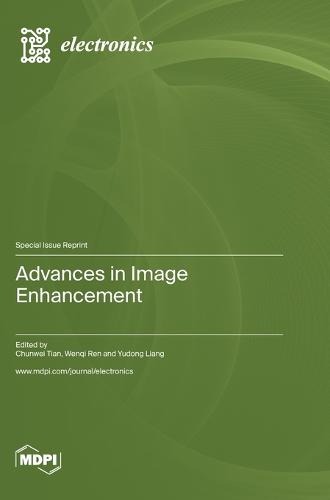
Advances in image enhancement
In the era of the internet of things, images have played important roles in human–computer interactions, and with the arrival of big data technology, people have higher requirements regarding image quality, especially for images collected in dark light. This can be addressed through the development of camera hardware quality, i.e., the resolution and exposure time of cameras, which may require high computational costs. As an alternative, image enhancement techniques can exact salient features to improve the quality of captured images according to the differences in diverse features, although they suffer from some challenges, i.e., a low contrast, artifacts, and overexposure, thus making it decidedly necessary to determine how to use advanced image enhancement techniques.

Advances in Image and Video Technology ; 1st Pacific Rim Symposium, PSIVT 2006, Hsinchu, Taiwan, December 10-13, 2006, Proceedings
The conference of the 1st IEEE Pacisc-Rim Symposium on Image and Video Technology (PSIVT 2006) was held at Hsinchu, Taiwan, Republic of China, on December 11–13, 2006. This volume contains papers selected for presentation at this conference. The aim of this conference was to bring together theoretical advances and practical implementations contributing to, or being involved in, image and video technology. PSIVT 2006 featured a comprehensive program including tutorials, keynote and invited talks, oral paper presentations, and posters. We received 450 s- missions from 22 countries and accepted 141 papers among those (i.e., de?ning an acceptance rate of 31.3%). The intention was to establish PSIVT as a t- quality series of symposia. Decisions were discult sometimes, but we hope that the ?nal result is acceptable to all involved.
