



الصفحة 24
الصفحة 24

E-Training Practices for Professional Organizations
E-Training Practices for Professional Organizations is an essential reference for anyone interested in the integration of e-business, e-work and e-learning processes. The book collects, for the first time, the proceedings from the 2003 IFIP eTrain Conference held in Pori, Finland. The text serves as a multi-disciplinary resource for information on the research, development and applications of all topics related to e-Learning. The first half of the book discusses theories, paradigms and their applications in academia and industry. The last half of the book examines learning environments, design issues and collaboration among the corporate, governmental and academic sectors. With academic and professional contributors, E-Training Practices for Professional Organizations reflects the multi-faceted and exciting nature of e-training studies. This volume presents the balanced view of past developments and current research necessary to truly reach the potential of this burgeoning field.

Establishing The Foundation Of Collaborative Networks ; IFIP TC 5 Working Group 5.5 Eighth IFIP Working Conference on Virtual Enterprises September 10-12, 2007, Guimarães, Portugal
While today production and service provision constitute the main areas of application for Collaborative Networks (CNs) worldwide, during the last decade the paradigm is extending to many new application areas. These developments emphasize the need for establishing a sounder foundation for collaborative networks, namely in terms of theoretical principles and formal models, capturing the concepts, entities, behaviors, and operations of the CNs, and developing technology-independent infrastructure architectures, tools and methodologies. This book includ represent a comprehensive overview of recent advances in various domains and lines of research and development on collaborative networks. There is a special emphasis on the CN topics related to trust aspects, performance and value systems, VO breeding environments, VO creation, e-contracting, collaborative architectures and frameworks, professional virtual communities, interoperability issues, business benefits, and case studies and applications in industry and services.
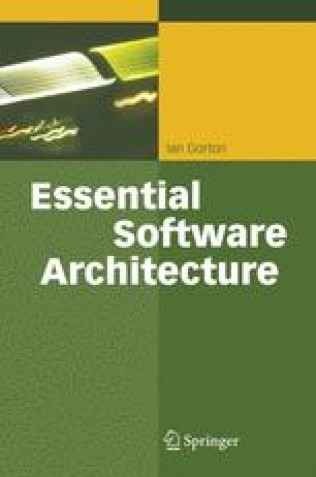
Essential Software Architecture
Job titles like "Technical Architect" and "Chief Architect" nowadays abound in the software industry, yet many people suspect that "architecture" is one of the most overused and least understood terms in professional software development. Gorton's book helps resolve this predicament. It concisely describes the essential elements of knowledge and key skills required to be a software architect. The explanations encompass the essentials of architecture thinking, practices, and supporting technologies.
Ernst Denert Award for Software Engineering 2020 : Practice Meets Foundations
This book provides an overview of the dissertations of the eleven nominees for the Ernst Denert Award for Software Engineering in 2020. The prize, kindly sponsored by the Gerlind & Ernst Denert Stiftung, is awarded for excellent work within the discipline of Software Engineering, which includes methods, tools and procedures for better and efficient development of high quality software. An essential requirement for the nominated work is its applicability and usability in industrial practice.

Ernst Denert Award for Software Engineering 2019 : Practice Meets Foundations
This book provides an overview of the dissertations of the five nominees for the Ernst Denert Award for Software Engineering in 2019. The prize, kindly sponsored by the Gerlind & Ernst Denert Stiftung, is awarded for excellent work within the discipline of Software Engineering, which includes methods, tools and procedures for better and efficient development of high quality software. An essential requirement for the nominated work is its applicability and usability in industrial practice.

Ergodic Dynamics : From Basic Theory to Applications
This textbook provides a broad introduction to the fields of dynamical systems and ergodic theory. Motivated by examples throughout, the author offers readers an approachable entry-point to the dynamics of ergodic systems. Modern and classical applications complement the theory on topics ranging from financial fraud to virus dynamics, offering numerous avenues for further inquiry. Starting with several simple examples of dynamical systems, the book begins by establishing the basics of measurable dynamical systems, attractors, and the ergodic theorems. From here, chapters are modular and can be selected according to interest. Highlights include the Perron–Frobenius theorem, which is presented with proof and applications that include Google PageRank. An in-depth exploration of invariant measures includes ratio sets and type III measurable dynamical systems using the von Neumann factor classification. Topological and measure theoretic entropy are illustrated and compared in detail, with an algorithmic application of entropy used to study the papillomavirus genome. A chapter on complex dynamics introduces Julia sets and proves their ergodicity for certain maps. Cellular automata are explored as a series of case studies in one and two dimensions, including Conway’s Game of Life and latent infections of HIV. Other chapters discuss mixing properties, shift spaces, and toral automorphisms.
Environments for Multi-Agent Systems ; 1st International Workshop, E4MAS, 2004, New York, NY, July 19, 2004, Revised Selected Papers
The modern ?eld of multiagent systems has developed from two main lines of earlier research. Its practitioners generally regard it as a form of arti?cial intelligence (AI). Some of its earliest work was reported in a series of workshops in the US dating from1980,revealinglyentitled,“DistributedArti?cialIntelligence,”andpioneers often quoted a statement attributed to Nils Nilsson that “all AI is distributed. ” The locus of classical AI was what happens in the head of a single agent, and much MAS research re?ects this heritage with its emphasis on detailed modeling of the mental state and processes of individual agents. From this perspective, intelligenceisultimatelythepurviewofasinglemind,thoughitcanbeampli?ed by appropriate interactions with other minds. These interactions are typically mediated by structured protocols of various sorts, modeled on human conver- tional behavior. But the modern ?eld of MAS was not born of a single parent. A few - searchershavepersistentlyadvocatedideasfromthe?eldofarti?ciallife(ALife). These scientists were impressed by the complex adaptive behaviors of commu- ties of animals (often extremely simple animals, such as insects or even micro- ganisms). The computational models on which they drew were often created by biologists who used them not to solve practical engineering problems but to test their hypotheses about the mechanisms used by natural systems. In the ar- ?cial life model, intelligence need not reside in a single agent, but emerges at the level of the community from the nonlinear interactions among agents. - cause the individual agents are often subcognitive, their interactions cannot be modeled by protocols that presume linguistic competence.
Enterprise service oriented architectures : Concepts, challenges, recommendations
Enterprise Service Oriented Architectures helps readers solve this challenge in making different applications communicate in a loosely coupled manner. This classic handbook leverages the experiences of thought leaders functioning in multiple industry verticals and provides a wealth of knowledge for creating the agile enterprise.

Enterprise Information Systems VII
The purpose of the 7th International Conference on Enterprise Information Systems (ICEIS) was to bring together researchers, engineers and practitioners interested in the advances and business applications of information systems. Five simultaneous tracks have been held, covering different aspects of Enterprise Information Systems Applications, including Enterprise Database Technology, Systems Integration, Artificial Intelligence, Decision Support Systems, Information Systems Analysis and Specification, Internet Computing, Electronic Commerce and Human Factors.

Enterprise Information Systems VI
This book contains the best papers of the Sixth International Conference on Enterprise Information Systems (ICEIS 2004), held in Porto (Portugal) and organized by INSTICC (Institute for Systems and Technologies of Information, Communication and Control) in collaboration with PORTUCALENSE UNIVERSITY, who hosted the event. Following the route started in 1999, ICEIS has become a major point of contact between research scientists, engineers and practitioners on the area of business applications of information systems. This conference has received an increased interest every year, from especially from the international academic community, and it is now one of the world largest conferences in its area. This year, five simultaneous tracks were held, covering different aspects related to enterprise computing, including: “Databases and Information Systems Integration”,

Enterprise Information Systems V
ICEIS focuses on real world applications and aims at bringing together researchers, engineers and practitioners interested in the advances and business applications of information systems. As in previous years, ICEIS’2003 held four simultaneous tracks covering different aspects of enterprise computing: Databases and Information Systems Integration, Artificial Intelligence and Decision Support Systems, Information Systems Analysis and Specification and Software Agents and Internet Computing. Although ICEIS’2003 received 546 paper submissions from over 50 countries, only 80 were accepted as full papers and presented in 30-minutes oral presentations. With an acceptance rate of 15%, these numbers demonstrate the intention of preserving a high quality forum for future editions of this conference. From the articles accepted as long papers for the conference, only 32 were selected for inclusion in this book Additional keynote lectures, tutorials and industrial sessions were also held during ICEIS’2003, and, for the first time this year, the 1st Doctoral Consortium on Enterprise Information Systems gave PhD students an opportunity to present their work to an international audience of experts in the field of information systems.
Enterprise Information Systems ; 8th International Conference, ICEIS 2006, Paphos, Cyprus, May 23-27, 2006, Revised Selected Papers
This book contains the carefully selected best papers of the 8th International Conference on Enterprise Information Sysetms, ICEIS 2006, held in Paphos, Cyprus, in May 2006.The 4 invited papers and 27 revised and selected papers presented in this volume cover different aspects related to enterprise computing. They were selected from 63 accepted papers (out of more than 400 submissions). The contributions are grouped in sections on databases and information systems integration.
Enterprise Applications and Services in the Finance Industry ; 3rd International Workshop, FinanceCom 2007, Montreal, Canada, December 8, 2007. Revised Papers
This book constitutes the proceedings of the 4th International Workshop on Enterprise Applications and Services in the Finance Industry, FinanceCom2008, held in Paris, France, on December 13, 2008. The workshop spans multiple disciplines, including technical, economic, sociological and behavioral sciences. The guiding theme of this workshop was concerned with innovations in the financial services industry, driven by either new business models or changed regulations.
Enhanced Living Environments : Algorithms, Architectures, Platforms, and Systems
Ambient Assisted Living (AAL) is an area of research based on Information and Communication Technologies (ICT), medical research, and sociological research. AAL is based on the notion that technology and science can provide improvements in the quality of life for people in their homes, and that it can reduce the financial burden on the budgets of the healthcare providers. The concept of Enhanced Living Environments (ELE) refers to the AAL area that is more related with ICT. Effective ELE solutions require appropriate ICT algorithms, architectures, platforms, and systems, having in view the advance of science in this area and the development of new and innovative solutions. The aim of this book is to become a state-of-the-art reference, discussing progress made, as well as prompting future directions on theories, practices, standards, and strategies related to the ELE area.

Engineering theories of software intensive systems : Theory, algorithms, software, and applications
Software engineering has over the years been applied in many different fields, ranging from telecommunications to embedded systems in car and aircraft industry as well as in production engineering and computer networks. Foundations in software technology lie in models allowing to capture application domains, detailed requirements, but also to understand the structure and working of software systems like software architectures and programs. These models have to be expressed in techniques based on discrete mathematics, algebra and logics. However, according to the very specific needs in applications of software technology, formal methods have to serve the needs and the quality of advanced software engineering methods, especially taking into account security aspects in Information Technology. This book presents mathematical foundations of software engineering and state-of-the-art engineering methods in their theoretical substance in the step towards practical applications to examine software engineering techniques and foundations used for industrial tasks.

Engineering self-organising systems Vol. 3910 ; 3rd International Workshop, ESOA 2005, Utrecht, The Netherlands, July 25, 2005, Revised Selected Papers
This book contains recent work from a broad range of areas with the common theme of utilising self-organisation productively. As distributed information infrastructures continue to spread (such as the Internet, wireless and mobile systems), new challenges have arisen demanding robust and scalable solutions. In these new challenging environments the - signers and engineers of global applications and services can seldom rely on centralised control or management, high reliability of devices, or secure en- ronments. At the other end of the scale, ad-hoc sensor networks and ubiquitous computing devices are making it possible to embed millions of smart computing agents into the local environment.

Engineering self-organising systems ; Vol. 3464 : Methodologies and applications
Self-organisation, self-regulation, self-repair, and self-maintenance are promising conceptual approaches to deal with the ever increasing complexity of distributed interacting software and information handling systems. Self-organising applications are able to dynamically change their functionality and structure without direct user intervention to respond to changes in requirements and the environment. This book comprises revised and extended papers presented at the International Workshop on Engineering Self-Organising Applications, ESOA 2004, held in New York, NY, USA in July 2004 at AAMAS as well as invited papers from leading researchers. The papers are organized in topical sections on state of the art, synthesis and design methods, self-assembly and robots, stigmergy and related topics, and industrial applications.
Engineering psychology and cognitive ergonomics ; 7th International Conference, EPCE 2007, Held as Part of HCI International 2007, Beijing, China, July 22-27, 2007, Proceedings
This book address the latest research and development efforts and highlight the human aspects of design and use of computing systems. It cover the entire field of Human-Computer Interaction, addressing major - vances in knowledge and effective use of computers in a variety of application areas. This volume contains papers in the thematic area of En- neering Psychology and Cognitive Ergonomics, addressing the following major topics: Cognitive and Affective Issues in User Interface Design, Cognitive Workload and Human Performance, Cognitive Modeling and Measuring, Safety Critical Applications and Systems

Engineering Knowledge in the Age of the Semantic Web ; 15th International Conference, EKAW 2006, Podebrady, Czech Republic, October 6-10, 2006, Proceedings
The 15th International Conference on Knowledge Engineering and Knowledge Management (2006), held on October 6-10, 2006 in Pod? ebrady,Czech Republic, followed a long tradition of European Knowledge Acquisition Workshops (from 1987),whicheventuallyacquiredtheformatofconference(in2000)whilekeeping their open-minded and interactive spirit. During the nearly 20 year lifespan of the series, the discipline of knowledge engineering (KE) evolved greatly. While knowledge acquisition (KA) techniques dominated in the very ?rst years, formal approaches to knowledge-based inf- ence and variousnew streamssuch as knowledgediscoveryfrom data/textslater cameinto play. During thelate1990sandafterwards,EKAWbecamea founding community for ontology and Semantic Web Research, which was also re?ected in the sub-titles of the 2002 and 2004 editions: “Ontologies and the Semantic Web” and “Engineering Knowledge in the Age of the Semantic Web,” resp- tively.

Engineering Interactive Systems ; EIS 2007 Joint Working Conferences, EHCI 2007, DSV-IS 2007, HCSE 2007, Salamanca, Spain, March 22-24, 2007. Selected Papers
This book constitutes the post-conference proceedings of the WG2.7/13.4 10th Conference on Engineering Human Computer Interaction (EHCI 2007), the WG 13.2 First Conference on Human Centred Software Engineering (HCSE 2007), and the 14th Conference on Design Specification and Verification of Interactive Systems (DSV-IS 2007); jointly held as EIS 2007, the international event on Engineering Interactive Systems, in Salamanca, Spain, in March 2007 - under the auspices of IFIP.
