



الصفحة 24
الصفحة 24

Ethereum Smart Contract Development in Solidity
This book introduces readers to the Solidity language from scratch, together with case studies and examples. It also covers advanced topics and explains the working mechanism of smart contracts in depth. Further, it includes relevant examples that shed new light on the forefront of Solidity programming. In short, it equips readers with essential practical skills, allowing them to quickly catch up and start using Solidity programming.

Establishing The Foundation Of Collaborative Networks ; IFIP TC 5 Working Group 5.5 Eighth IFIP Working Conference on Virtual Enterprises September 10-12, 2007, Guimarães, Portugal
While today production and service provision constitute the main areas of application for Collaborative Networks (CNs) worldwide, during the last decade the paradigm is extending to many new application areas. These developments emphasize the need for establishing a sounder foundation for collaborative networks, namely in terms of theoretical principles and formal models, capturing the concepts, entities, behaviors, and operations of the CNs, and developing technology-independent infrastructure architectures, tools and methodologies. This book includ represent a comprehensive overview of recent advances in various domains and lines of research and development on collaborative networks. There is a special emphasis on the CN topics related to trust aspects, performance and value systems, VO breeding environments, VO creation, e-contracting, collaborative architectures and frameworks, professional virtual communities, interoperability issues, business benefits, and case studies and applications in industry and services.

Essentials of electrical and computer engineering
Appropriate for an introductory course or course sequence in electrical engineering or electrical and computer engineering. This book teaches the fundamentals of electrical and computer engineering. It also introduces technologies such as MEMS (Microelectromechanical Systems) to illustrate how technologies are interdisciplinary.

Essentials of Computer Organization and Architecture
Addresses all necessary organization and architecture topics, but concise enough to be appropriate for a single-term course. Its focus on real-world examples and practical applications encourages students to develop a “big-picture” understanding of how essential organization and architecture concepts are applied in the computing world. In addition to direct correlation with the ACM/IEEE guidelines for computer organization and architecture, the text exposes readers to the inner workings of a modern digital computer through an integrated presentation of fundamental concepts and principles.
Ernst Denert Award for Software Engineering 2020 : Practice Meets Foundations
This book provides an overview of the dissertations of the eleven nominees for the Ernst Denert Award for Software Engineering in 2020. The prize, kindly sponsored by the Gerlind & Ernst Denert Stiftung, is awarded for excellent work within the discipline of Software Engineering, which includes methods, tools and procedures for better and efficient development of high quality software. An essential requirement for the nominated work is its applicability and usability in industrial practice.

Ernst Denert Award for Software Engineering 2019 : Practice Meets Foundations
This book provides an overview of the dissertations of the five nominees for the Ernst Denert Award for Software Engineering in 2019. The prize, kindly sponsored by the Gerlind & Ernst Denert Stiftung, is awarded for excellent work within the discipline of Software Engineering, which includes methods, tools and procedures for better and efficient development of high quality software. An essential requirement for the nominated work is its applicability and usability in industrial practice.
Enterprise service oriented architectures : Concepts, challenges, recommendations
Enterprise Service Oriented Architectures helps readers solve this challenge in making different applications communicate in a loosely coupled manner. This classic handbook leverages the experiences of thought leaders functioning in multiple industry verticals and provides a wealth of knowledge for creating the agile enterprise.

Enterprise Information Systems VII
The purpose of the 7th International Conference on Enterprise Information Systems (ICEIS) was to bring together researchers, engineers and practitioners interested in the advances and business applications of information systems. Five simultaneous tracks have been held, covering different aspects of Enterprise Information Systems Applications, including Enterprise Database Technology, Systems Integration, Artificial Intelligence, Decision Support Systems, Information Systems Analysis and Specification, Internet Computing, Electronic Commerce and Human Factors.

Enterprise Information Systems V
ICEIS focuses on real world applications and aims at bringing together researchers, engineers and practitioners interested in the advances and business applications of information systems. As in previous years, ICEIS’2003 held four simultaneous tracks covering different aspects of enterprise computing: Databases and Information Systems Integration, Artificial Intelligence and Decision Support Systems, Information Systems Analysis and Specification and Software Agents and Internet Computing. Although ICEIS’2003 received 546 paper submissions from over 50 countries, only 80 were accepted as full papers and presented in 30-minutes oral presentations. With an acceptance rate of 15%, these numbers demonstrate the intention of preserving a high quality forum for future editions of this conference. From the articles accepted as long papers for the conference, only 32 were selected for inclusion in this book Additional keynote lectures, tutorials and industrial sessions were also held during ICEIS’2003, and, for the first time this year, the 1st Doctoral Consortium on Enterprise Information Systems gave PhD students an opportunity to present their work to an international audience of experts in the field of information systems.
Enterprise Information Systems ; 8th International Conference, ICEIS 2006, Paphos, Cyprus, May 23-27, 2006, Revised Selected Papers
This book contains the carefully selected best papers of the 8th International Conference on Enterprise Information Sysetms, ICEIS 2006, held in Paphos, Cyprus, in May 2006.The 4 invited papers and 27 revised and selected papers presented in this volume cover different aspects related to enterprise computing. They were selected from 63 accepted papers (out of more than 400 submissions). The contributions are grouped in sections on databases and information systems integration.
Enterprise Applications and Services in the Finance Industry ; 3rd International Workshop, FinanceCom 2007, Montreal, Canada, December 8, 2007. Revised Papers
This book constitutes the proceedings of the 4th International Workshop on Enterprise Applications and Services in the Finance Industry, FinanceCom2008, held in Paris, France, on December 13, 2008. The workshop spans multiple disciplines, including technical, economic, sociological and behavioral sciences. The guiding theme of this workshop was concerned with innovations in the financial services industry, driven by either new business models or changed regulations.
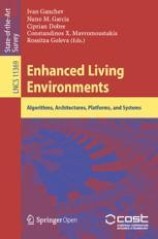
Enhanced Living Environments : Algorithms, Architectures, Platforms, and Systems
Ambient Assisted Living (AAL) is an area of research based on Information and Communication Technologies (ICT), medical research, and sociological research. AAL is based on the notion that technology and science can provide improvements in the quality of life for people in their homes, and that it can reduce the financial burden on the budgets of the healthcare providers. The concept of Enhanced Living Environments (ELE) refers to the AAL area that is more related with ICT. Effective ELE solutions require appropriate ICT algorithms, architectures, platforms, and systems, having in view the advance of science in this area and the development of new and innovative solutions. The aim of this book is to become a state-of-the-art reference, discussing progress made, as well as prompting future directions on theories, practices, standards, and strategies related to the ELE area.
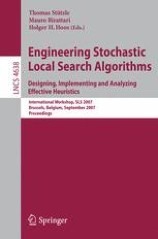
Engineering Stochastic Local Search Algorithms. Designing, Implementing and Analyzing Effective Heuristics ; International Workshop, SLS 2007, Brussels, Belgium, September 6-8, 2007, Proceedings
Stochastic local search (SLS) algorithms enjoy great popularity as powerful and versatile tools for tackling computationally hard decision and optimization pr- lems from many areas of computer science, operations research, and engineering. However, in recent years it has become evident that at the core of this development task there is a highly complex engineering process, which combines various aspects of algorithm design with empirical analysis techniques and problem-specific background, and which relies heavily on knowledge from a number of disciplines and areas, including computer science, operations research, artificial intelligence, and statistics. This development process needs to be - sisted by a sound methodology that addresses the issues arising in the various phases of algorithm design, implementation, tuning, and experimental eval- tion.

Engineering societies in the agents world V : 5th international workshop, ESAW 2004, Toulouse, France, October 20-22, 2004 : revised selected and invited papers
The ?rst workshop “Engineering Societies in the Agents World” (ESAW) was held in August 2000, in conjunction with the 14th European Conference on Arti?cial Intelligence (ECAI 2000) in Berlin. It was launched by a group of - searchers who thought that the design and development of MASs (multi-agent systems) not only needed adequate theoretical foundations but also a call for new techniques, methodologies and infrastructures to develop MASs as arti?cial societies. The second ESAW was co-located with the European Agent Summer School (ACAI 2001) in Prague, and mostly focused on logics and languages, middleware, infrastructures and applications. In Madrid, the third ESAW c- centrated on models and methodologies and took place with the “Cooperative Information Agents” workshop (CIA 2002). The fourth ESAW in London was the ?rst one that ran as a stand-alone event: apart from the usual works on methodologies and models, it also stressed the issues of applications and m- tidisciplinary models. Based on the success of previous ESAWs, and also given that the di?cult challenges in the construction of arti?cial societies are not yet fully addressed, the ?fth ESAW workshop was organized in the same spirit as its predecessors.
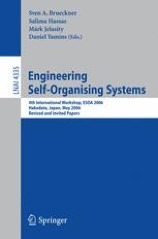
Engineering self-organising systems ; 4th International Workshop, ESOA 2006, Hakodate, Japan, May 9, 2006, Revised and Invited Papers
This book discusses a broad variety of topics in an effort to allow room for new ideas and discussion, and eventually a better understanding of the important directions and techniques of Engineering Self-Organizing.This book raises the important question of whether there are underlying statistical mechanics-like principles that apply to emergent multi-agent systems. Answering this question will in the long run provide an important part of the underlying theory of emergent distributed systems.

Engineering Knowledge in the Age of the Semantic Web ; 15th International Conference, EKAW 2006, Podebrady, Czech Republic, October 6-10, 2006, Proceedings
The 15th International Conference on Knowledge Engineering and Knowledge Management (2006), held on October 6-10, 2006 in Pod? ebrady,Czech Republic, followed a long tradition of European Knowledge Acquisition Workshops (from 1987),whicheventuallyacquiredtheformatofconference(in2000)whilekeeping their open-minded and interactive spirit. During the nearly 20 year lifespan of the series, the discipline of knowledge engineering (KE) evolved greatly. While knowledge acquisition (KA) techniques dominated in the very ?rst years, formal approaches to knowledge-based inf- ence and variousnew streamssuch as knowledgediscoveryfrom data/textslater cameinto play. During thelate1990sandafterwards,EKAWbecamea founding community for ontology and Semantic Web Research, which was also re?ected in the sub-titles of the 2002 and 2004 editions: “Ontologies and the Semantic Web” and “Engineering Knowledge in the Age of the Semantic Web,” resp- tively.

Engineering Interactive Systems ; EIS 2007 Joint Working Conferences, EHCI 2007, DSV-IS 2007, HCSE 2007, Salamanca, Spain, March 22-24, 2007. Selected Papers
This book constitutes the post-conference proceedings of the WG2.7/13.4 10th Conference on Engineering Human Computer Interaction (EHCI 2007), the WG 13.2 First Conference on Human Centred Software Engineering (HCSE 2007), and the 14th Conference on Design Specification and Verification of Interactive Systems (DSV-IS 2007); jointly held as EIS 2007, the international event on Engineering Interactive Systems, in Salamanca, Spain, in March 2007 - under the auspices of IFIP.

Engineering human computer interaction and interactive systems ; Joint Working Conferences EHCI-DSVIS 2004, Hamburg, Germany, July 11-13, 2004, Revised Selected Papers
As its name suggests, the EHCI-DSVIS conference has been a special event, merging two different, although overlapping, research communities: EHCI (Engineering for Human-Computer Interaction) is a conference organized by the IFIP 2.7/13.4 working group, started in 1974 and held every three years since 1989. The group’s activity is the scientific investigation of the relationships among the human factors in computing and software engineering. DSVIS (Design, Specification and Verification of Interactive Systems) is an annual conference started in 1994, and dedicated to the use of formal methods for the design of interactive systems. Of course these two research domains have a lot in common, and are informed by each other’s results.

Engineering and Managing Software Requirements
This book provides an exploration of key issues in requirements engineering, the book is organized in three parts. Part 1 presents surveys of state-of-the art requirements engineering process research along with critical assessments of existing models, frameworks and techniques. Part 2 addresses key areas in requirements engineering, such as market-driven requirements engineering, goal modeling, requirements ambiguity, and others. Part 3 concludes the book with articles that present empirical evidence and experiences from practices in industrial projects. Its broader perspective gives this book its distinct appeal and makes it of interest to both researchers and practitioners, not only in software engineering but also in other disciplines such as business process engineering and management science.

EndNote 1 - 2 - 3 Easy! : Reference Management for the Professional
EndNote® 1-2-3 Easy!: Reference Management for the Professional is a valuable educational resource for biomedical and healthcare professionals, including researchers, physicians, students, information systems professionals, managers, teachers, librarians, and other professionals engaged in scientific manuscript writing. It offers a practical, "how to" manual providing easy-to-follow, step-by-step advice on using EndNote®, a popular reference management software package.
