



الصفحة 20
الصفحة 20
Autonomy oriented computing : From problem solving to complex systems modeling
Autonomy Oriented Computing explores the important theoretical and practical issues in AOC, by analyzing methodologies and presenting experimental case studies. The book serves as a comprehensive reference source for researchers, scientists, engineers, and professionals in all fields concerned with this promising new development in computer science. It can also be used as a main or supplementary text in graduate and undergraduate programs across a broad range of computer-related disciplines, including Robotics and Automation, Amorphous Computing, Image Processing and Computer Vision, Programming Paradigms, Computational Biology, and many others. The first part of the book, Fundamentals, describes the basic concepts and characteristics of an AOC system, and then it enumerates the critical design and engineering issues faced in AOC system development. The second part of the book, AOC in Depth, provides a detailed analysis of methodologies and case studies to evaluate the use of AOC in problem solving and complex system modeling. The final chapter reviews the essential features of the AOC paradigm and outlines a number of possibilities for future research and development.

Autonomy and human rights in health care : An international perspective
Autonomy and Human Rights in Healthcare: An International Perspective is a group of essays published in memory of David Thomasma, one of the leading humanists in the field of bioethics during the twentieth century. A pioneer in the field of multidisciplinary research, having integrated major theological and philosophical traditions in the west with modern science, Thomasma was a role model to the authors who have devoted essays to his major avenues of inquiry. The authors represent many different countries and disciplines throughout the globe. The volume deals with the pressing issue of how to ground a universal bioethics in the context of the conflicted world of combative cultures and perspectives.

Autonomic networking ; 1st International IFIP TC6 Conference, AN 2006, Paris, France, September 27-29, 2006, Proceedings
The autonomic communication paradigm has been defined mainly through the Autonomic Communications Forum (ACF) and particularly as follows: Autonomic communication is centered on selfware – an innovative approach to perform known and emerging tasks of a network control plane, both end-to-end and middle box communication-based. Selfware assures the capacity to evolve; however, it requires generic network instrumentation. Selfware principles and technologies borrow largely from well-established research on distributed systems, fault tolerance among others, from emerging research on non-conventional networking (multihop ad hoc, sensor, peer-to-peer, group communication, etc.

Autonomic communication ; Vol. 3457 ; 1st International IFIP Workshop, WAC 2004, Berlin, Germany, October 18-19, 2004, Revised Selected Papers
The ?rst IFIP Workshop on Autonomic Communication (WAC 2004) was held 2004 in Berlin, Germany. The purpose of this workshop was to discuss Autonomic Communication—a new communication paradigm to assist the design of the next-generation n- works. WAC 2004 was explicitly focused on the principles that help to achieve purposeful behavior on top of self-organization (self-management, self-healing, self-awareness, etc. ). The workshop intended to derive these common principles from submissions that study network element’s autonomic behavior exposed by innovative (cross-layer optimized, context-aware, and securely programmable) protocol stack (or its middleware emulations) in its interaction with numerous, often dynamic network groups and communities. The goals were to understand how autonomic behaviors are learned, in?uenced or changed, and how, in turn, these a?ect other elements, groups and the network. Panel reports were compiled by panel moderators and conclude this volume.

Aurora : Observing and Recording Nature's Spectacular Light Show
The uniquely beautiful light display of an aurora is the result of charged particles colliding with tenuous atmospheric oxygen and nitrogen, more than 60 miles above the Earth, when the magnetosphere is disturbed by changes in the solar wind. Often - and incorrectly - regarded as being confined to high northern and southern latitudes, major auroral displays are visible from even the southern USA and the south of England, and occur perhaps twenty times in each eleven-year sunspot cycle. This book describes the aurora from the amateur observational viewpoint, discusses professional studies of auroral and geomagnetic phenomena to put amateur work in context, and explains how practical observers can go about observing and recording auroral displays.

Attitudes and changing contexts
In this book, the author defends a unified externalists account of propositional attitudes and reference, and formalizes this view within possible world semantics.

Attention in Cognitive Systems : Theories and Systems from an Interdisciplinary Viewpoint ; 4th International Workshop on Attention in Cognitive Systems, WAPCV 2007 Hyderabad, India, January 8, 2007 Revised Selected Papers
The embodied nature of sensory-motor intelligence requires a continuous and focused interplay between the control of motor activities and the interpretation of feedback from perceptual modalities. Decision making about the selection of information from the incoming sensory stream – in tune with contextual processing on a current task and an agent’s global objectives – becomes a further challenging issue in attentional control. Attention must operate at interfaces between bottom-up driven world int- pretation and top-down driven information selection, thus acting at the core of arti?cial cognitive systems. These insights have already induced changes in AI-related disciplines, such as the design of behavior-based robot control and the computational modeling of animats. Today, the development of enabling technologiessuch as autonomous robotic systems,miniaturizedmobile–evenwearable–sensors,andambientintelligence systems involves the real-time analysis of enormous quantities of data. These data have to be processed in an intelligent way to provide “on time delivery” of the required relevant information. Knowledge has to be applied about what needs to be attended to, and when, and what to do in a meaningful sequence, in correspondence with visual feedback.

Asian Digital Libraries. Looking Back 10 Years and Forging New Frontiers ; 10th International Conference on Asian Digital Libraries, ICADL 2007, Hanoi, Vietnam, December 10-13, 2007. Proceedings
The theme reflects upon the growth of the digital libraries community and explores new areas that the community could delve into in the coming years.

Artificial neural networks – ICANN 2007 ; 17th International Conference, Porto, Portugal, September 9-13, 2007, Proceedings, Part II
It features contributions related to computational neuroscience, neurocognitive studies, applications in biomedicine and bioinformatics, pattern recognition, self-organization, text mining and internet applications, signal and times series processing, vision and image processing, robotics, control, and more.

Artificial intelligence techniques in hydrology and water resources management
The sustainable management of water cycles is crucial in the context of climate change and global warming. It involves managing global, regional, and local water cycles, as well as urban, agricultural, and industrial water cycles, to conserve water resources and their relationships with energy, food, microclimates, biodiversity, ecosystem functioning, and anthropogenic activities. Hydrological modeling is indispensable for achieving this goal, as it is essential for water resources management and the mitigation of natural disasters. In recent decades, the application of artificial intelligence (AI) techniques in hydrology and water resources management has led to notable advances. In the face of hydro-geo-meteorological uncertainty, AI approaches have proven to be powerful tools for accurately modeling complex, nonlinear hydrological processes and effectively utilizing various digital and imaging data sources, such as ground gauges, remote sensing tools, and in situ Internet of Things (IoT) devices.
Artificial intelligence techniques for satellite image analysis
The main objective of this book is to provide a common platform for diverse concepts in satellite image processing. In particular it presents the state-of-the-art in Artificial Intelligence (AI) methodologies and shares findings that can be translated into real-time applications to benefit humankind. Interdisciplinary in its scope, the book will be of interest to both newcomers and experienced scientists working in the fields of satellite image processing, geo-engineering, remote sensing and Artificial Intelligence. It can be also used as a supplementary textbook for graduate students in various engineering branches related to image processing.

Artificial intelligence in medicine ; 11th Conference on artificial intelligence in medicine in Europe, AIME 2007, Amsterdam, The Netherlands, July 7-11, 2007, Proceedings
This book contains development of theory, systems, and applications of AI in medicine, including the exploitationof AI approachesto molecularmedicine and biomedical informatics.
Artificial intelligence for multisource geospatial information
Collects 10 original research contributions published in the Special Issue entitled “Artificial Intelligence for Multisource Geospatial Information” of the ISPRS International Journal of Geo-Information. The focus is on different methods of Geospatial Artificial Intelligence (GeoAI) based on deep learning using different network architectures, clustering, soft computing, and semantic approaches. They are proposed to deal with a variety of Geospatial Big Data (GBD), such as georeferenced texts and photos in social networks, remote sensing images, cartographic maps, multidimensional geo databases, metadata in spatial data infrastructures, and for different tasks, such as for multisource georeferenced text integration and geodata flexible querying, for social sensing by applying sentiment analysis, clustering and geo analysis, for segmentation of roads, clouds and snow, and for detection of small targets and people on the streets.

Artificial intelligence for multimedia signal processing
Artificial intelligence technologies are also actively applied to broadcasting and multimedia processing technologies. A lot of research has been conducted in a wide variety of fields, such as content creation, transmission, and security, and these attempts have been made in the past two to three years to improve image, video, speech, and other data compression efficiency in areas related to MPEG media processing technology. Additionally, technologies such as media creation, processing, editing, and creating scenarios are very important areas of research in multimedia processing and engineering. This book contains a collection of some topics broadly across advanced computational intelligence algorithms and technologies for emerging multimedia signal processing as: Computer vision field, speech/sound/text processing, and content analysis/information mining.
Artificial intelligence applications and innovations ; 3rd IFIP Conference on Artificial Intelligence Applications and Innovations (AIAI), 2006, June 7-9, 2006, Athens, Greece
The IFIP series publishes state-of-the-art results in the sciences and technologies of information and communication. The scope of the series includes: foundations of computer science; software theory and practice; education; computer applications in technology; communication systems; systems modeling and optimization; information systems; computers and society; computer systems technology; security and protection in information processing systems; artificial intelligence; and human-computer interaction. Proceedings and post-proceedings of referred international conferences in computer science and interdisciplinary fields are featured. These results often precede journal publication and represent the most current research.
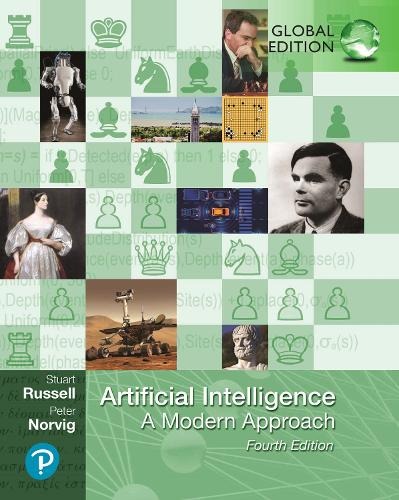
Artificial intelligence : A modern approach ; global ed.
Explores the full breadth and depth of the field of artificial intelligence (AI). The 4th edition brings readers up to date on the latest technologies, presents concepts in a more unified manner, and offers new or expanded coverage of machine learning, deep learning, transfer learning, multi agent systems, robotics, natural language processing, causality, probabilistic programming, privacy, fairness, and safe AI

Artificial immune systems ; Vol. 3627 ; 4th International conference, ICARIS 2005, Banff, Alberta, Canada, August 14-17, 2005, Proceedings
Your immune system is unique. It is in many ways as complex as your brain, butit is not centred in one location, like the brain. It is not a single organ—it consistsof many different cell types, diverse methods of intercellular communication, andmany different organs. Its functionality is blurred throughout you—we can’textract the immune system, or point to where it begins and ends. The immunesystem is not separable from the system it protects. It has integral links to everyorgan of our bodies.This has radical implications for the field of Artificial Immune Systems (AIS),that we are only now beginning to comprehend. One of the first insights is thatmodelling the immune system, or developing any kind of immune algorithm, isdifficult. The immune system is one aspect of biology that we find difficult toapply simple reductionist explanations to. We can very successfully extract sub-processes of the whole and create immune algorithms based on those processes.

Artifical intelligence for human computing ; ICMI 2006 and IJCAI 2007 International Workshops, Banff, Canada, November 3, 2006 Hyderabad, India, January 6, 2007 Revised Selceted Papers
This book contains the thoroughly refereed post-proceedings of two events discussing AI for Human Computing.It presented a vision of the future of computing technology in which AI, in particular machine learning and agent technology, plays an essential role.

Architecture of computing systems - ARCS 2007 ; 20th International Conference, Zurich, Switzerland, March 12-15, 2007, Proceedings
The ARCS is reporting hi- quality results in computer architecture and operating systems research.It is also represent a - namic, evolving community that closely follows new research trends and topics. ARCS has evolved towards a strong focus on s- tem aspects of pervasive computing and self-organization techniques (organic and autonomic computing).

Architecture of computing systems - ARCS 2006 ; 19th International Conference, Frankfurt / Main, Germany, March 13-16, 2006, Proceedings
Technological progress is one of the driving forces behind the dramatic devel- mentofcomputersystemarchitecturesoverthe pastthreedecades.Eventhough it is quite clear that this development cannot only be measured by the ma- mum number of components on a chip, Moore’s Law may be and is often taken as a simple measure for the non-braked growth of computational power over the years. The more components are realizable on a chip, the more innovative and unconventional ideas can be realized by system architects. As a result, research in computer system architectures is more exciting than ever before. This book coversthe trends that shape the ?eld of computer system archit- tures.
