



الصفحة 20
الصفحة 20

Advances in Mass Data Analysis of Signals and Images in Medicine, Biotechnology and Chemistry ; International Conference, MDA 2006/2007, Leipzig, Germany, July 18, 2007, Selected Papers
The automatic analysis of images and signals in medicine, biotechnology, and chemistry is a challenging and demanding field. Signal-producing procedures by microscopes, spectrometers, and other sensors have found their way into wide fields of medicine, biotechnology, economy, and environmental analysis. With this arises the problem of the automatic mass analysis of signal information. Signal-interpreting systems which generate automatically the desired target statements from the signals are therefore of compelling necessity. The continuation of mass analyses on the basis of classical procedures leads to investments of proportions that are not feasible. New procedures and system architectures are therefore required. The goals of this: Provide a forum for identifying important contributions and opportunities for research on mass data analysis on microscopic images Promote the systematic study of how to apply automatic image analysis and interpretation procedures to that field Show case applications of mass data analysis in biology, medicine, and chemistry Topics of interest include (but are not limited to): Techniques and developments of signal and image producing procedures Object matching and object tracking in microscopic and video microscopic images 1D, 2D, and 3D shape analysis and description

Advances in Machine Learning and Cybernetics ; 4th International Conference, ICMLC 2005, Guangzhou, China, August 18-21, 2005, Revised Selected Papers
Machine learning and cybernetics play an important role in many modern electronic, computer and communications systems. Automated processing of information by these systems requires intelligent analysis of various types of data and optimal decision making. In recent years, we have witnessed a rapid expansion of research and development activities in machine learning and cybernetics. To provide opportunities for researchers in these areas to share their ideas and foster collaborations, the International Conference on Machines and Cybernetics (ICMLC) has been held annually since 2002. The conference series has achieved a great success in attracting a large number of paper submissions and participants and enabling fruitful exchanges among academic and industrial researchers and postgraduate students. In 2005, the conference (ICMLC 2005) received 2461 full paper submissions and the Program Committee selected 1050 of them for presentation. It is especially encouraging that the conference is attracting more and more international attention.

Advances in Knowledge Discovery and Data Mining ; 11th Pacific-Asia Conference, PAKDD 2007, Nanjing, China, May 22-25, 2007 : Proceedings
This book covers new ideas, original research results and practical development experiences from all KDD-related areas including data mining, machine learning, data warehousing, data visualization, automatic scientific discovery, knowledge acquisition and knowledge-based systems.

Advances in information system development : New methods and practice for the networked society ; Vol. 1
Advances in Information Systems Development: Bridging the Gap between Academia and Industry, Volumes 1 and 2, are the collected proceedings of the Fourteenth International Conference on Information Systems Development. These latest volumes on Information Systems Development examine the exchange of ideas between academia and industry and aims to explore new solutions.

Advances in Information Processing and Protection
This book contains a selection of the best papers given at the international Advanced Computer Systems Conference in October 2006 in Miedzyzdroje, Poland. Combining research areas from both Computer Science and Industrial Management.
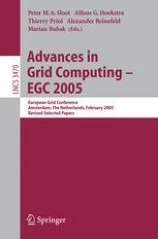
Advances in grid computing - EGC 2005 ; European grid conference, Amsterdam, The Netherlands, February 14-16, 2005, Revised Selected Papers
This book constitutes the proceedings of the European Grid Con-ference 2005, held at the Science Park Amsterdam The aim of the European Grid Conference was to be the premier event onGrid computing in Europe in 2005, focusing on all aspects of Grid computingand bringing together participants from research and industry. In this book you find the final versions of these accepted papers.

Advances in computer science - ASIAN 2006. Secure software and related issues ; 11th Asian computing science conference, Tokyo, Japan, December 6-8, 2006, Revised Selected Papers
Cover theory, practice, applications, and experiences related to secure software.

Advances in computer games ; 11th International Conference, ACG 2005, Taipei, Taiwan, September 6-8, 2005. Revised Papers
Constitutes the thoroughly refereed post-proceedings of the 11th International Conference on Advances in Computer Games, ACG 2005, held in Taipei, Taiwan, in September 2005 in conjunction with the 10th Computer Olympiad. The 20 revised full papers presented were carefully selected during two rounds of reviewing and improvement from 32 submissions. The papers cover all aspects of artificial intelligence in computer-game playing. Reasearch topics addressed are automatic generation, optimization, opponent modelling, search, knowledge representation, and graph history interaction. Games covered are western chess, chinese and japanese chess, checkers, lose checkers, amazons, go, poker, loa, mastermind, awari, ataxx, pool, as well as the two theoretical games connect and sumbers.

Advances in Building Information Modeling ; 1st Eurasian BIM Forum, EBF 2019, Istanbul, Turkey, May 31, 2019, Revised Selected Papers
Constitutes the refereed proceedings of the First Eurasian BIM Forum, EBF 2019, held in Istanbul, Turkey, in May 2019. The 16 full papers were carefully reviewed and selected from 44 submissions. The papers cover such topics as BIM adoption and implementation; BIM for project management; BIM for sustainability and performative design; BIM and facility management and infrastructural issues.

Advances in biometrics ; International conference, ICB 2006, Hong Kong, China, January 5-7, 2006, Proceedings
Biometrics has emerged as a reliable person identification method that can over-come some of the limitations of the traditional automatic personal identificationmethods. With significant advances in biometric technology and a correspondingincrease in the number of applications incorporating biometrics, it is essentialthat we bring together researchers from academia and industry as well as practi-tioners to share ideas, problems and solutions for the development and successfuldeployment of state-of-the-art biometric systems.The International Conference on Biometrics (ICB 2006) followed the success-ful International Conference on Biometric Authentication (ICBA 2004) to facil-itate this interaction. ICB 2006 received a large number of high-quality researchpapers. After a careful review of 192 submissions, 104 papers were acceptedfor presentation.

Advances in Artificial Life ; 9th European Conference, ECAL 2007, Lisbon, Portugal, September 10-14, 2007, Proceedings
This book is organized in topical sections on conceptual articles, morphogenesis and development, robotics and autonomous agents, evolutionary computation and theory, cellular automata, models of biological systems and their applications, ant colony and swarm systems, evolution of communication, simulation of social interactions, self-replication, artificial chemistry, and posters.

Advances in artificial life ; 8th European Conference, ECAL 2005 , Canterbury, UK, September 5-9, 2005, Proceedings
The Artificial Life term appeared more than 20 years ago . Since then the area has developed dramatically, many researchersjoining enthusiastically and research groups sprouting everywhere.a conceptual track, where papers were judged on criteria like importance and/or novelty of the concepts proposed rather than the experimental / theoretical results, has been introduced this year. A conference on a theme as broad as Artificial Life is bound to be very di-verse, but a few tendencies emerged. First, fields like ‘Robotics and Autonomous Agents’ or ‘Evolutionary Computation’are still extremely active and keep onbringing a wealth of results to the A-Life community. Even there, however, new tendencies appear, like collective robotics, and more specifically self-assembling robotics, which represent now a large subsection. Second, new areas appear.‘Morphogenesis and Development’ which used to be the subject of only a fewpapers, is now one of the largest subsections, and seems to be on the brinkof becoming a field of its own. Finally, most classical themes of A-Life re-search like ‘Artificial Chemistry’, ‘Ant-Inspired Systems’, ‘Cellular Automata’,‘Self-Replication’, ‘Social Simulations’ or ‘Bio-realist Simulations’ are still goingstrong and are well represented within this volume.

Advances in Applied Self-organizing Systems
This book presents the state-of-the-practice in successfully engineered self-organizing systems, and examines ways to balance design and self organization in the context of applications.

Advancement of Deep Learning and its Applications in Object Detection and Recognition
In just the past five years, deep learning has taken the world by surprise, driving rapid progress in fields as diverse as computer vision, natural language processing, automatic speech recognition, etc. This book presents an introduction to deep learning and various applications of deep learning such as recommendation systems, text recognition, diabetic retinopathy prediction of breast cancer, prediction of epilepsy, sentiment, fake news detection, software defect prediction and protein function prediction.

Advanced Intelligent Computing Theories and Applications. With Aspects of Theoretical and Methodological Issues ; 3rd International Conference on Intelligent Computing, ICIC 2007 Qingdao, China, August 21-24, 2007 Proceedings
Provides an annual forum dedicated to the emerging and challenging topics in artificial intelligence, machine learning, bioinformatics, and computational biology, etc. It aims to bring - gether researchers and practitioners from both academia and industry to share ideas, problems and solutions related to the multifaceted aspects of intelligent computing. This year, the conference concentrated mainly on the theories and methodologies as well as the emerging applications of intelligent computing. Its aim was to unify the picture of contemporary intelligent computing techniques as an integral concept that highlights the trends in advanced computational intelligence and bridges theoretical research with applications.

Advanced driver assistance system (ADAS)
The purpose of Advanced Driver Assistance Systems (ADAS) is to reduce or eliminate driver errors, and to enhance efficiency in traffic and transportation. Our project is a means and a great contribution to safe driving, and the user does not need to install sensors or hard tools to the vehicle, and through it, the cost can be reduced and maintenance cost can be eliminated. The images are processed and segmented to find different features in the image. Segmented images are used for identification and classification based on various machine learning algorithms and neural networks. The main focus of ADAS technologies is to contribute to factors such as safety management and automated, stress-free driving for the driver
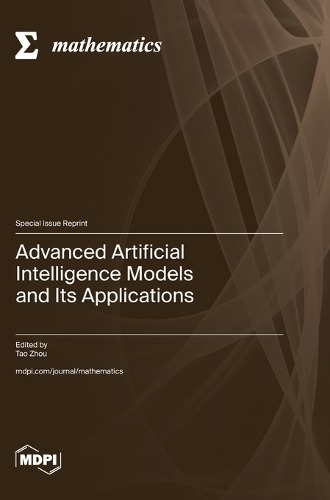
Advanced artificial intelligence models and its applications
The field of artificial intelligence (AI) has undergone enormous expansion since its inception in the mid-20th century, as demonstrated by its application across an array of engineering and scientific challenges. Particularly in the last decade, AI has witnessed a significant breakthrough with the advent of deep learning, which has facilitated the employment of various AI models across a multitude of domains. This reprint features ten papers accepted for publication in the Special Issue titled "Advanced Artificial Intelligence Models and Their Applications," published in the MDPI Mathematics journal. These papers explore numerous facets of advanced artificial intelligence models and their applications, covering areas such as cybersecurity, image classification, logistics optimization, automatic music generation, human capital investment, writer recognition, remote sensing image indexing, target tracking, and more.
Adaptive agents and multi-agent systems III : Adaptation and multi-Agent learning ; 5th, 6th, and 7th European Symposium, ALAMAS 2005-2007 on Adaptive and Learning Agents and Multi-Agent Systems, Revised Selected Papers
This book contains selected and revised papers of the European Symposium on Adaptive and Learning Agents and Multi-Agent Systems (ALAMAS).

Abstraction, Reformulation, and Approximation ; 7th International Symposium, SARA 2007, Whistler, Canada, July 18-21, 2007, Proceedings
This volume contains the proceedings of SARA 2007, the seventh symposium, held at Whistler Village, British Columbia, Canada, July 18-21. Three distinguished speakers were invited to give keynote presentations, and their abstracts are included herein,It has been recognized since the inception of artificial intelligence that abstractions, problem reformulations and approximations (AR&A) are central to human common-sense reasoning and problem solving and to the ability of systems to reason effectively in complex domains.AR&A techniques have been used in a variety of problem-solving settings, including automated reasoning, cognitive modelling.

Abstraction, reformulation and approximation ; 6th International symposium, SARA 2005, Airth Castle, Scotland, UK, July 26-29, 2005, proceedings
This volume contains the proceedings of the 6th Symposium on Abstraction, Reformulation and Approximation (SARA 2005). the proceedings have been published in the LNAI series of Springer. Abstractions, reformulations and approximations (AR&A) have found app- cationsin avarietyofdisciplines andproblems, including constraintsatisfaction, design, diagnosis, machine learning, planning, qualitative reasoning, scheduling, resource allocation and theorem proving, but are also deeply rooted in philo- phy and cognitive science. The papers in this volume capture a cross-section of the various facets of the ?eld and of its applications. One of the primary uses of AR&A is oriented to overcome computational intractability. AR&A techniques, however, have also proved useful for knowledge acquisition, explanation and other applications.
