



الصفحة 2
الصفحة 2

Models, Methods and Tools for Product Service Design : The Manutelligence Project
This book summarizes research being pursued within the Manutelligence project, the goal of which is to help enterprises develop smart, social and flexible products with high value added services. Manutelligence has improved Product and Service Design by developing suitable models and methods, and connecting them through a modular, collaborative and secure ICT Platform. The use of real data collected in real time by Internet of Things (IoT) technologies underpins the design of product-service systems and makes it possible to monitor them throughout their life cycle. Available data allows costs and sustainability issues to be more accurately measured and simulated in the form of Life Cycle Cost (LCC) and Life Cycle Assessment (LCA). Analysing data from IoT systems and sharing LCC and LCA information via the ICT Platform can help to accelerate the design of product-service systems, reduce costs and better understand customer needs. Industrial partners involved in Manutelligence provide a clear overview of the project's outcomes, and demonstrate how its technological solutions can be used to improve the design of product-service systems and the management of product-service life cycles.

Models in Software Engineering ; Workshops and Symposia at MoDELS 2007, Nashville, TN, USA, September 30 - October 5, 2007, Reports and Revised Selected Papers
This book constitutes the thoroughly refereed post-workshop proceedings of 10 internationl workshops and 2 symposia held as satellite events of the 10th International Conference on Model Driven Engineering Languages and Systems, MoDELS 2007, in Nashville, TN, USA, in September/October 2007 (see LNCS 4735).The 29 revised full papers were carefully selected for inclusion in the book and are presented along with a doctoral and an educators' symposium section. The papers are organized in topical sections representing the various workshops: aspect-oriented modeling (AOM 2007), language engineering (ATEM2007), model driven development of advanced user interfaces (MDDAUI 2007), model size metrics (MSM 2007).
Modelling and Reasoning with Vague Concepts
This volume outlines a formal representation framework for modelling and reasoning with vague concepts in Artificial Intelligence. The new calculus has many applications, especially in automated reasoning, learning, data analysis and information fusion. This book gives a rigorous introduction to label semantics theory, illustrated with many examples, and suggests clear operational interpretations of the proposed measures. It also provides a detailed description of how the theory can be applied in data analysis and information fusion based on a range of benchmark problems.

Modeling Decisions for Artificial Intelligence ; 5th International Conference, MDAI 2008 Sabadell, Spain, October 30-31, 2008. Proceedings
This book constitutes the refereed proceedings of the 5th International Conference on Modeling Decisions for Artificial Intelligence, MDAI 2008, held in Sabadell, Spain, in October 2008.The 19 revised full papers presented together with 2 invited lectures were thoroughly reviewed and selected from 43 submissions; they are devoted to theory and tools for modeling decisions, as well as applications that encompass decision making processes and information fusion techniques. The papers are organized in topical sections on aggregation operators, decision making, clustering and similarity, computational intelligence and optimization, as well as data privacy.
Model-Based Software and Data Integration ; 1st International Workshop, MBSDI 2008, Berlin, Germany, April 1-3, 2008. Proceedings
The First International Workshop on Model-Based Software and Data Integ- tion (MBSDI 2008), was ourfrst event of this kind in a forthcoming series of activities at TU Berlin, where a scientifc discussion and exchange forum was provided for both academic and industrial researchers. We aimed at researchers, engineersand practitionerswho focus onadvanced, model-basedsolutions inthe area of software and information integration and interoperability. As withevery beginning, the resonanceonour callsin today's overfoodingof workshops was somewhat unpredictable, and we did not really know how many paper submissions to expect. We were nicely surprised, considering the rather short lead time to organize the meeting and the very specialized and focused topic.
Model Driven Engineering Languages and Systems ; 11th International Conference, MoDELS 2008, Toulouse, France, September 28 - October 3, 2008. Proceedings
The book also contains three keynote speeches and contributions to workshops, symposia, tutorials and panels at the conference. The papers are organized in topical sections on Model Transformation: Foundations; Requirements Modeling; Domain-Specific Modeling; Model Transformation: Techniques, Composition and Analysis of Behavioral Models; Model Comprehension; Model Management; Behavioral Conformance and Refinement; Metamodeling and Modularity; Constraints; Model Analysis; Service-Oriented Architectures; Adaptive and Autonomic Systems; Empirical Studies; Evolution and Reverse Engineering; Modeling Language Semantics; Dependability Analysis and Testing; Aspect-Oriented Modeling; Structural Modeling;and Embedded Systems.

Model Checking Software ; Vol. 3925 ; 13th International SPIN Workshop, Vienna, Austria, March 30 - April 1, 2006, Proceedings
he name “SPIN” refers both to a workshopon model checking and to a famous model checking tool. The SPIN workshop is an annual forum for practitioners and researchersinterested in state space-based techniques for the validation and analysis of software and hardware systems, including communication protocols. It focuses on techniques based on explicit representations of state spaces, as implemented in the SPIN model checker or other tools, and techniques based on a combination of explicit representations with other representations. The SPIN model checker has proven to be particularly suited for the analysis of concurrent asynchronous systems. The workshop aims to encourage interaction and exchange of ideas with all related areas in software engineering.
Model Checking Software ; 15th International SPIN Workshop, Los Angeles, CA, USA, August 10-12, 2008 Proceedings
This book constitutes the refereed proceedings of the 15th International SPIN workshop on Model Checking Software, SPIN 2008, held in Los Angeles, CA, USA, in August 2008.The 17 revised full papers presented together with 1 tool paper and 4 invited talks were carefully reviewed and selected from 41 submissions. The main focus of the workshop series is software systems, including models and programs. The papers cover theoretical and algorithmic foundations as well as tools for software model checking and foster interactions and exchanges of ideas with related areas in software engineering, such as static analysis, dynamic analysis, and testing.
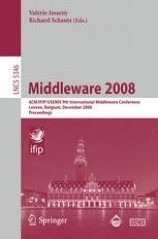
Middleware 2008 ; ACM/IFIP/USENIX 9th International Middleware Conference Leuven, Belgium, December 1-5, 2008 Proceedings
This book constitutes the refereed proceedings of the ACM/IFIP/USENIX 9th International Middleware Conference 2008, held in Leuven, Belgium, in December 2008.The 21 revised full papers presented were carefully reviewed and selected from 117 submissions for inclusion in the book. The papers are organized in topical sections on platforms extended to new capabilities, advanced software engineering focusing on specific system properties, system management techniques, as well as components and system algorithms and properties.

Middleware 2007 ; ACM/IFIP/USENIX 8th International Middleware Conference, Newport Beach, CA, USA, November 26-30, 2007, Proceedings
This book constitutes the refereed proceedings of the ACM/IFIP/USENIX 8th International Middleware Conference 2007, held in Newport Beach, CA, USA, in November 2007.

Microsoft Dynamics NAV : Jump Start to Optimization
Mastering Microsoft Dynamics NAV for beginners and IT professionals: from jump start to optimization. This book covers general use and shows you how to tailor Microsoft Dynamics NAV to mirror your firm's unique needs. Learn skills that enable you to navigate and interpret the world of possibilities locked within the ERP system. Through easy, concrete examples, you will master the layered environment and be able to use and create reports, forms, import/export functions and more. This book gives you the basis you need to demand the best information infrastructure for your enterprise.

MICAI 2008 : Advances in Artificial Intelligence ;7th Mexican International Conference on Artificial Intelligence, Atizapán de Zaragoza, Mexico, October 27-31, 2008 Proceedings
The 96 revised full papers presented together with 2 invited lectures were carefully reviewed and selected from 363 submissions. The papers are organized in topical sections on logic and reasoning, knowledge-based systems, knowledge representation and acquisition, ontologies, natural language processing, machine learning, pattern recognition, data mining, neural networks, genetic algorithms, hybrid intelligent systems, computer vision and image processing, robotics, planning and scheduling, uncertainty and probabilistic reasoning, fuzzy logic, intelligent tutoring systems, multi-agent systems and distributed ai, intelligent organizations, bioinformatics and medical applications, as well as applications.

Metalearning : Applications to Automated Machine Learning and Data Mining
This book as one of the fastest-growing areas of research in machine learning, metalearning studies principled methods to obtain efficient models and solutions by adapting machine learning and data mining processes. This adaptation usually exploits information from past experience on other tasks and the adaptive processes can involve machine learning approaches. As a related area to metalearning and a hot topic currently, automated machine learning (AutoML) is concerned with automating the machine learning processes. Metalearning and AutoML can help AI learn to control the application of different learning methods and acquire new solutions faster without unnecessary interventions from the user.

Metainformatics ; International Symposium, MIS 2004, Salzburg, Austria, September 15-18, 2004, Revised Selected Papers
Constitutes the refereed post-proceedings of the Metainformatics Symposium, MIS 2004, held in Salzburg, Austria. This book reviews 17 papers that are devoted to finding useful abstractions, analytical frameworks, and systems that improve the understanding of the underlying structure of disciplines and families of systems within computer science.
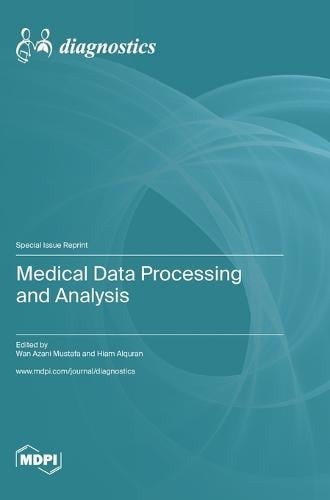
Medical data processing and analysis
Medical data can be defined as obtaining information from patients (such as signals, images, sounds, chemical components and their concentration, body temperature, respiratory rate, blood pressure, and different treatment measurements) to quantify the patient’s status and disease stage. Computer-aided diagnostic (CAD) systems use classical image processing, computer vision, machine learning, and deep learning methods for image analysis. Using image classification or segmentation algorithms, they find a region of interest (ROI) pointing to a specific location within the given image or an outcome of interest in the form of a label pointing to a diagnosis or prognosis. Computer science, with the evolution of artificial intelligence and machine learning techniques, facilitates the modeling and interpretation of results—from carrying out measurements to experiments and observations.

Mechanisms, Symbols, and Models Underlying Cognition ; 1st International Work-Conference on the Interplay Between Natural and Artificial Computation, IWINAC 2005, Las Palmas, Canary Islands, Spain, June 15-18, 2005, Proceedings, Part I
Constitute the refereed proceedings of the First International Work-Conference on the Interplay between Natural and Artificial Computation, IWINAC 2005. This two-volume set contains papers that are related with the conceptual developments in the fields of Neurophysiology and cognitive science, and also to bioinspired programming strategies.

MCITP self-paced training Kit (Exam 70-444) : Optimizing and maintaining a database administration solution microsoft SQL server 2005
Designed to help you make the most of your study time. Maximize your performance on the exam by learning to: * Monitor and troubleshoot queries, databases, and servers * Help defend against injection attacks, denial of service attacks, worms, and viruses * Manage security strategies and perform audits * Detect and resolve data conflicts * Diagnose faults and recover from database failures and disasters * Optimize database availability with failover clustering, database mirroring, log shipping, and replication * Customize a maintenance strategy and automate routine tasks * Build, debug, and deploy SQL Server Integration Services packages PRACTICE TESTS Assess your skills with practice tests on CD. You can work through hundreds of questions using multiple testing modes to meet your specific learning needs. You get detailed explanations for right and wrong answers-including a customized learning path that describes how and where to focus your studies. Your training kit includes: Details inside. * Official self-paced study guide. * Practice tests with multiple, customizable testing options and a learning plan based on your results. *400+ practice and review questions. * Case scenarios, practice exercises, and best practices. *180-day evaluation version of Microsoft SQL Server 2005 Enterprise Edition. * Fully searchable eBook of this guide.
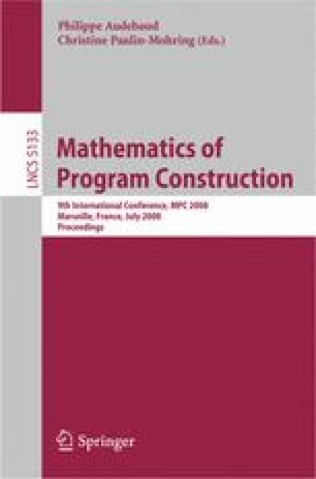
Mathematics of Program Construction ; 9th International Conference, MPC 2008, Marseille, France, July 15-18, 2008. Proceedings
This book constitutes the refereed proceedings of the 9th International Conference on Mathematics of Program Construction, MPC 2008, held in Marseille, France in July 2008.The 18 revised full papers presented together with 1 invited talk were carefully reviewed and selected from 41 submissions. Issues addressed range from algorithmics to support for program construction in programming languages and systems. Topics of special interest are type systems, program analysis and transformation, programming language semantics, program logics.

Mathematics for Computer Graphics
In thirteen chapters you will rediscover - and hopefully discover for the first time a new way of understanding - the mathematical techniques required to solve problems and design computer programs for computer graphic applications. Each chapter explores a specific mathematical topic and takes you forward into more advanced areas until you are able to understand 3D curves and surface patches, and solve problems using vectors.

Mathematical Morphology : 40 Years On ; Proceedings of the 7th International Symposium on Mathematical Morphology, April 18-20, 2005
Mathematical Morphology is a speciality in Image Processing and Analysis, which considers images as geometrical objects, to be analyzed through their interactions with other geometrical objects. It relies on several branches of mathematics, such as discrete geometry, topology, lattice theory, partial differential equations, integral geometry and geometrical probability. It has produced fast and efficient algorithms for computer analysis of images, and has found applications in bio-medical imaging, materials science, geoscience, remote sensing, quality control, document processing and data analysis. This book contains the 43 papers presented at the 7th International Symposium on Mathematical Morphology, held in Paris on April 18-20, 2005. It gives a lively state of the art of current research topics in this field. It also marks a milestone, the 40 years of uninterrupted development of this ever-expanding domain.
