



الصفحة 2
الصفحة 2
Comparative genomics ; Vol. 3388 : RECOMB 2004 International Workshop, RCG 2004, Bertinoro, Italy, October 16-19, 2004, Revised Selected Papers
This papers investigates the problem of conservation of combinatorial structures in genome rearrangement scenarios. We give a characterization of a class of scenarios that conserve all common intervals, called commuting scenarios, and a characterization of permutations for which commuting scenarios exist. We show that measuring conservation of common intervals can be useful tool in assessing the quality of rearrangement scenarios, by investigating in detail three specific scenarios involving the mouse, rat and human X chromosomes.
Comparative genomics ; RECOMB 2007, International Workshop, RECOMB-CG 2007, San Diego, CA, USA, September 16-18, 2007, Proceedings
This book provides an evolutionary conceptual framework for comparative genomics, with the ultimate objective of understanding the loss and gain of genes during evolution, the interactions among gene products, and the relationship between genotype, phenotype and the environment. The many examples in the book have been carefully chosen from primary research literature based on two criteria: their biological insight and their pedagogical merit. The phylogeny-based comparative methods, involving both continuous and discrete variables, often represent a stumbling block for many students entering the field of comparative genomics. They are numerically illustrated and explained in great detail.

Comparative genomics ; International Workshop, RECOMB-CG 2008, Paris, France, October 13-15, 2008. Proceedings
This book constitutes the refereed proceedings of the 6th RECOMB Comparative Genomics Satellite Workshop, RECOMB-CG 2008, held in Paris, France, in October 2008.

Biometrics and Identity Management ; 1st European Workshop, BIOID 2008, Roskilde, Denmark, May 7-9, 2008. Revised Selected Papers
This volume constitutes the post-conference proceedings of the First European Workshop on Biometrics and Identity Management, BIOID 2008, held in Roskilde, Denmark, during May 7-9, 2008.
Bioinorganic electrochemistry
Interfacial electrochemistry of redox metalloproteins and DNA-based molecules is presently moving towards new levels of structural and functional resolution. This is the result of powerful interdisciplinary efforts. Underlying fundamentals of biological electron and proton transfer is increasingly well understood although with outstanding unresolved issues. Comprehensive bioelectrochemical studies have mapped the working environments for bioelectrochemical electron transfer, supported by the availability of mutant proteins and other powerful biotechnology. Introduction of surface spectroscopy, the scanning probe microscopies, and other solid state and surface physics methodology has finally offered exciting new fundamental and technological openings in interfacial bioelectrochemistry of both redox proteins and DNA-based molecules.
Bio-informatique moléculaire : Une approche algorithmique = Molecular bioinformatics : An algorithmic approach
Deals with genetic maps, from the problem of sequence comparison and alignment, including DNA chips and genomic rearrangement. It thus covers a wide variety of topics relating to algorithmic and combinatorial processing of questions arising from molecular bioinformatics and biotechnology.
Bioinformatics technologies
Solving modern biological problems requires advanced computational methods. Bioinformatics evolved from the active interaction of two fast-developing disciplines, biology and information technology. The central issue of this emerging field is the transformation of often distributed and unstructured biological data into meaningful information. This book describes the application of well-established concepts and techniques from areas like data mining, machine learning, database technologies, and visualization techniques to problems like protein data analysis, genome analysis and sequence databases. Chen has collected contributions from leading researchers in each area. The chapters can be read independently, as each offers a complete overview of its specific area, or, combined, this monograph is a comprehensive treatment that will appeal to students, researchers, and R&D professionals in industry who need a state-of-the-art introduction into this challenging and exciting young field.
Bioinformatics and Computational Biology Solutions Using R and Bioconductor
Bioconductor is a widely used open source and open development software project for the analysis and comprehension of data arising from high-throughput experimentation in genomics and molecular biology. Bioconductor is rooted in the open source statistical computing environment R. This volume's coverage is broad and ranges across most of the key capabilities of the Bioconductor project, including: Importation and preprocessing of high-throughput data from microarray, proteomic, and flow cytometry platforms / Curation and delivery of biological metadata for use in statistical modeling and interpretation. / Statistical analysis of high-throughput data, including machine learning and visualization,modeling and visualization of graphs and networks. This book is a dynamic document. Code underlying all of the computations that are shown is made available on a companion website, and readers can reproduce every number, figure, and table on their own computers.
Bioinformatics
In this textbook present mathematical models in bioinformatics and they describe the biological problems that inspire the computer science tools used to handle the enormous data sets involved. The first part of the book covers the mathematical and computational methods, while the practical applications are presented in the second part. The mathematical presentation is descriptive and avoids unnecessary formalism, and yet remains clear and precise. Emphasis is laid on motivation through biological problems and cross applications. Each of the four chapters in the first part is accompanied by exercises and problems to support an understanding of the techniques presented. Each of the six chapters of the second part is devoted to some specific application domain: sequence alignment, molecular phylogenetics and coalescence theory, genomics, proteomics, RNA, and DNA microarrays. Each chapter concludes with a problems and projects section, to deepen the reader's understanding and to allow for the design of derived methods. Many of the projects involve publicly available software and/or Web-based bioinformatics depositories. Finally, the book closes with a thorough bibliography, reaching from classic research results to very recent findings, providing many pointers for future research.Overall, this volume is ideally suited for a senior undergraduate or graduate course on bioinformatics, with a strong focus on its mathematical and computer science background.
Bioarrays : From Basics to Diagnostics
Bioarrays: From Basics to Diagnostics provides an integrated and comprehensive collection of timely articles on the use of bioarray techniques in the fields of biotechnology and molecular medicine. The entire volume is broken into four sections – Bioarray Technology Platforms, Biomarkers and Clinical Genomics, Biomarker Identification Using Clinical Proteomics and Glycomics, and Emerging Technologies in Diagnostics – that create one well-integrated work. Particular emphasis is placed on DNA, protein, and carbohydrate biochips. The volume also looks extensively at oligonucleotides, cDNA, proteins, antibodies, and carbohydrate arrays.

Bioactive Heterocycles VI : Flavonoids and anthocyanins in plants, and latest bioactive heterocycles I
Heterocyclic chemistry is the biggest branch of chemistry covering two-thirds of the chemical literature and this book covers the hot topics of frontier research summarized by reputed scientists in

Becoming a world-class university : The case of King Abdulaziz University
This book written by international experts in the field of educational innovation is a guide for universities to become world-class universities. It contributes to the current international intellectual debate on the future of higher education. It also tells the story of King Abdulaziz University in Jeddah (Saudi Arabia) and its effort to become a world-class university. The book discusses excellence in different aspects such as education, research, community services, strategic planning, knowledge economy and international cooperation.

AsiaSim 2007 ; Asia Simulation Conference 2007, Seoul, Korea, October 10-12, 2007, Proceedings
This book contains modeling, simulation, and their applications.It also contains e-business, supply chain management, general and engineering applications, manufacturing, medical, military,networks, transportation, traffic and virtual reality.
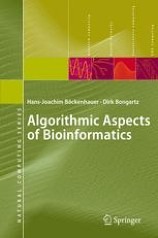
Algorithmic Aspects of Bioinformatics
Advances in bioinformatics and systems biology require improved computational methods for analyzing data, while progress in molecular biology is in turn influencing the development of computer science methods. This book introduces some key problems in bioinformatics, discusses the models used to formally describe these problems, and analyzes the algorithmic approaches used to solve them. After introducing the basics of molecular biology and algorithmics, Part I explains string algorithms and alignments; Part II details the field of physical mapping and DNA sequencing; and Part III examines the application of algorithmics to the analysis of biological data. Exciting application examples include predicting the spatial structure of proteins, and computing haplotypes from genotype data. This book describes topics in detail and presents formal models in a mathematically precise, yet intuitive manner, with many figures and chapter summaries, detailed derivations, and examples. It is well suited as an introduction into the field of bioinformatics, and will benefit students and lecturers in bioinformatics and algorithmics, while also offering practitioners an update on current research topics.

Advances in Natural Computation ; Vol. 4222 ; 2nd International Conference, ICNC 2006, Xi'an, China, September 24-28, 2006, Proceedings, Part II
constitutethe proceedings of the 2nd International Conference on Natural Computation (ICNC 2006), jointly held with the 3rd International Conference on Fuzzy Systems and Knowledge Discovery, ICNC-FSKD 2006 featured the most up-to-date research results in com- tational algorithms inspired from nature, including biological, ecological, and physical systems. It is an exciting and emerging interdisciplinary area in which a wide rangeof techniques and methods arebeing studied for dealing with large, complex, and dynamic problems. The joint conferences also promoted cro- fertilization over these exciting and yet closely-related areas, which had a s- nifcant impact on the advancement of these important technologies. Specifc areas included neural computation, quantum computation, evolutionarycom- tation, DNA computation, fuzzy computation, granular computation, artifcial life, etc., with innovative applications to knowledge discovery, fnance, ope- tions research, and more. In addition to the large number of submitted papers, we were blessed with the presence of six renowned keynote speakers.

Advances in natural computation ; Vol. 4221 ; 2nd International Conference, ICNC 2006, Xi'an, China, September 24-28, 2006, Proceedings, Part I
ICNC-FSKD 2006 featured the most up-to-date research results in com- tational algorithms inspired from nature, including biological, ecological, and physical systems. It is an exciting and emerging interdisciplinary area in which a wide rangeof techniques and methods arebeing studied for dealing with large, complex, and dynamic problems. The joint conferences also promoted cro- fertilization over these exciting and yet closely-related areas, which had a s- nifcant impact on the advancement of these important technologies. Specifc areas included neural computation, quantum computation, evolutionarycom- tation, DNA computation, fuzzy computation, granular computation, artifcial life, etc., with innovative applications to knowledge discovery, fnance, ope- tions research, and more. In addition to the large number of submitted papers, we were blessed with the presence of six renowned keynote speakers.

Advances in natural computation ; Vol. 3612 ; 1st International conference, ICNC 2005, Changsha, China, August 27-29, 2005, Proceedings, Part III
Includes 313 full papers and 189 short papers the refereed proceedings of the First International Conference on Natural Computation, ICNC 2005, held in Changsha, China, in August 2005 as a joint event with the Second International Conference on Fuzzy Systems and Knowledge Discovery FSKD 2005. includ Topics : Artificial Intelligence / Theory of Computation / Computation by Abstract Devices / Algorithm Analysis and Problem Complexity / Image Processing and Computer Vision / Pattern Recognition

Advances in natural computation ; Vol. 3611 ; 1st International conference, ICNC 2005, Changsha, China, August 27-29, 2005, proceedings, Part II
Featured the most up-to-date research results in com-putational algorithms inspired from nature, including biological, ecological, andphysical systems. It is an exciting and emerging interdisciplinary area in whicha wide range of techniques and methods are being studied for dealing with large,complex, and dynamic problems. The joint conferences also promoted cross-fertilization over these exciting and yet closely-related areas, "
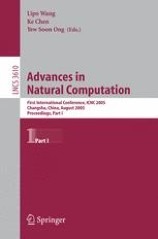
Advances in natural computation ; Vol. 3610 ; 1st International conference, ICNC 2005, Changsha, China, August 27-29, 2005, Proceedings, Part I
Featured the most up-to-date research results in computational algorithms inspired from nature, including biological, ecological, andphysical systems. It is an exciting and emerging interdisciplinary area in which a wide range of techniques and methods are being studied for dealing with large, complex, and dynamic problems. The joint conferences also promoted cross-fertilization over these exciting and yet closely-related areas, which had a sig-nificant impact on the advancement of these important technologies. Specificareas included neural computation, quantum computation, evolutionary com-putation, DNA computation, chemical computation, information processing incells and tissues, molecular computation, computation with words, fuzzy com-putation, granular computation, artificial life, swarm intelligence, ants colonies
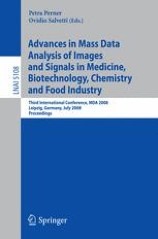
Advances in Mass Data Analysis of Images and Signals in Medicine, Biotechnology, Chemistry and Food Industry ; 3rd International Conference, MDA 2008 Leipzig, Germany, July 14, 2008 Proceedings
Presents the broad and growing scientific evidence linking mass data analysis with challenging problems in medicine, biotechnology and chemistry.
