



الصفحة 19
الصفحة 19
Essential Software Architecture
Job titles like "Technical Architect" and "Chief Architect" nowadays abound in the software industry, yet many people suspect that "architecture" is one of the most overused and least understood terms in professional software development. Gorton's book helps resolve this predicament. It concisely describes the essential elements of knowledge and key skills required to be a software architect. The explanations encompass the essentials of architecture thinking, practices, and supporting technologies.

Error-Correction Coding and Decoding : Bounds, Codes, Decoders, Analysis and Applications
This book discusses both the theory and practical applications of self-correcting data, commonly known as error-correcting codes. The applications included demonstrate the importance of these codes in a wide range of everyday technologies, from smartphones to secure communications and transactions. Written in a readily understandable style,This book is a valuable resource for anyone interested in error-correcting codes and their applications, ranging from non-experts to professionals at the forefront of research in their field.
Eric Sink on the Business of Software
Eric Sink on the Business of Software is a selection of the best and most popular essays from the author's website. This insightful collection of essays explore the business concerns that programmers face during the course of their careers—particularly those programmers who are small independent software vendors. Sink also covers issues like starting your own business, and then performing the hiring, marketing, and finances in a style that programmers understand, sprinkled with a touch of humor.

Ergodic Dynamics : From Basic Theory to Applications
This textbook provides a broad introduction to the fields of dynamical systems and ergodic theory. Motivated by examples throughout, the author offers readers an approachable entry-point to the dynamics of ergodic systems. Modern and classical applications complement the theory on topics ranging from financial fraud to virus dynamics, offering numerous avenues for further inquiry. Starting with several simple examples of dynamical systems, the book begins by establishing the basics of measurable dynamical systems, attractors, and the ergodic theorems. From here, chapters are modular and can be selected according to interest. Highlights include the Perron–Frobenius theorem, which is presented with proof and applications that include Google PageRank. An in-depth exploration of invariant measures includes ratio sets and type III measurable dynamical systems using the von Neumann factor classification. Topological and measure theoretic entropy are illustrated and compared in detail, with an algorithmic application of entropy used to study the papillomavirus genome. A chapter on complex dynamics introduces Julia sets and proves their ergodicity for certain maps. Cellular automata are explored as a series of case studies in one and two dimensions, including Conway’s Game of Life and latent infections of HIV. Other chapters discuss mixing properties, shift spaces, and toral automorphisms.
Entertainment computing - ICEC 2006 ; 5th International Conference, Cambridge, UK, September 20-22, 2006, Proceeding
ICEC 2006 attracted 47 full paper submissions, 48 short paper submissions in total 95 technical papers. Based on a thorough review and selection process by 85 international experts from academia and industry as members of the Program Committee, a high-quality program was compiled. The International Program Committee consisted of experts from all over the world As a result, 17 full papers and 17 short papers were accepted as submitted or with minor revisions. For the remaining submissions, 28 were recommended to change according to the reviews and were submitted as posters. This proceedings volume presents 62 technical contributions which are from many different countries.
Entertainment Computing - ICEC 2005 ; 4th International Conference, Sanda, Japan, September 19-21, 2005, Proceedings
First of all, we appreciate the hard work of all the authors who contributed to ICEC 2005 by submitting their papers. ICEC 2005 attracted 95 technical paper submissions, 8 poster submissions and 7 demo submissions, in total 110. This number is nearly equal to ICEC 2004. Based on a thorough review and selection process carried out by 76 international experts from academia and industry as members of the senior and international program committees, a high-quality program was compiled. The program committee consisted of experts from all over the world: 1 from Austria, 3 from Bulgaria, 2 from Canada, 4 from China, 1 from Finland, 4 from France, 10 from Germany, 1 from Greece, 1 from Ireland, 1 from Israel, 1 from Italy, 26 from Japan, 1 from Korea, 4 from The Netherlands, 1 from New Zealand, 1 from Norway, 1 from Singapore, 1 from Thailand, 4 from the UK, and 8 from the USA. In this number, reviewers are included. The final decision was made at the senior program committee meeting based on three reviewers' feedback, available online via the conference management tool. Through earnest and fair discussion at the meeting, 25 technical papers were accepted as long papers and 32 technical papers were accepted as short papers from 95 submitted technical papers. Moreover, 3 poster papers and 5 demo papers were accepted.
Enterprise service oriented architectures : Concepts, challenges, recommendations
Enterprise Service Oriented Architectures helps readers solve this challenge in making different applications communicate in a loosely coupled manner. This classic handbook leverages the experiences of thought leaders functioning in multiple industry verticals and provides a wealth of knowledge for creating the agile enterprise.
Enterprise ontology : Theory and methodology
Such a theory and a matching methodology, which has passed the test of practical experience, constitute the contents of this book. The enterprise ontology, as developed by Dietz, is the starting point for profoundly understanding the organization of an enterprise and subsequently for analyzing, (re)designing, and (re)engineering it. The approach covers numerous issues in an integrated way: business processes, in- and outsourcing, information systems, management control, staffing etc.

Enterprise Information Systems V
ICEIS focuses on real world applications and aims at bringing together researchers, engineers and practitioners interested in the advances and business applications of information systems. As in previous years, ICEIS’2003 held four simultaneous tracks covering different aspects of enterprise computing: Databases and Information Systems Integration, Artificial Intelligence and Decision Support Systems, Information Systems Analysis and Specification and Software Agents and Internet Computing. Although ICEIS’2003 received 546 paper submissions from over 50 countries, only 80 were accepted as full papers and presented in 30-minutes oral presentations. With an acceptance rate of 15%, these numbers demonstrate the intention of preserving a high quality forum for future editions of this conference. From the articles accepted as long papers for the conference, only 32 were selected for inclusion in this book Additional keynote lectures, tutorials and industrial sessions were also held during ICEIS’2003, and, for the first time this year, the 1st Doctoral Consortium on Enterprise Information Systems gave PhD students an opportunity to present their work to an international audience of experts in the field of information systems.
Engineering theories of software intensive systems : Theory, algorithms, software, and applications
Software engineering has over the years been applied in many different fields, ranging from telecommunications to embedded systems in car and aircraft industry as well as in production engineering and computer networks. Foundations in software technology lie in models allowing to capture application domains, detailed requirements, but also to understand the structure and working of software systems like software architectures and programs. These models have to be expressed in techniques based on discrete mathematics, algebra and logics. However, according to the very specific needs in applications of software technology, formal methods have to serve the needs and the quality of advanced software engineering methods, especially taking into account security aspects in Information Technology. This book presents mathematical foundations of software engineering and state-of-the-art engineering methods in their theoretical substance in the step towards practical applications to examine software engineering techniques and foundations used for industrial tasks.
Engineering Stochastic Local Search Algorithms. Designing, Implementing and Analyzing Effective Heuristics ; International Workshop, SLS 2007, Brussels, Belgium, September 6-8, 2007, Proceedings
Stochastic local search (SLS) algorithms enjoy great popularity as powerful and versatile tools for tackling computationally hard decision and optimization pr- lems from many areas of computer science, operations research, and engineering. However, in recent years it has become evident that at the core of this development task there is a highly complex engineering process, which combines various aspects of algorithm design with empirical analysis techniques and problem-specific background, and which relies heavily on knowledge from a number of disciplines and areas, including computer science, operations research, artificial intelligence, and statistics. This development process needs to be - sisted by a sound methodology that addresses the issues arising in the various phases of algorithm design, implementation, tuning, and experimental eval- tion.
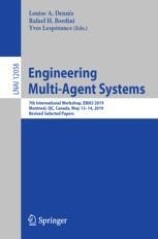
Engineering Multi-Agent Systems ; 7th International Workshop, EMAS 2019, Montreal, QC, Canada, May 13–14, 2019, Revised Selected Papers
This book constitutes the thoroughly refereed post-conference proceedings of the 7th International Workshop on Engineering Multi-Agent Systems, EMAS 2019, held in Montreal, QC, Canada, in May 2019. The 13 revised full papers presented in this book were carefully selected and reviewed from 20 submissions. The papers are grouped in the following topical sections: Multi-Agent Interaction and Organization; Simulation; Social Awareness and Explainability; Learning and Reconfiguration; and Implementation Techniques and Tools.

Engineering and Managing Software Requirements
This book provides an exploration of key issues in requirements engineering, the book is organized in three parts. Part 1 presents surveys of state-of-the art requirements engineering process research along with critical assessments of existing models, frameworks and techniques. Part 2 addresses key areas in requirements engineering, such as market-driven requirements engineering, goal modeling, requirements ambiguity, and others. Part 3 concludes the book with articles that present empirical evidence and experiences from practices in industrial projects. Its broader perspective gives this book its distinct appeal and makes it of interest to both researchers and practitioners, not only in software engineering but also in other disciplines such as business process engineering and management science.

Energy Efficient Servers : Blueprints for Data Center Optimization
The book includes a deep examination of different features used in processors, memory, interconnects, I/O devices, and other platform components. It outlines the power and performance impact of these features and the role firmware and software play in initialization and control. Using examples from cloud, HPC, and enterprise environments, the book demonstrates how various power management technologies are utilized across a range of server utilization. It teaches the reader how to monitor, analyze, and optimize their environment to best suit their needs. It shares optimization techniques used by data center administrators and system optimization experts at the world’s most advanced data centers.

End-User Development
By now, most people have become familiar with the basic functionality and interfaces of computers. However, developing new or modified applications that effectively support users' goals still requires considerable expertise in programming that cannot be expected from most people. Thus, one fundamental challenge for the coming years is to develop environments that allow users who do not have background in programming to develop or modify their own applications, with the ultimate aim of empowering people to flexibly employ advanced information and communication technologies.

Encyclopedia of Multimedia
Provides easy access to important concepts, issues and technology trends in the field of multimedia technologies, systems, techniques, and applications. Hundreds of leading researchers and world experts have contributed to this comprehensive collection of nearly 350 entries.Over 1,100 heavily-illustrated pages — including 80 new entries — present concise overviews of all aspects of software, systems, web tools and hardware that enable video, audio and developing media to be shared and delivered electronically.

Encyclopedia of Multimedia
he Encyclopedia of Multimedia provides in-depth coverage of the important concepts, issues and technology trends in the field of multimedia technologies, systems, techniques, and applications. It is a comprehensive collection of entries that present perspectives and future trends in the field from hundreds of leading researchers and world experts in the field. These entries describe a number of topics in multimedia systems and applications – from multimedia servers, to multimedia databases and multimedia networks and communications, to emerging multimedia applications.
Encyclopedia of GIS "Geographical Information Sciences"
provides up-to-date information on emerging topics such as spatial big data, smart-phone GIS, urban computing and mobile recommender systems. It also expands the first edition’s rich set of GIS-related commercial and societal applications such as geo-targeting, geo-fencing and understanding climate changes, while enabling more comprehensive coverage of classical GIS topics such as map projections, global positioning systems and spatial cognition. The entries explain the key software, data sets and processes used by geographers and computational scientists. Additionally, the reference emphasizes the role of GIS in business and mobile intelligence. By offering more diversified GIS-related topics from theory and research than most of the other available literature, the authors equip newcomers to the field with principles as well as applications.
Encyclopedia of Algorithms
Provides a comprehensive set of solutions to important algorithmic problems for students and researchers, including high-impact solutions from the most recent decade.A must-have for computer scientists, this encyclopedic reference has been edited by Ming Yang Kao, Editor-in-Chief of the top journal in the field, Algorithmica, All of the entries have been written and peer-reviewed by experts in the field. Nearly 400 entries are organized alphabetically by problem, with subentries for distinct solutions.

Enabling Semantic Web Services : The Web Service Modeling Ontology
Service-oriented computing has become one of the predominant factors in current IT research and development. Web services seem to be the middleware solution of the future for highly interoperable distributed software solutions. In parallel, research on the Semantic Web provides the results required to exploit distributed machine-processable data. To combine these two research lines into industrial-strength applications, a number of research projects have been set up by organizations like W3C and the EU. After a brief presentation of the underlying basic technologies and standards of the World Wide Web, the Semantic Web, and Web Services, they detail all the elements of WSMO from basic concepts to possible applications in e-commerce, e-government and e-banking, and they also describe its relation to other approaches like OWL-S or WSDL-S.
