



الصفحة 19
الصفحة 19

Machines, Computations, and Universality ; 4th International Conference, MCU 2004, Saint Petersburg, Russia, September 21-24, 2004, Revised Selected Papers
Constitutes the post-proceedings of the 4th International Conference on Machines, Computations, and Universality, MCU 2004, held in St Petersburg, Russia in September 2004. This book covers a variety of foundational aspects in theoretical computer science such as cellular automata, molecular computing, quantum computing, and formal languages

Machine Learning: ECML 2006 ; 17th European Conference on Machine Learning, Berlin, Germany, September 18-22, 2006, Proceedings
This book constitutes the refereed proceedings of the 17th European Conference on Machine Learning, ECML 2006, held in Berlin, Germany in September 2006, jointly with PKDD 2006. The 46 revised full papers and 36 revised short papers presented together with abstracts of 5 invited talks were carefully reviewed and selected from 564 papers submitted to both, ECML and PKDD. The papers present a wealth of new results in the area and address all current issues in machine learning.
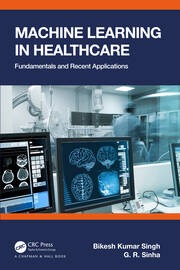
Machine learning in healthcare : Fundamentals and recent applications
Discusses how to build various ML algorithms and how they can be applied to improve healthcare systems. Healthcare applications of AI are innumerable: medical data analysis, early detection and diagnosis of disease, providing objective-based evidence to reduce human errors, curtailing inter- and intra-observer errors, risk identification and interventions for healthcare management, real-time health monitoring, assisting clinicians and patients for selecting appropriate medications, and evaluating drug responses. Extensive demonstrations and discussion on the various principles of machine learning and its application in healthcare is provided, along with solved examples and exercises.
Machine learning for brain disorders
Organized into five parts. Part One presents the fundamentals of ML. Part Two looks at the main types of data used to characterize brain disorders, including clinical assessments, neuroimaging, electro- and magnetoencephalography, genetics and omics data, electronic health records, mobile devices, connected objects and sensors. Part Three covers the core methodologies of ML in brain disorders and the latest techniques used to study them. Part Four is dedicated to validation and datasets, and Part Five discusses applications of ML to various neurological and psychiatric disorders.

Machine learning challenges : Evaluating predictive uncertainty, Visual Object Classification, and Recognizing Textual Entailment, 1st Pascal Machine Learning Challenges Workshop, MLCW 2005, Southampton, UK, April 11-13, 2005, Revised Selected Papers
Constitutes the refereed post-proceedings of the First PASCAL Machine Learning Challenges Workshop, MLCW 2005. 25 papers address three challenges: finding an assessment base on the uncertainty of predictions using classical statistics, Bayesian inference, and statistical learning theory; second, recognizing objects from a number of visual object classes in realistic scenes; third, recognizing textual entailment addresses semantic analysis of language to form a generic framework for applied semantic inference in text understanding.

Machine Learning and Knowledge Discovery in Databases ; European Conference, ECML PKDD 2008, Antwerp, Belgium, September 15-19, 2008, Proceedings, Part II
Constitutes the refereed proceedings of the joint conference on Machine Learning and Knowledge Discovery in Databases: ECML PKDD 2008, held in Antwerp, Belgium, in September 2008.The 100 papers presented in two volumes, together with 5 invited talks, were carefully reviewed and selected from 521 submissions. In addition to the regular papers the volume contains 14 abstracts of papers appearing in full version in the Machine Learning Journal and the Knowledge Discovery and Databases Journal of Springer.
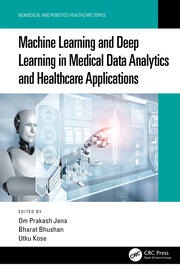
Machine learning and deep learning in medical data analytics and healthcare applications
Introduces and explores a variety of schemes designed to empower, enhance, and represent multi-institutional and multi-disciplinary machine learning (ML) and deep learning (DL) research in healthcare paradigms. Serving as a unique compendium of existing and emerging ML/DL paradigms for the healthcare sector, this book demonstrates the depth, breadth, complexity, and diversity of this multi-disciplinary area. It provides a comprehensive overview of ML/DL algorithms and explores the related use cases in enterprises such as computer-aided medical diagnostics, drug discovery and development, medical imaging, automation, robotic surgery, electronic smart records creation, outbreak prediction, medical image analysis, and radiation treatments.
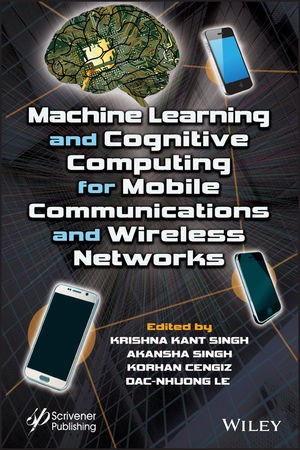
Machine Learning and Cognitive Computing for Mobile Communications and Wireless Networks
Communication and network technology has witnessed recent rapid development and numerous information services and applications have been developed globally. These technologies have high impact on society and the way people are leading their lives. The advancement in technology has undoubtedly improved the quality of service and user experience yet a lot needs to be still done. Some areas that still need improvement include seamless wide-area coverage, high-capacity hot-spots, low-power massive-connections, low-latency and high-reliability and so on. Thus, it is highly desirable to develop smart technologies for communication to improve the overall services and management of wireless communication. Machine learning and cognitive computing have converged to give some groundbreaking solutions for smart machines. With these two technologies coming together, the machines can acquire the ability to reason similar to the human brain. The research area of machine learning and cognitive computing cover many fields like psychology, biology, signal processing, physics, information theory, mathematics, and statistics that can be used effectively for topology management. Therefore, the utilization of machine learning techniques like data analytics and cognitive power will lead to better performance of communication and wireless systems.
Logics of Specification Languages
Dedicated chapters address : the use of ASM (Abstract State Machines) in the classroom; the Event-B modelling method; a methodological guide to CafeOBJ logic; CASL, the Common Algebraic Specification Language; the Duration Calculus; the logic of the RAISE specification language (RSL); the specification language TLA+; the typed logic of partial functions and the Vienna Development Method (VDM); and Z logic and its applications. Each chapter is self-contained, with references, and symbol and concept indexes. Finally, in a unique feature, the book closes with short commentaries on the specification languages written by researchers closely associated with their original development.

Logics in Artificial Intelligence ; 11th European Conference, JELIA 2008, Dresden, Germany, September 28-October 1, 2008. Proceedings
Constitutes the refereed proceedings of the 11th European Conference on Logics in Artificial Intelligence, JELIA 2008, held in Dresden, Germany, Liverpool, in September/October 2008.The 32 revised full papers presented together with 2 invited talks were carefully reviewed and selected from 98 submissions. The papers cover a broad range of topics including belief revision, description logics, non-monotonic reasoning, multi-agent systems, probabilistic logic, and temporal logic.

Logics in artificial intelligence ; 10th European Conference, JELIA 2006, Liverpool, UK, September 13-15, 2006, Proceedings
Constitutes the refereed proceedings of the 10th European Conference on Logics in Artificial Intelligence, JELIA 2006. The 34 revised full papers and 12 revised tool description papers presented together with 3 invited talks were carefully reviewed and selected from 96 submissions. The papers cover a range of topics within the remit of the Conference, such as logic programming, description logics, non-monotonic reasoning, agent theories, automated reasoning, and machine learning.

Logic-Based Program Synthesis and Transformation ; 17th International Symposium, LOPSTR 2007, Kongens Lyngby, Denmark, August 23-24, 2007, Revised Selected Papers
Contains a selectionofthe the paperspresentedatthe 17thInter- tional Symposium on Logic-Based Program Synthesis and Transformation, that was held in Kongens Lyngby, Denmark, August 23-24,2007. LOPSTR thus traditionally solicits papers in the areas of: specification, synthesis, verification, transformation, analysis, optimization, composition, security, reuse, applications andtools, component-baseds of tware development, software architectures, age- based software development and program refnement. Formal proceedings are produced only after the symposium, so that authors can incorporate this feed back in the published papers.

Logic-based program synthesis and transformation ; 16th International Symposium, LOPSTR 2006, Venice, Italy, July 12-14, 2006, Revised Selected Papers
Constitutes the refereed proceedings of the International Symposium on Logical Foundations of Computer Science, LFCS 2007, held in New York, NY, USA in June 2007. The volume presents 36 revised refereed papers that address all current aspects of logic in computer science.

Logical foundations of computer science ; International Symposium, LFCS 2007, New York, NY, USA, June 4-7, 2007, Proceedings
Constitutes the refereed proceedings of the International Symposium on Logical Foundations of Computer Science, LFCS 2007, held in New York, NY, USA in June 2007. The volume presents 36 revised refereed papers that address all current aspects of logic in computer science.
Logical Data Modeling : What it is and How to do it
LOGICAL DATA MODELING: What It Is and How To Do IT is directed toward three groups of people: (1) Business subject matter experts, (2) information technology professionals, (3) advanced students in Computer Science, Management Information Systems, and e-Business. Its purpose is to outline the basics of logical data modeling—specifically, data modeling for relational database management systems—in simple, practical terms and in a business context. The focus on relational data modeling is consciously made because it is superior in modeling real business activities.
Logical Aspects of Computational Linguistics ; 5th International Conference, LACL 2005, Bordeaux, France, April 28-30, 2005, Proceedings
Inaugurates the new FoLLI LNAI subline. It constitutes the refereed proceedings of the 5th International Conference on Logical Aspects of Computational Linguistics, LACL 2005, held in Bordeaux, France in April 2005. The 25 revised full papers presented were carefully reviewed and selected from over 40 submissions. The papers address a wide range of logical and formal methods in computational linguistics with studies of particular grammar formalisms and their computational properties, language engineering, and traditional topics about the syntax/semantics interface.

Logical aspects of computational linguistics ; 4th International Conference, LACL 2001, Le Croisic, France, June 27-29, 2001, Proceedings
Structural Equations in Language Learning.- On the Distinction between Model-Theoretic and Generative-Enumerative Syntactic Frameworks.- Contributed Papers.- A Formal Definition of Bottom-Up Embedded Push-Down Automata and Their Tabulation Technique.- An Algebraic Approach to French Sentence Structure.- Deductive Parsing of Visual Languages.- Lambek Grammars Based on Pregroups.- An Algebraic Analysis of Clitic Pronouns in Italian.- Consistent Identification in the Limit of Any of the Classes k-Valued Is NP-hard.- Polarized Non-projective Dependency Grammars.- On Mixing Deduction and Substitution in Lambek Categorial Grammars.- A Framework for the Hyperintensional Semantics of Natural Language with Two Implementations.- A Characterization of Minimalist Languages.- of Speech Tagging from a Logical Point of View.- Transforming Linear Context-Free Rewriting Systems into Minimalist Grammars.- Recognizing Head Movement.- Combinators for Paraconsistent Attitudes.- Combining Syntax and Pragmatic Knowledge for the Understanding of Spontaneous Spoken Sentences.- Atomicity of Some Categorially Polyvalent Modifiers.

Logical approaches to computational barriers ; 2nd Conference on Computability in Europe, CiE 2006, Swansea, UK, June 30-July 5, 2006, Proceedings
The sources of new ideas and methods include practical developments in areas such as neural networks, quantum computation, natural computation, molecular computation, and computational learning. Applications are everywhere, especially, in algebra, analysis and geometry, or data types and programming. This volume, Logical Approaches to Computational Barriers, is the proce- ings of the second in a series of conferences of CiE that was held at the Depa- ment of Computer Science, Swansea University, 30 June - 5 July, 2006.
Logical and Relational Learning
This textbook covers logical and relational learning in depth, and hence provides an introduction to inductive logic programming (ILP), multirelational data mining (MRDM) and (statistical) relational learning (SRL). These subfields of data mining and machine learning are concerned with the analysis of complex and structured data sets that arise in numerous applications, such as bio- and chemoinformatics, network analysis, Web mining, natural language processing, within the rich representations offered by relational databases and computational logic.

Logic, language, information and computation ; 15th International Workshop, WoLLIC 2008 Edinburgh, UK, July 1-4, 2008 Proceedings
The papers cover all pertinent subjects in computer science with particular interest in cross-disciplinary topics. Typical areas of interest are: foundations of computing and programming; novel computation models and paradigms; broad notions of proof and belief; formal methods in software and hardware development; logical approach to natural language and reasoning; logics of programs, actions and resources; foundational aspects of information organization, search, flow, sharing, and protection.
