



الصفحة 19
الصفحة 19
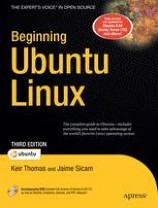
Beginning Ubuntu Linux
Beginning Ubuntu Linux, the award–winning and best–selling Ubuntu book for beginners, is now in its third edition, presenting readers with an up–to–the–minute introduction to the world of Linux and the open source community. A detailed overview of Ubuntu's installation and configuration process encourages you to take the plunge and switch to Linux, and from there you'll learn how to wield total control over your newly installed operating system. Guided through the most commonly desired tasks such as printer configuration, listening to audio CDs and MP3s, watching movies, performing office and Internet–related tasks, as well as general system maintenance matters, authors Keir Thomas and Jaime Sicam will soon have you using and enjoying Ubuntu Linux and never looking back.
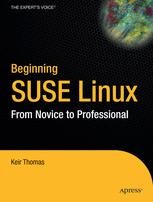
Beginning SUSE Linux : From novice to professional
The book begins by discussing the background of Linux and open source software, then proceeds to guide you through the SUSE installation process. You'll learn how to use the basic functions, and modify the look and feel according to your tastes. This book is packed with troubleshooting tips, so even the most cautious beginner will feel right at home. Next, the book covers the daily usage tasks that are enjoyable and interesting to learn. You'll learn how to configure your system to listen to audio CDs and MP3s, burn CDs, watch movies, connect to the Internet, and reproduce common Windows tasks.
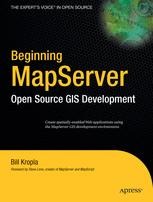
Beginning MapServer : Open Source GIS Development
Beginning MapServer: Open Source GIS Development is the first book of its kind. It offers a comprehensive introduction to MapServer, the development platform for integrating mapping technology into Internet applications. You'll learn how to build and extend dynamic applications using popular languages like PHP, Perl, and Python. After a thorough introduction to installation and configuration, you'll uncover basic MapServer topics and examples. You'll also learn about advanced MapServer features, and how to query and incorporate dynamic data into your application. The book culminates with the creation of an actual mapping application.
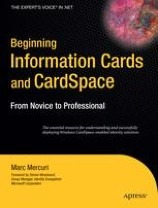
Beginning Information Cards and Cardspace : From novice to professional
If you work at all with Internet-facing solutions, you know that the lack of an identity metasystem is a critical vulnerability in the design. Various consortiums have worked to define a system of identity—a platform-agnostic way of communicating and validating claims of identity. If you work with identity solutions or structures, you will find Beginning Information Cards and CardSpace: From Novice to Professional essential to understanding and successfully implementing CardSpace solutions.
Beginning Google Web Toolkit : From novice to professional
The open source, lightweight Google Web Toolkit (GWT) is a framework that allows Java developers to build rich Internet applications (RIAs), more recently called Ajax applications, in Java. Typically, writing these applications requires a lot of JavaScript development. However, Java and JavaScript are very distinctively different languages (although the name suggests otherwise), therefore requiring a different development process. In Beginning Google Web Toolkit: From Novice to Professional, you'll learn to build rich, user–friendly web applications using a popular Java–based Ajax web framework, the Google Web Toolkit.

Beginning Fedora :From novice to professional
Beginning Fedora: From Novice to Professional guides you through the tasks most new Linux users desire to perform, while explaining potentially confusing concepts along the way. It will steer you through system customization opportunities and common tasks like listening to audio CDs and MP3s, watching movies, and performing office- and Internet-related jobs.

Basic theoretical physics : A concise overview
This concise treatment embraces, in four parts, all the main aspects of theoretical physics (I . Mechanics and Basic Relativity, II. Electrodynamics and Aspects of Optics, III. Non-relativistic Quantum Mechanics, IV. Thermodynamics and Statistical Physics). It summarizes the material that every graduate student, physicist working in industry, or physics teacher should master during his or her degree course. It thus serves both as an excellent revision and preparation tool, and as a convenient reference source, covering the whole of theoretical physics. It may also be successfully employed to deepen its readers' insight and add new dimensions to their understanding of these fundamental concepts. Recent topics such as holography and quantum cryptography are included, thus making this a unique contribution to the learning material for theoretical physics.

Barriers and Biases in Computer-Mediated Knowledge Communication : And How They May Be Overcome
This books deals with computer-mediated cooperation and communication scenarios in teaching and learning situations, leisure activities (e.g. laypersons looking for expert information on the internet), and net-based communication at work. Such scenarios will become increasingly important. But the successful use of such computer-mediated settings is not trivial. Cooperative learning and work itself requires special skills and strategies. And the technical settings with sometimes restricted, sometimes new possibilities for communication add problems on top of the cooperation itself. What are the barriers in computer-mediated communication for cooperative learning and work? Which are the most relevant biases in computer-mediated information processing? Based on empirical research the contributors from psychology, education and computer sciences offer different perspectives on the nature and causes of such barriers.
Autonomous control for a reliable internet of services : Methods, models, approaches, techniques, algorithms, and tools
This open access book was prepared as a Final Publication of the COST Action IC1304 “Autonomous Control for a Reliable Internet of Services (ACROSS)”. The book contains 14 chapters and constitutes a show-case of the main outcome of the Action in line with its scientific goals. It will serve as a valuable reference for undergraduate and post-graduate students, educators, faculty members, researchers, engineers, and research strategists working in this field. The objective of this book is, by applying a systematic approach, to assess the state-of-the-art and consolidate the main research results achieved in this area.

Autonomic networking ; 1st International IFIP TC6 Conference, AN 2006, Paris, France, September 27-29, 2006, Proceedings
The autonomic communication paradigm has been defined mainly through the Autonomic Communications Forum (ACF) and particularly as follows: Autonomic communication is centered on selfware – an innovative approach to perform known and emerging tasks of a network control plane, both end-to-end and middle box communication-based. Selfware assures the capacity to evolve; however, it requires generic network instrumentation. Selfware principles and technologies borrow largely from well-established research on distributed systems, fault tolerance among others, from emerging research on non-conventional networking (multihop ad hoc, sensor, peer-to-peer, group communication, etc.

Autonomic and Trusted Computing ; 5th International Conference, ATC 2008, Oslo, Norway, June 23-25, 2008 Proceedings
This book constitutes the refereed procedings of the 5th International Conference on Autonomic and Trusted Computing, ATC 2008, held in Oslo, Norway, in June 2008, co-located with UIC 2008, the 5th International Conference on Ubiquitous Intelligence and Computing.

Autonomic and Trusted Computing ; 4th International Conference, ATC 2007, Hong Kong, China, July 11-13, 2007, Proceedings
To cope with the growing and ubiquitous complexity, autonomic computing (AC) focuses on se- manageable computing and communication systems that exhibit self-awareness, self-configuration, self-optimization, self-healing, self-protection and other self-x operations to the maximum extenteven without human interventionor guidance. Organiccomputing(OC)additionally emphasizes natural-analogueconceptslike self-organization and controlled emergence. Any autonomic ororganic system must be trus tworthy to avoid the risk of l- ing control and to retain confidence that the system will not fail. Trust and/or distrust relationships on the Internet and in pervasive infrastructures are key factors to enable dynamic interaction and cooperation of various users, systems and services. Trusted/trustworthy computing (TC) aims at making computing and communication systems as well as services available, predictable, traceable, controllable, assessable, sustainable, dependable, persist-able, security/privacy protect-able, etc.

Automatic speech recognition on mobile devices and over communication networks
This book brings together leading academic researchers and industrial practitioners to address the issues in this emerging realm and presents the reader with a comprehensive introduction to the subject of speech recognition in devices and networks.

Artificial neural networks in Pattern Recognition ; 3d IAPR Workshop, ANNPR 2008 Paris, France, July 2-4, 2008 Proceedings
Constitutes the refereed proceedings of the Third TC3 IAPR Workshop on Artificial Neural Networks in Pattern Recognition, ANNPR 2008, held in Paris, France, in July 2008.

Artificial neural networks - ICANN 2008 ; 18th International Conference, Prague, Czech Republic, September 3-6, 2008, Proceedings, Part II
This two volume set LNCS 5163 and LNCS 5164 constitutes the refereed proceedings of the 18th International Conference on Artificial Neural Networks, ICANN 2008, held in Prague Czech Republic, in September 2008.

Artificial neural networks - ICANN 2008 ; 18th International Conference, Prague, Czech Republic, September 3-6, 2008, Proceedings, Part I
This two volume set LNCS 5163 and LNCS 5164 constitutes the refereed proceedings of the 18th International Conference on Artificial Neural Networks, ICANN 2008, held in Prague Czech Republic, in September 2008.

Artificial neural networks – ICANN 2007 ; 17th International Conference, Porto, Portugal, September 9-13, 2007, Proceedings, Part II
It features contributions related to computational neuroscience, neurocognitive studies, applications in biomedicine and bioinformatics, pattern recognition, self-organization, text mining and internet applications, signal and times series processing, vision and image processing, robotics, control, and more.
Artificial intelligence-based Internet of things systems
Discusses the evolution of future generation technologies through Internet of Things (IoT) in the scope of Artificial Intelligence (AI). The main focus of this volume is to bring all the related technologies in a single platform, so that undergraduate and postgraduate students, researchers, academicians, and industry people can easily understand the AI algorithms, machine learning algorithms, and learning analytics in IoT-enabled technologies. This book uses data and network engineering and intelligent decision support system-by-design principles to design a reliable AI-enabled IoT ecosystem and to implement cyber-physical pervasive infrastructure solutions. This book brings together some of the top IoT-enabled AI experts throughout the world who contribute their knowledge regarding different IoT-based technology aspects. Addresses the complete functional framework workflow in AI-enabled IoT ecosystem; Presents intelligent object identification and object discovery through the IoT ecosystem and its implications to the real world ;Explores security and privacy issues and trustworthy machine learning related to data-intensive technologies in AI-based IoT ecosystems.

Artificial intelligence techniques in hydrology and water resources management
The sustainable management of water cycles is crucial in the context of climate change and global warming. It involves managing global, regional, and local water cycles, as well as urban, agricultural, and industrial water cycles, to conserve water resources and their relationships with energy, food, microclimates, biodiversity, ecosystem functioning, and anthropogenic activities. Hydrological modeling is indispensable for achieving this goal, as it is essential for water resources management and the mitigation of natural disasters. In recent decades, the application of artificial intelligence (AI) techniques in hydrology and water resources management has led to notable advances. In the face of hydro-geo-meteorological uncertainty, AI approaches have proven to be powerful tools for accurately modeling complex, nonlinear hydrological processes and effectively utilizing various digital and imaging data sources, such as ground gauges, remote sensing tools, and in situ Internet of Things (IoT) devices.

Artificial intelligence in HCI ; 1st International conference, AI-HCI 2020, Held as Part of the 22nd HCI International Conference, HCII 2020, Copenhagen, Denmark, July 19–24, 2020, Proceedings
This book constitutes the refereed proceedings of the First International Conference on Artificial Intelligence in HCI, AI-HCI 2020, held as part of the 22nd International Conference on Human-Computer Interaction, HCII 2020, in July 2020. The conference was planned to be held in Copenhagen, Denmark, but had to change to a virtual conference mode due to the COVID-19 pandemic.
