



الصفحة 19
الصفحة 19

Machine Learning Techniques for Multimedia : Case Studies on Organization and Retrieval
This book provides a comprehensive coverage of the most important machine learning techniques used and their application in this domain. Arising from the EU MUSCLE network, a program that drew together multidisciplinary teams with expertise in machine learning, pattern recognition, artificial intelligence, and image, video, text and crossmedia processing, the book first introduces the machine learning principles and techniques that are applied in multimedia data processing and analysis. The second part focuses on multimedia data processing applications, with chapters examining specific machine learning issues in domains .
Machine Learning Techniques and Analytics for Cloud Security
covers new methods, surveys, case studies, and policy with almost all machine learning techniques and analytics for cloud security solutions
Machine learning refined : Foundations, algorithms, and applications
Providing a unique approach to machine learning, this text contains fresh and intuitive, yet rigorous, descriptions of all fundamental concepts necessary to conduct research, build products, tinker, and play. By prioritizing geometric intuition, algorithmic thinking, and practical real world applications in disciplines including computer vision, natural language processing, economics, neuroscience, recommender systems, physics, and biology, this text provides readers with both a lucid understanding of foundational material as well as the practical tools needed to solve real-world problems. With in-depth Python and MATLAB/OCTAVE-based computational exercises and a complete treatment of cutting edge numerical optimization techniques, this is an essential resource for students and an ideal reference for researchers and practitioners working in machine learning, computer science, electrical engineering, signal processing, and numerical optimization
Machine Learning in Computer Vision
The goal of this book is to address the use of several important machine learning techniques into computer vision applications. An innovative combination of computer vision and machine learning techniques has the promise of advancing the field of computer vision, which contributes to better understanding of complex real-world applications. The effective usage of machine learning technology in real-world computer vision problems requires understanding the domain of application, abstraction of a learning problem from a given computer vision task, and the selection of appropriate representations for the learnable (input) and learned (internal) entities of the system. In this book, we address all these important aspects from a new perspective: that the key element in the current computer revolution is the use of machine learning to capture the variations in visual appearance, rather than having the designer of the model accomplish this. As a bonus, models learned from large datasets are likely to be more robust and more realistic than the brittle all-design models.

Machine Learning for Multimodal Interaction ; 4th International Workshop, MLMI 2007, Brno, Czech Republic, June 28-30, 2007, Revised Selected Papers
This book contains a selection of revised papers from the 4th Workshop on Machine Learning for Multimodal Interaction (MLMI 2007), which took place in Brno, Czech Republic, during June 28 30, 2007. As in the previous editions of the MLMI series, the 26 chapters of this book cover a large area of topics, from multimodal processing and human computer interaction to video, audio, speech and language processing. The application of machine learning techniques to problems arising in these felds and the design and analysis of software
Machine Learning for Multimedia Content Analysis
Challenges in complexity and variability of multimedia data have led to revolutions in machine learning techniques. Multimedia data, such as digital images, audio streams and motion video programs, exhibit richer structures than simple, isolated data items. A number of pixels in a digital image collectively conveys certain visual content to viewers. A TV video program consists of both audio and image streams that unfold the underlying story. To recognize the visual content of a digital image, or to understand the underlying story of a video program, we may need to label sets of pixels or groups of image and audio frames jointly.
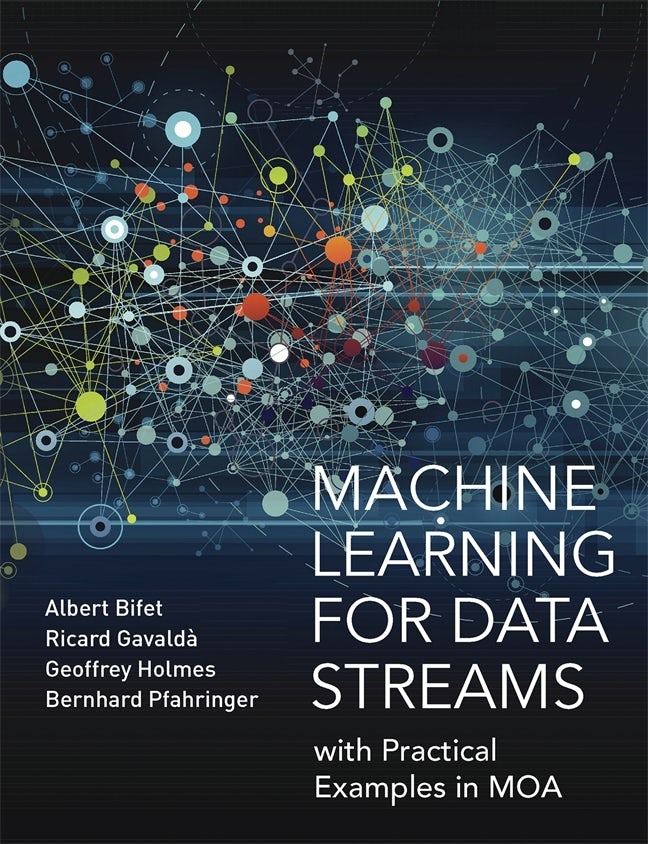
Machine learning for data streams : With practical examples in MOA
The book first offers a brief introduction to the topic, covering big data mining, basic methodologies for mining data streams, and a simple example of MOA. More detailed discussions follow, with chapters on sketching techniques, change, classification, ensemble methods, regression, clustering, and frequent pattern mining. Most of these chapters include exercises, an MOA-based lab session, or both. Finally, the book discusses the MOA software, covering the MOA graphical user interface, the command line, use of its API, and the development of new methods within MOA.
Machine learning for brain disorders
Organized into five parts. Part One presents the fundamentals of ML. Part Two looks at the main types of data used to characterize brain disorders, including clinical assessments, neuroimaging, electro- and magnetoencephalography, genetics and omics data, electronic health records, mobile devices, connected objects and sensors. Part Three covers the core methodologies of ML in brain disorders and the latest techniques used to study them. Part Four is dedicated to validation and datasets, and Part Five discusses applications of ML to various neurological and psychiatric disorders.
Machine Learning for Audio, Image and Video Analysis : Theory and Applications
The book is organized in four parts: The first focuses on technical aspects, basic mathematical notions and elementary machine learning techniques. The second provides an extensive survey of most relevant machine learning techniques for media processing, while the third part focuses on applications and shows how techniques are applied in actual problems. The fourth part contains detailed appendices that provide notions about the main mathematical instruments used throughout the text
Machine Learning Approaches in Cyber Security Analytics
Introduces various machine learning methods for cyber security analytics. With an overwhelming amount of data being generated and transferred over various networks, monitoring everything that is exchanged and identifying potential cyber threats and attacks poses a serious challenge for cyber experts. Further, as cyber attacks become more frequent and sophisticated, there is a requirement for machines to predict, detect, and identify them more rapidly. Machine learning offers various tools and techniques to automate and quickly predict, detect, and identify cyber attacks.
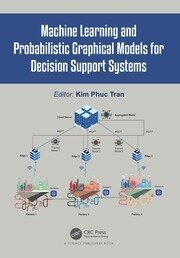
Machine Learning and Probabilistic Graphical Models for Decision Support Systems
Presents recent advancements in research, a review of new methods and techniques, and applications in decision support systems (DSS) with Machine Learning and Probabilistic Graphical Models, which are very effective techniques in gaining knowledge from Big Data and in interpreting decisions. It explores Bayesian network learning, Control Chart, Reinforcement Learning for multicriteria DSS, Anomaly Detection in Smart Manufacturing with Federated Learning, DSS in healthcare, DSS for supply chain management, etc. Researchers and practitioners alike will benefit from this book to enhance the understanding of machine learning, Probabilistic Graphical Models, and their uses in DSS in the context of decision making with uncertainty. The real-world case studies in various fields with guidance and recommendations for the practical applications of these studies are introduced in each chapter.
Machine learning and its application to reacting flows: ml and combustion
These two fields, ML and turbulent combustion, have large body of work and knowledge on their own, and this book brings them together and explain the complexities and challenges involved in applying ML techniques to simulate and study reacting flows. This is important as to the world’s total primary energy supply (TPES), since more than 90% of this supply is through combustion technologies and the non-negligible effects of combustion on environment. Although alternative technologies based on renewable energies are coming up, their shares for the TPES is are less than 5% currently and one needs a complete paradigm shift to replace combustion sources. The book covers the current state of the art in these two topics and outlines the challenges involved, merits and drawbacks of using ML for turbulent combustion simulations including avenues which can be explored to overcome the challenges.
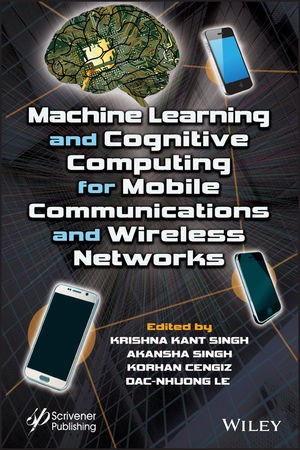
Machine Learning and Cognitive Computing for Mobile Communications and Wireless Networks
Communication and network technology has witnessed recent rapid development and numerous information services and applications have been developed globally. These technologies have high impact on society and the way people are leading their lives. The advancement in technology has undoubtedly improved the quality of service and user experience yet a lot needs to be still done. Some areas that still need improvement include seamless wide-area coverage, high-capacity hot-spots, low-power massive-connections, low-latency and high-reliability and so on. Thus, it is highly desirable to develop smart technologies for communication to improve the overall services and management of wireless communication. Machine learning and cognitive computing have converged to give some groundbreaking solutions for smart machines. With these two technologies coming together, the machines can acquire the ability to reason similar to the human brain. The research area of machine learning and cognitive computing cover many fields like psychology, biology, signal processing, physics, information theory, mathematics, and statistics that can be used effectively for topology management. Therefore, the utilization of machine learning techniques like data analytics and cognitive power will lead to better performance of communication and wireless systems.
Machine Learning and Big Data Analytics Paradigms : Analysis, Applications and Challenges
Intended to present the state of the art in research on machine learning and big data analytics. The accepted chapters covered many themes including artificial intelligence and data mining applications, machine learning and applications, deep learning technology for big data analytics, and modeling, simulation, and security with big data. It is a valuable resource for researchers in the area of big data analytics and its applications.
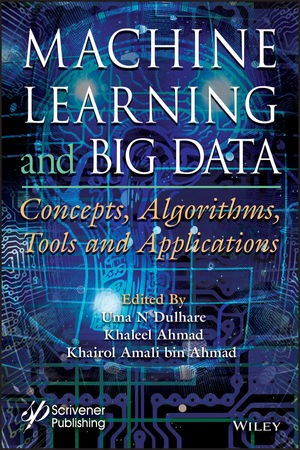
Machine learning and big data : Concepts, algorithms, tools and applications
Showcase novel use-cases and applications, present empirical research results from user-centered qualitative and quantitative experiments of these new applications, and facilitate a discussion forum to explore the latest trends in big data and machine learning by providing algorithms which can be trained to perform interdisciplinary techniques such as statistics, linear algebra, and optimization and also create automated systems that can sift through large volumes of data at high speed to make predictions or decisions without human intervention
Machine Learning : Modeling Data Locally and Globally
Machine Learning - Modeling Data Locally and Globally presents a novel and unified theory that tries to seamlessly integrate different algorithms. Specifically, the book distinguishes the inner nature of machine learning algorithms as either "local learning"or "global learning."This theory not only connects previous machine learning methods, or serves as roadmap in various models, but – more importantly – it also motivates a theory that can learn from data both locally and globally. This would help the researchers gain a deeper insight and comprehensive understanding of the techniques in this field. The book reviews current topics,new theories and applications.
Long-Term Preservation of Digital Documents : Principles and Practices
Key to our culture is that we can disseminate information, and then maintain and access it over time. While we are rapidly advancing from vulnerable physical solutions to superior, digital media, preserving and using data over the long term involves complicated research challenges and organization efforts. Uwe Borghoff and his coauthors address the problem of storing, reading, and using digital data for periods longer than 50 years. They briefly describe several markup and document description languages like TIFF, PDF, HTML, and XML, explain the most important techniques such as migration and emulation, and present the OAIS (Open Archival Information System) Reference Model. To complement this background information on the technology issues the authors present the most relevant international preservation projects, such as the Dublin Core Metadata Initiative, and experiences from sample projects run by the Cornell University Library and the National Library of the Netherlands. A rated survey list of available systems and tools completes the book.
Logics of Specification Languages
Dedicated chapters address : the use of ASM (Abstract State Machines) in the classroom; the Event-B modelling method; a methodological guide to CafeOBJ logic; CASL, the Common Algebraic Specification Language; the Duration Calculus; the logic of the RAISE specification language (RSL); the specification language TLA+; the typed logic of partial functions and the Vienna Development Method (VDM); and Z logic and its applications. Each chapter is self-contained, with references, and symbol and concept indexes. Finally, in a unique feature, the book closes with short commentaries on the specification languages written by researchers closely associated with their original development.

Logics in Artificial Intelligence ; 11th European Conference, JELIA 2008, Dresden, Germany, September 28-October 1, 2008. Proceedings
Constitutes the refereed proceedings of the 11th European Conference on Logics in Artificial Intelligence, JELIA 2008, held in Dresden, Germany, Liverpool, in September/October 2008.The 32 revised full papers presented together with 2 invited talks were carefully reviewed and selected from 98 submissions. The papers cover a broad range of topics including belief revision, description logics, non-monotonic reasoning, multi-agent systems, probabilistic logic, and temporal logic.

Logic-Based Program Synthesis and Transformation ; 17th International Symposium, LOPSTR 2007, Kongens Lyngby, Denmark, August 23-24, 2007, Revised Selected Papers
Contains a selectionofthe the paperspresentedatthe 17thInter- tional Symposium on Logic-Based Program Synthesis and Transformation, that was held in Kongens Lyngby, Denmark, August 23-24,2007. LOPSTR thus traditionally solicits papers in the areas of: specification, synthesis, verification, transformation, analysis, optimization, composition, security, reuse, applications andtools, component-baseds of tware development, software architectures, age- based software development and program refnement. Formal proceedings are produced only after the symposium, so that authors can incorporate this feed back in the published papers.
