



الصفحة 19
الصفحة 19

Google Maps Mashups with Google Mapplets
Have a Google Maps mashup that you'd like to expose to millions of users on maps.google.com? New to the mapping craze, but have an idea for a killer map–based application? Want to learn how to create GeoRSS and KML feeds with your geotagged content, exposing your customer to new ways of exploring and navigating your content? Google Maps Mashups with Google Mapplets Is the first book to cover Google's Mapplet technology Shows you how to create Google Maps–based applications and publish to maps.google.com Provides a single–source resource and practical guide to Mapplets and mashups Teaches you how to mash up Mapplets using location–specific data

Global optimization and constraint satisfaction ; 2nd International Workshop, COCOS 2003, Lausanne, Switzerland, Nevember 18-21, 2003, Revised Selected Papers
Theformulationofmanypracticalproblemsnaturallyinvolvesconstraintsonthe variables entering the mathematical model of a real-life situation to be analyzed. It is of great interest to ?nd the possible scenarios satisfying all constraints, and, iftherearemanyofthem,eitherto?ndthebestsolution,ortoobtainacompact, explicit representation of the whole feasible set. The 2nd Workshop on Global Constrained Optimization and Constraint S- isfaction, COCOS 2003, which took place during November 18–21, 2003 in L- sanne, Switzerland, was dedicated to theoretical, algorithmic, and application oriented advances in answering these questions. Here global optimization refers to ?nding the absolutely best feasible point, while constraint satisfaction refers to?ndingallpossiblefeasiblepoints.AsinCOCOS2002,the?rstsuchworkshop (see the proceeedings [1]), the emphasis was on complete solving techniques for problems involving continuous variables that provide all solutions with full rigor, and on applications which, however, were allowed to have relaxed standards of rigor.

Global mobile satellite communications : For maritime, Land and aeronautical applications
This book is important for modern shipping, truck, train and aeronautical societies because GMSC in the present millennium provides more effective business and trade, with emphasis on safety and commercial communications. Global Mobile Satellite Communications is written to make bridges between potential readers and current GMSC trends, mobile system concepts and network architecture using a simple mode of style with understandable technical information, characteristics, graphicons, illustrations and mathematics equations

Global E-Security ; 4th International Conference, ICGeS 2008, London, UK, June 23-25, 2008. Proceedings
This book constitutes the refereed proceedings of the 4th International Conference on Global E-Security, ICGeS 2008, held in London, UK, in June 2008.The 36 revised full papers presented were carefully reviewed and selected from numerous submissions. The papers are organized in topical sections on cybercrime and digital forensics investigation, voice and video over internet protocols security, computer security, security architecture and authorisations, and IT governance.
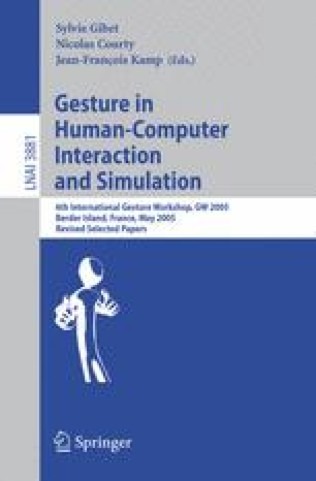
Gesture in Human-Computer Interaction and Simulation ; 6th International Gesture Workshop, GW 2005, Berder Island, France, May 18-20, 2005, Revised Selected Papers
The international Gesture Workshops have become the leading interdisciplinary events for dissemination of the latest results on gesture-based communication. The goal of these workshops is to bring together researchers who want to meet and share ideas on advanced research on gesture related to multidisciplinary scienti?c ?elds. Depending on the ?elds, the objectives can be very di?erent. While physiology and biomechanics aim to extract fundamental knowledge of physical gesture, computer sciences try to capture di?erent aspects of gesture and extract features that help to identify, interpret or rebuild the underlying mechanisms of communication gestures. Other approaches and methodologies are followed by cognitive sciences and linguistics, bringing a complementary - derstanding of motor control and gesture meaning. The results can be enhanced by technological applications or demonstrations.

Geometric Modeling and Processing - GMP 2006 ; 4th International Conference, GMP 2006, Pittsburgh, PA, USA, July 26-28, 2006, Proceedings
This book constitutes the refereed proceedings of the 4th International Conference on Geometric Modeling and Processing, GMP 2006, held in Pittsburgh, PA, USA in July 2006. The 36 revised full papers and 21 revised short papers presented were carefully reviewed and selected from a total of 84 submissions. All current issues in the area of geometric modeling and processing are addressed and the impact in such areas as computer graphics, computer vision, machining, robotics, and scientific visualization is shown. The papers are organized in topical sections on shape reconstruction, curves and surfaces, geometric processing, shape deformation, shape description, shape recognition, geometric modeling, subdivision surfaces, and engineering applications.

Geometric Fundamentals of Robotics
Geometric Fundamentals of Robotics provides an elegant introduction to the geometric concepts that are important to applications in robotics. This second edition is still unique in providing a deep understanding of the subject: rather than focusing on computational results in kinematics and robotics, it includes significant state-of-the art material that reflects important advances in the field, connecting robotics back to mathematical fundamentals in group theory and geometry.

Geometric Algebra for Computer Graphics
The first five chapters review the algebras of real numbers, complex numbers, vectors, and quaternions and their associated axioms, together with the geometric conventions employed in analytical geometry. As well as putting geometric algebra into its historical context, John Vince provides chapters on Grassmann’s outer product and Clifford’s geometric product, followed by the application of geometric algebra to reflections, rotations, lines, planes and their intersection. The conformal model is also covered, where a 5D Minkowski space provides an unusual platform for unifying the transforms associated with 3D Euclidean space.

Geographic Information Science ; 5th International Conference, GIScience 2008, Park City, UT, USA, September 23-26, 2008. Proceedings
This book constitutes the refereed proceedings of the 5th International Conference on Geographic Information Secience, GIScience 2008, held in Park City, UT, USA, in September 2008.The 24 revised full papers presented were carefully reviewed and selected from 77 submissions. Among the traditional topics addressed are spatial relations, geographic dynamics, and spatial data types. A significant number of papers deal with navigation networks, location-based services, and spatial information query and retrieval. Geo-sensors, mobile computing, and Web mapping rank among the important new directions.

Genetic rogramming ; Vol. 3447 : 8th European conference, EuroGP 2005, Lausanne, Switzerland, March 30-April 1, 2005, Proceedings
In this volume we present the contributions for the 18th European Conference on Genetic Programming (EuroGP 2005). The conference took place from 30 March to 1 April in Lausanne, Switzerland. EuroGP is a well-established conf- ence and the only one exclusively devoted to genetic programming. All previous proceedings were published by Springer in the LNCS series. From the outset, EuroGP has been co-located with the EvoWorkshops focusing on applications of evolutionary computation. Since 2004, EvoCOP, the conference on evolutionary combinatorial optimization, has also been co-located with EuroGP, making this year’s combined events one of the largest dedicated to evolutionary computation in Europe. Genetic programming (GP) is evolutionary computation that solves complex problems or tasks by evolving and adapting a population of computer programs, using Darwinian evolution and Mendelian genetics as its sources of inspiration. Some of the 34 papers included in these proceedings address foundational and theoretical issues and there is also a wide variety of papers dealing with di?erent application areas, such as computer science, engineering, language processing, biology and computational design, demonstrating that GP is a powerful and practical problem-solving paradigm.

Genetic Programming ; 11th European Conference, EuroGP 2008, Naples, Italy, March 26-28, 2008. Proceedings
The 11th European Conference on Genetic Programming, EuroGP 2008, took place in Naples, Italy from 26 to 28 March in the University of Naples Congress Centre with spectacular views over the Gulf of Naples. This volume contains the papers for the 21 oral presentations and 10 posters that were presented during this time. A diverse array of topics were covered refecting the current state of research in the ?eld of Genetic Programming, including the latest work on representations, theory, operators and analysis, evolvable hardware, agents and numerous applications. A rigorous, double-blind peer review process was employed, with each s- mission reviewed by at least three members of the international Program C- mittee.

Genetic algorithms: theory, design and programming
We present a series of scientific contributions that delve into the intricate theoretical foundations and practical nuances of genetic algorithms (GAs). Beyond the academic realm, GAs have demonstrated profound applications in societal decision-making and engineering optimization, showcased through real-world examples and case studies. A dedicated section on programming principles offers a thorough guide for implementing GAs across diverse languages. This edition, tailored for researchers and academics, serves as a testament to the scientific advancements within the field, inviting readers to explore the nuanced journey from theoretical constructs to pragmatic applications in the dynamic landscape of GAs.

Generative programming and component engineering ; 4th International conference, GPCE 2005, Tallinn, Estonia, September 29 - October 1, 2005, Proceedings
Generative Programming and Component Engineering (GPCE) is a leading - searchconferenceonautomaticprogrammingandcomponentengineering.These approaches to software engineering have the potential to revolutionize software development as automation and components revolutionized manufacturing. The conference brings together researchers and practitioners interested in adva- ing automation for software development. It is also a premier forum for cro- fertilization between the programming language and software engineering - search communities. GPCEaroseasajointconference, mergingthepriorconferenceonGenerative and Component-Based Software Engineering (GCSE) and the Workshop on - mantics, Applications, andImplementationofProgramGeneration(SAIG). The proceedingsofthepreviousGPCEconferenceswerepublishedintheLNCSseries of Springer as volumes2487,2830, and 3286.In 2005 GPCE wasco-locatedwith the International Conference on Functional Programming (ICFP) and the s- posium on Trends in Functional Programming (TFP), re?ecting the vigorous interaction between the functional programming and generative programming research communities. GPCE and ICFP are both sponsored by the Association for Computing Machinery. The quality and breadth of the papers submitted to GPCE 2005 was impr- sive. All 86 papers, including 5 papers for tool demonstrations, were rigorously reviewed by 17 highly quali?ed Program Committee members. The members of the Program Committee ?rst provided in-depth individual reviews of the s- mitted papers, and then debated the merits of the papers through an extended electronicProgramCommitteemeeting.After much(friendly) argument,25r- ular papers and 2 tool demonstration papers were selected for publication. The ProgramCommittee provided extensive technical feedback to the authors of the submittedpapers.Theconferenceprogramwascomplementedwiththreeinvited talks, three extended tutorials, and three all-day workshops.

Generative adversarial text to image synthesis
Synthesizing high-quality images from text descriptions is a challenging problem in computer vision and has many practical applications. Samples generated by existing text-to-image approaches can roughly reflect the meaning of the given descriptions, but they fail to contain necessary details and vivid object parts. In order to make the project more specialized, it was approved that the project be dedicated to fashion image generation, we present an effective approach for generating new clothing through generative adversarial learning. Generative Adversarial Networks (GANs) successfully show the capability of synthesizing sharper images compared to other generative models.

Fuzzy-Neuro Approach to Agent Applications : From the AI Perspective to Modern Ontology
The book provides a full explanation of the concepts and theories of intelligent agents and agent-based systems. Providing a comprehensive theoretical background, the author covers modern artificial intelligence topics such as ontologies, neural networks, chaos theory, fuzzy logics and genetic algorithms. Finally, the author details how the iJADK toolkit (intelligent Java agent development kit for intelligent e-business applications) can be used in the design and implementation phases of real applications.

Fuzzy Systems Engineering : Theory and Practice
This book is devoted to reporting innovative and significant progress in fuzzy system engineering. Given the maturation of fuzzy logic, this book is dedicated to exploring the recent breakthroughs in fuzziness and soft computing in favour of intelligent system engineering. This monograph presents novel developments of the fuzzy theory as well as interesting applications of the fuzzy logic exploiting the theory to engineer intelligent systems.

Fuzzy systems and knowledge discovery ; Vol. 3614 ; 2nd International Conference, FSKD 2005, Changsha, China, August 27-29, 2005, Proceedings, Part II
This book and its sister volume, LNAI 3613 and 3614, constitute the proce- ings of the Second International Conference on Fuzzy Systems and Knowledge Discovery (FSKD 2005), jointly held with the First International Conference on Natural Computation (ICNC 2005, LNCS 3610, 3611, and 3612) from - gust 27–29, 2005 in Changsha, Hunan, China. FSKD 2005 successfully attracted 1249 submissions from 32 countries/regions (the joint ICNC-FSKD 2005 received 3136 submissions). After rigorous reviews, 333 high-quality papers, i. e. , 206 long papers and 127 short papers, were included in the FSKD 2005 proceedings, r- resenting an acceptance rate of 26. 7%. The ICNC-FSKD 2005 conference featured the most up-to-date research - sults in computational algorithms inspired from nature, including biological, e- logical, and physical systems. It is an exciting and emerging interdisciplinary area in which a wide range of techniques and methods are being studied for dealing with large, complex, and dynamic problems. The joint conferences also promoted cross-fertilization over these exciting and yet closely-related areas, which had a signi?cant impact on the advancement of these important technologies. Speci?c areas included computation with words, fuzzy computation, granular com- tation, neural computation, quantum computation, evolutionary computation, DNA computation, chemical computation, information processing in cells and tissues, molecular computation, arti?cial life, swarm intelligence, ants colony, arti?cial immune systems, etc. , with innovative applications to knowledge d- covery, ?nance, operations research, and more.

Fuzzy systems and knowledge discovery ; Vol. 3613 ; 2nd International Conference, FSKD 2005, Changsha, China, August 27-29, 2005, Proceedings, Part I
This book and its sister volume, LNAI 3613 and 3614, constitute the proce- ings of the Second International Conference on Fuzzy Systems and Knowledge Discovery (FSKD 2005), jointly held with the First International Conference on Natural Computation (ICNC 2005, LNCS 3610, 3611, and 3612) from - gust 27–29, 2005 in Changsha, Hunan, China. FSKD 2005 successfully attracted 1249 submissions from 32 countries/regions (the joint ICNC-FSKD 2005 received 3136 submissions). After rigorous reviews, 333 high-quality papers, i. e. , 206 long papers and 127 short papers, were included in the FSKD 2005 proceedings, r- resenting an acceptance rate of 26. 7%. The ICNC-FSKD 2005 conference featured the most up-to-date research - sults in computational algorithms inspired from nature, including biological, e- logical, and physical systems. It is an exciting and emerging interdisciplinary area in which a wide range of techniques and methods are being studied for dealing with large, complex, and dynamic problems. The joint conferences also promoted cross-fertilization over these exciting and yet closely-related areas, which had a signi?cant impact on the advancement of these important technologies. Speci?c areas included computation with words, fuzzy computation, granular com- tation, neural computation, quantum computation, evolutionary computation, DNA computation, chemical computation, information processing in cells and tissues, molecular computation, arti?cial life, swarm intelligence, ants colony, arti?cial immune systems, etc. , with innovative applications to knowledge d- covery, ?nance, operations research, and more.

Fuzzy probabilities : New approach and applications
In probability and statistics we often have to estimate probabilities and parameters in probability distributions using a random sample. Instead of using a point estimate calculated from the data we propose using fuzzy numbers which are constructed from a set of confidence intervals. In probability calculations we apply constrained fuzzy arithmetic because probabilities must add to one. Fuzzy random variables have fuzzy distributions. A fuzzy normal random variable has the normal distribution with fuzzy number mean and variance. Applications are to queuing theory, Markov chains, inventory control, decision theory and reliability theory.

Fuzzy Models and Algorithms for Pattern Recognition and Image Processing
Fuzzy Models and Algorithms for Pattern Recognition and Image Processing presents a comprehensive introduction of the use of fuzzy models in pattern recognition and selected topics in image processing and computer vision. Unique to this volume in the Kluwer Handbooks of Fuzzy Sets Series is the fact that this book was written in its entirety by its four authors. A single notation, presentation style, and purpose are used throughout. The result is an extensive unified treatment of many fuzzy models for pattern recognition. The main topics are clustering and classifier design, with extensive material on feature analysis relational clustering, image processing and computer vision. Also included are numerous figures, images and numerical examples that illustrate the use of various models involving applications in medicine, character and word recognition, remote sensing, military image analysis, and industrial engineering.
