



الصفحة 17
الصفحة 17
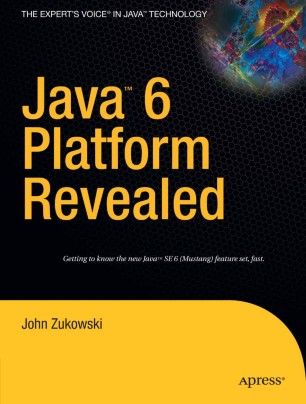
Java 6 Platform Revealed
New editions of the platform don't happen that frequently, but when they do, there is a lot to learn about quickly. If you want to come up to speed on the feature set as quickly as possible, Java 6 Platform Revealed will place you well ahead of the pack. You'll find 10 chapters of how to use the JSR implementations and library improvements that are now a part of Mustang. You'll learn about the scripting features of AWT and Swing, like splash screens, system tray access, and table sorting and filtering and lots more. What you won't find in Java 6 Platform Revealed is a "getting started with Java" tutorial. Come prepared with a good working knowledge of Java 5 platform for best results.
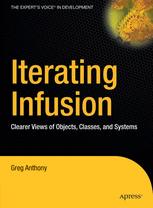
Iterating Infusion : Clearer Views of Objects, Classes, and Systems
Iterating Infusion presents comprehensive tools for you to best manage and work with object orientation. These include simplified fundamental concepts, popular language comparisons, advanced designing strategies, a broad usage progression, thorough design notations (interaction algebra), and data-oriented (fundamentally-OO) languages. The title, Iterating Infusion, alludes to the fact that any system has multiple, coexisting functional levels and that new levels—both lower and higher—are continually added to the same functional area. The practical effect is to bring processes into focus, always clarifying the vague. The extreme form of this is when separate but compatible technologies are brought together to create advancements; these can be baby-steps or great leaps, with varying amounts of effort. In more general terms, the same thing in a different context can take on much more power. And actually, this phenomenon is at the heart of object-oriented software.
Computation Engineering : Applied Automata Theory and Logic
This book covers automata in depth, providing good intuitions along the way, and culminating with applications that are used every day in the field. In this respect, it is a departure from the conventional textbooks on complexity and computability, although these 'tradtional' aspects remain well represented.

Complex Motion ; 1st International Workshop, IWCM 2004, Günzburg, Germany, October 12-14, 2004, Revised Papers
The world we live in is a dynamic one: we explore it by moving through it, and many of the objects which we are interested in are also moving. Trafic, for instance, is an example of a domain where detecting and processing visual motion is of vital interest, both in a metaphoric as well as in a purely literal sense. Visual communication is another important example of an area of science which is dominated by the need to measure, understand, and represent visual motion in an eficient way. Visual motion is a subject of research which forces the investigator to deal with complexity; complexity in the sense of facing efiects of motion in a very large diversity of forms, starting from analyzing simple motion in a changing envir- ment (illumination, shadows, . . . ), under adverse observation conditions, such as bad signal-to-noiseratio (low illumination, small-scaleprocesses, low-dosex-ray, etc. ), covering also multiple motions of independent objects, occlusions, and - ing as far as dealing with objects which are complex in themselves (articulated objects such as bodies of living beings). The spectrum of problems includes, but does not end at, objects which are not ‘bodies’ at all, e. g. , when anal- ing fiuid motion, cloud motion, and so on. Analyzing the motion of a crowd in a shopping mall or in an airport is a further example that implies the need to struggle against the problems induced by complexity.

Communications and Multimedia Security ; Vol. 3677 ; 9th IFIP TC-6 TC-11 International Conference, CMS 2005, Salzburg, Austria, September 19-21, 2005, Proceedings
This book constitutes the refereed proceedings of the 9th IFIP Ti6 Ti11 International Conference on Communications and Multimedia Security, CMS 2005, held in Salzburg, Austria in September 2005. The 28 revised full papers and 13 two-page abstracts presented together with 4 invited papers were carefully reviewed and selected from 143 submissions. The papers are organized in topical sections on applied cryptography, DRM and e-commerce, media encryption, multimedia security, privacy, biometrics and access control, network security, mobile security, and XML security.

Communications and Multimedia Security ; Vol. 175 ; 8th IFIP TC-6 TC-11 Conference on Communications and Multimedia Security, Sept. 15-18, 2004, Windermere, The Lake District, United Kingdom
Communications and Multimedia Security is an essential reference for both academic and professional researchers in the fields of Communications and Multimedia Security. This state-of-the-art volume presents the proceedings of the Eighth Annual IFIP TC-6 TC-11 Conference on Communications and Multimedia Security, September 2004, in Windermere, UK. The papers presented here represent the very latest developments in security research from leading people in the field. The papers explore a wide variety of subjects including privacy protection and trust negotiation, mobile security, applied cryptography, and security of communication protocols. Of special interest are several papers which addressed security in the Microsoft .Net architecture, and the threats that builders of web service applications need to be aware of. The papers were a result of research sponsored by Microsoft at five European University research centers. This collection will be important not only for multimedia security experts and researchers, but also for all teachers and administrators interested in communications security.
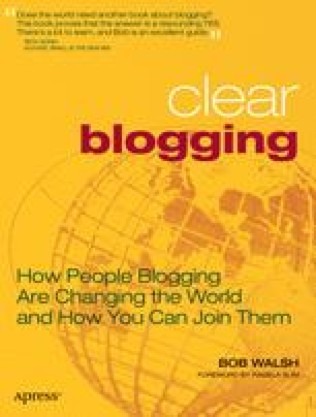
Clear Blogging : How People Blogging Are Changing the World and How You Can Join Them
Clear Blogging sets out to answer in non-technical terms what blogging has to offer, and why and how you should blog. Clear Blogging will show you why blogging has shaken up mainstream media, and how a blogger can end up on CNN.

Classification of covid-19 in lung images
The novel coronavirus 2019 (COVID-2019), which first appeared in Wuhan city of China in December 2019, spread rapidly around the world and became a pandemic. It has caused a devastating effect on both daily lives, public health, and the global economy. It is critical to detect the positive cases as early as possible so as to prevent the further spread of this epidemic and to quickly treat affected patients. The need for auxiliary diagnostic tools has increased as there are no accurate automated toolkits available. Recent findings obtained using radiology imaging techniques suggest that such images contain salient information about the COVID-19 virus. Application of advanced artificial intelligence (AI) techniques coupled with radiological imaging can be helpful for the accurate detection of this disease, and can also be assistive to overcome the problem of a lack of specialized physicians in remote villages.

Classification - the ubiquitous challenge ; Proceedings of the 28th annual conference of the Gesellschaft für Klassifikation e.V., University of Dortmund, March 9-11, 2004
This volume contains revised versions of selected papers presented duringthe 28th Annual Conference of the Gesellschaft f ̈ur Klassifikation (GfKl), theGerman Classification Society. contributed papers by authors from 18countries were presented at the conference in 52 parallel sessions representingthe whole field addressed by the title of the conference “Classification: TheUbiquitous Challenge”. Among these 52 sessions the VOC organized sessionson Mixture Modelling, Optimal Scaling, Multiway Methods, and Psychomet-rics with 18 papers. Overall, presentation of the papers in this volume is arranged in the fol-lowing parts:I. (Semi-)Plenary PresentationsII. Classification and Data AnalysisIII. Applications, andIV. Contest: Social Milieus in Dortmund

Citation Analysis in Research Evaluation
This book is written for members of the scholarly research community, and for persons involved in research evaluation and research policy. More specifically, it is directed towards the following four main groups of readers: – All scientists and scholars who have been or will be subjected to a quantitative assessment of research performance using citation analysis. – Research policy makers and managers who wish to become conversant with the basic features of citation analysis, and about its potentialities and limitations. – Members of peer review committees and other evaluators, who consider the use of citation analysis as a tool in their assessments. – Practitioners and students in the field of quantitative science and technology studies, informetrics, and library and information science. Citation analysis involves the construction and application of a series of indicators of the ‘impact’, ‘influence’ or ‘quality’ of scholarly work, derived from citation data, i.e. data on references cited in footnotes or bibliographies of scholarly research publications. Such indicators are applied both in the study of scholarly communication and in the assessment of research performance. The term ‘scholarly’ comprises all domains of science and scholarship, including not only those fields that are normally denoted as science – the natural and life sciences, mathematical and technical sciences – but also social sciences and humanities.
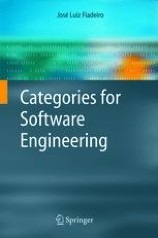
Categories for software engineering
This book provides a gentle, software engineering oriented introduction to category theory. Assuming only a minimum of mathematical preparation, this book explores the use of categorical constructions from the point of view of the methods and techniques that have been proposed for the engineering of complex software systems: object-oriented development, software architectures, logical and algebraic specification techniques, models of concurrency, inter alia. After two parts in which basic and more advanced categorical concepts and techniques are introduced, the book illustrates their application to the semantics of CommUnity – a language for the architectural design of interactive systems. "For computer scientists, this unique book presents Category Theory in a manner tailored to their interests and with examples to which they can relate." Ira Forman, IBM "This book applies little-known yet quite powerful formal tools from category theory to software structures: designs, architectures, patterns, and styles. Rather than focus on issues at the level of computational models and semantics, it instead applies these tools to some of the problems facing the sophisticated software architect.

Case-Based Reasoning Research and Development ; 7th International Conference on Case-Based Reasoning, ICCBR 2007 Belfast Northern Ireland, UK, August 13-16, 2007 Proceedings
It presented along with three invited talks. The sections address all aspects of case-based reasoning, featuring original theoretical research, applied research, and applications with practical, social, environmental, and economic significance.
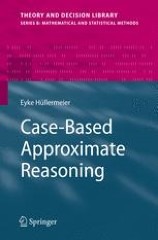
Case-Based Approximate Reasoning
Case-based reasoning (CBR) has received a great deal of attention in recent years and has established itself as a core methodology in the field of artificial intelligence. The key idea of CBR is to tackle new problems by referring to similar problems that have already been solved in the past. More precisely, CBR proceeds from individual experiences in the form of cases. The generalization beyond these experiences typically relies on a kind of regularity assumption demanding that 'similar problems have similar solutions'. Making use of different frameworks of approximate reasoning and reasoning under uncertainty, notably probabilistic and fuzzy set-based techniques, this book develops formal models of the above inference principle, which is fundamental to CBR. The case-based approximate reasoning methods thus obtained especially emphasize the heuristic nature of case-based inference and aspects of uncertainty in CBR. This way, the book contributes to a solid foundation of CBR which is grounded on formal concepts and techniques from the aforementioned fields. Besides, it establishes interesting relationships between CBR and approximate reasoning, which not only cast new light on existing methods but also enhance the development of novel approaches and hybrid systems.
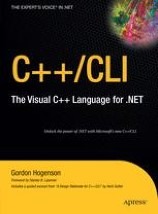
C++ /CLI : The Visual C++ Language for .NET
C++/CLI: The Visual C++ Language for .NET introduces Microsoft's extensions to the C++ syntax that allow you to target the common language runtime the key to the heart of the .NET 3.0 platform. In 12 no-fluff chapters, Microsoft insider Gordon Hogenson takes you into the core of the C++/CLI language and explains both how the language elements work and how Microsoft intends them to be used.
C# 10 Quick Syntax Reference : A Pocket Guide to the Language, APIs, and Library
Reviews the essential C# 10 and earlier syntax, not previously covered, in a well-organized format that can be used as a handy reference. Specifically, unions, generic attributes, CallerArgumentExpression, params span, Records, Init only setters, Top-level statements, Pattern matching enhancements, Native sized integers, Function pointers and more. You will: Employ nullable reference types / Work with ranges and indices / Apply recursive patterns to your applications / Use switch expressions

Business process management ; Vol. 4102 : 4th International Conference, BPM 2006, Vienna, Austria, September 5-7, 2006, Proceedings
This book constitutes the refereed proceedings of the 4th International Conference on Business Process Management, BPM 2006. The book presents 20 revised full papers, 5 industrial papers, and 15 short papers together with an invited paper and the abstract of an invited talk. The papers are organized in topical sections on monitoring and mining, service composition, process models and languages, dynamic process management, Web service composition, and applied business process management.

Business Intelligence for the Real-Time Enterprises ; 1st International Workshop, BIRTE 2006, Seoul, Korea, September 11, 2006, Revised Selected Papers
The book includes different aspects in the lifecycle of business intelligence on very large enterprise-wide operational real-time data sets. In today’s competitive and highly dynamic environment, analyzing data to und- stand how the business is performing, to predict outcomes and trends, and to improve the effectiveness of business processes underlying business operations has become critical. The traditional approach to reporting is not longer adequate; users now - mand easy-to-use intelligent platforms and applications capable of analyzing real-time business data to provide insight and actionable information at the right time. The end goal is to improve the enterprise performance by better and timelier decision making, enabled by the availability of up-to-date, high-quality information.
Building XNA 2.0 Games : A Practical Guide for Independent Game Development
Building XNA 2.0 Games: A Practical Guide for Independent Game Development is written by James Silva, who recently won the prestigious Microsoft Dream Build Play game competition with his award–winning game, The Dishwasher: Dead Samurai. Building XNA 2.0 Games: A Practical Guide for Independent Game Development is an in–depth and exclusive look into the entire XNA game development process and includes the creation of a software game masterpiece. James Silva guides you through the process he took to build his award–winning title, from concept to reality. He reveals tips and techniques for creating a polished, high–quality game with very few resources, while bridging the gap between coding and art.
Building the Infrastructure for Cloud Security : A Solutions view
For cloud users and providers alike, security is an everyday concern, yet there are very few books covering cloud security as a main subject. This book will help address this information gap from an Information Technology solution and usage-centric view of cloud infrastructure security. The book highlights the fundamental technology components necessary to build and enable trusted clouds. Here also is an explanation of the security and compliance challenges organizations face as they migrate mission-critical applications to the cloud, and how trusted clouds, that have their integrity rooted in hardware, can address these challenges.
Building Spring 2 Enterprise Applications
This book covers the first steps of using Spring while discussing the relevant technologies that Spring can be integrated with, what to be aware of, and how working with Spring makes them easier to use. Focuses on the most useful features of Spring, including persistence and transaction management as well as the complete Spring web tools portfolio. Introduces three-tier application design and how to test these designs.
