



الصفحة 16
الصفحة 16

Embedded Robotics : Mobile Robot Design and Applications with Embedded Systems
The EyeBot controller and mobile robots have evolved over more than a decade. This book gives an in-depth introduction to embedded systems and autonomous mobile robots, using the EyeBot controller (EyeCon) and the EyeBot mobile robot family as application examples. This book combines teaching and research material and can be used for courses in Embedded Systems as well as in Robotics and Automation.

Embedded robotics : From mobile robots to autonomous vehicles with Raspberry Pi and Arduino
Presents a unique examination of mobile robots and autonomous vehicles using embedded systems, from introductory to advanced level. It is structured in four parts, dealing with Embedded Systems (processors, sensors, actuators, control, multitasking and communication), Robot Hardware (driving and walking robots, autonomous boats and planes, as well as robot manipulators), Robot Software (localization, navigation, image processing and automotive systems), and Artificial Intelligence (neural networks, genetic algorithms and deep learning). The book is organized for ease of use, with numerous figures, photographs, and worked example programs. The book is written as a text for courses in computer science, computer engineering, IT, electronics engineering, and mechatronics, as well as a guide for robot hobbyists and researchers.

Embedded image processing on the TMS320C6000™ DSP : Examples in code composer studio™ and MATLAB
the author also explains the uses and rationale behind a plethora of technologies, most notably several industry-standard and essential TI developer technologies, including the Code Composer Studio™ IDE. Highlights include numerous debugged MATLAB and C/C++ Visual Studio prototype applications and efficient C implementations of real-world algorithms tested on both the C6416 DSK and C6701 EVM development platforms

Embedded Computer Systems : Architectures, Modeling, and Simulation ; 7th International Workshop, SAMOS 2007, Samos, Greece, July 16-19, 2007, Proceedings
The book is unique in the sense that not only solved research problems are presented and discussed but also (partly) unsolved pr- lems and in-depth topical reviews can be unleashed in the scientific arena. C- sequently, it provides the participants with an environment where collaboration rather than competition is fostered.

Embedded and Ubiquitous Computing - EUC 2005 Workshops ; EUC 2005 Workshops : UISW, NCUS, SecUbiq, USN, and TAUES, Nagasaki, Japan, December 8-9, 2005
This book constitutes the refereed proceedings of the EUC 2005 workshops held in conjunction with the IFIP International Conference on Embedded and Ubiquitous Computing, EUC 2005, in Nagasaki, Japan in December 2005.The 132 revised full papers presented were carefully reviewed and selected from 352 submissions. Topics covered by the five workshops are ubiquitous intelligence and smart worlds (UISW 2005), network-centric ubiquitous systems (NCUS 2005), security in ubiquitous computing systems (SecUbiq 2005), RFID and ubiquitous sensor networks (USN 2005), and trusted and autonomic ubiquitous and embedded systems (TAUES 2005).

Elevating video content creation with ai assistance = ارتقاء إنشاء محتوى الفيديو بمساعدة الذكاء الاصطناعي
We developed an AI Assistant equipped with features such as description crafting, title generation, keyword extraction, image captioning, clickbait detection, and sentiment analysis.To achieve these functionalities, we proposed a model for generating video descriptions using ResNet50 as a feature extractor and a LSTM network with an attention mechanism as a sequence generator, achieving a BLEU-1 score of 0.907 and a ROUGE-L score of 0.645. For keyword extraction, we utilized Sentence Transformer to identify strategically relevant keywords from the generated descriptions. For title generation, we fine-tuned the BART model, achieving a ROUGE-L score of 0.45. For clickbait detection, we used SVC classifier with linear kernel and TF-IDF vectorization for feature extraction, resulting in 96% accuracy. Our sentiment analysis model using a CNN-LSTM architecture achieved 80% accuracy in analyzing comments on videos. For image captioning, we employed a feature extractor with a CNN layer followed by an LSTM model, achieving a BLEU-1 score of 0.53. Our platform empowers creators by simplifying complex tasks and offering deeper audience engagement insights, making it a powerful tool in the evolving digital content creation.

eLearning and Digital Publishing
This book provides a framework which clearly portrays the relationships between information literacy, eLearning and digital publishing. The structure of the book has three main sections: the first has primarily an educational focus, the second a focus on digital publishing, and the third builds on the first two sections to examine overall implications for the growth of knowledge and scholarly communication.

eIoT : The Development of the Energy Internet of Things in Energy Infrastructure
This book explores the collision between the sustainable energy transition and the Internet of Things (IoT). In that regard, this book’s arrival is timely. Not only is the Internet of Things for energy applications, herein called the energy Internet of Things (eIoT), rapidly developing but also the transition towards sustainable energy to abate global climate is very much at the forefront of public discourse. It is within the context of these two dynamic thrusts, digitization and global climate change, that the energy industry sees itself undergoing significant change in how it is operated and managed. The goal of this book is to provide a single integrated picture of how eIoT can come to transform our energy infrastructure. This book links the energy management change drivers mentioned above to the need for a technical energy management solution. It, then, describes how eIoT meets many of the criteria required for such a technical solution.

E-health records
Each patient can view his health history electronically, decision makers can view the history of any patient and the treatment methods he underwent during his life and take the necessary measures to reach the patient to optimal health, and the Ministry of Health can obtain medical reports that enable it to take the necessary decisions.

Egocentric video summarization
Video summarization is defined as the generation of a summary of extensive video content that comes from all kinds of videos including egocentric videos by detecting and presenting the material to potential users which is most informative and contains interesting information. Video summarization has many practical applications and Egocentric video summarization approaches have been proposed to solve various problems in the healthcare industry. This work focuses on Alzheimer. Patients suffering from Alzheimer’s face difficulties in remembering what happened during their day, the identity of persons and medicine they took.
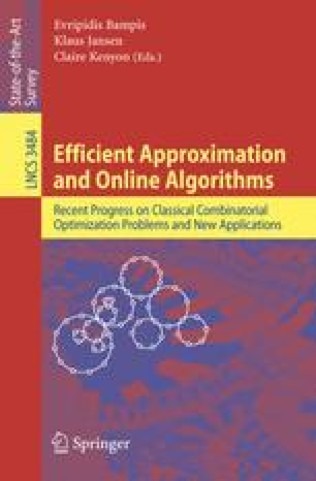
Efficient Approximation and Online Algorithms : Recent Progress on Classical Combinatorial Optimization Problems and New Applications
This book provides a good opportunity for computer science practitioners and researchers to get in sync with current state-of-the-art and future trends in the field of combinatorial optimization and online algorithms. Recent advances in this area are presented focusing on the design of efficient approximation and on-line algorithms. One central idea in the book is to use a linear program relaxation of the problem, randomization and rounding techniques.

eDirectory Field Guide
eDirectory Field Guide is a handy reference for configuring, troubleshooting, and optimizing Novells eDirectory on NetWare, Linux, Unix, and Windows. Along with Sun ONE Directory Server and Microsoft Active Directory, Novells eDirectory is a leader in directory server software, the specialized database that enterprises employ to store user identities. This book offers tips for migrating from one operating system to another. iMonitor, troubleshooting, and administration tools (such as Novell's iManager and ConsoleOne) are discussed in detail.

E-CARGO and role-based collaboration : Modeling and solving problems in the complex
A model for collaboratively solving complex problems Explains the nature of collaboration, explores an easy-to-follow process of collaboration, and defines a model to solve complex problems in collaboration and complex systems. Written by a noted expert on the topic, the book initiates the study of an effective collaborative system from a novel perspective. The role-based collaboration (RBC) methodology investigates the most important aspects of a variety of collaborative systems including societal-technical systems. The models and algorithms can also be applied across system engineering, production, and management. Contains a set of concepts, models, and algorithms for the analysis, design, implementation, maintenance, and assessment of a complex system Presents computational methods that use roles as a primary underlying mechanism to facilitate collaborative activities including role assignment Explores the RBC methodology that concentrates on the aspects that can be handled by individuals to establish a well-formed team Offers an authoritative book written by a noted expert on the topic

E-business and telecommunication networks ; 3rd International conference, ICETE 2006, Setúbal, Portugal, August 7-10, 2006. Selected Papers
This book constitutes the best papers of the Third International Conference on E-business and Telecommunication Networks, ICETE 2006, held in Setúbal, Portugal, August 7-10, 2006.

E-business and telecommunication networks ; 2nd International conference, ICETE 2005, Reading, UK, October 3-7, 2005. Selected Papers
This book contains fields of e-business and telecommunication networks, including aspects related to security, wireless systems, signal processing, and all sorts of applications, who are bringing new services and technologies into the lives of ordinary consumers. Four simultaneous tracks were held, covering different aspects, namely: “Global Communication Information Systems and Services”, “Security and Reliability in Information Systems and Networks”, “Wireless Communication Systems and Networks” and “Multimedia Signal Processing”.

Dynamical Vision ; ICCV 2005 and ECCV 2006 Workshops, WDV 2005 and WDV 2006, Beijing, China, October 21, 2005, Graz, Austria, May 13, 2006, Revised Papers
Classical multiple-view geometry studies the reconstruction of a static scene - served by a rigidly moving camera. However, in many real-world applications the scene may undergo much more complex dynamical changes. For instance, the scene may consist of multiple moving objects (e.g., a trafic scene) or arti- lated motions (e.g., a walking human) or even non-rigid dynamics (e.g., smoke, fire, or a waterfall). In addition, some applications may require interaction with the scene through a dynamical system (e.g., vision-guided robot navigation and coordination). To study the problem of reconstructing dynamical scenes, many new al- braic, geometric, statistical, and computational tools have recently emerged in computer vision, computer graphics, image processing, and vision-based c- trol.

DSP for In-Vehicle and Mobile Systems
DSP for In-Vehicle and Mobile Systems is focused on digital signal processing strategies for improving information access, command and control, and communications for in-vehicle environments. It is expected that the next generation of human-to-vehicle interfaces will incorporate speech, video/image, and wireless communication modalities to provide more comfortable and safer driving ambiance

Dream catcher
Dream Catcher is a video generation application that helps in many fields as science fiction, imagine event’s scenarios, education, animation and montage. By applying artificial algorithms implemented and trained on a dataset containing video samples and there descriptions to generate videos from any given text. The idea of generating videos from text is a new idea that was first presented at 2017, even that international companies like Google and OpenAi In the last year, was working on developing models to generate images from text. To make it easier to use the application, there are many ways to enter the text either by an image, voice or Typing from the keyboard.

DOM Scripting : Web Design with JavaScript and the Document Object Model
There are three main technologies married together to create usable, standards-compliant web designs: XHTML for data structure, Cascading Style Sheets for styling your data, and JavaScript for adding dynamic effects and manipulating structure on the fly using the Document Object Model. This book is about the latter of the three. DOM Scripting: Web Design with JavaScript and the Document Object Model gives you everything you need to start using JavaScript and the Document Object Model to enhance your web pages with client-side dynamic effects. Jeremy Keith starts off by giving you a basic crash course in JavaScript and the DOM, then moves on to provide you with several real-world examples built up from scratch, including dynamic image galleries and dynamic menus. Then, he shows you how to manipulate web page style using the CSS DOM, and create markup on the fly.

Document Analysis Systems VII ; 7th International Workshop, DAS 2006, Nelson, New Zealand, February 13-15, 2006, Proceedings
This book constitutes the refereed proceedings of the 7th International Conference on Document Analysis Systems, DAS 2006, held in Nelson, New Zealand, in February 2006.
