



الصفحة 15
الصفحة 15

Grid economics and business models ; 5th International workshop, GECON 2008, Las Palmas de Gran Canaria, Spain, August 26, 2008. Proceedings
This volume constitutes the refereed proceedings of the 5th International Workshop on Grid Economics and Business Models, GECON 2008, held in Las Palmas de Gran Canaria, Spain, August 2008.The 10 full papers included in this volume were carefully selected from 27 submission. They aim at presenting current results and innovative research in the area of grid economics. The papers are organized in topical sections on grid business modeling, market mechanisms for the grid, grid markets, and grid architectures.The proceedings are rounded off by 9 project reports that give an overview of the current and ongoing research in grid economics.

Grid Computing Security
In this book Chakrabarti has structured the issues pertaining to grid computing security into three main categories: architecture-related, infrastructure-related, and management-related issues. He discusses all three categories in detail, presents existing solutions, standards, and products, and pinpoints their shortcomings and open questions.

Grid computing in life science ; 1st International Workshop on Life Science Grid, LSGRID 2004 Kanazawa, Japan, May 31-June 1, 2004, Revised Selected and Invited Papers
Researchers in the ?eld of life sciences rely increasingly on information te- nology to extract and manage relevant knowledge. The complex computational and data management needs of life science research make Grid technologies an attractive support solution. However, many important issues must be addressed before the Life Science Grid becomes commonplace. The 1st International Life Science Grid Workshop (LSGRID 2004) was held in Kanazawa Japan, May 31–June 1, 2004. This workshop focused on life s- ence applications of grid systems especially for bionetwork research and systems biology which require heterogeneous data integration from genome to phenome, mathematical modeling and simulation from molecular to population levels, and high-performance computing including parallel processing, special hardware and grid computing.
Grid computing : Experiment management, Tool Integration, and Scientific Workflows
Grid computing has become a topic of significant interest in the scientific community as a means of enabling application developers to aggregate resources scattered around the globe for solving large-scale scientific problems. This monograph addresses four critical software development aspects for the engineering and execution of applications on parallel and Grid architectures.

Grid computing : Achievements and prospects
Grid Computing: Achievements and Prospects, the 9th edited volume of the CoreGRID series, includes selected papers from the CoreGRID Integration Workshop, held April 2008 in Heraklion-Crete, Greece. This event brings together representatives of the academic and industrial communities performing Grid research in Europe. The workshop was organized in the context of the CoreGRID Network of Excellence in order to provide a forum for the presentation and exchange of views on the latest developments in grid technology research.

Grid and cooperative computing - GCC 2005 ; 4th International Conference, Beijing, China, November 30 -- December 3, 2005, Proceedings
This volume presents the accepted papers for the 4th International Conference on Grid and Cooperative Computing (GCC2005),held in Beijing, China, during November 30 – December 3, 2005.The conferenceseries of GCC aims to provide an international forum for the presentation and discussion of research trends on the theory, method, and design of Grid and cooperative computing as well as their scienti?c, engineering and commercial applications. It has become a major annual event in this area. The First International Conference on Grid and Cooperative Computing (GCC2002) received 168 submissions. GCC 2003 received 550 submissions, from which 176 regular papers and 173 short papers were accepted. The acceptance rate of regular papers was 32%, and the total acceptance rate was 64%. GCC 2004 received 427 main-conference submissions and 154 workshop submissions. The main conference accepted 96 regular papers and 62 short papers. The - ceptance rate of the regular papers was 23%. The total acceptance rate of the main conference was 37%. For this conference, we received 576 submissions. Each was reviewed by two independent members of the International Program Committee. After carefully evaluating their originality and quality, we accepted 57 regular papers and 84 short papers. The acceptance rate of regular papers was 10%. The total acc- tance rate was 25%.
Green, pervasive, and cloud computing ; 15th International conference, GPC 2020, Xi'an, China, November 13–15, 2020, Proceedings
This book constitutes the refereed proceedings of the 15th International Conference on Green, Pervasive, and Cloud Computing, GPC 2020, held in Xi'an, China, in November 2020. The 30 full papers presented in this book together with 8 short papers were carefully reviewed and selected from 96 submissions. They cover the following topics: Device-free Sensing; Machine Learning; Recommendation Systems; Urban Computing; Human Computer Interaction; Internet of Things and Edge Computing; Positioning; Applications of Computer Vision; CrowdSensing; and Cloud and Related Technologies.

Graph-theoretic concepts in computer science ; 46th International Workshop, WG 2020, Leeds, UK, June 24–26, 2020, Revised Selected Papers
This book constitutes the revised papers of the 46th International Workshop on Graph-Theoretic Concepts in Computer Science, WG 2020, held in Leeds, UK, in June 2020. The workshop was held virtually due to the COVID-19 pandemic. The 32 full papers presented in this volume were carefully reviewed and selected from 94 submissions. They cover a wide range of areas, aiming to present emerging research results and to identify and explore directions of future research of concepts on graph theory and how they can be applied to various areas in computer science.

Graph-theoretic concepts in computer science ; 34th International Workshop, WG 2008, Durham, UK, June 30 – July 2, 2008. Revised Papers
This book constitutes the thoroughly refereed post-conference proceedings of the 34th International Workshop on Graph-Theoretic Concepts in Computer Science, WG 2008, held in Durham, UK, in June/July 2008.The 30 revised full papers presented together with 3 invited paper were carefully reviewed and selected from 76 submissions. The papers feature original results on all aspects of graph-theoretic concepts in Computer Science, e.g. structural graph theory, sequential, parallel, and distributed graph and network algorithms and their complexity, graph grammars and graph rewriting systems.

Graph structures for knowledge representation and reasoning ; 6th International Workshop, GKR 2020, virtual event, September 5, 2020, revised selected papers
This book constitutes the thoroughly refereed post-conference proceedings of the 6th International Workshop on Graph Structures for Knowledge Representation and Reasoning, GKR 2020, held virtually in September 2020, associated with ECAI 2020, the 24th European Conference on Artificial Intelligence.

Graph drawing ; Vol. 3843 ; 13 th International symposium, GD 2005, Limerick, Ireland, September 12-14, 2005, Revised Papers
The 13th International Symposium on Graph Drawing (GD 2005) was held in Limerick, Ireland, September 12-14, 2005. One hundred and ?fteen participants from 19 countries attended GD 2005. In response to the call for papers the Program Committee received 101 subm- sions, each detailing original research or a system demonstration. Each submission was reviewed by at least three Program Committee members; each referee’s c- ments were returned to the authors. Following extensive discussions, the comm- tee accepted 38 long papers, 3 short papers and 3 long system demos, each of which were presented during one of the conference’s 12 sessions. Eight posters were also accepted and were on display throughout the conference.

Graph drawing ; 15th International symposium, GD 2007, Sydney, Australia, September 24-26, 2007. Revised Papers
The 16th International Symposium on Graph Drawing (GD 2008) was held in Hersonissos, near Heraklion, Crete, Greece, September 21-24, 2008, and was attended by 91 participants from 19 countries. In response to the call for papers the Program Committee received 83 s- missions,eachdescribing originalresearchand/or a systemdemonstration.Tamassia showed how graph drawing techniques can be used as an e?ective tool in computer security and pointed to future research directions in this area. Following what is now a tradition, the 15th Annual Graph Drawing Contest was held during the conference, also including a Graph Drawing Challenge to the conference attendees.

Graph drawing ; 14th International symposium, GD 2006, Karlsruhe, Germany, September 18-20, 2006, Revised Papers
The 33 revised full papers and 5 revised short papers presented together with 2 invited talks, 1 system demo, 2 poster papers address all current aspects in graph drawing, ranging from foundational and methodological issues to applications for various classes of graphs in a variety of fields.

Global mobile satellite communications : For maritime, Land and aeronautical applications
This book is important for modern shipping, truck, train and aeronautical societies because GMSC in the present millennium provides more effective business and trade, with emphasis on safety and commercial communications. Global Mobile Satellite Communications is written to make bridges between potential readers and current GMSC trends, mobile system concepts and network architecture using a simple mode of style with understandable technical information, characteristics, graphicons, illustrations and mathematics equations

Global E-Security ; 4th International Conference, ICGeS 2008, London, UK, June 23-25, 2008. Proceedings
This book constitutes the refereed proceedings of the 4th International Conference on Global E-Security, ICGeS 2008, held in London, UK, in June 2008.The 36 revised full papers presented were carefully reviewed and selected from numerous submissions. The papers are organized in topical sections on cybercrime and digital forensics investigation, voice and video over internet protocols security, computer security, security architecture and authorisations, and IT governance.

Global Computing ; IST/FET International Workshop, GC 2004, Rovereto, Italy, March 9-12, 2004, Revised Selected Papers
This book constitutes the thoroughly refereed post-proceedings of the IST/FET International Workshop on Global Computing, GC 2004, held in Rovereto, Italy in March 2004. The 18 revised full papers presented were carefully selected during two rounds of reviewing and improvement from numerous submissions. Among the topics covered are programming environments, dynamic reconfiguration, resource guarantees, peer-to-peer networks, analysis of systems and resources, resource sharing, and security, as well as foundational calculi for mobility.
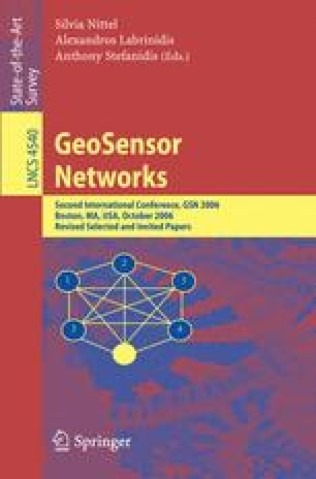
GeoSensor Networks : 2nd International Conference, GSN 2006, Boston, MA, USA, October 1-3, 2006, Revised Selected and Invited Papers
This book constitutes the thoroughly refereed proceedings of the Second GeoSensor Networks Conference, held in Boston, Massachusetts, USA, in October 2006. The conference addressed issues related to the collection, management, processing, analysis, and delivery of real-time geospatial data using distributed geosensor networks. This represents an evolution of the traditional static and centralized geocomputational paradigm.

Geographic Information Science ; 5th International Conference, GIScience 2008, Park City, UT, USA, September 23-26, 2008. Proceedings
This book constitutes the refereed proceedings of the 5th International Conference on Geographic Information Secience, GIScience 2008, held in Park City, UT, USA, in September 2008.The 24 revised full papers presented were carefully reviewed and selected from 77 submissions. Among the traditional topics addressed are spatial relations, geographic dynamics, and spatial data types. A significant number of papers deal with navigation networks, location-based services, and spatial information query and retrieval. Geo-sensors, mobile computing, and Web mapping rank among the important new directions.

Geographic Information Science ; 4th International Conference, GIScience 2006, Münster, Germany, September 20-23, 2006, Proceedings
The GIScience conference series (www. giscience. org) was created as a forum for all researchers who are interested in advancing research in the fundam- tal aspects of geographic information science.The conferences focus on emerging topics and basic research ?ndings across all s- tors of geographic information science. After three highly successful conferences in the United States, this year’s GIScience conference was held in Europe for the ?rst time. The GIScience conferences have been a meeting point for researchers coming from various disciplines, including cognitive science, computer science, engine- ing, geography,information science, mathematics, philosophy, psychology,social science, and statistics. The advancement of geographic information science - quiressuchinterdisciplinarybreadth,andthisisalsowhatmakestheconferences so exciting. In order to account for the di?erent needs of the involved scienti?c disciplines with regard to publishing their research results.

Genetic programming IV : Routine human-competitive machine intelligence
Genetic Programming IV: Routine Human-Competitive Machine Intelligence presents the application of GP to a wide variety of problems involving automated synthesis of controllers, circuits, antennas, genetic networks, and metabolic pathways. The book describes fifteen instances where GP has created an entity that either infringes or duplicates the functionality of a previously patented 20th-century invention, six instances where it has done the same with respect to post-2000 patented inventions, two instances where GP has created a patentable new invention, and thirteen other human-competitive results. The book additionally establishes: GP now delivers routine human-competitive machine intelligence GP is an automated invention machine GP can create general solutions to problems in the form of parameterized topologies GP has delivered qualitatively more substantial results in synchrony with the relentless iteration of Moore's Law
