



الصفحة 14
الصفحة 14

Asian Digital Libraries. Looking Back 10 Years and Forging New Frontiers ; 10th International Conference on Asian Digital Libraries, ICADL 2007, Hanoi, Vietnam, December 10-13, 2007. Proceedings
The theme reflects upon the growth of the digital libraries community and explores new areas that the community could delve into in the coming years.
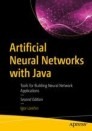
Artificial neural networks with Java : Tools for Building Neural Network Applications
Covers the internals of front and back propagation and helps you understand the main principles of neural network processing. You also will learn how to prepare the data to be used in neural network development and you will be able to suggest various techniques of data preparation for many unconventional tasks. You will learn: Use Java for the development of neural network applications / Prepare data for many different tasks / Carry out some unusual neural network processing / Use a neural network to process non-continuous functions / Develop a program that recognizes handwritten digits

Artificial intelligence techniques in hydrology and water resources management
The sustainable management of water cycles is crucial in the context of climate change and global warming. It involves managing global, regional, and local water cycles, as well as urban, agricultural, and industrial water cycles, to conserve water resources and their relationships with energy, food, microclimates, biodiversity, ecosystem functioning, and anthropogenic activities. Hydrological modeling is indispensable for achieving this goal, as it is essential for water resources management and the mitigation of natural disasters. In recent decades, the application of artificial intelligence (AI) techniques in hydrology and water resources management has led to notable advances. In the face of hydro-geo-meteorological uncertainty, AI approaches have proven to be powerful tools for accurately modeling complex, nonlinear hydrological processes and effectively utilizing various digital and imaging data sources, such as ground gauges, remote sensing tools, and in situ Internet of Things (IoT) devices.
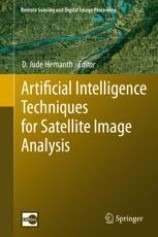
Artificial intelligence techniques for satellite image analysis
The main objective of this book is to provide a common platform for diverse concepts in satellite image processing. In particular it presents the state-of-the-art in Artificial Intelligence (AI) methodologies and shares findings that can be translated into real-time applications to benefit humankind. Interdisciplinary in its scope, the book will be of interest to both newcomers and experienced scientists working in the fields of satellite image processing, geo-engineering, remote sensing and Artificial Intelligence. It can be also used as a supplementary textbook for graduate students in various engineering branches related to image processing.
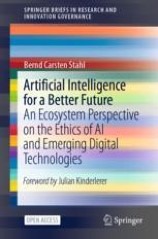
Artificial Intelligence for a better future : An ecosystem perspective on the ethics of AI and emerging digital technologies
This book proposes a novel approach to Artificial Intelligence (AI) ethics. AI offers many advantages: better and faster medical diagnoses, improved business processes and efficiency, and the automation of boring work.
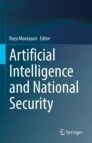
Artificial intelligence and national security
Analyses the implications of the technical, legal, ethical and privacy challenges as well as challenges for human rights and civil liberties regarding Artificial Intelligence (AI) and National Security. It also offers solutions that can be adopted to mitigate or eradicate these challenges wherever possible. As a general-purpose, dual-use technology, AI can be deployed for both good and evil. The use of AI is increasingly becoming of paramount importance to the governments mission to keep their nations safe. However, the design, development and use of AI for national security poses a wide range of legal, ethical, moral and privacy challenges. This book explores national security uses for Artificial Intelligence (AI) in Western Democracies and its malicious use. This book also investigates the legal, political, ethical, moral, privacy and human rights implications of the national security uses of AI in the aforementioned democracies. It illustrates how AI for national security purposes could threaten most individual fundamental rights, and how the use of AI in digital policing could undermine user human rights and privacy.

Arabic AI-generated adverts = إعلانات عربية مولدة بالذكاء الاصطناعي
In the ever-evolving landscape of digital marketing, our groundbreaking platform emerges, harnessing the power of artificial intelligence to revolutionize the creation of marketing campaigns. This innovative solution seamlessly combines neural networks, natural language generation, and multimedia processing capabilities to generate comprehensive and personalized marketing assets from a single product image. At its core, the platform leverages deep learning models that analyze the visual characteristics of the uploaded product image and identifies key features and attributes to define the product category, this enables the generation of compelling and persuasive marketing content tailored to the specific product. The platform's multi-faceted approach encompasses three distinct components: text generation, poster creation, and video advertisement production. Utilizing advanced natural language generation techniques, it crafts engaging marketing text that captures the essence and unique selling points of the product. Simultaneously, its image processing capabilities produce visually stunning promotional posters that blend the product image with eye-catching graphics and typography. along with creating captivating video advertisements optimized for social media and online advertising campaigns.

Applied cryptography and network security ; 19th International Conference, ACNS 2021, Kamakura, Japan, June 21–24, 2021, Proceedings, Part I
The two-volume set LNCS 12726 + 12727 constitutes the proceedings of the 19th International Conference on Applied Cryptography and Network Security, ACNS 2021, which took place virtually during June 21-24, 2021. The 37 full papers presented in the proceedings were carefully reviewed and selected from a total of 186 submissions. They were organized in topical sections as follows: Part I: Cryptographic protocols; secure and fair protocols; cryptocurrency and smart contracts; digital signatures; embedded system security; lattice cryptography; Part II: Analysis of applied systems; secure computations; cryptanalysis; system security; and cryptography and its applications.
Applied and computational mathematics for digital environments
Contains the 11 papers that were accepted and published in the Special Issue “Applied and Computational Mathematics for Digital Environments” of the MDPI Mathematics journal. The topics of interest include, among others, scientific research, applied tasks, and problems in the following areas: The construction of mathematical and information models of intelligent computer systems for monitoring and controlling the parameters of digital environments; The development of intelligent optimization algorithms that search for optimal parameter values of mathematical and information models in digital environments; Software and mathematical technologies in the implementation of intelligent monitoring and computer control of the parameters of digital environments; The development and application of mathematical and information models, machine learning methods, and artificial intelligence for the analysis and processing of big data in digital environments.

Applications and Usability of Interactive TV; 8th Iberoamerican Conference, jAUTI 2019, Rio de Janeiro, Brazil, October 29–November 1, 2019, Revised Selected Papers
This book constitutes the refereed proceedings of the 8th Iberoamerican Conference on Applications and Usability of Interactive Television, jAUTI 2019, in Rio de Janeiro, Brazil, in October 2019. The 10 full papers presented were carefully reviewed and selected from 35 submissions. The papers are organized in topical sections on Design and Development; Second Screen and Crossmedia; Interaction Techniques and Technologies; Accessibility; User Experience.

Analog and Pulse Circuits
Intended for anyone who has an interest to learn the analysis and design of analog and digital systems. The book covers the foundation of analysis and design of all analog and pulse circuits. The book is organized into seven chapters. In each chapter, practical derivations are explained step by step.
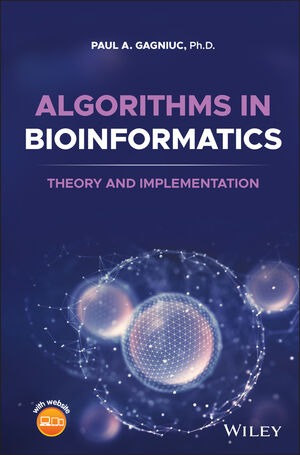
Algorithms in Bioinformatics : Theory and Implementation
Explores a comprehensive and insightful treatment of the practical application of bioinformatic algorithms in a variety of fields. Delivers a fulsome treatment of some of the main algorithms used to explain biological functions and relationships. It introduces readers to the art of algorithms in a practical manner which is linked with biological theory and interpretation. The book covers many key areas of bioinformatics, including global and local sequence alignment, forced alignment, detection of motifs, Sequence logos, Markov chains or information entropy. Other novel approaches are also described, such as Self-Sequence alignment, Objective Digital Stains (ODSs) or Spectral Forecast and the Discrete Probability Detector (DPD) algorithm. Readers will also benefit from the inclusion of: A detailed presentation of new methods, such as Self-sequence alignment, Objective Digital Stains and Spectral Forecast ; A treatment of sequence alignment, including local sequence alignment, global sequence alignment and forced sequence alignment with full implementations ; Discussions of position-specific weight matrices, including the count, weight, relative frequencies, and log-likelihoods matrices ; A detailed presentation of the methods related to Markov Chains as well as a description of their implementation in Bioinformatics and adjacent fields ; An examination of information and entropy, including sequence logos and explanations related to their meaning ; A chapter on philosophical transactions that allows the reader a broader view of the prediction process ; Extensive worked examples with detailed case studies that point out the meaning of different results

AIU projects evaluation platform
The project is a cloud computing system constructed to provide the service of helping students run their practical projects and work together while keeping track of every change in it, and teachers running the projects online and evaluating them. The system provided help doing this mission in real-time dialogue without having any dependencies downloaded on the machine and running it over the internet. The development of the system used a full-stack web framework and a database processing technology. The system has accomplished such services as running the projects online. The tests of the system are running in good conditions. The use of this system will solve the problem of teacher’s project evaluation and running them online.

AIU asset management system (Assettracker)
Assets can be defined as something of value that can be converted into cash, as all institutions and companies own assets and the larger the size of the organization, the greater the need to manage its owned assets. Some companies have resorted to manually tracking their assets by making paper data, but later, with the continuation of this approach, it has been noted that these data are largely lacking in organization and create difficulties in searching and tracking the life cycle of each asset separately. Here comes the role of our project, which is a software project based on automating assets and converting them from traditional methods to digital methods with the aim of obtaining the maximum benefit from assets in the organization by avoiding wasting assets, and issuing detailed reports indicating the decision-making process, in addition to the ability to deal with operations Effectively maintain assets.
AI, data, and digitalization : First International Symposium, SAIDD 2023, Sogndal, Norway, May 9–10, 2023, Revised Selected Papers
Artificial Intelligence, Big Data and Digitalization allow us more than ever beforeto make use of the data our society and public and private sectors generate every day.Institutions around the world are increasingly turning to such methods and technologiesto help them solve complex problems, promote efficiency and improve performance anddecision-making.
AI in learning : Designing the future
AI (artificial intelligence) is predicted to radically change teaching and learning in both schools and industry causing radical disruption of work. AI can support well-being initiatives and lifelong learning but educational institutions and companies need to take the changing technology into account. Moving towards AI supported by digital tools requires a dramatic shift in the concept of learning, expertise and the businesses built off of it. Based on the latest research on AI and how it is changing learning and education, this book will focus on the enormous opportunities to expand educational settings with AI for learning in and beyond the traditional classroom. This book also introduces ethical challenges related to learning and education, while connecting human learning and machine learning.
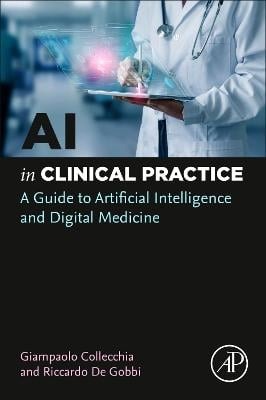
AI in clinical practice : A guide to artificial intelligence and digital medicine
Explains how artificial intelligence is applied to medicine, illustrating not only its enormous potential but also ancillary issues and the limits and risks inherent in its use on a large scale. The book focuses on the intersection between medicine and AI and its implications on the impact of human health care delivery. Topics discussed include wearable devices, health data, Internet of Things, virtual reality, robotic assistance system, and digital intelligence in the health sector. Additionally, sections discuss diagnostics and decision-making systems and machine/deep learning in clinical setting.
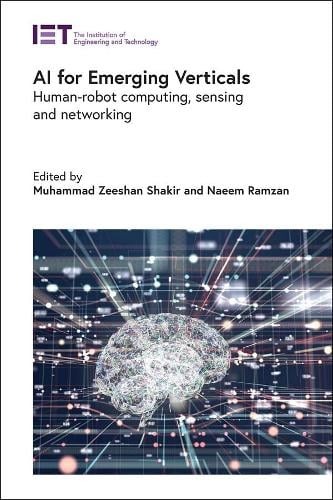
AI For Emerging Verticals : Human-robot computing, sensing and networking
Artificial intelligence (AI) and machine learning (ML) will play a major role. By adopting AI software and services, businesses can create predictive strategies, enhance their capabilities, better interact with customers, and streamline their business processes. Explores novel concepts and cutting-edge research and developments towards designing these fully automated advanced digital systems. Fostered by technological advances in artificial intelligence and machine learning, such systems potentially have a wide range of applications in robotics, human computing, sensing and networking. The chapters focus on models and theoretical approaches to guarantee automation in large multi-scale implementations of AI and ML systems; protocol designs to ensure AI systems meet key requirements for future services such as latency; and optimisation algorithms to leverage the trusted distributed and efficient complex architectures.

Advances on mechanics, design engineering and manufacturing III ; Proceedings of the international joint conference on mechanics, design engineering & advanced manufacturing, JCM 2020, June 2-4, 2020
This open access book gathers contributions presented at the International Joint Conference on Mechanics, Design Engineering and Advanced Manufacturing (JCM 2020), held as a web conference on June 2–4, 2020.

Advances in XML information retrieval and Evaluation ; 4th International workshop of the initiative for the evaluation of XML retrieval, INEX 2005, Dagstuhl Castle, Germany, November 28-30, 2005. Revised and Selected Papers
Content-oriented XML retrieval has been receiving increasing interest due to the widespread use of eXtensible Markup Language (XML), which is becoming a standard document format on the Web, in digital libraries,and publishing. By exploiting the enriched source of syntactic and semantic information that XML markup provides, XML information retrieval (IR) systems aim to implement a more focused retrieval strategy and return document components, so-called XML elements – instead of complete documents – in response to a user query. This focused retrieval approach is of particular bene?t for collections containing long documents or documents covering a wide variety of topics (e.g., books, user manuals, legal documents, etc.), where users’ e?ort to locate relevant content can be reduced by directing them to the most relevant parts of the documents.
