



الصفحة 12
الصفحة 12

Evolvable systems : From biology to hardware ; 8th International Conference, ICES 2008, Prague, Czech Republic, September 21-24, 2008. Proceedings
This book constitutes the refereed proceedings of the 8th International Conference on Evolvable Systems, ICES 2008, held in Prague, Czech Republic, in September 2008.The 28 revised full papers and 14 revised poster papers presented were carefully reviewed and selected from 52 submissions. The papers are organized in topical sections on evolution of analog circuits, evolution of digital circuits, hardware-software codesign and platforms for adaptive systems, evolutionary robotics, development, real-world applications, evolutionary networking, evolvable artificial neural networks, and transistor-level circuit evolution.

Evolvable systems : From biology to hardware ; 6th International Conference, ICES 2005, Sitges, Spain, September 12-14, 2005, Proceedings
The flying machines proposed by Leonardo da Vinci in the fifteenth century, the se- reproducing automata theory proposed by John von Neumann in the middle of the twentieth century and the current possibility of designing electronic and mechanical systems using evolutionary principles are all examples of the efforts made by humans to explore the mechanisms present in biological systems that permit them to tackle complex tasks. These initiatives have recently given rise to the emergent field of b- inspired systems and evolvable hardware. The inaugural workshop, Towards Evolvable Hardware, took place in Lausanne in October 1995, followed by the successive events of the International Conference on Evolvable Systems: From Biology to Hardware, held in Tsukuba (Japan) in October 1996, in Lausanne (Switzerland) in September 1998, in Edinburgh (UK) in April 2000, in Tokyo (Japan) in October 2001, and in Trondheim (Norway) in March 2003. Following the success of these past events the sixth international conference was aimed at presenting the latest developments in the field, bringing together researchers who use biologically inspired concepts to implement real systems in artificial intelligence, artificial life, robotics, VLSI design, and related domains. The sixth conference consolidated this biennial event as a reference meeting for the community involved in bio-inspired systems research. All the papers received were reviewed by at least three independent reviewers, thus guaranteeing a high-quality bundle for ICES 2005.

Evolutionary Computer Music
The evolutionary computation approach to music is an exciting new development for composers and musicologists alike. For composers, it provides an innovative and natural means for generating musical ideas from a specifiable set of primitive components and processes. For musicologists, these techniques are used to model the cultural transmission and change of a population's body of musical ideas over time. In both cases, musical evolution can be guided by a variety of constraints and tendencies built into the system, such as realistic psychological factors that influence the way music is expressed, experienced, learned, stored, modified, and passed on among individuals. This book discusses not only the applications of evolutionary computation to music, but also the tools needed to create and study such systems. These tools are drawn in part from research into the origins and evolution of biological organisms, ecologies, and cultural systems on the one hand, and from computer simulation methodologies on the other. They can be combined to create surrogate artificial worlds populated by interacting simulated organisms in which complex musical experiments can be performed that would otherwise be impossible.

Evolutionary computation, machine learning and data mining in bioinformatics ; 6th European Conference, EvoBIO 2008, Naples, Italy, March 26-28, 2008. Proceedings
The feld of bioinformatics has two main objectives: the creation and main- nance of biological databases, and the discovery of knowledge from life sciences data in order to unravel the mysteries of biological function, leading to new drugs and therapies for human disease. Life sciences data come in the form of biological sequences, structures, pathways, or literature. One major aspect of discovering biological knowledge is to search, predict, or model specifc infortioninagivendatasetinorderto generate new in teresting knowledge.Computer science methods such as evolutionary computation, machine learning, and data mining all have a great deal to ofer the feld of bioinformatics.

Evolutionary computation, machine learning and data mining in bioinformatics ; 5th European Conference, EvoBIO 2007, Valencia, Spain, April 11-13, 2007, Proceedings
This book Covers brings together experts in computer science with experts in bioinformatics and the biological sciences. It presents contributions on fundamental and theoretical issues along with papers dealing with different applications areas.

Ergodic Dynamics : From Basic Theory to Applications
This textbook provides a broad introduction to the fields of dynamical systems and ergodic theory. Motivated by examples throughout, the author offers readers an approachable entry-point to the dynamics of ergodic systems. Modern and classical applications complement the theory on topics ranging from financial fraud to virus dynamics, offering numerous avenues for further inquiry. Starting with several simple examples of dynamical systems, the book begins by establishing the basics of measurable dynamical systems, attractors, and the ergodic theorems. From here, chapters are modular and can be selected according to interest. Highlights include the Perron–Frobenius theorem, which is presented with proof and applications that include Google PageRank. An in-depth exploration of invariant measures includes ratio sets and type III measurable dynamical systems using the von Neumann factor classification. Topological and measure theoretic entropy are illustrated and compared in detail, with an algorithmic application of entropy used to study the papillomavirus genome. A chapter on complex dynamics introduces Julia sets and proves their ergodicity for certain maps. Cellular automata are explored as a series of case studies in one and two dimensions, including Conway’s Game of Life and latent infections of HIV. Other chapters discuss mixing properties, shift spaces, and toral automorphisms.
Enterprise Applications and Services in the Finance Industry ; 3rd International Workshop, FinanceCom 2007, Montreal, Canada, December 8, 2007. Revised Papers
This book constitutes the proceedings of the 4th International Workshop on Enterprise Applications and Services in the Finance Industry, FinanceCom2008, held in Paris, France, on December 13, 2008. The workshop spans multiple disciplines, including technical, economic, sociological and behavioral sciences. The guiding theme of this workshop was concerned with innovations in the financial services industry, driven by either new business models or changed regulations.

Enhanced Methods in Computer Security, Biometric and Artificial Intelligence Systems
"Methods of Artificial Intelligence and Intelligent Agents" contains 13 contributions analyzing such areas of AI as fuzzy set theory, predicate logic, neural networks, clustering, data mining and others. It also presents applications of AI as possible solutions for problems like firm bankruptcy, soil erosion, flight control and others. "Information Technology Security" covers three important areas of security engineering in information systems: software security, public key infrastructure and the design of new cryptographic protocols and algorithms. "Biometric Systems" comprises 11 contributions dealing with face picture analysis and recognition systems. This chapter focuses on known methods of biometric problem solution as well as the design of new models.
Enhanced Living Environments : Algorithms, Architectures, Platforms, and Systems
Ambient Assisted Living (AAL) is an area of research based on Information and Communication Technologies (ICT), medical research, and sociological research. AAL is based on the notion that technology and science can provide improvements in the quality of life for people in their homes, and that it can reduce the financial burden on the budgets of the healthcare providers. The concept of Enhanced Living Environments (ELE) refers to the AAL area that is more related with ICT. Effective ELE solutions require appropriate ICT algorithms, architectures, platforms, and systems, having in view the advance of science in this area and the development of new and innovative solutions. The aim of this book is to become a state-of-the-art reference, discussing progress made, as well as prompting future directions on theories, practices, standards, and strategies related to the ELE area.
Engineering theories of software intensive systems : Theory, algorithms, software, and applications
Software engineering has over the years been applied in many different fields, ranging from telecommunications to embedded systems in car and aircraft industry as well as in production engineering and computer networks. Foundations in software technology lie in models allowing to capture application domains, detailed requirements, but also to understand the structure and working of software systems like software architectures and programs. These models have to be expressed in techniques based on discrete mathematics, algebra and logics. However, according to the very specific needs in applications of software technology, formal methods have to serve the needs and the quality of advanced software engineering methods, especially taking into account security aspects in Information Technology. This book presents mathematical foundations of software engineering and state-of-the-art engineering methods in their theoretical substance in the step towards practical applications to examine software engineering techniques and foundations used for industrial tasks.
Engineering Stochastic Local Search Algorithms. Designing, Implementing and Analyzing Effective Heuristics ; International Workshop, SLS 2007, Brussels, Belgium, September 6-8, 2007, Proceedings
Stochastic local search (SLS) algorithms enjoy great popularity as powerful and versatile tools for tackling computationally hard decision and optimization pr- lems from many areas of computer science, operations research, and engineering. However, in recent years it has become evident that at the core of this development task there is a highly complex engineering process, which combines various aspects of algorithm design with empirical analysis techniques and problem-specific background, and which relies heavily on knowledge from a number of disciplines and areas, including computer science, operations research, artificial intelligence, and statistics. This development process needs to be - sisted by a sound methodology that addresses the issues arising in the various phases of algorithm design, implementation, tuning, and experimental eval- tion.

Engineering Societies in the Agents World VI ; 6th International Workshop, ESAW 2005, Kusadasi, Turkey, October 26-28, 2005, Revised Selected and Invited Papers
ESAW 2005 took place at the Pine Bay Hotel in Kusadasi, Turkey at the end of the October 2005. It was organized as a stand-alone event as were ESAW 2004and ESAW 2003.Following the initial ESAW vision,which wasset in 1999, by the members of the working group on “Communication, Coordination and Collaboration” of Agentlink, ESAW 2005 continued to focus on the engineering of complex software systems in terms of multi-agent societies, especially the social and environmental aspects of such societies.

Engineering societies in the agents world V : 5th international workshop, ESAW 2004, Toulouse, France, October 20-22, 2004 : revised selected and invited papers
The ?rst workshop “Engineering Societies in the Agents World” (ESAW) was held in August 2000, in conjunction with the 14th European Conference on Arti?cial Intelligence (ECAI 2000) in Berlin. It was launched by a group of - searchers who thought that the design and development of MASs (multi-agent systems) not only needed adequate theoretical foundations but also a call for new techniques, methodologies and infrastructures to develop MASs as arti?cial societies. The second ESAW was co-located with the European Agent Summer School (ACAI 2001) in Prague, and mostly focused on logics and languages, middleware, infrastructures and applications. In Madrid, the third ESAW c- centrated on models and methodologies and took place with the “Cooperative Information Agents” workshop (CIA 2002). The fourth ESAW in London was the ?rst one that ran as a stand-alone event: apart from the usual works on methodologies and models, it also stressed the issues of applications and m- tidisciplinary models. Based on the success of previous ESAWs, and also given that the di?cult challenges in the construction of arti?cial societies are not yet fully addressed, the ?fth ESAW workshop was organized in the same spirit as its predecessors.
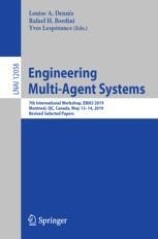
Engineering Multi-Agent Systems ; 7th International Workshop, EMAS 2019, Montreal, QC, Canada, May 13–14, 2019, Revised Selected Papers
This book constitutes the thoroughly refereed post-conference proceedings of the 7th International Workshop on Engineering Multi-Agent Systems, EMAS 2019, held in Montreal, QC, Canada, in May 2019. The 13 revised full papers presented in this book were carefully selected and reviewed from 20 submissions. The papers are grouped in the following topical sections: Multi-Agent Interaction and Organization; Simulation; Social Awareness and Explainability; Learning and Reconfiguration; and Implementation Techniques and Tools.

Engineering Interactive Systems ; 2nd Conference on Human-Centered Software Engineering, HCSE 2008, and 7th International Workshop on Task Models and Diagrams, TAMODIA 2008, Pisa, Italy, September 25-26, 2008. Proceedings
This book constitutes the combined proceedings of the second working conference on Human-Centred Software Engineering (HCSE 2008) and the 6th International Workshop on TAsk MOdels and DIAgrams (TAMODIA 2008); jointly held as EIS 2008, the international event on Engineering Interactive Systems, in Pisa, Italy, in September 2008.

Embedded Software and Systems ; Vol. 3820 ; 2nd International Conference, ICESS 2005, Xi'an, China, December 16-18, 2005, Proceedings
Welcome to the proceedings of the 2005 International Conference on Emb- ded Software and Systems (ICESS 2005) held in Xian, China, December 16-18, 2005. With the advent of VLSI system level integration and system-on-chip, the center of gravity of the computer industry is now moving from personal c- puting into embedded computing. Embedded software and systems are incre- ingly becoming a key technological component of all kinds of complex technical systems, ranging from vehicles, telephones, aircraft, toys, security systems, to medical diagnostics, weapons, pacemakers, climate control systems, etc. The ICESS 2005 conference provided a premier international forum for - searchers, developers and providers from academia and industry to address all resulting profound challenges; to present and discuss their new ideas, - search results, applications and experience; to improve international com- nication and cooperation; and to promote embedded software and system - dustrialization and wide applications on all aspects of embedded software and systems.

Embedded and Ubiquitous Computing - EUC 2005 ; International Conference EUC 2005, Nagasaki, Japan, December 6-9, 2005, Proceedings
Welcome to the proceedings of the 2005 IFIP International Conference on - bedded and Ubiquitous Computing (EUC 2005), which was held in Nagasaki, Japan, December 6–9, 2005. Embedded and ubiquitous computing is emerging rapidly as an exciting new paradigm to provide computing and communication services all the time, - erywhere. Its systems are now pervading every aspect of life to the point that they are hidden inside various appliances or can be worn unobtrusively as part of clothing and jewelry. This emergence is a natural outcome of research and technological advances in embedded systems, pervasive computing and c- munications, wireless networks, mobile computing, distributed computing and agent technologies, etc. Its tremendous impact on academics, industry, gove- ment, and daily life can be compared to that of electric motors over the past century, in fact it but promises to revolutionize life much more profoundly than elevators, electric motors or even personal computers. The EUC 2005 conference provided a forum for engineers and scientists in academia, industry, and government to address profound issues including te- nical challenges, safety, and social, legal, political, and economic issues, and to present and discuss their ideas, results, work in progress, and experience on all aspects of embedded and ubiquitous computing.

Elementary logic : For software development
This book teaches readers how to better reason about software development, to communicate reasoning, to distinguish between good and bad reasoning, and to read professional literature that presumes knowledge of elementary logic. It explains fundamental concepts and provides reader-friendly instructions for applying logic to software development.

Electromagnetic Aquametry : Electromagnetic wave interaction with water and moist substances
This book covers all aspects of Electromagnetic Aquametry. It summarizes the wide area of metrology and its applications in electromagnetic sensing of moist materials. The physical properties of water in various degrees of binding interacting with electromagnetic fields is presented by model systems. The book describes measurement methods and sensors in the frequency domain, TDR-techniques for environmental problems, methods and sensors for quality assessment of biological substances, and nuclear magnetic resonance techniques

Efficient Learning Machines : Theories, Concepts, and Applications for Engineers and System Designers
Machine learning techniques provide cost-effective alternatives to traditional methods for extracting underlying relationships between information and data and for predicting future events by processing existing information to train models. Efficient Learning Machines explores the major topics of machine learning, including knowledge discovery, classifications, genetic algorithms, neural networking, kernel methods, and biologically-inspired techniques.
