



الصفحة 11
الصفحة 11

Global Computing ; IST/FET International Workshop, GC 2004, Rovereto, Italy, March 9-12, 2004, Revised Selected Papers
This book constitutes the thoroughly refereed post-proceedings of the IST/FET International Workshop on Global Computing, GC 2004, held in Rovereto, Italy in March 2004. The 18 revised full papers presented were carefully selected during two rounds of reviewing and improvement from numerous submissions. Among the topics covered are programming environments, dynamic reconfiguration, resource guarantees, peer-to-peer networks, analysis of systems and resources, resource sharing, and security, as well as foundational calculi for mobility.

Future data and security engineering ; 7th International conference, FDSE 2020, Quy Nhon, Vietnam, November 25–27, 2020, Proceedings
This book constitutes the proceedings of the 7th International Conference on Future Data and Security Engineering, FDSE 2020, which was supposed to be held in Quy Nhon, Vietnam, in November 2020, but the conference was held virtually due to the COVID-19 pandemic. The 24 full papers (of 53 accepted full papers) presented together with 2 invited keynotes were carefully reviewed and selected from 161 submissions. The other 29 accepted full and 8 short papers are included in CCIS 1306. The selected papers are organized into the following topical headings: security issues in big data; big data analytics and distributed systems; advances in big data query processing and optimization; blockchain and applications; industry 4.0 and smart city: data analytics and security; advanced studies in machine learning for security; and emerging data management systems and applications.

Future data and security engineering : Big data, security and privacy, smart city and industry 4.0 applications ; 7th International Conference, FDSE 2020, Quy Nhon, Vietnam, November 25–27, 2020, Proceedings
This book constitutes the proceedings of the 7th International Conference on Future Data and Security Engineering, FDSE 2020, held in Quy Nhon, Vietnam, in November 2020.* The 29 full papers and 8 short were carefully reviewed and selected from 161 submissions. The selected papers are organized into the following topical headings: big data analytics and distributed systems; security and privacy engineering; industry 4.0 and smart city: data analytics and security; data analytics and healthcare systems; machine learning-based big data processing; emerging data management systems and applications; and short papers: security and data engineering.

Fundamentals of information systems security ; 3rd ed.
Provides a comprehensive overview of the essential concepts readers must know as they pursue careers in information systems security. The text opens with a discussion of the new risks, threats, and vulnerabilities associated with the transition to a digital world. Part 2 presents a high level overview of the Security+ Exam and provides students with information as they move toward this certification. The book closes with information on information security standards, education, professional certifications, and compliance laws. With its practical, conversational writing style and step-by-step examples, this text is a must-have resource for those entering the world of information systems security.

Fundamentals of information systems security ; 4th ed.
Provides a comprehensive overview of the concepts readers must know as they pursue careers in information systems security. The text opens with a discussion of emerging technologies and the risks, threats, and vulnerabilities associated with our digital world. Part II takes a deeper dive into the foundational knowledge areas and functions associated with a career in information security. The book closes with a survey of information security standards, professional certifications, and compliance laws. With its practical, conversational writing style and step-by-step examples, this text is a must-have resource for those entering the world of information systems security.

Fundamental approaches to software engineering ; 23rd International Conference, FASE 2020, Held as Part of the European Joint Conferences on Theory and Practice of Software, ETAPS 2020, Dublin, Ireland, April 25–30, 2020, Proceedings
This book constitutes the proceedings of the 23rd International Conference on Fundamental Approaches to Software Engineering, FASE 2020, which took place in Dublin, Ireland, in April 2020, and was held as Part of the European Joint Conferences on Theory and Practice of Software, ETAPS 2020. The 23 full papers, 1 tool paper and 6 testing competition papers presented in this volume were carefully reviewed and selected from 81 submissions.
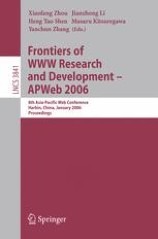
Frontiers of WWW Research and Development -- APWeb 2006 ; 8th Asia-Pacific Web Conference, Harbin, China, January 16-18, 2006, Proceedings
This book constitutes the refereed proceedings of the 8th Asia-Pacific Web Conference, APWeb 2006, held in Harbin, China in January 2006. The 56 revised full papers and 42 revised short papers presented together with 4 invited keynote papers, 6 industry papers, 19 demo papers, and 11 special papers on ICT advances for water resources management were carefully reviewed and selected from 413 submissions. The papers cover all current issues on WWW-related technologies and new advanced applications for researchers and practitioners from both academic and industry.

Frontiers of high performance computing and networking – ISPA 2006 workshops ; ISPA 2006 International workshops FHPCN, XHPC, S-GRACE, GridGIS, HPC-GTP, PDCE, ParDMCom, WOMP, ISDF, and UPWN, Sorrento, Italy, December 4 -7, 2006, Proceedings
This book constitutes the refereed joint proceedings of ten internationl workshops held in conjunction with the 4th International Symposium on Parallel and Distributed Processing and Applications, ISPA 2006, held in Sorrento, Italy in December 2006 (see LNCS 4330). Topics addressed are frontiers of high performance computing and networking (FHPCN 2006), XEN in HPC cluster and grid computing environments (XHPC 2006), semantic grid applications in computing and engineering (S-GRACE 2006), fertilization of grid computing and geographic information system (GridGIS 2006), high performance computing in genomic proteomic and transcriptomic (HPC-GTP 2006), parallel and distributed computing in engineering (PDCE 2006), parallel and distributed multimedia computing (ParDMCom 2006), middleware performance (WOMP 2006), information security and digital forensics (ISDF 2006), and ubiquitous processing for wireless networks (UPWN 2006).

Frontiers in Hardware Security and Trust : Theory, design and practice
The footprint and power constraints imposed on internet-of-things end-points, smart sensors, mobile and ad hoc network devices make traditional and software based cryptographic solutions that require a general-purpose processor increasingly unfeasible. The fact that security is not the primary functionality of these devices means that only a small portion of their limited processing power and storage is available for security, driving the need for alternative security solutions. Hardware security - including hardware obfuscation, hardware security primitives, side-channel attacks and so on - is therefore becoming an increasingly active research area in both academia and industry.

From P2P to Web Services and Grids : Peers in a Client/Server World
Provides an overview of peer-to-peer (P2P) technologies that have revolutionized the way we think about distributed computing and the internet. This book compares these technologies to alternative solutions, most notably web services and Grid computing but also other technologies, such as client/server based systems and agent technologies.

From grids to service and pervasive computing
Grids are a crucial enabling technology for scientific and industrial development. Peer-to-peer computing, grid, distributed storage technologies, emerging web service technologies, and other types of networked distributed computing have provided new paradigms exploiting distributed resources. Grids are revolutionizing computing as profoundly as e-mail and the Web.From Grids to Service and Pervasive Computing, the 10th edited volume of the CoreGRID series, is based on the 2008 CoreGRID Symposium, held August 25-26 in the Canary Islands, Spain.

Fourth IFIP International Conference on Theoretical Computer Science - TCS 2006 ; IFIP 19th World Computer Congress, TC-1, Foundations of Computer Science, August 23-24, 2006, Santiago, Chile
The IFIP series publishes state-of-the-art results in the sciences and technologies of information and communication. The scope of the series includes: foundations of computer science; software theory and practice; education; computer applications in technology; communication systems; systems modeling and optimization; information systems; computers and society; computer systems technology; security and protection in information processing systems; artificial intelligence; and human-computer interaction. Proceedings and post-proceedings of referred international conferences in computer science and interdisciplinary fields are featured. These results often precede journal publication and represent the most current research. The principal aim of the IFIP series is to encourage education and the dissemination and exchange of information about all aspects of computing.

Foundations of software science and computation structures ; Vol. 3921 ; 9th International conference, FOSSACS 2006, Held as part of the joint European conferences on theory and practice of software, ETAPS 2006, Vienna, Austria, March 25-31, 2006, proceedings
This book constitutes the refereed proceedings of the 9th International Conference on Foundations of Software Science and Computation Structures, FOSSACS 2006, held in Vienna, Austria in March 2006 as part of ETAPS. The 28 revised full papers presented together with 1 invited paper were carefully reviewed and selected from 107 submissions. The papers are organized in topical sections on mobile processes, software science, distributed computation, categorical models, real time and hybrid systems, process calculi, automata and logic, domains, lambda calculus, types, and security.

Foundations of software science and computation structures ; 25th International conference, FOSSACS 2022, Held as Part of the European joint conferences on theory and practice of software, ETAPS 2022, Munich, Germany, April 2–7, 2022, proceedings
This book constitutes the proceedings of the 25th International Conference on Foundations of Software Science and Computational Structures, FOSSACS 2022, which was held during April 4-6, 2022, in Munich, Germany, as part of the European Joint Conferences on Theory and Practice of Software, ETAPS 2022. They deal with research on theories and methods to support the analysis, integration, synthesis, transformation, and verification of programs and software systems.

Foundations of software science and computation structures ; 24th International conference, FOSSACS 2021, Held as Part of the European joint conferences on theory and practice of software, ETAPS 2021, Luxembourg City, Luxembourg, March 27 – April 1, 2021, proceedings
This book constitutes the proceedings of the 24th International Conference on Foundations of Software Science and Computational Structures, FOSSACS 2021, which was held during March 27 until April 1, 2021, as part of the European Joint Conferences on Theory and Practice of Software, ETAPS 2021. The conference was planned to take place in Luxembourg and changed to an online format due to the COVID-19 pandemic.

Foundations of software science and computation structures ; 23rd International conference, FOSSACS 2020, Held as part of the European joint conferences on theory and practice of software, ETAPS 2020, Dublin, Ireland, April 25–30, 2020, proceedings
This book constitutes the proceedings of the 23rd International Conference on Foundations of Software Science and Computational Structures, FOSSACS 2020, which took place in Dublin, Ireland, in April 2020, and was held as Part of the European Joint Conferences on Theory and Practice of Software, ETAPS 2020.

Foundations of Security Analysis and Design IV ; FOSAD 2006/2007 Turtorial Lectures
This book presents thoroughly revised versions of eight tutorial lectures given by leading researchers during two International Schools on Foundations of Security Analysis and Design, FOSAD 2006/2007, held in Bertinoro, Italy, in September 2006 and September 2007.

Foundations of security analysis and design III : FOSAD 2004/2005 tutorial lectures
The increasing relevance of security to real-life applications, such as electronic commerce and Internet banking, is attested by the fast-growing number of - search groups, events, conferences, and summer schools that address the study of foundations for the analysis and the design of security aspects. The “Int- national School on Foundations of Security Analysis and Design” (FOSAD, see http://www.sti.uniurb.it/events/fosad/)has been one of the foremost events - tablishedwiththegoalofdisseminatingknowledgeinthiscriticalarea,especially for young researchers approaching the ?eld and graduate students coming from less-favoured and non-leading countries. The FOSAD school is held annually at the Residential Centre of Bertinoro (http://www.ceub.it/), in the fascinating setting of a former convent and ep- copal fortress that has been transformed into a modern conference facility with computing services and Internet access. Since the ?rst school, in 2000, FOSAD hasattractedmorethan250participantsand50lecturersfromallovertheworld.

Foundations of Security : What Every Programmer Needs to Know
Foundations of Security: What Every Programmer Needs to Know teaches new and current software professionals state-of-the-art software security design principles, methodology, and concrete programming techniques they need to build secure software systems.

Foundations of Intelligent Systems ; Vol. 3488 ; 15th International Symposium ISMIS 2005, Saratoga Springs, NY, USA, May 25-28, 2005, Proceedings
This volume contains the papers selected for presentation at the 15th International S- posiumonMethodologiesforIntelligentSystems, ISMIS2005, heldinSaratogaSprings, NewYork,25-28May,2005. ThesymposiumwasorganizedbySUNYatAlbany. Itwas sponsored by the Army Research Of?ce and by several units of the University at Albany including its Division for Research, College of Arts and Sciences, Department of C- puter Science, and Institute for Informatics, Logics, and Security Studies (formerly the Institute for Programming and Logics). The Program Committee selected the following major areas for ISMIS 2005: intelligent information systems, knowledge discovery and data mining, knowledge - formation and integration, knowledge representation, logic for arti?cial intelligence, soft computing, Web intelligence, Web services, and papers dealing with applications of intelligent systems in complex/novel domains. The contributed papers were selected from almost 200 full draft papers by the Program Committee members.
