



الصفحة 11
الصفحة 11

LATIN 2006 : Theoretical Informatics ; 7th Latin American Symposium, Valdivia, Chile, March 20-24, 2006, Proceedings
This book constitutes the refereed proceedings of the 7th International Symposium, Latin American Theoretical Informatics, LATIN 2006, held in March 2006. The 66 revised full papers presented together with seven invited papers were carefully reviewed and selected from 224 submissions. The papers presented are devoted to a broad range of topics in theoretical computer science with a focus on algorithmics and computations related to discrete mathematics as well as on cryptography, data compression and Web applications.
JavaScript data structures and algorithms : An Introduction to understanding and implementing core data structure and algorithm fundamentals
Combines clear explanations of data structure and algorithm theory with practical code samples, examples and exercises, all specifically relevant to JavaScript Provides background information on object-oriented programming and native JavaScript concepts to help understand how everything fits together Illustrates how these theoretical computer science concepts ties back to practical applications in software engineering

IUTAM Symposium on Laminar-Turbulent Transition and Finite Amplitude Solutions
This volume contains refereed papers presented symposium on "Non-Uniqueness of Solutions to the Navier-Stokes equations and their Connection with Laminar-Turbulent Transition" The central objective of the symposium was to discuss the increasing amount of experimental and numerical evidence for finite amplitude solutions to the Navier-Stokes equations and to set the work into a modern theoretical context.
Complexity Theory : Exploring the Limits of Efficient Algorithms
Complexity theory is the theory of determining the necessary resources for the solution of algorithmic problems and, therefore, the limits of what is possible with the available resources. An understanding of these limits prevents the search for non-existing efficient algorithms. This textbook considers randomization as a key concept and emphasizes the interplay between theory and practice: New branches of complexity theory continue to arise in response to new algorithmic concepts, and its results - such as the theory of NP-completeness - have influenced the development of all areas of computer science. The topics selected have implications for concrete applications, and the significance of complexity theory for today's computer science is stressed throughout.
Complex Analysis with Applications to Number Theory
The book discusses major topics in complex analysis with applications to number theory.It 's including the theory of several finitely and infinitely complex variables, hyperbolic geometry, two- and three-manifolds, and number theory. In addition to solved examples and problems, the book covers most topics of current interest, such as Cauchy theorems, Picard’s theorems, Riemann–Zeta function, Dirichlet theorem, Gamma function, and harmonic functions.
Comparative genomics ; Vol.4205 ; RECOMB 2006 International Workshop, RECOMB-CG 2006, Montreal, Canada, September 24-26, 2006, Proceedings
The papers address a broad variety of aspects and components of the field of comparative genomics, ranging from new quantitative discoveries about genome structure and process to theorems on the complexity of computational problems inspired by genome comparison.

Comparative genomics ; Vol. 3678 : RECOMB 2005 International Workshop, RCG 2005, Dublin, Ireland, September 18-20, 2005, Proceedings
This book constitutes the refereed proceedings of the RECOMB 2005 Satellite Workshop, the 3rd RECOMB Comparative Genomics meeting RCG 2005, held in Dublin, Ireland in September 2005. The 14 revised full papers presented were carefully reviewed and selected from 21 initial submissions. The papers address a broad variety of aspects and components of the field of comparative genomics, ranging from new quantitative discoveries about genome structure and process to theorems on the complexity of computational problems inspired by genome comparison.
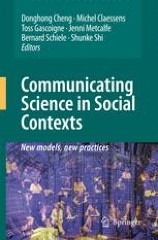
Communicating Science in Social Contexts : New models, new practices
Science communication, as a multidisciplinary field, has developed remarkably in recent years. It is now a distinct and exceedingly dynamic science that melds theoretical approaches with practical experience. Formerly well-established theoretical models now seem out of step with the social reality of the sciences, and the previously clear-cut delineations and interacting domains between cultural fields have blurred. Communicating Science in Social Contexts examines that shift, which itself depicts a profound recomposition of knowledge fields, activities and dissemination practices, and the value accorded to science and technology.

Chaos and fractals : New frontiers of science
Covers the central ideas and concepts of chaos and fractals as well as many related topics including: the Mandelbrot set, Julia sets, cellular automata, L-systems, percolation and strange attractors.

Case-Based Reasoning Research and Development ; 7th International Conference on Case-Based Reasoning, ICCBR 2007 Belfast Northern Ireland, UK, August 13-16, 2007 Proceedings
It presented along with three invited talks. The sections address all aspects of case-based reasoning, featuring original theoretical research, applied research, and applications with practical, social, environmental, and economic significance.

Case-based reasoning research and development ; 6th International conference on case-based reasoning, ICCBR 2005, Chicago, IL, USA, August 23-26, 2005, Proceedings
This book constitutes the refereed proceedings of the 6th International Conference on Case-Based Reasoning, ICCBR 2005, held in Chicago, IL, USA, in August 2005. The 19 revised full research papers and 26 revised poster papers presented together with the abstracts of 3 invited talks were carefully reviewed and selected from 74 submissions. The papers address all current foundational, theoretical and research aspects of case-based reasoning as well as advanced applications either with innovative commercial deployment or practical, social, environmental or economic significance.
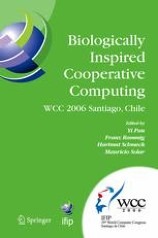
Biologically inspired cooperative computing ; IFIP 19th World Computer Congress, TC 10: 1st IFIP International Conference on biologically inspired cooperative computing, August 21-24, 2006, Santiago, Chile
The IFIP series publishes state-of-the-art results in the sciences and technologies of information and communication. The scope of the series includes: foundations of computer science; software theory and practice; education; computer applications in technology; communication systems; systems modeling and optimization; information systems; computers and society; computer systems technology; security and protection in information processing systems; artificial intelligence; and human-computer interaction.
Bioinspired optimization methods and their applications ; 9th International conference, BIOMA 2020, Brussels, Belgium, November 19–20, 2020, Proceedings
This book constitutes the refereed proceedings of the 9th International Conference on Bioinspired Optimization Methods and Their Applications, BIOMA 2020, held in Brussels, Belgium, in November 2020. The 24 full papers presented in this book were carefully reviewed and selected from 68 submissions. The papers in this BIOMA proceedings specialized in bioinspired algorithms as a means for solving the optimization problems and came in two categories: theoretical studies and methodology advancements on the one hand, and algorithm adjustments and their applications on the other.

Bio-inspired modeling of cognitive tasks ; 2nd International Work-conference on the interplay between natural and artificial computation, IWINAC 2007, La Manga del Mar Menor, Spain, June 18-21, 2007, Proceedings, Part I
This volume includes all the contributions mainly related with theoretical, conceptual and methodological aspects linking AI and knowledge engineering with neurophysiology, clinics and cognition.
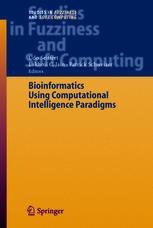
Bioinformatics Using Computational Intelligence Paradigms
Bioinformatics as well as Computational Intelligence are undoubtedly remarkably fast growing fields of research and real-world applications with enormous potential for current and future developments. "Bioinformatics using Computational Intelligence Paradigms" contains recent theoretical approaches and guiding applications of biologically inspired information processing systems(Computational Intelligence) against the background of bioinformatics. This carefully edited monograph combines the latest results of Bioinformatics and Computational Intelligence and offers a promising cross-fertilisation and interdisciplinary work between these growing fields.
Bioelectricity : A Quantitative Approach
"The authors’ goal in producing this book was to provide an introductory text to electrophysiology, based on a quantitative approach. In attempting to achieve this goal, therefore, the authors have opened the book with a useful, and digestible, introduction to various aspects of the mathematics relevant to this field, including vectors, introduction to Laplace, Gauss’s theorem, and Green’s theorem. This book will be useful for students in medical physics and biomedical engineering wishing to enter the field of electrophysiological investigation. It will also be helpful for biologists and physiologists who wish to understand the mathematical treatment of the processes and signals at the center of the interesting interdisciplinary field.

Bioeconomic modelling and valuation of exploited marine ecosystems
This book offers an environmental-economic analysis of exploited ecosystems with a clear policy orientation. The study tries to move beyond traditional economic fishery analysis in two respects. First, several theoretical and numerical models are offered that combine economic and ecological descriptions of fisheries. These models give special attention to spatial processes as well as to combining exploitation and conservation objectives. Second, valuation and stakeholder concerns are addressed in empirical analyses employing both qualitative and quantitative approaches. The latter is done by using advanced methods of monetary valuation. In addition, the first part of the book presents short, introductory overviews of integrated assessment, economic modeling of fishery management, and incorporating uncertainty in fisheries analysis.

Big Data Recommender Systems ; Vol.2 : Application Paradigms
Combines experimental and theoretical research on big data recommender systems to help computer scientists develop new concepts and methodologies for complex applications. It includes original scientific contributions in the form of theoretical foundations, comparative analysis, surveys, case studies, techniques and tools. First designed to generate personalized recommendations to users in the 90s, recommender systems apply knowledge discovery techniques to users’ data to suggest information, products, and services that best match their preferences. In recent decades, we have seen an exponential increase in the volumes of data, which has introduced many new challenges. recommender systems. Volume 2 covers a broad range of application paradigms for recommender systems over 22 chapters
Big Data Recommender Systems ; Vol.1 : Algorithms, Architectures, Big Data, Security and Trust
Combines experimental and theoretical research on big data recommender systems to help computer scientists develop new concepts and methodologies for complex applications. It includes original scientific contributions in the form of theoretical foundations, comparative analysis, surveys, case studies, techniques and tools.
Beyond the Worst-Case Analysis of Algorithms
There are no silver bullets in algorithm design, and no single algorithmic idea is powerful and flexible enough to solve every computational problem. Nor are there silver bullets in algorithm analysis, as the most enlightening method for analyzing an algorithm often depends on the problem and the application. However, typical algorithms courses rely almost entirely on a single analysis framework, that of worst-case analysis, wherein an algorithm is assessed by its worst performance on any input of a given size. The purpose of this book is to popularize several alternatives to worst-case analysis and their most notable algorithmic applications, from clustering to linear programming to neural network training. Forty leading researchers have contributed introductions to different facets of this field, emphasizing the most important models and results, many of which can be taught in lectures to beginning graduate students in theoretical computer science and machine learning.
