



الصفحة 11
الصفحة 11

Intelligent Computer Mathematics ; 13th International Conference, CICM 2020, Bertinoro, Italy, July 26–31, 2020, Proceedings
This book constitutes the refereed proceedings of the 13th International Conference on Intelligent Computer Mathematics, CICM 2020, held in Bertinoro, Italy, in July 2020*. The 15 full papers, 1 invited paper and 2 abstracts of invited papers presented were carefully reviewed and selected from a total of 35 submissions. The papers focus on advances in automated theorem provers and formalization, computer algebra systems and their libraries, and applications of machine learning, among other topics.

Intelligent Algorithms for Packing and Cutting Problem
Introduces intelligent solving algorithms for classical packing and cutting problem and their variants / Investigates novel methods, e.g. reinforcement learning algorithms, for rectangular and irregular packing problems / Presents practical engineering application cases in combination of theory and practice / investigates in detail the two-dimensional packing and cutting problems in the field of operations research and management science. It introduces the mathematical models and intelligent solving algorithms for these problems, as well as their engineering applications. Most intelligent methods reported in this book have already been applied in reality, which can provide reference for the engineers. The presented novel methods for the two-dimensional packing problem provide a new way to solve the problem for researchers interested in operations research or computer science. This book also introduces three new variants of packing problems and their solving methods, which offer a different research direction.

Intelligent Agents and Multi-Agent Systems ; 11th Pacific Rim International Conference on Multi-Agents, PRIMA 2008, Hanoi, Vietnam, December 15-16, 2008. Proceedings
This book constitutes the proceedings of the the 11th Pacific Rim International Conference on Multi-Agents, PRIMA 2008, held in Hanoi, Vietnam, in December 2008.The 19 regular papers and 22 short papers presented together with 3 keynote speeches, were carefully reviewed and selected from 56 submissions. Many current subjects in multi-agent research and development are addressed, ranging from theoretical and methodological issues to various applications in different fields. There was a track on multi-issue negotiation and agents and HCI.
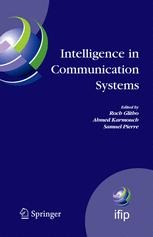
Intelligence in communication systems ; IFIP international onference on intelligence in communication systems, INTELLCOMM 2005, Montreal, Canada, October 17-19, 2005
International Federation for Information Processing The IFIP series publishes state-of-the-art results in the sciences and technologies of information and communication. The scope of the series includes: foundations of computer science; software theory and practice; education; computer applications in technology; communication systems; systems modeling and optimization; information systems; computers and society; computer systems technology; security and protection in information processing systems; artificial intelligence; and human-computer interaction. Proceedings and post-proceedings of referred international conferences in computer science and interdisciplinary fields are featured. These results often precede journal publication and represent the most current research. The principal aim of the IFIP series is to encourage education and the dissemination and exchange of information about all aspects of computing.

Intelligence and Security Informatics for International Security : Information Sharing and Data Mining
Reflects a decade of leading-edge research on intelligence and security informatics from the Artificial Intelligence Laboratory and the NSF COPLINK Center for Homeland Security Information Technology Research, as well as the application in real-world community situations by the center’s director and the book’s author, Dr. Hsinchun Chen.

Intelligence and Security Informatics ; Vol. 3917 ; International Workshop, WISI 2006, Singapore, April 9, 2006, Proceedings
Intelligence and security informatics (ISI) can be broadly defined as the study of the development and use of advanced information technologies and systems for national and international security-related applications. The First and Second Symposiums on ISI were held in Tucson, Arizona, in 2003 and 2004, respectively. In 2005, the IEEE International Conference on ISI was held in Atlanta, Georgia. These ISI conferences brought together academic researchers, law enforcement and intelligence experts, information technology consultants and practitioners to discuss their research and practice related to various ISI topics including ISI data management, data and text mining for ISI applications, terrorism informatics, deception detection, terrorist and criminal social network analysis, crime analysis, monitoring and surveillance, policy studies and evaluation, and information assurance, among others. We continued these stream of ISI conferences by organizing the Workshop on Intelligence and Security Informatics (WISI 2006) in conjunction with the Pacific Asia Conference on Knowledge Discovery and Data Mining (PAKDD 2006).

Intelligence and security informatics ; Vol. 3495 : IEEE International Conference on Intelligence and Security Informatics, ISI 2005, Atlanta, GA, USA, May 19-20, 2005, Proceedings
Intelligence and security informatics (ISI) can be broadly defined as the study of the development and use of advanced information technologies and systems for national and international security-related applications, through an integrated technological, organizational, and policy-based approach. In the past few years, ISI research has experienced tremendous growth and attracted substantial interest from academic researchers in related fields as well as practitioners from both government agencies and industry. The first two meetings (ISI 2003 and ISI 2004) in the ISI symposium and conference series were held in Tucson, Arizona, in 2003 and 2004, respectively. They provided a stimulating intellectual forum for discussion among previously disparate communities: academic researchers in information technologies, computer science, public policy, and social studies; local, state, and federal law enforcement and intelligence experts; and information technology industry consultants and practitioners.

Intelligence and security informatics ; IEEE ISI 2008 International Workshops : PAISI, PACCF, and SOCO 2008, Taipei, Taiwan, June 17, 2008. Proceedings
This book constitutes the refereed proceedings of the three international workshops PAISI 2008, PACCF 2008, and SOCO 2008, held as satellite events of the IEEE International Conference on Intelligence and Security Informatics, ISI 2008, in Taipei, Taiwan, in June 2008.The 55 revised full papers presented were carefully reviewed and selected from the presentations at the workshops. The 21 papers of the Pacific Asia Workshop on Intelligence and Security Informatics (PAISI 2008) cover topics such as information retrieval and event detection, internet security and cybercrime, currency and data protection, cryptography, image and video analysis, privacy issues, social networks, modeling and visualization, and network intrusion detection.

Intelligence and security informatics ; 1st European Conference, EuroISI 2008, Esbjerg, Denmark, December 3-5, 2008. Proceedings
This book constitutes the refereed proceedings of the First European Conference on Intelligence and Security Informatics, EuroISI 2008, held in Esbjerg, Denmark, in December 2008.The 23 revised full papers and 2 revised poster papers presented were carefully reviewed and selected from 48 submissions. The papers are organized in topical sections on criminal and social network analysis, intelligence analysis and knowledge discovery, Web-based intelligence monitoring and analysis, privacy protection, access control, and digital rights management, malware and intrusion detection, as well as surveillance and crisis management.

Intelleger = انتليجر
The project management system is a web application designed to assist software managers in efficiently managing their projects, including websites, mobile apps, and other software initiatives. Utilizing artificial intelligence, the application streamlines project creation and management processes, offering significant benefits in terms of organization and accuracy. Managers can create projects by inputting essential details such as the name, scope, deadline, and tasks. The system generates AI-based functional and non-functional requirements tailored to the project scope using gpt2 model on Pure dataset. Managers can then review and edit these requirements as needed before finalizing the project. The application facilitates comprehensive task management by allowing managers to assign tasks to developers, edit task details, and ensure task deadlines align with project deadlines. Developers can log their start and end times automatically when they begin and complete tasks, providing accurate time tracking and performance analysis.also they can use code generation model to generate their task’s code using codebert model on concode and codesearchnet dataset Real-time notifications keep both managers and developers informed of task assignments, completions, and other critical updates.
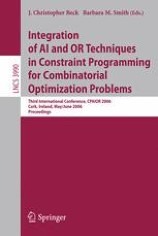
Integration of AI and OR Techniques in Constraint Programming for Combinatorial Optimization Problems ; Vol.3990 ; 3rd International Conference, CPAIOR 2006, Cork, Ireland, May 31 - June 2, 2006, Proceedings
Constitutes the refereed proceedings of the Third International Conference on Integration of AI and OR Techniques in Constraint Programming for Combinatorial Optimization Problems, CPAIOR 2006. The 20 revised full papers presented together with 3 invited talks address methodological and foundational issues from AI, OR, and algorithmics and present applications to the solution of combinatorial optimization problems in various fields via constraint programming.

Integration of AI and OR Techniques in Constraint Programming for Combinatorial Optimization Problems ; Vol.3524 : 2nd International Conference, CPAIOR 2005, Prague, Czech Republic, May 31 -- June 1, 2005
Intended primarily as a forum to focus on the integration and hybridization of the approaches of constraint programming (CP), arti?cial intelligence (AI), and operations research (OR) technologies for solving large-scale and complex real-life optimization problems. Therefore, CPAIOR is never far from industrial applications. The high number of submissions received this year, almost 100 papers, in witness to the interest of the research community in this conference. From these submissions, we chose 26 to be published in full in the proceedings. This volume includes summaries of the invited talks of CPAIOR: one from industry, one from the embedded system research community, and one from the operations research community.

Integration of AI and OR Techniques in Constraint Programming for Combinatorial Optimization Problems ; 5th International Conference, CPAIOR 2008 Paris, France, May 20-23, 2008 Proceedings
The 5th International Conference on Integration of AI and OR Techniques in Constraint Programming for Combinatorial Optimization Problems (CPAIOR 2008) was held in Paris, France May 20–23, 2008. The purpose of this conference series is to bring together researchers in the felds of constraint programming, artifcial intelligence, and operations research to explore ways of solving large-scale, practical optimization problems through integration and hybridization of the felds’ diferent techniques. Through the years, this research community is discovering that the felds have much in c- mon, and there has been tremendous richness in the resulting cross-fertilization of felds.

Integration of AI and OR Techniques in Constraint Programming for Combinatorial Optimization Problems ; 4th International Conference, CPAIOR 2007, Brussels, Belgium, May 23-26, 2007, Proceedings
This book constitutes the refereed proceedings of the 4th International Conference on Integration of AI and OR Techniques in Constraint Programming for Combinatorial Optimization Problems, CPAIOR 2007, held in Brussels, Belgium in May 2007.

Integrating Human Aspects in Production Management ; IFIP TC5 / WG5.7 Proceedings of the International Conference on Human Aspects in Production Management 5-9 October 2003, Karlsruhe, Germany
This book is composed of six parts, each focusing on a specific theme: Human Resource Planning; Human Aspects in the Digital Factory; Human Aspects in Production Planning & Control; Knowledge Management; Management of Distributed Work; and Service Engineering. The included papers were presented at the IFIP International Working Conference "Human Aspects in Production Management." Following this conference, the papers were extended by the authors and passed a peer review process.

Integrating Data Science and Earth Science : Challenges and Solutions
This book presents the results of three years collaboration between earth scientists and data scientist, in developing and applying data science methods for scientific discovery. The book will be highly beneficial for other researchers at senior and graduate level, interested in applying visual data exploration, computational approaches and scientifc workflows.

Integrated Science in Digital Age ; ICIS 2019
The ICIS 2019 received roughly 50 contributions, by authors hailing from six countries. Following a peer-review process, the Scientific Committee – a multidisciplinary group of 110 experts from 38 countries around the globe – selected roughly 60% for publication. The main topics covered include: Artificial Intelligence Research; Digital Business & Finance; Educational Sciences; Health Management Informatics; Public Administration in the Digital Age; and Social Problem-solving.

Integrated formal methods ; 3rd International Conference, IFM 2002, Turku, Finland, May 15-18, 2002. Proceedings.
IFM 2002 explored the relations between formal methods and graphical notations, especially the industrial standard language for software design, the Unified Modeling Language (UML). The themes of IFM 2002 reflect what we believe is a growing trend in the Formal Methods and Software Engineering research communities. Over the last threedecades,computer scientists have developed a range of formalisms focusing on particular aspects of behavior or analysis, such as sequential program structures, concurrent program structures, data and information structures, temporal reasoning, deductive proof, and model checking. Much effort is now being devoted to integrating these methods in order to combine their advantages and ensure they scale up to industrial needs. Graphical notations are now widely used in software engineering and there is growing recognition of the importance of providing these with the for mal underpinnings and form alanalysis capabilities found in formal methods.

Integrated Circuit and System Design. Power and Timing Modeling, Optimization and Simulation ; Vol. 4148 ; 16th International Workshop, PATMOS 2006, Montpellier, France, September 13-15, 2006, Proceedings
Welcome to the proceedings of PATMOS 2006, the 16th in a series of international workshops. PATMOS 2006 was organized by LIRMM with CAS technical - sponsorship and CEDA sponsorship. Over the years, the PATMOS workshop has evolved into an important European event, where researchers from both industry and academia discuss and investigate the emerging challenges in future and contemporary applications, design methodologies, and tools required for the development of upcoming generations of integrated circuits and systems. The technical program of PATMOS 2006 contained state-of-the-art technical contributions, three invited talks, a special session on hearing-aid design, and an embedded tutorial. The technical program focused on timing, performance and power consumption, as well as architectural aspects with particular emphasis on modeling, design, characterization, analysis and optimization in the nanometer era. The Technical Program Committee, with the assistance of additional expert reviewers, selected the 64 papers presented at PATMOS. The papers were organized into 11 technical sessions and 3 poster sessions. As is always the case with the PATMOS workshops, full papers were required, and several reviews were received per manuscript.

Integrated Circuit and System Design. Power and Timing Modeling, Optimization and Simulation ; Vol. 3728 ; 15th International Workshop, PATMOS 2005, Leuven, Belgium, September 21-23, 2005, Proceedings
Welcome to the proceedings of PATMOS 2005, the 15th in a series of international workshops.PATMOS2005wasorganizedbyIMECwithtechnicalco-sponsorshipfrom the IEEE Circuits and Systems Society. Over the years, PATMOS has evolved into an important European event, where - searchers from both industry and academia discuss and investigate the emerging ch- lenges in future and contemporary applications, design methodologies, and tools - quired for the developmentof upcominggenerationsof integrated circuits and systems. The technical program of PATMOS 2005 contained state-of-the-art technical contri- tions, three invited talks, a special session on hearing-aid design, and an embedded - torial. The technical program focused on timing, performance and power consumption, as well as architectural aspects with particular emphasis on modeling, design, char- terization, analysis and optimization in the nanometer era. The Technical Program Committee, with the assistance of additional expert revi- ers, selected the 74 papers to be presented at PATMOS. The papers were divided into 11 technical sessions and 3 poster sessions. As is always the case with the PATMOS workshops, the review process was anonymous, full papers were required, and several reviews were carried out per paper. Beyond the presentations of the papers, the PATMOS technical program was - riched by a series of speeches offered by world class experts, on important emerging research issues of industrial relevance. Prof. Jan Rabaey, Berkeley, USA, gave a talk on “Traveling the Wild Frontier of Ulta Low-Power Design”, Dr. Sung Bae Park, S- sung, gave a presentation on “DVL (Deep Low Voltage): Circuits and Devices”, Prof.
