



الصفحة 10
الصفحة 10

Cost-Based Oracle Fundamentals
In Cost-Based Oracle Fundamentals, the first book in a series of three, Jonathan Lewis—one of the foremost authorities in this field—describes the most commonly used parts of the model, what the optimizer does with your statistics, and why things go wrong. With this information, you'll be in a position to fix entire problem areas, not just single SQL statements, by adjusting the model or creating more truthful statistics.

Concise Guide to Quantum Computing : Algorithms, Exercises, and Implementations
This textbook is intended for practical, laboratory sessions associated with the course of quantum computing and quantum algorithms, as well as for self-study. It contains basic theoretical concepts and methods for solving basic types of problems and gives an overview of basic qubit operations, entangled states, quantum circuits, implementing functions, quantum Fourier transform, phase estimation, etc. The book serves as a basis for the application of new information technologies in education and corporate technical training: theoretical material and examples of practical problems, as well as exercises with, in most cases, detailed solutions, have relation to information technologies. A large number of detailed examples serve to better develop professional competencies in computer science.

Computer Vision Metrics : Survey, Taxonomy, and Analysis
Computer Vision Metrics provides an extensive survey and analysis of over 100 current and historical feature description and machine vision methods, with a detailed taxonomy for local, regional and global features. This book provides necessary background to develop intuition about why interest point detectors and feature descriptors actually work, how they are designed, with observations about tuning the methods for achieving robustness and invariance targets for specific applications. The survey is broader than it is deep, with over 540 references provided to dig deeper. The taxonomy includes search methods, spectra components, descriptor representation, shape, distance functions, accuracy, efficiency, robustness and invariance attributes, and more.

Computer Viruses and Malware
This book discusses both the technical and human factors involved in computer viruses, worms, and anti-virus software. It also looks at the application of malicious software to computer crime and information warfare. Computer Viruses and Malware is designed for a professional audience composed of researchers and practitioners in industry. This book is also suitable as a secondary text for advanced-level students in computer science.

Computer Graphics for Artists : An Introduction
Far too often artists, even professionals, lack a basic understanding of the principles of computer graphics resulting in inefficiency and a lower quality of work. This book addresses these issues by providing fundamental information in a university course format, with theoretical material, detailed illustrations, and projects to test the reader’s understanding of the concepts covered.

Computer Aided Verification; 31st International Conference, CAV 2019, New York City, NY, USA, July 15-18, 2019, Proceedings, Part II
The volume cover logics, decision procedures; and solvers; numerical programs; verification; distributed systems and networks; verification and invariants; and concurrency.

Computational intelligence and bioinspired systems ; 8th International Work-conference on artificial neural networks, IWANN 2005, Vilanova i la Geltrú, Barcelona, Spain, June 8-10, 2005, Proceedings
We present in this volume the collection of finally accepted papers of the eighth edition of the “IWANN” conference (“International Work-Conference on Artificial Neural Networks”). This biennial meeting focuses on the foundations, theory, models and applications of systems inspired by nature (neural networks, fuzzy logic and evolutionary systems). For scientists, engineers and professionals working in the area, this is a very good way to get solid and competitive applications. We are facing a real revolution with the emergence of embedded intelligence in many artificial systems (systems covering diverse fields: industry, domotics, leisure, healthcare, … ). So we are convinced that an enormous amount of work must be, and should be, still done. Many pieces of the puzzle must be built and placed into their proper positions, offering us new and solid theories and models (necessary tools) for the application and praxis of these current paradigms. The above-mentioned concepts were the main reason for the subtitle of the IWANN 2005 edition: “Computational Intelligence and Bioinspired Systems.” papers was addressing the following topics: 1. Mathematical and theoretical methods in computational intelligence.

Collaborative networks and their breeding environments ; IFIP TC 5 WG 5.5 Sixth IFIP Working Conference on VIRTUAL ENTERPRISES, 26-28 September 2005, Valencia, Spain
This book contains selected articles from PRO-VE'05, the sixth working conference on virtual enterprises, which was sponsored by the International Federation for Information Processing (IFIP) and held in Valencia, Spain. Being recognized as the most focused scientific / technical conference on Collaborative Networks, PRO-VE continues offering the opportunity for the presentation and discussion of both the latest research developments and practical application case studies. Following the IFIP vision. The articles included in this book represent a comprehensive overview of recent advances in various domains and lines of development of collaborative networks. Of particular relevance are the topics of holistic approaches and breeding environments management, creation and management of virtual organizations and professional virtual communications, performance measurement and management, benefit analysis, trust management, process modeling and meta-modeling, ICT infrastructures and support services, legal issues, and case studies.

Co-governed Sovereignty Network : Legal Basis and Its Prototype & Applications with MIN Architecture
This book introduces MIN, a novel networking architecture to implement the sovereign equality of all countries in the cyberspace. Combining legal theory and network technology, it first discusses the historical development of sovereignty and expounds the legal basis of cyberspace sovereignty. Then, based on the high-performance blockchain, it describes a new network architecture designed to implement co-governance at the technical level.
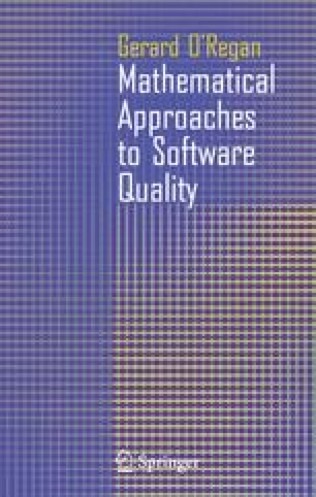
Mathematical Approaches to Software Quality
This book considers the potential and limitations of the various mathematical approaches and thereby aims to give a balanced view of the usability of each mathematical approach. Written with both student and professional in mind, this book assists the reader in applying mathematical methods to solve practical problems that are relevant to software engineers. It is suitable for coursework or self-study and there is helpful material on tools to support the various mathematical approaches.
Mastering Oracle SQL and SQL*Plus
This exceptional book explains fundamentals in detail, supported by realistic examples, while most other books on the market do not properly cover such basics. If you work with relational databases you need to understand the SQL language. And you will gain full competence to define, access, and manipulate data in an Oracle database, if you do so following this book's guidance.
Managing Risk and Information Security : Protect to Enable
Examine the evolving enterprise security landscape and discover how to manage and survive risk. While based primarily on the author’s experience and insights at major companies where he has served as CISO and CSPO, the book also includes many examples from other well-known companies and provides guidance for a management-level audience. Managing Risk and Information Security provides thought leadership in the increasingly important area of enterprise information risk and security. It describes the changing risk environment and why a fresh approach to information security is needed. Because almost every aspect of an enterprise is now dependent on technology not only for internal operations but increasing as a part of product or service creation, the focus of IT security must shift from locking down assets to enabling the business while managing and surviving risk. This edition discusses business risk from a broader perspective, including privacy and regulatory considerations. It describes the increasing number of threats and vulnerabilities and offers strategies for developing solutions. These include discussions of how enterprises can take advantage of new and emerging technologies—such as social media and the huge proliferation of Internet-enabled devices—while minimizing risk.
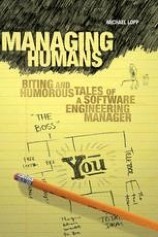
Managing Humans : Biting and Humorous Tales of a Software Engineering Manager
Managing Humans is a selection of the best essays from Michael Lopp's web site, Rands in Repose. Drawing on Lopp's management experiences at Apple, Netscape, Symantec, and Borland, this book is full of stories based on companies in the Silicon Valley where people have been known to yell at each other. It is a place full of dysfunctional bright people who are in an incredible hurry to find the next big thing so they can strike it rich and then do it all over again. Among these people are managers, a strange breed of people who through a mystical organizational ritual have been given power over your future and your bank account.
Mac OS X Leopard : Beyond the Manual
Good computer books make assumptions about the reader: what they do and don't know when they pick up the book, and what they want to know when they put it down. For each reader this could be very different; therefore, a book that suits one person may not be the best for another. Mac OS X Leopard: Beyond the Manual makes some assumptions too, ones that tend to differ from other Mac OS X books. First of all, we assume that you have used a computer in that past: that you know how to use a mouse and you know the proper place to stick a DVD to get it to play in your computer. We won't be showing you these things. (We will, however, demonstrate to our Mac converts how to “right click” on a trackpad with only one button!).
Logical Data Modeling : What it is and How to do it
LOGICAL DATA MODELING: What It Is and How To Do IT is directed toward three groups of people: (1) Business subject matter experts, (2) information technology professionals, (3) advanced students in Computer Science, Management Information Systems, and e-Business. Its purpose is to outline the basics of logical data modeling—specifically, data modeling for relational database management systems—in simple, practical terms and in a business context. The focus on relational data modeling is consciously made because it is superior in modeling real business activities.
Logging in Java with the JDK 1.4 Logging API and Apache log4j
In development scenarios where things can't be run in a debugger, or when you run the risk of masking the problem, logs are the greatest source of information about running a program. Pro Apache Log4j, Second Edition provides best practices guidelines and comprehensive coverage of the most recent release. Step by step, the book explains core concepts, from basic to advanced. Code samples are in Java and include guidelines for different application-specific needs. You'll also learn how to extend the API to write custom components and best practices for using the feature-rich log4j API. This book concludes with enterprise Java applications using log4j with JSP and J2EE.
LINQ for Visual C# 2008
Every C# programmer needs to learn about LINQ (Language–Integrated Query), Microsoft's breakthrough technology for simplifying and unifying data access from any data source. With LINQ, you can write more elegant and flexible code—not just to access databases and files, but to manipulate data structures and XML. This book is a short, yet comprehensive guide to the major features of LINQ and the significant enhancements introduced with .NET 3.5. There is no better source for getting a head–start on the future of these technologies than this book.
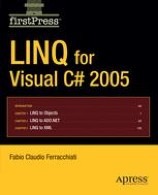
LINQ for Visual C# 2005
LINQ for Visual C# 2005 is a short, yet comprehensive guide to the major features of LINQ. It thoroughly covers LINQ to Objects, LINQ to SQL, LINQ to DataSet, and LINQ to XML. It also details significant enhancements to C#, .NET, and ADO.NET.
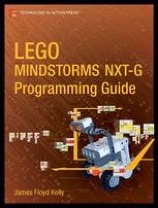
LEGO® MINDSTORMS® NXT-G Programming Guide
LEGO MINDSTORMS NXT-G Programming Guide provides programming techniques simple enough to be understood by young programmers, ages 10 and up, and provides a test robot (with instructions) in the appendix for running the programs
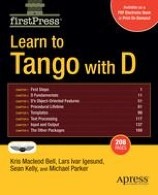
Learn to Tango with D
Learn to Tango with D introduces you to the powerful D language, with special attention given to the Tango software library. A concise yet thorough overview of the language's syntax and features is presented, followed by an introduction to Tango, the popular general–purpose library you'll find invaluable when building your D applications.
