


تحسين النتائح
ترتيب حسب
من
الى

Paradoxically, serious intra-abdominal infections are the forgotten ones in the world of infectious diseases. Paradoxical, because they are very common pathologies, affecting all age groups of the population and often life-threatening; paradoxical, because they concern many medical specialties through intensive care, gastroenterology, hepatology, imaging, infectious diseases, emergencies and surgery. Hence the need, thanks to an interdisciplinary collaboration, to publish a book in French bringing together all infectious abdominal pathologies, thus offering a synthesis of recent data from the literature in this field. This document should allow the various specialties concerned to find updates integrating the latest clinical, diagnostic and therapeutic data. Specialty interns and practitioners in the field will find something to establish an effective and up-to-date strategy for the management of patients with these pathologies, the high incidence of which and the severity of which is too often overlooked, it is important to remember.
Digestive tumors are among the most common malignant tumors and represent a major public health problem. This is one of the areas that has evolved the most in recent years in oncology due to significant progress in diagnostic strategies and therapeutic management. It seems essential that this progress be implemented in the daily practice of physicians treating these tumors. This book, the result of multidisciplinary work, provides a practical and up-to-date approach to the management of malignant digestive tumors. The first chapters are devoted to general and original subjects such as epidemiology, genetics, the management of elderly subjects. A second part approaches in a pragmatic and practical way the principles of diagnostic and therapeutic management by localization. A third part, devoted to the practical realization of chemotherapy, takes stock of new therapeutic approaches, oral or locoregional chemotherapy. Finally, the last part of the book is dedicated to digestive cancer emergencies and the palliative management of these tumors.
Gives a large place to mechanical ventilation, in particular to its optimization and the interest of its various forms, such as non-invasive ventilation or high frequency oscillation. It also discusses, in a practical way, what imaging and the study of respiratory mechanics can bring to the practitioner in the field or to the intensive care unit.

Clinical Neuro-Ophthalmology is a challenge for residents and experienced clinicians alike. This book covers all relevant techniques of diagnosis as well as interpretations of clinical signs. All information is highly structured, highlighting ‘definition’, ‘note’ and ‘pearl’, so that it can also be used by the physician during the patient encounter. The included flow chart posters remind the physician of the most important information.
Cet ouvrage a été conçu comme une aide pour le médecin généraliste, confronté quotidiennement à la pathologie traumatique. Les deux auteurs, urgentistes expérimentés, apportent des réponses claires, concises et pratiques aux problèmes que posent les lésions traumatiques. Des gestes simples, un abord clinique détaillé, la nécessité de recourir ou non à des examens complémentaires ou à un avis spécialisé sont ici expliqués et justifiés. Le style est précis, concis, et un lexique complète les définitions et les matériels cités dans le texte. Les auteurs se sont entourés des avis de généralistes et de spécialistes pour définir des conduites à tenir simples et compatibles avec les nécessités du terrain.
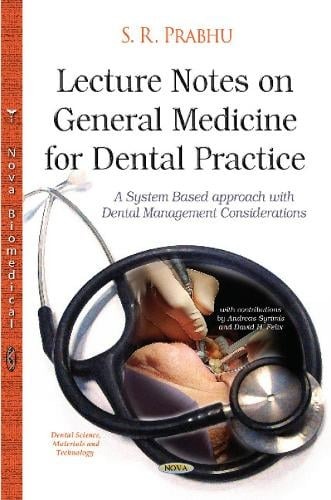
Offers a system based approach covering a broad range of topics in general medicine for dental practice. The book includes chapters on history taking and patient interview, general physical examination, system specific examination, common health related complaints, systemic infections, and diseases of the gastrointestinal, cardiovascular, respiratory, neurological, immunological, renal, endocrinal, dermatological and musculoskeletal systems. Nutritional disorders, psychiatric disorders, the female patient with menstrual, menopause and pregnancy related disorders, dental management of patients taking medications for systemic conditions and medical emergencies in dental practice have also been discussed in some detail.
Describes the most commonly encountered endodontic complications and provides up-to-date information on their prevention and management. The opening chapters explain the importance of accurate diagnosis and treatment planning, outline the role of digital radiography and CBCT in managing complications, and highlight the need for close attention to anatomic landmarks in order to avoid damage to neurovascular anatomy. Endodontic problems associated with different procedural errors are then discussed in detail, covering a wide variety of access- and instrumentation-related complications and the difficulties that may arise when using obturation techniques. Readers will also find information on the endodontic–periodontal relationship, special issues in geriatric patients, and the potential medical emergencies and precautions in specific patient subsets.
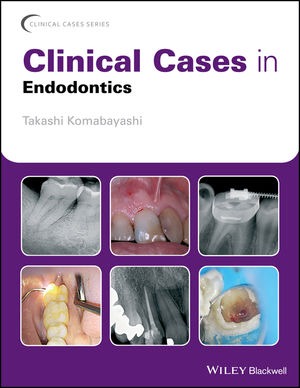
Presents actual clinical cases, accompanied by academic commentary, that question and educate the reader about essential topics in endodontic therapy. It begins with sets of cases illustrating the most common diagnoses and the steps involved in preparing a treatment plan. Subsequent chapters continue in this style, presenting exemplary cases as the basis of discussing various treatment options, including nonsurgical root canal treatment, re-treatment, periapical surgery, internal and external resorption, emergencies and trauma, and treating incompletely developed apices.
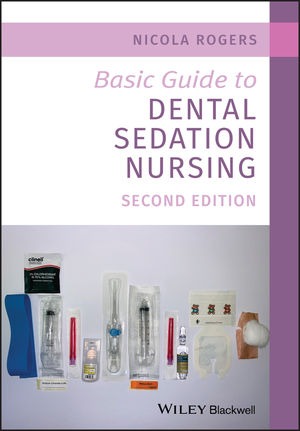
Starts by defining conscious sedation and discusses why dental sedation is used before moving on to discuss topics such as the medico-legal aspects, the dental nurse’s role, equipment, patient selection, types of sedation, medical emergencies, and anatomy. Presents essential evidence-based information on dental sedation nursing / Reflects the current NEBDN curriculum / Supported by images to demonstrate the concepts discussed
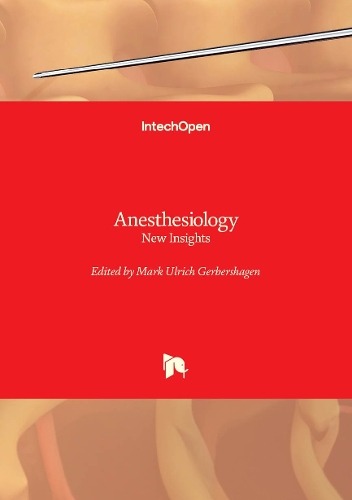
Provides a comprehensive overview of current developments in anaesthesiology. The chapters : Solutions for Insufficient Epidural Analgesia for Planned Vaginal Birth and Interdisciplinary Emergencies in the Delivery Room, Anesthesia for Robotic Surgeries in Children, Anesthetic Management of Bronchoscopic Lung Volume Reduction, General Anaesthesia in the Context of Haemorrhagic Shock and Trauma, Anesthesiologic Management of Patients with Opioids or Psychoactive Substance Use, Fascial Plane Blocks, Considerations and New Perspectives of Locoregional Anesthesia in Dentistry, The Effect of Parental Anxiety on Postoperative Paediatric Cognitive Dysfunction.
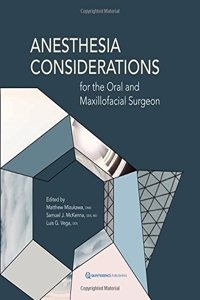
Strengthens the margin of safety of office-based anesthesia administration by helping practitioners determine whether the patients they treat are good candidates for office-based anesthesia. This book is organized into three sections. The first section provides a review of the principles of anesthesia, including the pharmacology of anesthetic agents, local anesthesia, patient monitoring, preoperative evaluation, the airway, and management of emergencies and complications. The major organ systems of the body are reviewed in section two, and the most common comorbid conditions that affect these systems are described in terms of their pathophysiology, diagnosis, management, and anesthesia-related considerations. Section three reviews patient groups that warrant special consideration in the administration of office-based anesthesia, such as geriatric, pediatric, pregnant, and obese patients. Spiral-bound and featuring tabs for quick and easy reference, this important book belongs on the shelf of every clinician who provides anesthesia in the office setting.
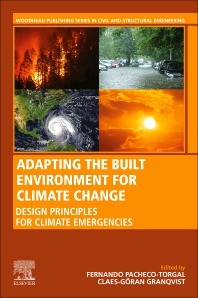
Adapting the Built Environment for Climate Change: Design Principles for Climate Emergencies analyzes several scenarios and proposes various adaptation strategies for climate emergencies (heat waves, wildfires, floods, and storms). Divided into three themes, the book offers an organized vision of a complex and multi-factor challenge. It covers climatic resilience and building refurbishment, implications for service life prediction and maintainability, and climate adaptation in the maintenance and management of buildings. Sections cover infrastructure materials, climate emergency adaptation and building adaptation to heat waves, wildfires, floods and storms.
This book summarizes work being pursued in the context of the CIPRNet (Critical Infrastructure Preparedness and Resilience Research Network) research project, co-funded by the European Union under the Seventh Framework Programme (FP7). The project is intended to provide concrete and on-going support to the Critical Infrastructure Protection (CIP) research communities, enhancing their preparedness for CI-related emergencies, while also providing expertise and technologies for other stakeholders to promote their understanding and mitigation of the consequences of CI disruptions, leading to enhanced resilience.

سوريا - اتستراد درعا - غباغب
+963-15 2050 - 15 860 380 /1/2/3 - 11 662 3900