


تحسين النتائح
ترتيب حسب
من
الى

Takes a fresh, holistic approach to the problems of light absorption and absorbers in seawaters, discussing the fundamentals of light absorption at various depths in seawaters of different trophicity by absorbers of diverse origin. The authors have drawn their information from a substantial body of contemporary research results published in the subject literature (over 700 references) as well as their own work during the last 30 years. No other book presently available examines the issues of light absorption and absorbers in seawaters in such a manner. The physical and chemical properties, as well as the optical constants, of organic and inorganic suspended particulate matter (SPM), are discussed in the context of their relationship to the light absorption properties of SPM. Special emphasis is placed on the role of the phytoplankton and the pigments it contains which are particularly strong and important absorbers of visible light in the sea.
Lifetime spectroscopy is one of the most sensitive diagnostic tools for the identification and analysis of impurities in semiconductors. Since it is based on the recombination process, it provides insight into precisely those defects that are relevant to semiconductor devices such as solar cells. This book introduces a transparent modeling procedure that allows a detailed theoretical evaluation of the spectroscopic potential of the different lifetime spectroscopic techniques. The various theoretical predictions are verified experimentally with the context of a comprehensive study on different metal impurities. The quality and consistency of the spectroscopic results, as explained here, confirms the excellent performance of lifetime spectroscopy.

In the paper the author attempts to assess the fatigue life of chosen welded joints. It focuses especially on chosen problems that accompany deter- nation of the fatigue life of welded joints, taking into consideration the strain energy density parameter.
In many countries, schools, universities and other traditional learning institutions are not providing for the educational needs of all members of the community. In many communities, particularly in regional, rural and disadvantaged areas, there are only limited options for people to undertake learning. Limited participation in learning has the danger of reinforcing people’s alienation from mainstream education and from participation and inclusion in social institutions and economic and community life more generally. This book addresses the challenge of identifying effective ways of accommodating the learning needs of all people and in so doing achieving the goals of lifelong learning for all.
This text explores the different ways in which the various social practices in which people participate becomes signed as learning, how and why that occurs and with what consequences. It takes seriously the linguistic turn in social theory to draw upon semiotics and poststructuralism through which to explore the significance of lifelong learning as an emerging discourse in education. The text explores the different ways in which learning conveys meaning and is given meaning. Given this, lifelong learning therefore is a way, and a significant way, in which learning is fashioned. The text then explores the notion that, if learning is lifelong and lifewide, what precisely is learning as distinct from other social practices and how those practices are given meaning as learning.
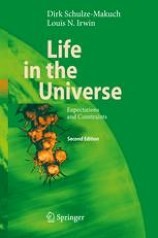
Energy, chemistry, solvents, and habitats -- the basic elements of living systems - define the opportunities and limitations for life on other worlds. This class-tested text examines each of these parameters in crucial depth and makes the argument that life forms we would recognize may be more common in our solar system than many assume. It also considers, however, exotic forms of life that would not have to rely on carbon as basic chemical element, solar energy as a main energy source, or water as primary solvent. Finally the question of detecting bio- and geosignature of such life forms is discussed, ranging from Earth environments to deep space. While speculative considerations in this emerging field of science cannot be avoided, the authors have tried to present their study with the breadth and seriousness that a scientific approach to this issue requires. They seek an operational definition of life and investigate the realm of possibilities that nature offers to realize this very special state of matter and avoid scientific jargon wherever possible to make this intrinsically interdisciplinary subject understandable to a broad range of readers.
What is life? Has molecular biology given us a satisfactory answer to this question? And if not, why, and how to carry on from there? This book examines life not from the reductionist point of view, but rather asks the question: what are the universal properties of living systems and how can one construct from there a phenomenological theory of life that leads naturally to complex processes such as reproductive cellular systems, evolution and differentiation? The presentation has been deliberately kept fairly non-technical so as to address a broad spectrum of students and researchers from the natural sciences and informatics.
Lipids are as important for life as proteins, sugars, and genes. The present book gives a multi-disciplinary perspective on the physics of life and the particular role played by lipids and the lipid-bilayer component of cell membranes. The book is aimed at undergraduate students and young research workers within physics, chemistry, biochemistry, molecular biology, nutrition, as well as pharmaceutical and biomedical sciences. The emphasis is on the physical properties of lipid membranes seen as soft and molecularly structured interfaces. By combining and synthesizing insights obtained from a variety of recent studies, an attempt is made to clarify what membrane structure is and how it can be quantitatively described. Furthermore, it is shown how biological function mediated by membranes is controlled by lipid membrane structure and organization on length scales ranging from the size of the individual molecule, across molecular assemblies of proteins and lipid domains in the range of nanometers, to the size of whole cells. Applications of lipids in nano-technology and biomedicine are also described.
It focuses on two fundamental questions in the theory of semisimple Lie groups: the geometry of Riemannian symmetric spaces and their compactifications; and branching laws for unitary representations, i.e., restricting unitary representations to (typically, but not exclusively, symmetric) subgroups and decomposing the ensuing representations into irreducibles.Ji's introductory chapter motivates the subject of symmetric spaces and their compactifications with carefully selected examples. A discussion of Satake and Furstenberg boundaries and a survey of the geometry of Riemannian symmetric spaces in general provide a good background for the second chapter, namely, the Borel–Ji authoritative treatment of various types of compactifications useful for studying symmetric and locally symmetric spaces. Borel–Ji further examine constructions of Oshima, De Concini, Procesi, and Melrose, which demonstrate the wide applicability of compactification techniques. Kobayashi examines the important subject of branching laws. Important concepts from modern representation theory, such as Harish–Chandra modules, associated varieties, microlocal analysis, derived functor modules, and geometric quantization are introduced. Concrete examples and relevant exercises engage the reader.
Van den Ban’s introductory chapter explains the basic setup of a reductive symmetric space along with a careful study of the structure theory, particularly for the ring of invariant differential operators for the relevant class of parabolic subgroups. Advanced topics for the formulation and understanding of the proof are covered, including Eisenstein integrals, regularity theorems, Maass–Selberg relations, and residue calculus for root systems. Schlichtkrull provides a cogent account of the basic ingredients in the harmonic analysis on a symmetric space through the explanation and definition of the Paley–Wiener theorem. Approaching the Plancherel theorem through an alternative viewpoint, the Schwartz space, Delorme bases his discussion and proof on asymptotic expansions of eigenfunctions and the theory of intertwining integrals.
Provides a clear and comprehensive modern treatment of Lie sphere geometry and its applications to the study of Euclidean submanifolds. It begins with the construction of the space of spheres, including the fundamental notions of oriented contact, parabolic pencils of spheres, and Lie sphere transformations. The link with Euclidean submanifold theory is established via the Legendre map, which provides a powerful framework for the study of submanifolds, especially those characterized by restrictions on their curvature spheres.
Lie groups has been an increasing area of focus and rich research since the middle of the 20th century. Procesi's masterful approach to Lie groups through invariants and representations gives the reader a comprehensive treatment of the classical groups along with an extensive introduction to a wide range of topics associated with Lie groups: symmetric functions, theory of algebraic forms, Lie algebras, tensor algebra and symmetry, semisimple Lie algebras, algebraic groups, group representations, invariants, Hilbert theory, and binary forms with fields ranging from pure algebra to functional analysis.
This book, designed for advanced graduate students and post-graduate researchers, provides an introduction to Lie algebras and some of their applications to the spectroscopy of molecules, atoms, nuclei and hadrons. In the first part, a concise exposition is given of the basic concepts of Lie algebras, their representations and their invariants. The second part contains a description of how Lie algebras are used in practice in the treatment of bosonic and fermionic systems. Physical applications considered include rotations and vibrations of molecules (vibron model), collective modes in nuclei (interacting boson model), the atomic shell model, the nuclear shell model, and the quark model of hadrons. One of the key concepts in the application of Lie algebraic methods in physics, that of spectrum generating algebras and their associated dynamic symmetries, is also discussed. The book contains many examples that help to elucidate the abstract algebraic definitions. It provides a summary of many formulas of practical interest, such as the eigenvalues of Casimir operators and the dimensions of the representations of all classical Lie algebras.
The theory of Lie algebras and algebraic groups has been an area of active research in the last 50 years. It intervenes in many different areas of mathematics : for example invariant theory, Poisson geometry, harmonic analysis, mathematical physics. The aim of this book is to assemble in a single volume the algebraic aspects of the theory so as to present the foundation of the theory in characteristic zero. Detailed proofs are included and some recent results are discussed in the last chapters. All the prerequisites on commutative algebra and algebraic geometry are included.
Written by leading experts in optical radar, or lidar, this book brings all the recent practices up-to-date and covers a multitude of applications, from atmospheric sciences to environmental protection. Its broad cross-disciplinary scope should appeal to both the experienced scientist and the novice in the field. The Foreword is by one of the early pioneers in the area, Herbert Walther.
A pioneer in meteorology and peace research and remains a towering presence in both fields. This edited volume reviews his work and assesses its influence in the social sciences, notably his work on arms races and their consequences, mathematical models, the size distribution of wars, and geographical features of conflict
Since its inception in 1974, the level crossing approach for analyzing a large class of stochastic models has become increasingly popular among researchers. This volume traces the evolution of level crossing theory for obtaining probability distributions of state variables and demonstrates solution methods in a variety of stochastic models including: queues, inventories, dams, renewal models, counter models, pharmacokinetics, and the natural sciences. Results for both steady-state and transient distributions are given, and numerous examples help the reader apply the method to solve problems faster, more easily, and more intuitively.

Banter, chit-chat, gossip, natter, tete-a-tete: these are just a few of the terms for the varied ways in which we interact with one another through conversation. David Crystal explores the factors that motivate so many different kinds of talk and reveals the rules we use unconsciously, even in the most routine exchanges of everyday conversation. We tend to think of conversation as something spontaneous, instinctive, habitual.

Les médecins et les équipes soignantes perçoivent comme une nouvelle pression la nécessité de transmettre le diagnostic de cancer et de discuter des options thérapeutiques avec un patient qui n’est pas toujours prêt à s y confronter. Bien que l’on puisse saluer le partage de l’information et encourager la transparence, le médecin prend le risque du blocage de dialogue, d’une indifférence, au pire d’un traumatisme. L’idée d’une diminution d’un certain pouvoir médical s’insinue dans le « dispositif » d’annonce qui renvoie la clinique à des apprentissages techniques. Au contraire, certains médecins cherchent à s’inscrire dans un mouvement plus démocratique. Ils constatent que pour le malade, savoir n’est pas choisir, et que dans les cas difficiles, ils restent encore décideurs. Cet ouvrage fait le point sur les changements obtenus par les lois et leurs conséquences sur les pratiques et incite à une réflexion philosophique sur la vérité et les vérités des interlocuteurs de la scène médicale.

Euler was not only by far the most productive mathematician in the history of mankind, but also one of the greatest scholars of all time. He attained, like only a few scholars, a degree of popularity and fame which may well be compared with that of Galilei, Newton, or Einstei .This book is based in part on unpublished sources and comes right out of the current research on Euler. It is entirely free of formulae as it has been written for a broad audience with interests in the history of culture and science.

سوريا - اتستراد درعا - غباغب
+963-15 2050 - 15 860 380 /1/2/3 - 11 662 3900