


تحسين النتائح
ترتيب حسب
من
الى

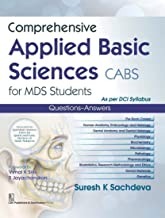
All the questions are answered as per the type of question (long | short) and with “to the point” answers to make it more interesting. Answers are selected authentically from standard textbooks commonly referred to by the students to avoid confusion during examinations. Each answer is explained in heading and subheadings to break the continuous text. Written in a simple, well structured and point-wise format with a comprehensive examination-oriented description along with the diagrammatic representation. An indispensable book for the ‘last minute’ revision while preparing for the examinations and for quick reference throughout the course duration.
Presents the most current and comprehensive review of oral anatomy for clinicians and researchers alike. In 26 chapters, the reader is taken on a unique anatomical journey, starting with the oral fissure, continuing via the maxilla and mandible to the tongue and floor of the mouth, and concluding with the temporomandibular joint and masticatory muscles. Each chapter offers a detailed description of the relevant anatomical structures and their spatial relationships, provides quantitative morphological assessments, and explains the relevance of the region for clinical dentistry. All dental health care professionals require a sound knowledge of anatomy for the purposes of diagnostics, treatment planning, and therapeutic intervention. A full understanding of the relationship between anatomy and clinical practice is the ultimate objective, and this book will enable the reader to achieve such understanding as the basis for provision of the best possible treatment for each individual patient as well as recognition and comprehension of unexpected clinical findings.

The book’s three-part structure addresses types of dental materials in the 22 chapters of Part I, includes laboratory and clinical applications (essentially a built-in lab manual) in Part II, and presents 11 case studies in Part III that serve as an overall review and help students strengthen their critical thinking skills when providing patient care.
Provides a detailed step-by-step approach to the dissection of the forehead, face, and neck, in a structural, layered approach. This dissection manual follows an atlas format, with color photographs from past professional lectures and classroom courses, as well as line drawings, enhancing descriptions. Clinical correlations are also interjected throughout to highlight the importance of individual anatomic structures. Chapters describe the preparation and storage of specimens and the dissection of the forehead and eyebrows, the midface, nose, ear, and lower face, and the neck.
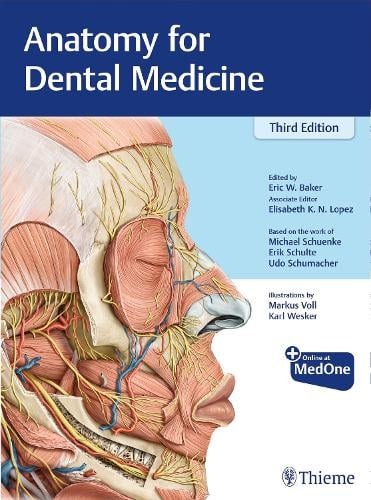
Strikes an optimal balance between systemic and regional approaches to complex head and neck anatomy. Award-winning full-color illustrations, succinct text, summary tables, and questions put anatomical structures and knowledge into a practical context. NEW! Additional radiologic images and landmark features throughoutNEW! Reorganized brain/nerve sectionsNEW! Expanded clinical question appendix including patient box questions in the style of the INBDENEW! Factual question appendix places greater emphasis on areas including the skull, larynx, cross sectional anatomy, body below the neck, and local anesthesia

This excellently illustrated book aims to equip dentists, oral surgeons, and trainees with the detailed knowledge of anatomical variations in the oral region that is now required for optimal daily clinical practice.
Describes the processes, techniques and biomechanics involved in providing aligner treatment for different types of malocclusions. It opens with an overview of the material characteristics and the basic concepts of aligner therapy including topics like biocompatibility and intraoral deterioration. The main part of the book is dedicated to the various types of aligners, the methods used in their application and the practical aspects of delivery. It is structured based on the type of malocclusion being managed giving the reader a systematic pattern and a practical way of progressing through the book. The book closes with a discussion of the scientific data available.
Examines exciting advancements in the field of ceramics, including nanotechnology, clean energy, and tribology as well as fundamental concepts like defects and structure. It is a comprehensive discussion on how today’s ceramics are processed and used in many of today’s critical technologies. It discusses current techniques for synthesizing durable and cost-effective ceramic components with biocompatibility, complexity, and high precision. This book is a comprehensive reference for researchers, engineers, dental clinicians, biologists, academics, and students interested in ceramics.
Full understanding of the role of cone beam computed tomography (CBCT) in helping to solve many of the most challenging problems in endodontics. It will shorten the learning curve in application of this exciting imaging technology in a variety of contexts: difficult diagnostic cases, treatment planning, evaluation of internal tooth anatomy prior to root canal therapy, nonsurgical and surgical treatments, early detection and treatment of resorptive defects, and outcomes assessment. The ability to obtain an accurate 3D representation of a tooth and the surrounding structures by means of noninvasive CBCT imaging is changing the approach to clinical decision making in endodontics. Clinicians long accustomed to working in very small, three-dimensional spaces are no longer constrained by the limitations of two-dimensional imaging. The challenges of mastering the new technology can, however, be daunting. The detailed guidance contained in this book will help endodontists to take full advantage of the important benefits offered by CBCT.
For courses in Civil Engineering Materials, Construction Materials, and Construction Methods & Materials offered in Civil, Environmental, or Construction engineering departments. Civil and Construction Engineering Materials: Properties, Uses, and Evaluations Materials for Civil and Construction Engineers helps students understand and select the materials involved in supporting the infrastructure needs of society--from buildings, to water and treatment distribution systems, to dams, highways, and airport pavements. By gaining a deep understanding of material behavior and the material selectio
This book provides an overview of the building blocks necessary for managing, steering and guiding the establishment of a research infrastructure (RI). It offers valuable insights into RI investment, access and management at the academic, grants management, agency and policy level, and serves as a useful guide for the research community, students, and those in the private sector wishing to understand the approaches and opportunities involved in the establishment, maintenance and management of research infrastructure platforms.
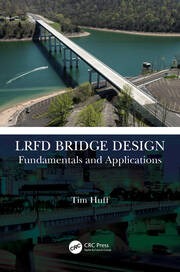
Examines and explains material from the 9th edition of the AASHTO LRFD Bridge Design Specifications, including deck and parapet design, load calculations, limit states and load combinations, concrete and steel I-girder design, bearing design, and more. With increased focus on earthquake resiliency, two separate chapters– one on conventional seismic design and the other on seismic isolation applied to bridges– will fully address this vital topic. The primary focus is on steel and concrete I-girder bridges, with regard to both superstructure and substructure design. / Includes several worked examples for a project bridge as well as actual bridges designed by the author / Examines seismic design concepts and design details for bridges / Presents the latest material based on the 9th edition of the LRFD Bridge Design Specifications / Covers fatigue, strength, service, and extreme event limit states / Includes numerous solved problems and exercises at the end of each chapter to illustrate the concepts presented
Pesents buildings developed using modular assembly approaches based on lightweight and corrosion-resistant fiber reinforced polymer (FRP) composites. Construction methods and the choice of building materials offer great opportunities for more productive and environmentally friendly solutions. This book includes valuable experimental data on large-scale structural components (beams, slabs, amd columns), connections (shear connections, wall stud connections, beam-column connections, column-column connections) and structures (composite floor system, structural sandwich assemblies, and full-scale structural demonstrations), supported with detailed numerical modelling and analytical methods.
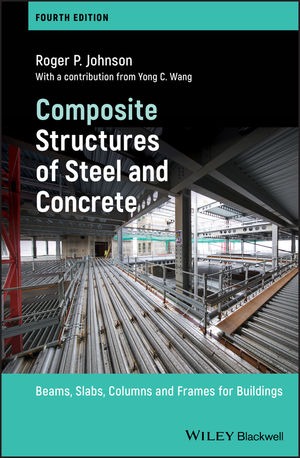
Provides an introduction to the theory and design of composite structures of steel and concrete. Material applicable to both buildings and bridges is included, with more detailed information relating to structures for buildings. Throughout, the design methods are illustrated by calculations in accordance with the Eurocode for composite structures, EN 1994, Part 1-1, 'General rules and rules for buildings' and Part 1-2, 'Structural fire design', and their cross-references to ENs 1990 to 1993.
This standard assumes that the structure, after completion, is used as intended in the project and subject to planned inspection and maintenance to meet the expected project lifetime and to detect any unforeseen weakness or behavior" (EN 13670 4.1)An important decision factor in the design of new structures and repairs to existing structures is the lifetime or expected service life. This concept, which is common for civil engineering works, has been extended to all engineering and building works by applying the European Structural Design Codes.
Includes the fundamental mechanical and physical properties of materials; properties, tests, and gradation designs of aggregates; production, composition, hydration, properties, and tests of lime and cement; composition, tests, and design of cement concrete; mechanisms, properties, and design of inorganic binder stabilized material; properties, tests, and grading of asphalt; composition, properties, tests, and designs of asphalt mixture; and properties, treatments, tests, and selections of steel.
Presents the state-of-the-art in civil engineering materials, including the fundamental theory of materials needed for civil engineering projects and unique insights from decades of large-scale construction in China. The title includes the latest advances in new materials and techniques for civil engineering, showing the relationship between composition, structure and properties, and covering ultra-high-performance concrete and self-compacting concrete developed in China. This book provides comprehensive coverage of the most commonly used, most advanced materials for use in civil engineering. This volume consists of eight chapters covering the fundamentals of materials, inorganic cementing materials, Portland cement concrete, bricks, blocks and building mortar, metal, wood, asphalt and polymers.
Brings together all diverse disciplines of civil engineering and related areas (for example, geotechnical engineering, water resources engineering, structural engineering, transportation engineering, environmental engineering, construction management, GIS, and remote sensing) towards a common goal of disaster resilience through an interdisciplinary approach. It contains methods and case studies focusing on civil engineering solutions to reduce the disaster risk. The book contents are aligned in line with the priorities set by UN-Sendai Framework for Disaster Risk Reduction and UN-SDGs to promote a global culture of risk-awareness and disaster reduction. The book will be a useful comprehensive reference for disaster risk reduction beneficial for engineering students, teaching faculty, researchers, industry professionals and policymakers.
This volume collects emerging issues in Environmental and Civil Engineering, originating from outstanding doctoral dissertations discussed at Politecnico di Milano in 2021. The advanced innovative insights provided are presented with reference to the relevant sustainable development goals (SDGs), hoping that scientists, technicians and decision makers will find them as a valid support to face future sustainability challenges.

This document is a comprehensive design code for concrete. It is the result of a comprehensive revision to the original model code of 1978, which was produced jointly by the Comite Euro-International du Beton (CEB) and the Federation Internationale de la Precontrainte (FIP). Model Code 1990 has more detailed guidelines and explanations than national codes and can be used as a basis for them. It has already influenced the codification work that is being carried out both nationally and internationally and will continue to do so. With the publication of Eurocode 2: Part 1 as a draft pre-standard, this document is a useful reference during the consultative period before Eurocode 2 becomes a European standard. It may be of use to anyone involved in codification work on concrete.

سوريا - اتستراد درعا - غباغب
+963-15 2050 - 15 860 380 /1/2/3 - 11 662 3900