


تحسين النتائح
ترتيب حسب
من
الى


The physical and chemical mechanisms as well as the sizes of these processes are quite different. So are the motivations for studying them scientifically.The super- 8 nova is a thermo-nuclear explosion on a scale of 10 cm. Astrophysicists try to understand them in order to get insight into fundamental properties of the universe. In hows around airfoils of commercial airliners at the scale of 3 10 cm shock waves occur that influence the stability of the wings as well as fuel consumption in ight. This requires appropriate design of the shape and structure of airfoils by engineers. Knocking occurs in combustion, a chemical 1 process, and must be avoided since it damages motors. The scale is 10 cm and these processes must be optimized for efficiency and environmental conside- tions. The common thread is that the underlying ?uid ?ows may at a certain scale of observation be described by basically the same type of hyperbolic s- tems of partial differential equations in divergence form, called conservation laws. Astrophysicists, engineers and mathematicians share a common interest in scientific progress on theory for these equations and the development of computational methods for solutions of the equations. Due to their wide applicability in modeling of continua. A substantial portion of mathematical research is related to the analysis and numerical approximation of solutions to such equations. Hyperbolic conservation laws in two or more space dimensions still poseone of the main challenges to modern mathematics.
The present monograph summarizes, in a comprehensive way, several years of joint experimental and theoretical frontier research on ultrafast laser-induced molecular dynamics and its control. Emphasis is set on the characterization of the nuclear dynamics within molecular systems in various environments (gas phase, surfaces, solids, solution, strong fields) triggered by optical excitations spanning from the infrared to the ultraviolet. Building on the converged analysis between experiment and theory, control of chemical reactions is established by means of optimally shaped laser pulses. This paves the road toward new applications and future challenges in this rapidly developing research field.
The geometric interpretation of gravitation is one of the major foundations of modern theoretical physics. This primer introduces classical general relativity with emphasis on the clarity of conceptual structure and on the basic mathematical methods to build up systematically application skills. The wealth of physical phenomena entailed by the Einstein‘s equations is revealed with the help of specific models describing gravitomagnetism, gravitational waves, cosmology, gravitational collapse and black holes. End-of-chapter exercises complete the main text.

This book gives a mathematical treatment of a novel concept in material science that characterizes the properties of dynamic materials—that is, material substances whose properties are variable in space and time. Unlike conventional composites that are often found in nature, dynamic materials are mostly the products of modern technology developed to maintain the most effective control over dynamic processes. These materials have diverse applications: tunable left-handed dielectrics, optical pumping with high-energy pulse compression, and electromagnetic stealth technology, to name a few. Of special significance is the participation of dynamic materials in almost every optimal material design in dynamics.
This text is the first to provide a comprehensive introduction to SDS. Driven by numerous examples and thought-provoking problems, the presentation offers good foundational material on finite discrete dynamical systems which leads systematically to an introduction of SDS. Techniques from combinatorics, algebra and graph theory are used to study a broad range of topics, including reversibility, the structure of fixed points and periodic orbits, equivalence, morphisms and reduction. Unlike other books that concentrate on determining the structure of various networks, this book investigates the dynamics over these networks by focusing on how the underlying graph structure influences the properties of the associated dynamical system.
This book is introduction to the theory of continuous-time stochastic processes. A balance of theory and applications, the work features concrete examples of modeling real-world problems from biology, medicine, industrial applications, finance, and insurance using stochastic methods. No previous knowledge of stochastic processes is required. Key topics covered include: * Interacting particles and agent-based models: from polymers to ants * Population dynamics: from birth and death processes to epidemics * Financial market models: the non-arbitrage principle * Contingent claim valuation models: the risk-neutral valuation theory * Risk analysis in insurance

The book summarizes international progress over the last few decades in upper atmosphere airglow research. Measurement methods, theoretical concepts and empirical models of a wide spectrum of upper atmospheric emissions and their variability are considered. The book contains a detailed bibliography of studies related to the upper atmosphere airglow.

Consists of various topics, including radioactivity inspection of food products; decontamination trials for rice and livestock production; the state of contamination in wild animals and birds, trees, mushrooms, and timber; the dynamics of radioactivity distribution in mountain and paddy fields; damage incurred by the forestry and fishery industries; and the change in consumers’ minds. The last chapter introduces a real-time radioisotope imaging system, the forefront technique to visualize actual movement of cesium in soil and in plants. This is the only book to provide systematic data about the actual change of radioactivity, and thus is of great value for all researchers who wish to understand the effect of radioactive fallout on agriculture.

Reports on studies undertaken at contaminated sites such as farmland, forests, and marine and freshwater environments, with a particular focus on livestock, wild plants and mushrooms, crops, and marine products in those environments. It also provides additional data collected in the subsequent years to show how the radioactivity levels in agricultural products and their growing environments have changed with time and the route by which radioactive materials entered agricultural products as well as their movement between different components (e.g., soil, water, and trees) within an environmental system (e.g., forests). The book covers various topics, including radioactivity testing of food products; decontamination trials for rice and livestock production; the state of contamination in, trees, mushrooms, and timber; the dynamics of radioactivity distribution in paddy fields and upland forests; damage incurred by the forestry and fishery industries; and the change in consumers’ attitudes. Chapter 19 introduces a real-time radioisotope imaging system, a pioneering technique to visualize the movement of cesium in soil and in plants.
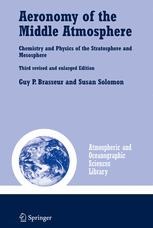
Provides a comprehensive view of the chemical, dynamical, and radiative processes that affect ozone and other chemicals in the stratosphere and mesosphere. Over recent decades our understanding of these processes has increased dramatically. The discovery of the Antarctic ozone hole has shown that human activities can lead to major changes in our environment.
Contains peer-reviewed papers from the Fourth World Landslide Forum organized by the International Consortium on Landslides (ICL), the Global Promotion Committee of the International Programme on Landslides (IPL), University of Ljubljana (UL) and Geological Survey of Slovenia in Ljubljana, Slovenia from May 29 to June 2, 2017. The complete collection of papers from the Forum is published in five full-color volumes
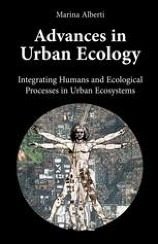
The future of Earth’s ecosystems is increasingly influenced by the pace and patterns of urbanization. One of the greatest challenges for natural and social scientists is to understand how urbanizing regions evolve through the complex interactions between humans and ecological processes. Questions and methods of inquiry specific to our traditional disciplinary domains yield partial views that reflect different epistemologies and understandings of the world. In order to achieve the level of synthesis required to see the urban ecosystem as a whole we must change the way we pose questions and search for answers. Cities are the result of human and ecological processes occurring simultaneously in time and in space and the legacy of the simultaneous processes of the past. Urban ecology is the study of the co-evolution of human-ecological systems. Scholars of both urban systems and ecology must challenge the assumptions and world views within their disciplines and work towards a hybrid theory that builds on multiple world views.

Contains versions of selected communications presented at the ECCOMAS Thematic Conference in Multibody Dynamics 2003 that took place in Lisbon, Portugal, which have been enhanced in their self-containment and tutorial aspects by the authors. This comprehensive text constitutes a useful reference for researchers and design engineers.
Provides the latest information in intelligent vehicle control, sensing, and intelligent transportation. It addresses the growing need for safe, comfortable, time and energy-efficient modes of transportation with emphasis on the latest key findings, current trends, and likely future developments in this rapidly expanding field. Highlights : Discusses individual vehicle dynamics, sensory and multiple ground-vehicle interactions / Includes systematic review of past and current research achievements / Presents case studies in cutting-edge directions such as vehicle steering motion, vehicle vision systems, cooperative driving, intersection safety, and tire pressure monitoring / Assesses the likely future developments of this field. This book is useful for both practicing engineers and researchers in the automotive industry.
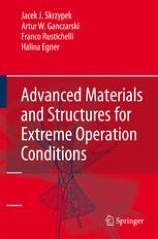
The present monograph deals with new advanced materials, including composites, functionally graded materials, materials for high temperature service, advanced approaches to local and non-local analysis of localized damage, new description of crack deactivation, and many more.
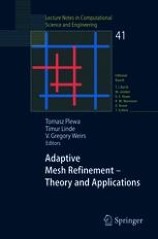
Advanced numerical simulations that use adaptive mesh refinement (AMR) methods have now become routine in engineering and science. Originally developed for computational fluid dynamics applications these methods have propagated to fields as diverse as astrophysics, climate modeling, combustion, biophysics and many others. The underlying physical models and equations used in these disciplines are rather different, yet algorithmic and implementation issues facing practitioners are often remarkably similar. Unfortunately, there has been little effort to review the advances and outstanding issues of adaptive mesh refinement methods across such a variety of fields. This book attempts to bridge this gap. The book presents a collection of papers by experts in the field of AMR who analyze past advances in the field and evaluate the current state of adaptive mesh refinement methods in scientific computing.
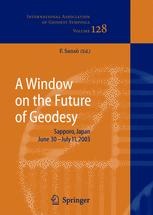
These proceedings represent the worldwide picture of the state of the art of geodesy. The volume comprehensively covers the most recent results and supplies a good review of the new ideas developing in the field, opening a window to the future of geodesy.
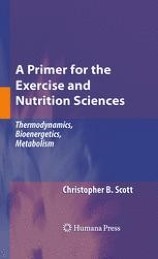
Provides a fresh approach to the study of energy expenditure by introducing the latest concepts in open system thermodynamics and cellular to whole-body energy exchange. A journey is undertaken by the reader, beginning with what energy is and where the energy in glucose is found, and ending with the concept of high versus low intensity exercise in augmenting weight loss.
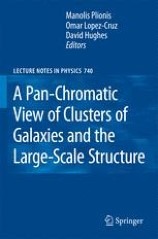
The reviews presented in this volume cover a wide-range of cluster of galaxies topics like the physics of the ICM gas, the internal cluster dynamics, the detection of clusters using different observational techniques, the great advances in analytical or numerical modeling of clusters, weak and strong lensing effects, the large scale structure as traced by clusters, the cosmological significance of clusters as well as the formation and evolution of clusters within the new cosmological paradigm.
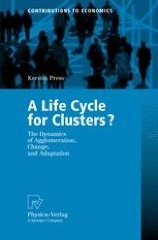
The phenomenon of non-random spatial concentrations of firms in one or few related sectors (clusters) is intensively debated in economic theory and policy. The euphoria about successful clusters however neglects that historically, many thriving clusters did deteriorate into old industrial areas. This book studies the determinants of cluster survival by analyzing their adaptability to change in the economic environment. Linking theoretic knowledge with empirical observations, a simulation model (based in the N/K method) is developed, which explains when and why the cluster's architecture assists or hampers adaptability. It is found that architectures with intermediate degrees of division of labour and more collective governance forms foster adaptability. Cluster development is thus path dependent as architectures having evolved over time impact on the likelihood of future survival.

سوريا - اتستراد درعا - غباغب
+963-15 2050 - 15 860 380 /1/2/3 - 11 662 3900