


تحسين النتائح
ترتيب حسب
من
الى


While tin/lead solders have dominated the electronics industry for many years, environmental considerations and new legislation are forcing change. Backed by more than ten years of research in Pb-free solders, many electronics manufacturers are poised for conversion. A Guide to Lead-free Solders is intended as a tool to help industry as it moves into a new era in the production and use of solders. An overview of the principles of soldering technology is provided beginning with the theory underlying each concept. Focusing on the most up-to-date methods for testing and characterization, these theories are then reinforced by experimental examples and industrial applications.
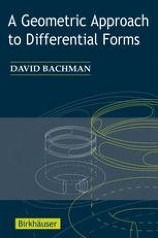
The modern subject of differential forms subsumes classical vector calculus. This text presents differential forms from a geometric perspective accessible at the undergraduate level. The book begins with basic concepts such as partial differentiation and multiple integration and gently develops the entire machinery of differential forms. Each new concept is presented with a natural picture that students can easily grasp. Algebraic properties then follow. This facilitates the development of differential forms without assuming a background in linear algebra. Throughout the text, emphasis is placed on applications in 3 dimensions, but all definitions are given so as to be easily generalized to higher dimensions. A centerpiece of the text is the generalized Stokes' theorem. Although this theorem implies all of the classical integral theorems of vector calculus, it is far easier for students to both comprehend and remember.
This book aims at a middle ground between the introductory books on derivative securities and those that provide advanced mathematical treatments. It is written for mathematically capable students who have not necessarily had prior exposure to probability theory, stochastic calculus, or computer programming. It provides derivations of pricing and hedging formulas (using the probabilistic change of numeraire technique) for standard options, exchange options, options on forwards and futures, quanto options, exotic options, caps, floors and swaptions, as well as VBA code implementing the formulas. It also contains an introduction to Monte Carlo, binomial models, and finite-difference methods.
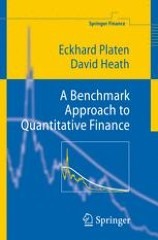
The general framework is used to provide an understanding of the nature of stochastic volatility. The book is intended for a wide audience that includes quantitative analysts, postgraduate students and practitioners in finance, economics and insurance. It aims to be a self-contained, accessible but mathematically rigorous introduction to quantitative finance for readers that have a reasonable mathematical or quantitative background. Finally, the book should stimulate interest in the benchmark approach by describing some of its power and wide applicability.
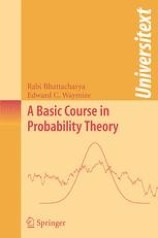
The book develops the necessary background in probability theory underlying diverse treatments of stochastic processes and their wide-ranging applications. Theorems from analysis and measure theory used in the main text are provided in comprehensive appendices, along with their proofs, for ease of reference.

سوريا - اتستراد درعا - غباغب
+963-15 2050 - 15 860 380 /1/2/3 - 11 662 3900