


تحسين النتائح
ترتيب حسب
من
الى

Acollection of world class paper articles addressing the following topics: Image and Pattern Recognition: Compression, Image processing, Signal Processing Architectures, Signal Processing for Communication, Signal Processing Implementation, Speech Compression, and Video Coding Architectures. Languages and Systems: Algorithms, Databases, Embedded Systems and Applications, File Systems and I/O, Geographical Information Systems, Kernel and OS Structures, Knowledge Based Systems, Modeling and Simulation, Object Based Software Engineering, Programming Languages, and Programming Models and tools. Parallel Processing: Distributed Scheduling, Multiprocessing, Real-time Systems, Simulation Modeling and Development, and Web Applications. New trends in computing: Computers for People of Special Needs, Fuzzy Inference, Human Computer Interaction, Incremental Learning, Internet-based Computing Models, Machine Intelligence, Natural Language Processing, Neural Networks, and Online Decision Support System.
Discusses the stateof-the art of electric machines, associated components and contemporary trends of their development. Novel electric machines considered in this book have been limited to rotary electric machines. Linear electric machines and linear actuators have not been included.
Investigate and to teach quantum mechanics with the aid of computer-generated animations. It is a self-contained textbook that combines selected topics from atomic physics (spherical symmetry, the hydrogen atom, and particles with spin) with an introduction to quantum information theory (qubits, EPR paradox, teleportation, quantum computers). It explores relativistic quantum mechanics and the strange behavior of Dirac equation solutions. A series of appendices covers important topics from perturbation and scattering theory. The book places an emphasis on ideas and concepts, with a fair to moderate amount of mathematical rigor. Though this book stands alone, it can also be paired with Thaller Visual Quantum Mechanics to form a comprehensive course in quantum mechanics. The software for the first book earned the European Academic Software Award 2000 for outstanding innovation in its field.

"Advanced Topics in Control Systems Theory" contains selected contributions written by lecturers at the third (annual) Formation d’Automatique de Paris (FAP) (Graduate Control School in Paris). Following on from the lecture notes from the second FAP (Volume 311 in the same series) it is addressed to graduate students and researchers in control theory with topics touching on a variety of areas of interest to the control community such as nonlinear optimal control, observer design, stability analysis and structural properties of linear systems. The reader is provided with a well-integrated synthesis of the latest thinking in these subjects without the need for an exhaustive literature review. The internationally known contributors to this volume represent many of the most reputable control centers in Europe.
Advanced Topics in Control Systems Theory contains selected contributions written by lecturers at the second (annual) Formation dAutomatique de Paris (FAP) (Graduate Control School in Paris). It is addressed to graduate students and researchers in control theory with topics touching on a variety of areas of interest to the control community such as cascaded systems, flatness, optimal control, and Hamiltonian and infinite-dimensional systems. The reader is provided with a well-integrated synthesis of the latest thinking in these subjects without the need for an exhaustive literature review.
Technical advancements are basic elements in our life. In biophysical studies, new applications and improvements in well-established techniques are being implemented every day. This book deals with advancements produced not only from a technical point of view, but also from new approaches that are being taken in the study of biophysical samples, such as nanotechniques or single-cell measurements. This book constitutes a privileged observatory for reviewing novel applications of biophysical techniques that can help the reader enter an area where the technology is progressing quickly and where a comprehensive explanation is not always to be found.
This book is a collection of problems for advanced students in the area of Strength of Materials. It draws the reader´s attention also to problems that are often overlooked and answers questions that are far beyond a training course and require more fundamental understanding. All problems are provided with detailed solutions to enable the reader to either learn about the problem-solving process or just to check his/her own way of solution. The research and educational Work of V.I. Feodosiev was carried out in the Bauman Moscow State technical University where he held the course on Strength of Materials for 50 years. Deep insight into engineering problems, clearness of concepts and elegance of solutions accompanied by pedagogical talent are the main features of his style.
Advanced Reliability Models and Maintenance Policies introduces partition and redundant problems within reliability models, and provides optimization techniques. The book also indicates how to perform maintenance in a finite time span and at failure detection, and to apply recovery techniques for computer systems.
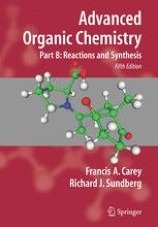
Since its original appearance in 1977, Advanced Organic Chemistry has maintained its place as the premier textbook in the field, offering broad coverage of the structure, reactivity and synthesis of organic compounds. As in the earlier editions, the text contains extensive references to both the primary and review literature and provides examples of data and reactions that illustrate and document the generalizations. While the text assumes completion of an introductory course in organic chemistry, it reviews the fundamental concepts for each topic that is discussed.

Advanced Organic Chemistry Part A provides a close look at the structural concepts and mechanistic patterns that are fundamental to organic chemistry. It relates those mechanistic patterns, including relative reactivity and stereochemistry, to underlying structural factors. Understanding these concepts and relationships will allow students to recognize the cohesive patterns of reactivity in organic chemistry. Part A: Structure and Mechanism and Part B: Reaction and Synthesis - taken together - are intended to provide the advanced undergraduate or beginning graduate student in chemistry with a foundation to comprehend and use the research literature in organic chemistry
Provides the latest information in intelligent vehicle control, sensing, and intelligent transportation. It addresses the growing need for safe, comfortable, time and energy-efficient modes of transportation with emphasis on the latest key findings, current trends, and likely future developments in this rapidly expanding field. Highlights : Discusses individual vehicle dynamics, sensory and multiple ground-vehicle interactions / Includes systematic review of past and current research achievements / Presents case studies in cutting-edge directions such as vehicle steering motion, vehicle vision systems, cooperative driving, intersection safety, and tire pressure monitoring / Assesses the likely future developments of this field. This book is useful for both practicing engineers and researchers in the automotive industry.
With the total number of vehicles steadily increasing and soon approaching one billion, the world is facing serious challenges in terms of both safety of road transport and sustainability. Consequently the two major persistent issues for the automotive industry are improved safety and reduced emissions. The book in hand is a showroom of activities, the International Forum on Advanced Microsystems for Automotive Applications (AMAA) has been known for during the last 12 years.
There is a coincidence of the AMAA objectives and those of EPoSS, the European Technology Platform on Smart Systems Integration, contributing intensively to the development of automotive-specific smart systems. You will find a series of the EPoSS items in the programme of the 11th AMAA, which continues to be a unique exchange forum for companies in the automotive value chain. The publication in hand also reflects these issues. It is a cut-out of new technological priorities in the area of microsystems-based smart devices and opens up a mid-term perspective of future smart systems applications in automobiles
Microsystems in many cases provided the key functions for this progress. Although the issues the event concentrated on didn’t change significantly (safety, powertrain, comfort, etc.), considerable shifts of technological paradigms and approaches can be stated. The future of microsystems will consist of integrated smart systems which are able to diagnose a situation, to describe and to qualify it. They will be able to identify and mutually address each other. They will be predictive and therefore they will be able to decide and help to decide. Smart systems will enable the automobile to interact with the environment, they will perform multiple tasks and assist a variety of activities. Smart systems will be highly reliable, often networked and energy autonomous.
this book explores a collaborative approach by proposing novel memory hierarchies and software optimization techniques for the optimal utilization of these memory hierarchies. Linking memory architecture design with memory-architecture aware compilation results in fast, energy-efficient and timing predictable memory accesses.The evaluation of the optimization techniques using real-life benchmarks for a single processor system, a multiprocessor system-on-chip (SoC) and for a digital signal processor system, reports significant reductions in the energy consumption and performance improvement of these systems. The book presents a wide range of optimizations, progressively increasing in the complexity of analysis and of memory hierarchies. The final chapter covers optimization techniques for applications consisting of multiple processes found in most modern embedded devices.
Man-machine interaction is the gateway providing access to functions and services, which, due to the ever increasing complexity of smart systems, threatens to become a bottleneck. This book therefore introduces not only advanced interfacing concepts, but also gives insight into the related theoretical background.This refers mainly to the realization of video-based multimodal interaction via gesture, mimics, and speech, but also to interacting with virtual object in virtual environments, cooperating with local or remote robots, and user assistance. this book puts special emphasis on implementation aspects. To this end it is accompanied by software development environments for image processing, classification, and virtual environment implementation. In addition a test data base is included for gestures, head pose, facial expressions, full-body person recognition, and people tracking.
Advanced Magnetic Nanostructures is devoted to the fabrication, characterization, experimental investigation, theoretical understanding, and utilization of advanced magnetic nanostructures. Focus is on various types of 'bottom-up' and 'top-down' artificial nanostructures, as contrasted to naturally occurring magnetic nanostructures, such as iron-oxide inclusions in magnetic rocks, and to structures such as perfect thin films. Industrial and academic researchers in magnetism and related areas such as nanotechnology, materials science, and theoretical solid-state physics will find this book a valuable resource.
For the third edition, the author has added a new chapter on associative algebras that includes the well known characterizations of the finite-dimensional division algebras over the real field (a theorem of Frobenius) and over a finite field (Wedderburn's theorem); polished and refined some arguments (such as the discussion of reflexivity, the rational canonical form, best approximations and the definitions of tensor products); upgraded some proofs that were originally done only for finite-dimensional/rank cases; added new theorems, including the spectral mapping theorem; considerably expanded the reference section with over a hundred references to books on linear algebra.
Provides a comprehensive monograph on gate stacks in semiconductor technology. The reader will get a clear view of what has been done so far, what is the state-of-the-art and which are the main challenges ahead before we come any closer to a viable Ge and III-V MOS technology.
The approach described is to create methods for experimental observations of noise sources, their localization and their frequency spectrum, voltage-current and thermal dependences. Our current knowledge of measurement methods for mesoscopic devices is summarized to identify directions for future research, related to downscaling effects. The directions for future research into fluctuation phenomena in quantum dot and quantum wire devices are specified. Nanoscale electronic devices will be the basic components for electronics of the 21st century. From this point of view the signal-to-noise ratio is a very important parameter for the device application. Since the noise is also a quality and reliability indicator, experimental methods will have a wide application in the future.

سوريا - اتستراد درعا - غباغب
+963-15 2050 - 15 860 380 /1/2/3 - 11 662 3900