


تحسين النتائح
ترتيب حسب
من
الى

It addresses methods and techniques for topics that range from design and rendering, context modelling, personalisation, multimodal interaction to usability test. Instead of striving for a seamless coverage of all essential theoretical and technical issues with an equal depth and extent, we attempt to pinpoint a number of research highlights and representative development activities at universities, research institutions and so- ware industry. The operational prototypes and platforms reported in the book are on the one hand outcome and feasibility proof of various approaches. On the other hand, they serve as a new starting point for the refinement of user interfaces and iterative usability tests.

Magnetic heterostructures constitute an important field in magnetism and nanotechnology, which has developed over the past fifteen years due to important advances in epitaxial- growth techniques and lithographic processes. Magnetic heterostructures combine different physical properties which do not exist in nature. Examples are semiconductors/ferromagnets, superconductors/ferromagnets, and ferromagnets/antiferromagnets. These combinations display rich and novel physical properties different from those that exit in any single one of them. Interlayer exchange coupling, exchange bias, proximity effects, giant magneto-resistance, tunneling magneto-resistance, spininjection and spintransport are examples of new physical phenomena that rely on the combination of different materials layers

Presents the main mathematical machines for drawing curves, for applying geometrical transformations or for making classical perspectives.The publication constitutes an example of how history of mathematics may be useful for teaching today’s mathematics.

Organized to make it easy for astronomers to use, enabling ground-based images and views to be compared with the Orbiter photographs. The photographs are striking for their consistent Sun angles (for uniform appearance). All features are identified with their current IAU-approved names, and each photograph is located in terms of latitude and longitude. To help practical astronomers, all the photographs are systematically related to an Earth-based view.

Provides a comprehensive portrait of lone parenthood at the beginning of the XXI century from a life course perspective. The contributions included in this volume examine the dynamics of lone parenthood in the life course and explore the trajectories of lone parents in terms of income, poverty, labour, market behaviour, wellbeing, and health. Throughout, comparative analyses of data from countries as France, the United Kingdom, Ireland, Germany, Belgium, Sweden, Switzerland, Hungary, and Australia help portray how lone parenthood varies between regions, cultures, generations, and institutional settings. The findings show that one-parent households are inhabited by a rather heterogeneous world of mothers and fathers facing different challenges.
Modern logic has been intimately connected with algebra since its origins in figures such as Boole, De Morgan, and Peirce. But while universal algebra is a long recognized field, universal logic has only recently been named as such. This is perhaps because classical logic was until relatively recently taken by many as the "one true logic". But with the proliferation of special purpose non-classical logics in recent years, universal logic is clearly a field whose time has come. This book contains many excellent papers demonstrating the value of this approach.
Signifies the arrival of a new renaissance in logic, a new revival not only of logic, but of the vision of logic as a unifying tool for science as a whole, including mathematics, physics, cosmology, computer science and AI. The book and the vision behind it give logic, conceived as a scientific study of rationality, new unifying power, new perspectives, and new horizons.Universal Logic is not a new logic, but a general theory of logics, considered as mathematical structures. The name was introduced about ten years ago, but the subject is as old as the beginning of modern logic: Alfred Tarski and other Polish logicians such as Adolf Lindenbaum developed a general theory of logics at the end of the 1920s based on consequence operations and logical matrices. The subject was revived after the flowering of thousands of new logics during the last thirty years: there was a need for a systematic theory of logics to put some order in this chaotic multiplicity.
Contribute to our understanding of this dynamic process by clearly presenting and discussing the most important hypotheses, issues and theories in philosophical and logical study of language, thought and action. Among the fundamental issues discussed are the rationality and freedom of agents, theoretical and practical reasoning, individual and collective attitudes and actions, the nature of cooperation and communication, the construction and conditions of adequacy of scientific theories, propositional contents and their truth conditions, illocutionary force, time, aspect and presupposition in meaning, speech acts within dialogue, the dialogical approach to logic and the structure of dialogues and other language games, as well as formal methods needed in logic or artificial intelligence to account for choice, paradoxes, uncertainty and imprecision.

In many countries, schools, universities and other traditional learning institutions are not providing for the educational needs of all members of the community. In many communities, particularly in regional, rural and disadvantaged areas, there are only limited options for people to undertake learning. Limited participation in learning has the danger of reinforcing people’s alienation from mainstream education and from participation and inclusion in social institutions and economic and community life more generally. This book addresses the challenge of identifying effective ways of accommodating the learning needs of all people and in so doing achieving the goals of lifelong learning for all.

Written by leading experts in optical radar, or lidar, this book brings all the recent practices up-to-date and covers a multitude of applications, from atmospheric sciences to environmental protection. Its broad cross-disciplinary scope should appeal to both the experienced scientist and the novice in the field. The Foreword is by one of the early pioneers in the area, Herbert Walther.

In the present book, Pauline Phemister argues against traditional Anglo-American interpretations of Leibniz as an idealist who conceives ultimate reality as a plurality of mind-like immaterial beings and for whom physical bodies are ultimately unreal and our perceptions of them illusory. Re-reading the texts without the prior assumption of idealism allows the more material aspects of Leibniz's metaphysics to emerge. Leibniz is found to advance a synthesis of idealism and materialism. His ontology posits indivisible, living, animal-like corporeal substances as the real metaphysical constituents of the universe; his epistemology combines sense-experience and reason; and his ethics fuses confused perceptions and insensible appetites with distinct perceptions and rational choice. In the light of his sustained commitment to the reality of bodies, Phemister re-examines his dynamics, the doctrine of pre-established harmony and his views on freedom.

In recent years the question of the legitimacy of international law has been discussed quite intensively. Such questions are, for example, whether international law lacks legitimacy in general; whether international law or a part of it has yielded to the facts of power; whether adherence to international legal commitments should be subordinated to self-defined national interests; whether international law or particular rules of it – such as the prohibition of the use of armed force – have lost their ability to induce compliance (compliance pull); and what is the relevance of non-enforcement or failure to obey for the legitimacy of that particular international norm? This book contains fresh perspectives on these questions, offered at an international and interdisciplinary conference hosted by the Max Planck Institute for Comparative Law and International Law.
Edited volumes run the danger of being a hotchpotch of contributions on a wide variety of topics. Here, we have explicitly focused on a central theme in contemporary economic geography and regional science, namely the relationship between learning, innovation and clustering. Internationally renowned scientists made both theoretical and empirical contributions to this volume. We think this book constitutes a broad palette of contemporary thinking and research on the relationship between spatial concentration and innovation and hope it will play a significant role in future debates on this issue.
In the last few decades the effect of lead contamination on human health has received significant attention. Based on such concerns, elimination of lead from ceramic glaze, paint, plumbing etc. has been legislated and implemented. However, until recently, solders used in electronics, based on suitability and knowledge-base developed over a long period of time, remained lead-based. Successive rapid advances in microelectronic devices in recent decades make them obsolete within a very short period after their introduction resulting in significant quantities of electronic wastes in landfills. Leaching of toxic lead from such electronic wastes can result in contamination of the human food chain causing serious health hazards. As a consequence, several European and Pacific Rim countries have passed legislations warranting elimination of lead from electronic solders by fast approaching deadlines. Global economic pressures brought on by such legislations have resulted in a flurry of research activities to find suitable lead-free substitutes for the traditional leaded electronic solders.
Lattice Boltzmann models have a remarkable ability to simulate single- and multi-phase fluids and transport processes within them. A rich variety of behaviors, including higher Reynolds numbers flows, phase separation, evaporation, condensation, cavitation, buoyancy, and interactions with surfaces can readily be simulated. This book provides a basic introduction that emphasizes intuition and simplistic conceptualization of processes. It avoids the more difficult mathematics that underlies LB models. The model is viewed from a particle perspective where collisions, streaming, and particle-particle/particle-surface interactions constitute the entire conceptual framework. Beginners and those with more interest in model application than detailed mathematical foundations will find this a powerful "quick start" guide. Example simulations, exercises, and computer codes are included. Working code is provided on the Internet.

Over the next decade the gravitational physics community will benefit from dramatic improvements in many technologies critical to testing gravity. Highly accurate deep space navigation, interplanetary laser communication, interferometry and metrology, high precision frequency standards, precise pointing and attitude control, together with drag-free technologies, will revolutionize the field of experimental gravitational physics. The centennial of the general theory of relativity in 2015 will motivate a significant number of experiments designed to test this theory with unprecedented accuracy.

This volume considers the ways in which modernity challenges and informs the language policies of various Southeast Asians nations. Using case studies from Malaysia, the Philippines, Singapore and Thailand, the authors examine language policies that are explicitly articulated either in the form of State constitutions or in the public proclamations of political leaders. Particular attention is paid to the ways in which English, often seen as the language of globalization, impacts the status of indigenous Southeast Asian language.

This book examines language choice in contemporary Cambodia, and uses the case study to explore and evaluate competing explanations for the spread of English globally. the multiple contexts in which Cambodians make individual and institutional language policy choices are considered. Chapters 2 and 3 examine the economic and political contexts for language choice, as Cambodia has transitioned from a planned economy and communism to a market economy and democracy. Chapters 4, 5, and 6 examine the assistance context for language choice; the bilateral, multilateral, and nongovernmental development agencies that have recently begun to work in Cambodia demand certain language skills of Cambodian employees and government counterparts, and support the learning of these languages in both nonformal and formal education.
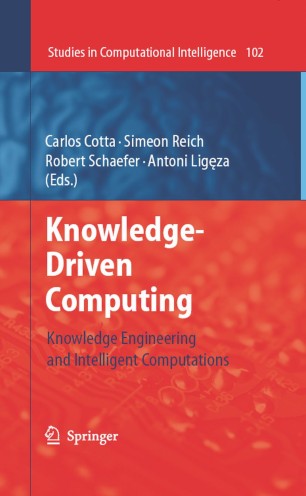
Knowledge-Driven Computing constitutes an emerging area of intensive research located at the intersection of Computational Intelligence and Knowledge Engineering with strong mathematical foundations. It embraces methods and approaches coming from diverse computational paradigms, such as evolutionary computation and nature-inspired algorithms, logic programming and constraint programming, rule-based systems, fuzzy sets and many others. The use of various knowledge representation formalisms and knowledge processing and computing paradigms is oriented towards the efficient resolution of computationally complex and difficult problems.
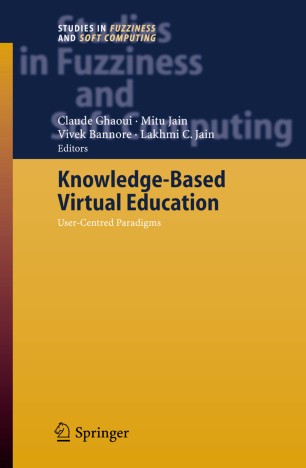
The book covers a multitude of important issues on the subject of "Innovations in Knowledge-Based Virtual Education ", aiming at researchers and practitioners from academia, industry, and government. The carefully selected contributions report on research, development and real-world experiences of virtual education.

سوريا - اتستراد درعا - غباغب
+963-15 2050 - 15 860 380 /1/2/3 - 11 662 3900