


تحسين النتائح
ترتيب حسب
من
الى


This book offers a comparative study of eight ambitious national reforms that sought to create opportunities for students to gain the necessary breath of skills to thrive in a rapidly changing world.
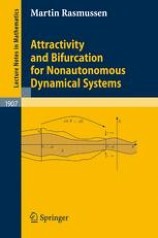
Although, bifurcation theory of equations with autonomous and periodic time dependence is a major object of research in the study of dynamical systems since decades, the notion of a nonautonomous bifurcation is not yet established. In this book, two different approaches are developed which are based on special definitions of local attractivity and repulsivity.

Records the state of the art in research on mathematics-related affect. It discusses the concepts and theories of mathematics-related affect along the lines of three dimensions. The first dimension identifies three broad categories of affect: motivation, emotions, and beliefs. The book contains one chapter on motivation, including discussions on how emotions and beliefs relate to motivation. There are two chapters that focus on beliefs and a chapter on attitude which cross-cuts through all these categories. The second dimension covers a rapidly fluctuating state to a more stable trait. All chapters in the book focus on trait-type affect and the chapter on motivation discusses both these dimensions. The third dimension regards the three main levels of theorizing: physiological (embodied), psychological (individual) and social. All chapters reflect that mathematics-related affect has mainly been studied using psychological

In this book, the author defends a unified externalists account of propositional attitudes and reference, and formalizes this view within possible world semantics.
This introduction to Atomic and Molecular Physics explains how our present model of atoms and molecules has been developed over the last two centuries both by many experimental discoveries and, from the theoretical side, by the introduction of quantum physics to the adequate description of micro-particles. It illustrates the wave model of particles by many examples and shows the limits of classical description. The interaction of electromagnetic radiation with atoms and molecules and its potential for spectroscopy is outlined in more detail and in particular lasers as modern spectroscopic tools are discussed more thoroughly. Many examples and problems with solutions are offered to encourage readers to actively engage in experimentation.
This is a textbook for students with a background in quantum mechanics. The text is designed to give hands-on experience with atomic structure calculations. Material covered includes angular momentum methods, the central field Schrödinger and Dirac equations, Hartree-Fock and Dirac-Hartree-Fock equations, multiplet structure, hyperfine structure, the isotope shift, dipole and multipole transitions, basic many-body perturbation theory, configuration interaction, and correlation corrections to matrix elements.
Atomic Spectroscopy provides a comprehensive discussion on the general approach to the theory of atomic spectra, based on the use of the Lagrangian canonical formalism. This approach is developed and applied to explain the hydrogenic hyperfine structure associated with the nucleus motion, its finite mass, and spin. The non-relativistic or relativistic, spin or spin-free particle approximations can be used as a starting point of general approach. The special attention is paid to the theory of Lamb shift formation. The formulae for hydrogenic spectrum including the account of Lamb shift are written in simple analytical form. The book is of interest to specialists, graduate and postgraduate students, who are involved into the experimental and theoretical research in the field of modern atomic spectroscopy.
This book is a blend of analytical methods based on the phenomenon of atomic and nuclear physics. It comprises comprehensive presentations about X-ray Fluorescence (XRF), Mössbauer Spectroscopy (MS), X-ray Photoelectron Spectroscopy (XPS), Neutron- Activation Analysis (NAA), Particle Induced X-ray Emission Analysis (PIXE), Rutherford Backscattering Analysis (RBS), Elastic Recoil Detection (ERD), Nuclear Reaction Analysis (NRA), Particle Induced Gamma-ray Emission Analysis (PIGE), and Accelerator Mass Spectrometry (AMS). These techniques are commonly applied in the fields of medicine, biology, environmental studies, archaeology or geology et al. and pursued in major international research laboratories.
this book offers a comprehensive and state of the art analysis of aerodynamic and flight mechanic entry topics. In addition, it provides a large set of application exercises and solutions. It is addressed to university and engineering school students, as well as engineers in aerospace companies and government agencies, or simply curious readers.
Atmospheric ice takes a wide range of fascinating forms, all beautiful in their own ways but many posing severe risk to the security of overhead networks for electric power, communications and other systems. This book documents the fundamentals of atmospheric icing and surveys the state of the art in eight chapters, each written by a team of experienced and internationally renowned experts.
Modern aerospace vehicles, such as the space shuttle, other launch vehicles, and long-range ballistic missiles, do not discriminate between atmospheric and space flight. Most texts on flight dynamics, however, make this artificial distinction and therefore do not simultaneously cover aircraft and spacecraft. Bridging this gap in the literature, Atmospheric and Space Flight Dynamics is a unified presentation, demonstrating that the two disciplines have actually evolved from the same set of physical principles.Primarily useful as a textbook for advanced undergraduate and beginning graduate-level students, the work is also an excellent reference or self-study guide for researchers and practitioners in aerospace engineering, aviation, mechanical engineering, dynamics, astrodynamics, aeronautics, and astronautics.
In this book we focus on sensors on Low Earth Orbit (LEO) satellites, which exploit solar, lunar, stellar, GNSS (Global Navi- tion Satellite Systems), and LEO-crosslink signals for observing the Earth's - mosphere and climate. The methods all share the key properties of self-calibration, high accuracy and vertical resolution, global coverage, and (if using radio signals) all-weather ca- bility. The atmospheric parameters obtained extend from the fundamental va- ables temperature, density, pressure and water vapor via trace gases, aerosols and cloud liquid water to ionospheric electron density. Occultation data are therefore of high value in a wide range of fields including climate monitoring and research, atmospheric physics and chemistry, operational meteorology, and ionospheric physics.
Many of problems of the natural sciences lead to nonlinear partial differential equations. However, only a few of them have succeeded in being solved explicitly. Therefore different methods of qualitative analysis such as the asymptotic methods play a very important role. This is the first book in the world literature giving a systematic development of a general asymptotic theory for nonlinear partial differential equations with dissipation. Many typical well-known equations are considered as examples, such as: nonlinear heat equation, KdVB equation, nonlinear damped wave equation, Landau-Ginzburg equation, Sobolev type equations, systems of equations of Boussinesq, Navier-Stokes and others.
An encyclopedic treatment of classic as well as contemporary large sample theory, dealing with both statistical problems and probabilistic issues and tools. It is written in an extremely lucid style, with an emphasis on the conceptual discussion of the importance of a problem and the impact and relevance of the theorems. The book has 34 chapters over a wide range of topics, nearly 600 exercises for practice and instruction, and another 300 worked out examples. It also includes a large compendium of 300 useful inequalities on probability, linear algebra, and analysis that are collected together from numerous sources, as an invaluable reference for researchers in statistics, probability, and mathematics.
Presents a new method of asymptotic analysis of boundary-layer problems, the Successive Complementary Expansion Method (SCEM). The first part is devoted to a general comprehensive presentation of the tools of asymptotic analysis. It gives the keys to understand a boundary-layer problem and explains the methods to construct an approximation. The second part is devoted to SCEM and its applications in fluid mechanics, including external and internal flows. The advantages of SCEM are discussed in comparison with the standard Method of Matched Asymptotic Expansions. In particular, for the first time, the theory of Interactive Boundary Layer is fully justified. With its chapter summaries, detailed derivations of results, discussed examples and fully worked out problems and solutions, the book is self-contained.
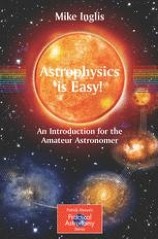
With some justification, many amateur astronomers believe astrophysics is a very difficult subject, requiring at least degree-level mathematics to understand it properly. This isn’t necessarily the case. Mike Inglis' quantitative approach to the subject explains all aspects of astrophysics in simple terms and cuts through the incomprehensible mathematics with which this fascinating subject is all too often associated. Astrophysics is Easy! begins by looking at the H-R diagram and other basic tools of astrophysics, then ranges across the universe, from a first look at the interstellar medium and nebulae, through the birth, evolution and death of stars, to the physics of galaxies and clusters of galaxies.
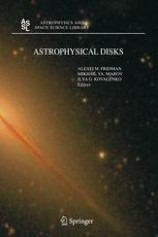
The book deals with collective and stochastic processes in astrophysical discs involving theory, observations, and the results of modelling. Among others, it examines the spiral-vortex structure in galactic and accretion disks , stochastic and ordered structures in the developed turbulence. It also describes sources of turbulence in the accretion disks, internal structure of disk in the vicinity of a black hole, numerical modelling of Be envelopes in binaries, gaseous disks in spiral galaxies with shock waves formation, observation of accretion disks in a binary system and mass distribution of luminous matter in disk galaxies.
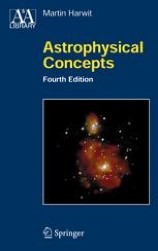
This classic text, aimed at senior undergraduates and beginning graduate students in physics and astronomy, presents a wide range of astrophysical concepts in sufficient depth to give the reader a quantitative understanding of the subject. Emphasizing physical concepts, the book outlines cosmic events but does not portray them in detail: it provides a series of astrophysical sketches. For this fourth edition, nearly every part of the text has been reconsidered and rewritten, new sections have been added to cover recent developments, and others have been extensively revised and brought up to date. The book begins with an outline of the scope of modern astrophysics and enumerates some of the outstanding problems faced in the field today. The basic physics needed to tackle these questions are developed in the next few chapters using specific astronomical processes as examples. The second half of the book enlarges on these topics and shows how we can obtain quantitative insight into the structure and evolution of stars, the dynamics of cosmic gases, the large-scale behavior of the Universe, and the origins of life.
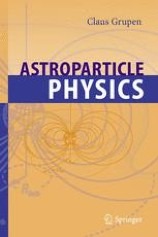
The book describes the branch of astrophysics in which processes in the universe are investigated with experimental methods known from particle physics experiments. After a historical introduction to the basics of elementary particles, their interactions and the relevant detection techniques are described. The main body of the book concerns cosmic rays. The modern aspects of astroparticle physics are described in a chapter on cosmology. The book provides an orientation in the field of astroparticle physics that many beginners might look for. The physics issues are presented with little mathematics, and the results are illustrated by many diagrams. The reader has a chance to enter this field of astrophysics with a book that closes the gap between expert and popular level.
At some time we have all gazed through the telescope eyepiece at the magnificent rings and banded globe of Saturn, or seen long shadows reaching across crater floors at the Moon’s terminator – and wondered at the sheer beauty of the sight. It seems almost anachronistic to think of sketching when CCD imaging is available, but astronomical sketching provides an entirely different and deeply personal experience. It means spending time at the eyepiece to really look at what you can see, training your eye to perceive ever greater detail to take the fullest advantage of your telescope's light grasp and resolution.

سوريا - اتستراد درعا - غباغب
+963-15 2050 - 15 860 380 /1/2/3 - 11 662 3900