


تحسين النتائح
ترتيب حسب
من
الى

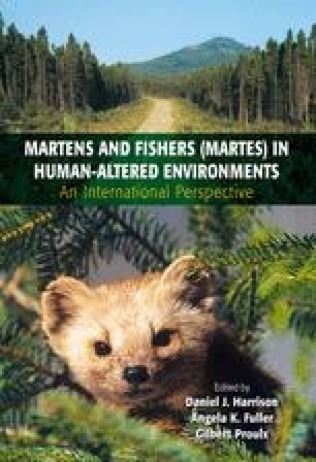
Examines the conditions where humans and martens are compatible and incompatible, and promotes land use practices that allow Martes to be representatively distributed and viable. All Martes have been documented to use forested habitats and 6 species (excluding the stone marten) are generally considered to require complex mid- to late-successional forests throughout much of their geographic ranges. All species in the genus require complex horizontal and vertical structure to provide escape cover protection from predators, habitat for their prey, access to food resources, and protection from the elements. Martens and the fisher have high metabolic rates, have large spatial requirements, have high surface area to volume ratios for animals that often inhabit high latitudes, and often require among the largest home range areas per unit body weight of any group of mammals. Resulting from these unique life history characteristics, this genus is particularly sensitive to human influences on their habitats, including habitat loss, stand-scale simplification of forest structure via some forms of logging, and landscape-scale effects of habitat fragmentation. Given their strong associations with structural complexity in forests, martens and the fisher are often considered as useful barometers of forest health and have been used as ecological indicators, flagship, and umbrella species in different parts of the world. Thus, efforts to successfully conserve and manage martens and fishers are associated with the ecological fates of other forest dependent species and can greatly influence ecosystem integrity within forests that are increasingly shared among wildlife and humans.We have made great strides in our fundamental understanding of how animals with these unique life history traits perceive and utilize habitats, respond to habitat change, and how their populations function and perform under different forms of human management and mismanagement.
Tremendous human progress is becoming possible through the development of converging technologies stimulated by advances in four core fields: Nanotechnology, Biotechnology Information technology, and new technologies based in Cognitive science (NBIC). This book provides a unique review of technical developments related to the unification that is rapidly taking place today among these fields.

Man as a Place of God is an examination of Levinas’ philosophy of religion in the light of his ethics and anthropology. It provides a lively introduction to the main themes of Levinas’ thought and offers critical perspectives on Levinas by relating his work to that of Heidegger, Ricoeur, Rorty, Derrida and Vattimo.
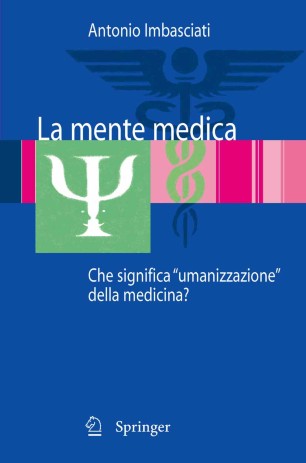
Il presente testo intende chiarire misconoscimenti e riduzionismi che paralizzano il pur auspicato mutamento della medicina e le sue articolazioni in differenti professionalità. La Psicologia Clinica si pone come chiave per leggere la mentalità collettiva che sottende l’attuale cultura sanitaria medicalizzante, che si scontra con le esigenze della persona umana, negando, oltretutto, quanto la psicosomatica oggi ci dice circa la costante modulazione psichica di tutti i processi organici, nella salute così come in tutte le malattie. L’umanizzazione della medicina non è un surplus eticamente giusto per il malato: è un indispensabile agente terapeutico. La sua mancanza è iatrogena.
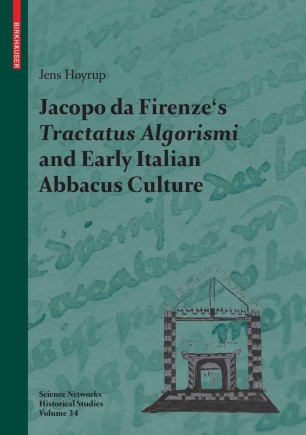
In the city republics of Renaissance Italy, it was a common practice among the merchant class to send sons for a two-year course of study at an "abbacus school", where they learned practical, mostly commercial mathematics, known as abbaco. From this school institution, several hundred manuscripts survive, all in Italian, often containing not only what the masters needed in their teaching but also algebra or other advanced mathematical material. A signal feature of the book by Jens Høyrup is the first translation of one of these abbacus manuscripts into English.

This edited book offers diverse perspectives on the Palestinian refugee problem and the possible ways to facilitate its resolution. The book contains contributions of Israeli, Palestinian and other scholars, and its main goal is to initiate an informed dialogue that will bridge the “knowledge gap” between the different camps.
This volume examines the difficulties that arise in creating highly complex engineered systems and new approaches that are being adopted. Topics addressed range from the formal representation and classification of distributed networked systems to revolutionary engineering practices inspired by biological evolution. By bringing together the latest research in Complex Engineered Systems, this book sheds light on the current state and future course of this emerging field.

This volume contains a collection of expert views on the state of the art in Large Eddy Simulation (LES) and its application to complex ?ows. Much of the material in this volume was inspired by contributions that were originally presented at the symposium on Complex E?ects in Large Eddy Simulation held in Lemesos (Limassol), Cyprus, between September 21st and 24th, 2005.
Mechanics, Electrodynamics, Quantum Mechanics, and Statistical Mechanics and Thermodynamics comprise the canonical undergraduate curriculum of theoretical physics. In Compendium of Theoretical Physics, Armin Wachter and Henning Hoeber offer a concise, rigorous and structured overview that will be invaluable for students preparing for their qualifying examinations, readers needing a supplement to standard textbooks, and research or industrial physicists seeking a bridge between extensive textbooks and formula books. The authors take an axiomatic-deductive approach to each topic, starting the discussion of each theory with its fundamental equations. By subsequently deriving the various physical relationships and laws in logical rather than chronological order, and by using a consistent presentation and notation throughout, they emphasize the connections between the individual theories. The reader’s understanding is then reinforced with exercises, solutions and topic summaries.
Offers critical insights into the thriving international field of community indicators, incorporating the experiences of government leaders, philanthropic professionals, community planners and a wide range of academic disciplines. It illuminates the important role of community indicators in diverse settings and the rationale for the development and implementation of these innovative projects. details many of the practical “how to” aspects of the field as well as lessons learned from implementing indicators in practice. The case studies included here also demonstrate how, using a variety of data applications, leaders of today are monitoring and measuring progress and communities are empowered to make sustainable improvements in their wellbeing.

When the ?rst edition of this book was published in 2004, the following year 2005 has happened to have been the warmest year since 1880, when the ?rst reliable worldwide instrumental records came into existance. Claiming no li- age between the publication of our book and the temperature record, yet this record demonstrates the trend of increase in the global surface temperatures during thepast20years,reinforcedbyevidenceofriseofatmosphere’sand oceans’ temperatures, and increased melting of ice and snow in the arctic and antarctic regions as well as on mountain tops. All these observations are par- leled by the increase in the quantity of heat trapping gases in the atmosphere, causing most probably, the global greenhouse effect. In order to try and predict, what might be the impact of this effect on the on the natural and human environments of the Near East, (Figs. 1–1d) the authors adopted the saying that the past is the key for the future. The practical conclusion of this principle says that the acquiring knowledge of the impact of past climate changes on the nature and human societies, may allow conclusions with regard to future possible impact of climate changes. By correlating proxy data of all types, paleo-sea and lake levels, paleo-hydrology, pollen pro?les, environmental isotopes as well as archaeological and historical documents, the authors tried to collect as much as possible of this knowledge.

This book brings together a collection of classic research papers on the Dempster-Shafer theory of belief functions. By bridging fuzzy logic and probabilistic reasoning, the theory of belief functions has become a primary tool for knowledge representation and uncertainty reasoning in expert systems.
This concise research monograph introduces and reviews the concept of chiral soliton models for baryons. In these models, baryons emerge as (topological) defects of the chiral field. The many applications shed light on a number of bayron properties, ranging from static properties via nucleon resonances and deep inelastic scattering to even heavy ion collisions. As far as possible, the theoretical investigations are confronted with experiment. Conceived to bridge the gap between advanced graduate textbooks and the research literature, this volume also features a number of appendices to help nonspecialist readers to follow in more detail some of the calculations in the main text.
This book examines the educational conditions that support cultures of exploration in kindergartens. It conceptualises cultures of exploration, whether those cultures are created through children’s own engagement or are demanded of them through undertaking specific tasks within different institutional settings.

This book examines the appearance of matter in its most primitive form, from the vacuum and the diversity that results from the fusion of elementary units in the genesis of atomic matter; considers the empirical rules of chemical affinity that regulate the synthesis and properties of molecular matter; analyzes the compatibility of the theories of chemistry with the quantum and relativity theories of physics; formulates a consistent theory, based on clear physical pictures and manageable mathematics, to account for chemical concepts such as the structure and stability of atoms and molecules, the periodicity of nuclides and elements, valence states, activation and chemical reactivity, electronegativity and general covalency, the exclusion principle, electronic energy, orbital angular momentum and spin in relation to molecular shape, torsional rigidity, chirality and molecular modeling; explains the self-similarity between space-time, nuclear structure, covalent assembly, biological growth, planetary systems and galactic conformation.
Research in the area of chemical and biochemical sensors and the development of respective applications is still growing rapidly. In the last decade it has become evident that the successful development of chemical and biochemical sensors resistant to the harsh conditions in the various routine applications calls for a cooperation between chemists and engineers.Thus, this book aims at instructing researcher and practitioners in both disciplines in a strictly systematic, interdisciplinary and practice-oriented way about the basic technology of chemical and biochemical sensors. This concise volume bridges the gap between the different "ways of thinking" in chemistry, physics and engineering
Cells and Robots is an outcome of the multidisciplinary research extending over Biology, Robotics and Hybrid Systems Theory. It is inspired by modeling reactive behavior of the immune system cell population, where each cell is considered as an independent agent. In our modeling approach, there is no difference if the cells are naturally or artificially created agents, such as robots. This appears even more evident when we introduce a case study concerning a large-size robotic population scenario. Under this scenario, we also formulate the optimal control of maximizing the probability of robotic presence in a given region and discuss the application of the Minimum Principle for partial differential equations to this problem. Simultaneous consideration of cell and robotic populations is of mutual benefit for Biology and Robotics, as well as for the general understanding of multi-agent system dynamics.The text of this monograph is based on the PhD thesis of the first author. The work was a runner-up for the fifth edition of the Georges Giralt Award for the best European PhD thesis in Robotics, annually awarded by the European Robotics Research Network (EURON).
Cell motility is a fascinating example of cell behavior which is fundamentally important to a number of biological and pathological processes. It is based on a complex self-organized mechano-chemical machine consisting of cytoskeletal filaments and molecular motors. In general, the cytoskeleton is responsible for the movement of the entire cell and for movements within the cell. The main challenge in the field of cell motility is to develop a complete physical description on how and why cells move. For this purpose new ways of modeling the properties of biological cells have to be found. This long term goal can only be achieved if new experimental techniques are developed to extract physical information from these living systems and if theoretical models are found which bridge the gap between molecular and mesoscopic length scales. Cell Motility gives an authoritative overview of the fundamental biological facts, theoretical models, and current experimental developments in this fascinating area.
The ISEKI-Food book series is a collection where various aspects of food safety and environmental issues are introduced and reviewed by scientists specializing in the field. In all of the books a special emphasis is placed on including case studies applicable to each specific topic. The books are intended for graduate students and senior level undergraduate students as well as professionals and researchers interested in food safety and environmental issues applicable to food safety.

The Institute Vienna Circle held a conference in 2003, Cambridge and Vienna: Frank P. Ramsey and the Vienna Circle, to commemorate the philosophical and scientific work of Frank Plumpton Ramsey (1903-1930). This Ramsey conference provided historical and biographical perspectives on one of the most gifted thinkers of the Twentieth Century.

سوريا - اتستراد درعا - غباغب
+963-15 2050 - 15 860 380 /1/2/3 - 11 662 3900