


تحسين النتائح
ترتيب حسب
من
الى

This open access book looks at the dramatic history of ovariotomy, an operation to remove ovarian tumours first practiced in the early nineteenth century. Bold and daring, surgeons who performed it claimed to be initiating a new era of surgery by opening the abdomen. Ovariotomy soon occupied a complex position within medicine and society, as an operation which symbolised surgical progress, while also remaining at the boundaries of ethical acceptability. This book traces the operation’s innovation, from its roots in eighteenth-century pathology, through the denouncement of those who performed it as ‘belly-rippers’, to its rapid uptake in the 1880s, when ovariotomists were accused of over-operating. Throughout the century, the operation was never a hair’s breadth from controversy.

Presents an updated discussion on the chemical composition and biological properties of the main bee products, which until now have been presented separately in different editions This book scoops out studies about bee products most used in marketing and in traditional medicine such as honey, royal jelly, propolis, bee pollen and bee venom Discusses chemical composition and biological function of the different bee products on topics such as nutrition, aging and age-related diseases, cancer, neurodegenerative diseases and pathogen infections Bee products are rich in several essential nutrients and non essential nutrients, as sugars, minerals, proteins, free amino acids, vitamins, enzymes and polyphenols, that seem to be closely related to their biological functions. The effects of these products in nutrition, aging and age-related diseases, cancer, neurodegenerative diseases and pathogen infections are discussed.
Medical researchers including doctors, nurses, medical students and allied health professionals are required to undertake a period of research as part of their career pathway. Basic Science Techniques in Clinical Practice covers the main areas, allowing anyone to set up and complete research projects and this information can easily be translated to clinical projects. Written by international authors to provide a flavor from many institutions, the book’s appeal is cross-sectional, both at hospital and primary care levels worldwide.
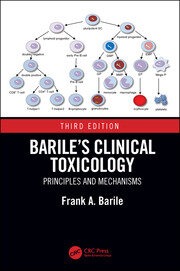
Examines the complex interactions associated with clinical toxicological events as a result of therapeutic drug administration or chemical exposure. Special emphasis is placed on signs and symptoms of diseases and pathology caused by toxins and clinical drugs. Includes the source, pharmacological and toxicological mechanism of action, detection and identification in body fluids, and treatment of exposure. An overview of protocols for managing various toxic ingestions, and the antidotes and treatments associated with their pathology, are discussed. In addition, effect of toxins on a limited number of body systems and drug-induced adverse drug reactions are also covered
The authors of this volume present the synthesis on how the various host cellular Rho GTPases activities are manipulated by bacteria to fulfill their virulence.
Interactions among different TCSs enable one system to respond to multiple signals, which is important for bacteria to minutely adjust themselves to complex environmental changes. Such interactions are found or predicted in various bacteria in this book. Over the past decade, a vast amount of exciting new information on the signal transduction pathway in bacteria has been brought to light. Reports on these develop› ments have been put together in this book, Bacterial Signal Transduction: Networks andDrug Targets. This book Offers an incentive for graduate students, academic scientists, and researchers in the pharmaceutical industry to further elucidate the TCS networks and apply them in the search for novel drugs.

Cover techniques used to study secretion systems. Chapters focus on identifying and localizing the different subunits, defining interactions within subunits, monitoring conformational changes, purifying and imaging of large complexes, defining the assembly pathway by fluorescence microscopy and the role of energy during assembly and/or secretion, identifying secreted effectors as well as using reporters to follow effector transport. Written in the highly
This book imparts fundamental knowledge on the structure, organization, and evolution of bacterial genomes. The value and power of comparative genomics and proteomics, bioinformatics, microarrays, and knockout animal models in analyzing genomes, bacteria-host interactions and disease are demonstrated. Also discussed are the genomes of virulent and nonvirulent strains and species, origin and evolution of pathogens, different models of bacteria-host interactions, and diseases mechanisms.
This completely revised and updated edition of Bacterial Fish Pathogens is a comprehensive discussion of the biological aspects of the bacterial taxa which cause disease in fish. Since the 3rd edition was published in 1999, much has changed in the control of disease of farmes and wild fish. New pathogens such as Pasteurella skyensis have been described, and antimicrobial compounds for the control of disease have been replaced by alternative methods, such as probiotics. Consideration is given to all the bacterial taxa which have at some time been reported as fish pathogens, whether they are secondary invaders of already damaged tissues or serious, primary pathogens.
This volume tends to focus on the biology of biofilms that affect human disease. It opens with chapters that provide the reader with current perspectives on biofilm development, physiology, environmental and regulatory effects, the role of quorum sensing, and resistance/phenotypic persistence to antimicrobial agents during biofilm growth. The next chapters are devoted to common problematic biofilms, those that colonize venous and urinary catheters. The final series of chapters examines biofilm formation by four species that are important pathogens and well studied models, one of which, Yersinia pestis, cleverly adopts a biofilm state of growth within its insect vector to promote disease transmission to mammalian hosts.
Facial nerve surgery inevitably leads to partial pareses, abnormally associated movements and pathologically altered reflexes. The reason for this "post-paralytic syndrome" is the misdirected reinnervation of targets
The complexarchitectureofneuronal networks togetherwith the extraordinary associated functions make the nervous system a fascinating biological structure. The considerable work performed to explore this cellular machinery is nowadays successfulbecause the mysteryofnervous system developmentisbeing unravelled. As described in their outstanding review published 10 years ago in Science.' Marc Tessier-Lavigne and Corey Goodman-the pioneers of the molecular era of axon guidance-summarized the assembly of nervous system connections as a subtle game of attraction and repulsion of neuronal growth cones. The cellular ballet ensuring the formation of billions of synapses, which ultimately gives rise to the highest cognitive functions, is primarily orchestrated by a step-by-step mechanism of growth driven by multiple molecular cues. While our general concept of axon guidance remains identical, a profound evolution ofour knowledge ofthe molecular identityofthe guidance cues together with their interactions and signalling pathways occurred over the past ten years.
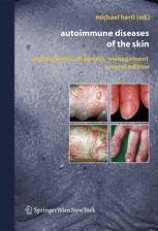
The book provides an overview and the latest information on the broad spectrum of cutaneous autoimmune disorders for clinicians, scientists and practitioners in dermatology, medicine, rheumatology, ENT, pediatrics and ophthalmology. The book is unique since it presents the state-of-the-art knowledge on pathophysiology, clinical diagnosis and management of these disorders provided by the world experts in the field. The primary intention is to broaden the understanding of the pathophysiology of cutaneous autoimmune disorders and to provide a practical guide to how to identify and handle these conditions. The book is illustrated with many tables, illustrative figures and clinical color photographs. The second edition has been extended by chapters on autoimmune pigmentary disorders (vitiligo), hairloss (alopecia areata) and cutaneous symptoms of rheumatic disorders.
The software includes a rich iconography on blood and marrow cells which will complement the knowledge in cytology of hematologists. Certain cytological abnormalities encountered in certain pathologies are also presented.
The auricle is a privileged place to observe and treat patients reflexively. It is endowed with both a particularly rich innervation, and brief connections with the higher nervous centers. It constitutes both a reading pavilion, to observe information coming from the organs and nerve endings of the skin, and a control pavilion to help correct abnormal information. It is a lookout post, placed bypassing the brainstem, on the path connecting the organs and the brain. It thus allows a fair control and an effective intervention. In this medical treatise on Auriculotherapy, historical and scientific data, medical explanations and bibliographical references are presented.
Protection and Repair presents recent developments in auditory research and their potential translation to the clinical setting. In particular the authors address the major entities of peripheral auditory trauma, discuss the underlying mechanisms, the central nervous system consequences, protective interventions and finally explore the possibilities to restore cochlear morphology and function.Two themes run through the chapters in this book: cellular homeostasis and cell death. In the broadest sense, all auditory pathologies are disorders of cellular homeostasis.
The prevention of the most frequent and deadly pathologies (cancers, cardiovascular diseases, accidents) essentially involves modifying risky behavior, a challenge which cannot be resolved by the simple dissemination of information. To be able to modify behavior, it is necessary to take into account, on the one hand, the individuals themselves and what leads them to change their ways of living and, on the other hand, the cultural, social, physical and economic environment. who shapes people and whose modifications are necessary for individual changes. Thus, preventive health actions are effective as long as they strengthen the ability to exercise control over individual and collective health determinants.
This book is a single source that provides a multi-perspective look at and approach to Atrial Fibrillation. Because Atrial Fibrillation is so prevalent and affects all areas of medicine, the information in this book will be useful to cardiologists, cardiac surgeons, researchers, and all those in the medical field.

Divided into four parts and intends to give an overview on the pathogenesis of atherosclerosis, established treatment and prevention regimen, and of perspectives for the development of new treatment modalities.
Associative and Endophytic Nitrogen-fixing Bacteria and Cyanobacterial Associations This book is part of the seven-volume series that was launched a few years ago with the ambitious objectives of reviewing the field of nitrogen fixation from its earliest beginnings through the millennium change and of consolidating the relevant information - from fundamental to agricultural and environmental aspects – all in one place. Volume 5 covers the biology of bacteria that associate with n- leguminous plants. The subject matter includes a wide range of associations; it covers the bacterial species that associate either with the surface or within the tissues of grasses (often referred as plant growth-promoting rhizobacteria) and also the symbiotic associations that cyanobacteria form with fungi, algae, and both lower and higher plants. This volume does not deal with the Frankia-actinorhizal plant associations, which is the topic of Volume 6

سوريا - اتستراد درعا - غباغب
+963-15 2050 - 15 860 380 /1/2/3 - 11 662 3900