


تحسين النتائح
ترتيب حسب
من
الى


Signifies the arrival of a new renaissance in logic, a new revival not only of logic, but of the vision of logic as a unifying tool for science as a whole, including mathematics, physics, cosmology, computer science and AI. The book and the vision behind it give logic, conceived as a scientific study of rationality, new unifying power, new perspectives, and new horizons.Universal Logic is not a new logic, but a general theory of logics, considered as mathematical structures. The name was introduced about ten years ago, but the subject is as old as the beginning of modern logic: Alfred Tarski and other Polish logicians such as Adolf Lindenbaum developed a general theory of logics at the end of the 1920s based on consequence operations and logical matrices. The subject was revived after the flowering of thousands of new logics during the last thirty years: there was a need for a systematic theory of logics to put some order in this chaotic multiplicity.
In this book control algorithms are represented by the linear graph-schemes of algorithms (GSA), where the number of operator vertices is not less than 75% of the total number of all algorithm vertices. A special class of control units named as compositional microprogram control units (CMCU) is proposed as the best way for interpretation of linear control algorithms.

The remote mountain loch of Lochnagar is one of the most studied freshwater bodies in Europe. This book brings together knowledge gained over two decades of multi-disciplinary scientific study, with the results of lake sediment research covering millennia, to show how the loch has developed both naturally and as a result of human impact
Provides for the first time a general overview of research activities related to location and map-based services. These activities have emerged over the last years, especially around issues of positioning, spatial modelling, cartographic communication as well as in the fields of ubiquitious cartography, geo-pervasive services, user-centered modelling and geo-wiki activities. Topics cover an enormous range with heterogenous relationships to the main book issues. Whilst contemporary cartography aims at looking at new and efficient ways for communicating spatial information the development and availability of technologies like mobile networking, mobile devices or short-range sensors lead to interesting new possibilities for achieving this aim.

This book helps to understand in which ways local governing elites are important for the success or failure of national democratic development. Although we know a great deal about the general importance of civil society and social capital for the development of sustainable democracy, we still know little about what specific local governing qualities or political capital that interact with democratic development. The collected data covers time series of surveys from between 15 to 30 political and administrative leaders in over a hundred middle-sized European and Eurasian cities. The study takes us across the 1980s and 1990s, going from cities in Sweden and the Netherlands - through the Baltic cities - to the cities of Belarus and Russia.

Draws parallels with the settlement of terrestrial frontiers to investigate how new space propulsion techniques may help future space settlers exploit extraterrestrial resources to establish independence from the Earth. "Living Off the Land in Space," a collaboration among two space scientists and an artist, is illuminated with many NASA-derived computer-generated images, including drawings, and presents the human (as well as the technological) side of space settlement. It will be an inspiring and indispensible source for those wishing to share in this great adventure.

On the level of a textbook a self-consistent approach to liquid separations with membranes is presented, contrasting equilibrium separations with the rate-controlling effects of barrier interference on mass transfer. As a corollary objective, an effort is made to observe context, factual and historical, when introducing concepts and applications of membrane separation science. Ordering principle is the formal structure of mass transfer across barriers, being construed of a driving force (allocated to the condition of the mixtures to be separated) and a barrier permeability (holding the keys to membrane selectivity). The membranes, by this approach, appear by way of the mass transport demands which they are to meet, or else by way of the separation effects which they inspire.

This book presents critical reviews of the present position and future trends in modern chemical research concerned with chemical structure and bonding. It contains short and concise reports, each written by the world's renowned experts.
In this book, experts in statistics and psychometrics describe classes of linkages, the history of score linkings, data collection designs, and methods used to achieve sound score linkages. They describe and critically discuss applications to a variety of domains including equating of achievement exams, linkages between computer-delivered exams and paper-and-pencil exams, concordances between the current version of the SAT® and its predecessor, concordances between the ACT® and the SAT®, vertical linkages of exams that span grade levels, and linkages of scales from high-stakes state assessments to the scales of the National Assessment of Educational Progress (NAEP).
The book addresses the “balancing act” between developing students’ modelling skills on the one hand, and using modelling to help them learn mathematics on the other, which arises from the integration of modelling into classrooms. In addition the book highlights professional learning and development for in-service teachers, particularly in systems where the introduction of modelling into curricula means reassessing how mathematics is taught.
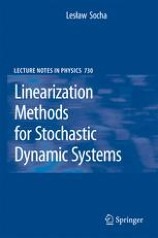
The aim of this book is to give a systematic introduction to and overview of the relatively simple and popular linearization methods available. The scope is limited to models with continous external and parametric excitations, yet these cover the majority of known approaches. The book contains an application chapter with emphasis on vibration analysis of stochastic mechanical structures as well as a chapter devoted to the assessment of the accuracy of the theoretical methods presented, both with respect to numerical and to experimental studies.
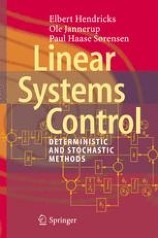
Modern control theory and in particular state space or state variable methods can be adapted to the description of many different systems because it depends strongly on physical modeling and physical intuition. The laws of physics are in the form of differential equations and for this reason, this book concentrates on system descriptions in this form. This means coupled systems of linear or nonlinear differential equations. The physical approach is emphasized in this book because it is most natural for complex systems. It also makes what would ordinarily be a difficult mathematical subject into one which can straightforwardly be understood intuitively and which deals with concepts which engineering and science students are already familiar.
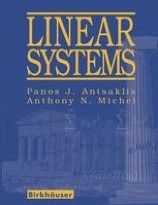
Linear systems theory plays a broad and fundamental role in electrical, mechanical, chemical and aerospace engineering, communications, and signal processing. A thorough introduction to systems theory with emphasis on control is presented in this self-contained textbook. The book examines the fundamental properties that govern the behavior of systems by developing their mathematical descriptions. Linear time-invariant, time-varying, continuous-time, and discrete-time systems are covered. Rigorous development of classic and contemporary topics in linear systems, as well as extensive coverage of stability and polynomial matrix/fractional representation, provide the necessary foundation for further study of systems and control.

This open access book focuses on the linear selection index (LSI) theory and its statistical properties. It addresses the single-stage LSI theory by assuming that economic weights are fixed and known - or fixed, but unknown - to predict the net genetic merit in the phenotypic, marker and genomic context. Further, it shows how to combine the LSI theory with the independent culling method to develop the multistage selection index theory. The final two chapters present simulation results and SAS and R codes, respectively, to estimate the parameters and make selections using some of the LSIs described. It is essential reading for plant quantitative geneticists, but is also a valuable resource for animal breeders.
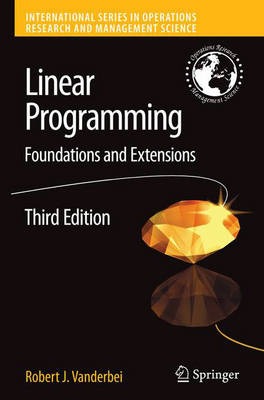
Linear Programming: Foundations and Extensions is an introduction to the field of optimization. The book emphasizes constrained optimization, beginning with a substantial treatment of linear programming, and proceeding to convex analysis, network flows, integer programming, quadratic programming, and convex optimization. The book is carefully written. Specific examples and concrete algorithms precede more abstract topics. Topics are clearly developed with a large number of numerical examples worked out in detail.
This significantly expanded fourth edition is designed as an introduction to the theory and applications of linear PDEs. The authors provide fundamental concepts, underlying principles, a wide range of applications, and various methods of solutions to PDEs. In addition to essential standard material on the subject, the book contains new material that is not usually covered in similar texts and reference books, including conservation laws, the spherical wave equation, the cylindrical wave equation, higher-dimensional boundary-value problems, the finite element method, fractional partial differential equations, and nonlinear partial differential equations with applications.
Linear programming attracted the interest of mathematicians during and after World War II when the first computers were constructed and methods for solving large linear programming problems were sought in connection with specific practical problems—for example, providing logistical support for the U.S. Armed Forces or modeling national economies. Early attempts to apply linear programming methods to solve practical problems failed to satisfy expectations. There were various reasons for the failure. One of them, which is the central topic of this book, was the inexactness of the data used to create the models. This phenomenon, inherent in most pratical problems, has been dealt with in several ways. At first, linear programming models used "average” values of inherently vague coefficients, but the optimal solutions of these models were not always optimal for the original problem itself. Later researchers developed the stochastic linear programming approach, but this too has its limitations. Recently, interest has been given to linear programming problems with data given as intervals, convex sets and/or fuzzy sets. The individual results of these studies have been promising, but the literature has not presented a unified theory. Linear Optimization Problems with Inexact Data attempts to present a comprehensive treatment of linear optimization with inexact data, summarizing existing results and presenting new ones within a unifying framework.
Begins with a reflection on the history of test design--the core activity of all educational and psychological testing. It then presents a standard language for modeling test design problems as instances of multi-objective constrained optimization. The main portion of the book discusses test design models for a large variety of problems from the daily practice of testing, and illustrates their use with the help of numerous empirical examples. The presentation includes models for the assembly of tests to an absolute or relative target for their information functions, classical test assembly, test equating problems, item matching, test splitting, simultaneous assembly of multiple tests, tests with item sets, multidimensional tests, and adaptive test assembly. Two separate chapters are devoted to the questions of how to design item banks for optimal support of programs with fixed and adaptive tests. Linear Models for Optimal Test Design, which does not require any specific mathematical background, has been written to be a helpful resource on the desk of any test specialist.
Gives an up-to-date account of the theory and applications of linear models. The book can be used as a text for courses in statistics at the graduate level and as an accompanying text for courses in other areas. Some of the highlights in this book are as follows. A relatively extensive chapter on matrix theory (Appendix A) provides the necessary tools for proving theorems discussed in the text and offers a selection of classical and modern algebraic results that are useful in research work in econometrics, engineering, and optimization theory. The matrix theory of the last ten years has produced a series of fundamental results aboutthe de?niteness ofmatrices,especially forthe di?erences ofmatrices, which enable superiority comparisons of two biased estimates to be made for the ?rst time. We have attempted to provide a uni?ed theory of inference from linear models with minimal assumptions
This introduction to the ideas and methods of linear functional analysis shows how familiar and useful concepts from finite-dimensional linear algebra can be extended or generalized to infinite-dimensional spaces. Aimed at advanced undergraduates in mathematics and physics, the book assumes a standard background of linear algebra, real analysis (including the theory of metric spaces), and Lebesgue integration, although an introductory chapter summarizes the requisite material. The initial chapters develop the theory of infinite-dimensional normed spaces, in particular Hilbert spaces, after which the emphasis shifts to studying operators between such spaces. Functional analysis has applications to a vast range of areas of mathematics; the final chapters discuss the particularly important areas of integral and differential equations.

سوريا - اتستراد درعا - غباغب
+963-15 2050 - 15 860 380 /1/2/3 - 11 662 3900