


تحسين النتائح
ترتيب حسب
من
الى


A diversified firm’s withdrawal from a business unit, i.e. business exit, is a significant phenomenon in management practice. Although divestitures are highly relevant in practice, the acquisition of business units attracts much more attention in strategic management research. Carolin Decker develops and empirically applies a framework in which business exits serve the purpose of re-establishing a firm’s previously harmed legitimacy. She suggests four types of legitimacy needs that are to be satisfied with the divestiture of a business unit and the simultaneous pursuit of strategic reorientation. The author tests the theoretical framework with secondary data on 213 business exits. Her findings support the idea that legitimacy needs drive the likelihood of fit-enhancing business exits in divesting firms.
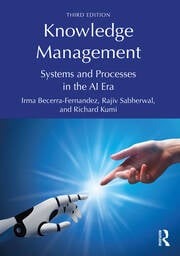
Aimed at students and managers who seek detailed insights into contemporary knowledge management (KM). It explains the concepts, theories, and technologies that provide the foundation for knowledge management; the systems and structures that constitute KM solutions; and the processes for developing, deploying, and evaluating these KM solutions. It serves as a complete introduction to the subject of knowledge management, incorporating technical and social aspects, as well as concepts, practical examples, traditional KM approaches, and emerging topics. This third edition has been revised and expanded to include more coverage of emergent trends such as cloud computing, online communities, crowdsourcing and artificial intelligence.
Bridges the disciplinary boundaries within the social sciences to explore the role of social institutions in shaping geographical contexts, and in creating new knowledge. It includes theorizations as well as original empirical case studies on the emergence, maintenance and change of institutions as well as on their constraining and enabling effects on innovation, entrepreneurship, art and cultural heritage, often at regional scales across Europe and North America. Rooted in the disciplines of management and organization studies, sociology, geography, political science, and economics the contributors all take comprehensive approaches to carve out the specific contextuality of institutions as well as their impact on societal outcomes. Not only does this book offer detailed insights into current debates in institutional theory, it also provides background for scholars, students, and professionals at the intersection between regional development, policy-making, and regulation.
Using a public choice perspective, this book explains the evolution and political and economic impact of recent changes to the Italian institutional framework. Because these changes are so numerous and broad, their implementation serves as a case study for other Western governments. Particular attention is paid to the introduction of the EURO, the reform of voting from proportional to majoritarian rule, the impact of corporatism, constraints imposed by the Maastricht Treaty, and the switch from a highly centralized government to a federal organization.
Do small developing economies, or SDEs, need a specific competition policy to create competitive markets? Against the backdrop of globalization, protectionist policies that promote state ownership and heavy regulation of key industries are proving increasingly ineffective for driving growth. Countries around the world are instituting reforms to promote competition and business creation, yet the economic and political concentration of power, feeble judicial systems, and the scarcity of human and financial resources pose special challenges to SDEs. Competition Policies in Emerging Economies features an in-depth analysis of two strategic industries — telecommunications and banking — in several Central American nations which sheds light on the dynamics of the transition to deregulation and trade liberalization. Examining the lessons learned from these experiences and presenting discussion of political, legal, economic, financial, cultural, and organizational issues, the book provides unique perspectives on competition policy and economic development.
Combines elements of economic and business history to study business ethics from the nineteenth century to today. It concentrates on American and British business history, delving into issues such as slavery, industrialization, firm behavior and monopolies, and Ponzi schemes. This book draws on the work of economists and historians to highlight the importance of changing technologies, religious beliefs, and cultural attitudes, showing that what is considered ethical differs across time and place.
Business Education in Emerging Market Economies discusses the impact of business education on emerging markets and explores curricular innovation, pedagogical approaches, and strategic alliances in the context of industrializing economies. Emerging markets consist of eighty percent of the world's population and some 75% of its trade growth in the foreseeable future according to the U.S. Department of Commerce. The potential economic growth of emerging markets has prompted a need to understand the dynamics of these markets, their business institutions, and their educational systems. The pressures of globalization and the recent economic reforms that swept across emerging, developing, and transitioning, economies have had a positive impact on the demand for business education and business knowledge from the developed and industrialized countries. As a result, many methods were developed to transfer know-how from the developed markets including learning through imitation, using western style pedagogical approaches, attending universities in industrialized countries, learning through experience and practice, and using information technology. The conclusion we reach is that business and management education in emerging markets is fast changing the way in which these markets operate and are perceived – business educators are catalysts for greater economic integration.

Credit risk analysis is one of the most important topics in the field of financial risk management. Due to recent financial crises and regulatory concern of Basel II, credit risk analysis has been the major focus of financial and banking industry. Especially for some credit-granting institutions such as commercial banks and credit companies, the ability to discriminate good customers from bad ones is crucial. The need for reliable quantitative models that predict defaults accurately is imperative so that the interested parties can take either preventive or corrective action. Hence credit risk analysis becomes very important for sustainability and profit of enterprises. In such backgrounds, this book tries to integrate recent emerging support vector machines and other computational intelligence techniques that replicate the principles of bio-inspired information processing to create some innovative methodologies for credit risk analysis and to provide decision support information for interested parties.

In the German banking sector, management is continually increasing its focus on shareholder interests. This can be seen in the ambitious profitability targets set by management in this sector. Some municipalities are also putting increasing pressure on Landesbanks and saving banks, as members of the largest German banking group, to create greater financial value.
Provides a tailored overview of what AI specifically means for financial services, a highly regulated yet also disrupted industry. it investigates the current state of AI applications in financial services today along with the state of funding and partnerships between tech and banking industries. it also examines the key pillars of responsible AI and the importance of keeping humans in the loop. the book takes a deep dive into the use cases in the financial services industry, the challenges and opportunities, and the fragmented regulatory landscape. how can we effectively assess risks, and balance innovation and customer centricity with trust in AI in financial services? can smaller organizations reap the benefits of the technology? how can institutions deploy AI responsibly and securely, and promote a fairer and more equitable future for more people?

Hints of globalization have actually been around for several decades, even though they made only a modest impact; however, the availability of global capital and advances in communication technology have emp- sized the process of internationalization and the tools available to connect and integrate business activities to answer to more complex needs of c- ents. Moreover, the financial scandals and the review of mutual fund trade activity in the US by the Attorney General Elliot Spitzer have highlighted the importance to focus all efforts on renewing the confidence of prof- sional investors and their clients who have entrusted their capital to asset managers. Therefore, there is a growing need in the market to reinforce the concept of “Shared Positive Values” among the entire industry and among its stakeholders.

The introduction of the Mercedes-Benz Production System (MPS) is exemplary of a trend within the automotive industry: the creation and introduction of company-specific standardised production systems. This book contributes to the debate about production systems by examining the social and economic implications of the role of standardisation in production systems. In this context it addresses three core issues: First, the driving forces behind the changing forms and functions of standardisation and the role of institutions therein. Second, the impact of standardisation on the evolution of automotive production systems. Third, based on the author's own empirical research conducted over a three year period at the Mercedes-Benz plant Stuttgart-Untertürkheim/Germany, the book examines the influence of standardisation on the work of actors on the shop floor in terms of organisational learning processes and the regulation of work.
This book investigates the origins and evolution of Asia’s new institutional architecture in trade, finance, and security from both a theoretical and empirical perspective. The traditional institutional equilibrium in Asia has come under heavy strain in the "post triple shocks period" - the post-Cold War, the post-financial crisis of 1997-98, and the post-9-11 attacks. The new dynamics of rivalry and cooperation among states at both the intraregional and transregional levels is now shaping a new institutional architecture. Political and business leaders from Northeast and Southeast Asia interact with each other more frequently. South Asia’s participation in the rest of Asia in recent years is truly impressive. As we show, the future institutional trajectory of Asia is still open, but we believe that the book provides a timely examination of key shifts in the region. In doing so, our hope is to provide policymakers and analysts with an institutional road map for the future.
Simulation methods are revolutionizing the practice of applied economic analysis. This volume collects eighteen chapters written by leading researchers from prestigious research institutions the world over. The common denominator of the papers is their relevance for applied research in environmental and resource economics. The topics range from discrete choice modeling with heterogeneity of preferences, to Bayesian estimation, to Monte Carlo experiments, to structural estimation of Kuhn-Tucker demand systems, to evaluation of simulation noise in maximum simulated likelihood estimates, to dynamic natural resource modeling. Empirical cases are used to show the practical use and the results brought forth by the different methods.

With the continuing dispersion of the global digital network and performance improvements of information and communication technologies, resource-poor start-ups with online business models have emerged in large numbers. These firms are able to deploy their competitive advantages across their country borders early in their life-cycle and engage in international commerce at a fast pace. An increased immediacy between the firms and the globally accessible customer is observed. Julia Christofor’s study aims to analyze the conditions of the initial internationalization decision in the Net Economy. Based on Information Systems, International Entrepreneurship, and Entrepreneurship literature, factors, which constitute the internationalization propensity, are derived. The results of this study suggest that a holistic perspective including the founder, business model and the firm level should be considered when explaining the internationalization propensity of entrepreneurs.
Alternative Investments is the definitive guide to understanding non-traditional asset classes. Alternatives are a disparate group of investments that are distinguished from long-only, publicly traded investments in stocks, bonds, and cash (often referred to as traditional investments). Alternative investments include real estate, commodities, infrastructure, and other non-traditional investments such as private equity or debt and hedge funds.

An excellent reference to both the learning, and empirical literature in finance." (Krzysztof Piasecki, Zentralblatt MATH, Vol. 1141, 2008) "Norman Ehrentreich was one of the daring few to take on the model, and he has summarized his work and findings in this excellent book. … It is useful primer for anyone interested in getting started in the area of agent-based finance. … It is essential reading for anyone interested in the dynamics of the SFI market in particular, but I also recommend it for others as a useful resource on agent-based financial market design as well." (Blake LeBaron, Journal of Artificial Societies and Social Simulation, Vol. 12 (2), March, 2009)

Offers a treatment of microeconomic theory - one that stresses the behavior of the individual actor in various institutional settings. This book begins with an exposition of the standard models of choice and the market. It is designed for the first-year graduate microeconomic theory course and is accessible to advanced undergraduates as well.

Organizations need to identify risks and chances of environmental changes in order to adapt to or possibly even to influence them. Early warning which comprises scanning and interpretation plays an important role in this process. Whereas the traditional contingency approach considers early warning as a part of the organizational structure, the extended contingency theory assumes the additional influence of an individual’s personality on early warning. Andreas Kirschkamp empirically analyses the early warning behavior of Chief Executive Officers in German medium-sized companies. First, he presents the design variables of early warning, then the influencing contingency variables. On the basis of the scholarly research on psychological and contingency theory, the author deduces hypotheses and tests them. The results show that early warning behavior is not only influenced by traditional contingency variables but also by personal attitudes.

On the occasion of the 50th anniversary of the European Union experts present their analyses of historical developments and new economic challenges for the EU. After a reflection on historical dynamics, the contributors point out the dramatic economic shifts between Europe, Asia and the US. Representatives from major central banks (including the ECB), other leading banks, and academia analyze the dynamics of the Eurozone and financial market integration in the context of globalization and economic growth. Furthermore, the authors discuss the challenges of information and communication technologies by means of various country analyses. Moreover, the Schumpeterian prospects for Europe and the Lisbon Agenda, the long-term challenges of EU pension reforms, emission trading systems in the EU, and options for a new EU constitution are highlighted. At the bottom line of this EU analysis are major implications for investors, managers, policy-makers and the public at large in both the EU and the global economy.

سوريا - اتستراد درعا - غباغب
+963-15 2050 - 15 860 380 /1/2/3 - 11 662 3900