


تحسين النتائح
ترتيب حسب
من
الى

Covers the recent trends on the biological applications of nanomaterials, methods for their preparation, and techniques for their characterization. Further, the book examines the fundamentals of nanotoxicity, methods to assess the toxicity of engineered nanomaterials, approaches to reduce toxicity during synthesis. It also provides an overview of the state of the art in the application of Artificial intelligence-based methodologies for evaluation of toxicity of drugs and nanoparticles. The book further discusses nanocarrier design, routes of various nanoparticle administration, nano based drug delivery systems, and the toxicity challenges associated with each drug delivery method. It presents the latest advances in the interaction of nanoparticles with the cellular environment and assess nanotoxicity of these engineered nanoparticles. The book also explores the comparative and mechanistic genotoxicity assessment of the nanomaterials. This book is useful source of information for industrial practitioners, policy makers, and other professionals in the fields of toxicology, medicine, pharmacology, food, and drugs.
Examines the current state of the field within pharmaceutical sciences and concisely explains the history of biomaterials including key developments. Written by experts in the field, this volume within the Advances in Pharmaceutical Product Development and Research series deepens understanding of biomaterials and bionanotechnology within drug discovery and drug development. Each chapter delves into a particular aspect of this fast-moving field to cover the fundamental principles, advanced methodologies and technologies employed by pharmaceutical scientists, researchers and pharmaceutical industries to transform a drug candidate or new chemical entity into a final administrable dosage form, with particular focus on biomaterials and bionanomaterials. This book provides a comprehensive examination suitable for researchers working in the pharmaceutical, cosmetics, biotechnology, food and related industries as well as advanced students in these fields.
Looks at the applications of biomarkers as important tools for herbal drug discovery, presenting research on phytoconstituents with advanced nanotechnological applications for healthcare benefits. Herbal drug discovery based on biomarkers is an emerging area in complementary and alternative medicine that has tremendous potential in healthcare. Conventional medications have limited efficacy and high toxicity, whereas herbal drugs are said to provide wide structural diversity that is not usually seen with conventional/synthetic drug molecules. Recognition of various herbal constituents, such as terpenoids, fatty acids, flavonoids and steroids, are well explored in the management and treatment of various disorders in this volume. These agents target various biomarkers such as nitric oxide (NO), cytokines, chemokines, adhesion molecules, NF- kβ, lipoxygenase (LOX), and arachidonic acid. Reviews the literature on inflammatory biomarkers in the treatment of diseases Looks at the development of herbal drug discovery based on biomarkers Explores emerging concepts of nanomedicines for herbal drug delivery Takes an interdisciplinary approach, with application to disciplines related to medical, pharmaceutical, biotechnological, Ayurvedic, Unani and biomedical engineering fields
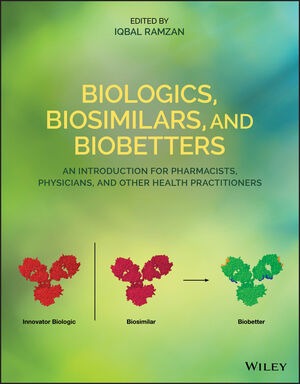
Explains what pharmacists need to discuss the equivalence, efficacy, safety, and risks of biosimilars with physicians, health practitioners, and patients about Guides regulators on pragmatic approaches to dealing with these drugs in the context of rapidly evolving scientific and clinical evidence Balances scientific information on complex drugs with practical information, such as a checklist for pharmacists
The idea for this book was born during the symposium on biologics organized by ZAFES (Center for Drug Research, Development and Safety at the University of Frankfurt am Main) in September 2005. Highly distinguished researchers special- ing in the field of biologics had gathered together to exchange information on this relatively new subject. Realizing that this symposium was one of the few sources of condensed information on biologics, it became obvious that we had to create a means of informing an interested wider circle of scientists and especially general c- nicians. Therefore, the editors of this book suggested to the researchers at the symposium andalsotoprominent scientists andcliniciansinvolvedinthe developmentand application of biologics as their major field of interest the idea of assembling this compendium. We received an overwhelmingly positive response – thankfully also from the publisher – most being more than willing to support this innovative project with highly relevant chapters on the latest state of the art.
This book provides sought-after guidance to primary care physicians on preparing for and responding to terrorist events. Chapters offer a fundamental understanding of the epidemiology and relevant clinical aspects of diseases caused by biological agents (anthrax, plague, smallpox, botulism, tularemia, and hemorrhagic viruses), chemical agents (nerve and blister), and radiological agents. The text details how to detect terrorist-caused illness as early as possible, how to provide defensive or preventive therapy, and how to triage and treat ill patients. Emphasis is placed on addressing both the physical and psychological impact on patients and providers.

This book presents a comprehensive account of all aspects of biological invasions in South Africa, where research has been conducted over more than three decades, and where bold initiatives have been implemented in attempts to control invasions and to reduce their ecological, economic and social effects.

Man’s recent colonization of New Zealand has dramatically altered the resident biota and resulted in the introduction of numerous alien organisms to these once remote islands. In reverse, there is increasing evidence of a lesser known export of species to other regions of the world. This volume presents an in-depth review of the level and rate of such invasions, and investigates what controls the success of invaders and the consequences for ecosystems both on land and offshore. It provides invasion biologists everywhere with tests of current theories about those factors leading to the success of invaders as well as evaluating principles for understanding the nature of their impacts that form a solid basis for the effective management of biological invasions worldwide.
Many plants, animals, and microbes use adhesive polymers and structures to attach to inert substrates, to each other, or to other organisms. This is the first major review that brings together research on many of the well-known biological adhesives. Emphasizing the diversity of biological adhesives and associated adhesion processes, it deals with bacteria, fungi, algae, and marine and terrestrial animals. It bridges a variety of disciplines including biochemistry, molecular biology, biomechanics, bioengineering, microbiology, organism structure and function, and ultrastructure. As we learn more about the molecular and mechanical properties of these adhesives, we begin to understand why they adhere so well and how they develop cohesive strength. With this understanding comes the prospect of developing synthetic or semi-synthetic adhesives with broad applications in areas such as medicine, dentistry, and biotechnology. The book is suitable for both industrial and academic researchers.
A comprehensive overview and summary of recent achievements and the latest trends in bioinspired thermal materials. Following an introduction to different thermal materials and their effective heat transfer to other materials, the text discusses heat detection materials that are inspired by biological systems, such as fire beetles and butterflies. There then follow descriptions of materials with thermal management functionality, including those for evaporation and condensation, heat transfer and thermal insulation materials, as modeled on snake skins, polar bears and fire-resistant trees.
This book provides students and researchers in the life sciences with essential practical information on how to quantitatively analyze data images. It refrains from focusing on theory, and instead uses practical examples and step-by step protocols to familiarize readers with the most commonly used image processing and analysis platforms such as ImageJ, MatLab and Python.
In the last few decades more and more yeast habitats that were not investigated earlier, spanning cold climates to tropical regions and dry deserts to rainforests, have been explored. As a result, a large body of ecological data has been accumulated and the number of known yeast species has increased rapidly. This book provides an overview of the biodiversity of yeasts in different habitats. The recent advances achieved by the application of molecular biological methods in the field of yeast taxonomy and ecology are also incorporated in the book. Wherever possible, the interaction between yeasts and the surrounding environment is discussed.
The book discusses the challenges and considerations for bioanalytical support, covering a wide range of central topics in the field, including overview and basic immunology for testing of biological therapeutics, pharmacokinetic aspects, clinical immunogenicity prediction and testing, biomarker testing, biotransformation assessment for biologics, statistical aspects of bioanalytical testing, regulatory expectations, and more
Hen eggs have exceptional potential as an inexhaustible source for a variety of products with unique properties. These products are valuable to human health and nutrition and can be used as raw materials for diverse purposes in the cosmetics and pharmaceutical industries. Bioactive Egg Compounds presents the latest results and concepts in the biotechnological use of egg compounds. Following an introduction to the different compounds of egg white, yolk and shell, the nutritive value of egg compounds is discussed. Procedures for processing egg compounds to improve their nutritive value are described, including the concept of so-called enriched eggs. Also described is the isolation and application of egg compounds with special properties, such as antibiotic action.
This open access book looks at the dramatic history of ovariotomy, an operation to remove ovarian tumours first practiced in the early nineteenth century. Bold and daring, surgeons who performed it claimed to be initiating a new era of surgery by opening the abdomen. Ovariotomy soon occupied a complex position within medicine and society, as an operation which symbolised surgical progress, while also remaining at the boundaries of ethical acceptability. This book traces the operation’s innovation, from its roots in eighteenth-century pathology, through the denouncement of those who performed it as ‘belly-rippers’, to its rapid uptake in the 1880s, when ovariotomists were accused of over-operating. Throughout the century, the operation was never a hair’s breadth from controversy.
Microbes produce an extraordinary array of defense systems. These include bacteriocins, a class of antimicrobial molecules with narrow killing spectra, produced by bacteria. The book describes the diversity and ecological role of bacteriocins of Gram-positive and Gram-negative bacteria, presenting a new classification scheme for the former and a state-of-the-art look at the role of bacteriocins in bacterial communication. It discusses the molecular evolution of colicins and colicin-like bacteriocins, and provides a contemporary overview of archaeocins, bacteriocin-like antimicrobials produced by archaebacteria. Furthermore, various modeling (in silico) studies elucidate the role of bacteriocins in microbial community dynamics and fitness, delving into rock-paper-scissors competition and the counter-intuitive survival of the weakest. The book makes compelling reading for a multi-faceted scientific audience, including those working in the fields of biodiversity and biotechnology, notably in the human and animal health domain.
The application of new molecular methodologies in the study of bacterial behaviour and cell architecture has enabled new revolutionary insights and discoveries in these areas. While this has also raised a number of scientific mysteries about bacteria, it certainly improved our understanding of these organisms as complex and adaptive entities rather than just simple tiny buckets of enzymes. The value of this recent knowledge in bacterial physiology is not only restricted to fundamental biology, but it also extends to biotechnology and drug-discovery disciplines where understanding cell behaviour and structure is essential for better exploitation of useful bacteria and effective eradication of harmful ones. This makes a new text accommodating recent developments in bacterial physiology highly relevant to a wide range of readership including those interested in basic and applied knowledge.
This book imparts fundamental knowledge on the structure, organization, and evolution of bacterial genomes. The value and power of comparative genomics and proteomics, bioinformatics, microarrays, and knockout animal models in analyzing genomes, bacteria-host interactions and disease are demonstrated. Also discussed are the genomes of virulent and nonvirulent strains and species, origin and evolution of pathogens, different models of bacteria-host interactions, and diseases mechanisms.
This completely revised and updated edition of Bacterial Fish Pathogens is a comprehensive discussion of the biological aspects of the bacterial taxa which cause disease in fish. Since the 3rd edition was published in 1999, much has changed in the control of disease of farmes and wild fish. New pathogens such as Pasteurella skyensis have been described, and antimicrobial compounds for the control of disease have been replaced by alternative methods, such as probiotics. Consideration is given to all the bacterial taxa which have at some time been reported as fish pathogens, whether they are secondary invaders of already damaged tissues or serious, primary pathogens.
This volume tends to focus on the biology of biofilms that affect human disease. It opens with chapters that provide the reader with current perspectives on biofilm development, physiology, environmental and regulatory effects, the role of quorum sensing, and resistance/phenotypic persistence to antimicrobial agents during biofilm growth. The next chapters are devoted to common problematic biofilms, those that colonize venous and urinary catheters. The final series of chapters examines biofilm formation by four species that are important pathogens and well studied models, one of which, Yersinia pestis, cleverly adopts a biofilm state of growth within its insect vector to promote disease transmission to mammalian hosts.

سوريا - اتستراد درعا - غباغب
+963-15 2050 - 15 860 380 /1/2/3 - 11 662 3900