


تحسين النتائح
ترتيب حسب
من
الى

Light Scattering Reviews is the first book in a series devoted to bringing together the state-of-the-art and milestones in our knowledge of light scattering media optics (LSMO). Contributions from leading researchers focus on both the theoretical and experimental results in the area. The book provides a valuable picture of recent developments in light scattering. It facilitates studies in LSMO and will be of great importance for researchers in a variety of disciplines. Divided into three parts, this volume first discusses single light scattering, followed by multiple light scattering and finally looks at the possible applications in combustion and marine research.
Takes a fresh, holistic approach to the problems of light absorption and absorbers in seawaters, discussing the fundamentals of light absorption at various depths in seawaters of different trophicity by absorbers of diverse origin. The authors have drawn their information from a substantial body of contemporary research results published in the subject literature (over 700 references) as well as their own work during the last 30 years. No other book presently available examines the issues of light absorption and absorbers in seawaters in such a manner. The physical and chemical properties, as well as the optical constants, of organic and inorganic suspended particulate matter (SPM), are discussed in the context of their relationship to the light absorption properties of SPM. Special emphasis is placed on the role of the phytoplankton and the pigments it contains which are particularly strong and important absorbers of visible light in the sea.
Energy, chemistry, solvents, and habitats -- the basic elements of living systems - define the opportunities and limitations for life on other worlds. This class-tested text examines each of these parameters in crucial depth and makes the argument that life forms we would recognize may be more common in our solar system than many assume. It also considers, however, exotic forms of life that would not have to rely on carbon as basic chemical element, solar energy as a main energy source, or water as primary solvent. Finally the question of detecting bio- and geosignature of such life forms is discussed, ranging from Earth environments to deep space. While speculative considerations in this emerging field of science cannot be avoided, the authors have tried to present their study with the breadth and seriousness that a scientific approach to this issue requires. They seek an operational definition of life and investigate the realm of possibilities that nature offers to realize this very special state of matter and avoid scientific jargon wherever possible to make this intrinsically interdisciplinary subject understandable to a broad range of readers.

A pioneer in meteorology and peace research and remains a towering presence in both fields. This edited volume reviews his work and assesses its influence in the social sciences, notably his work on arms races and their consequences, mathematical models, the size distribution of wars, and geographical features of conflict
Based on material delivered at several summer schools, this book is the first comprehensive textbook at the graduate level encompassing all aspects associated with the emerging field of astrobiology. Volume II gathers another set of extensive lectures covering topics so diverse as the formation and the distribution of elements in the Universe, the concept of habitability from both the planetologists' and the biologists' point of view and artificial life. The contributions are held together by the common goal to understand better the origin of life, its evolution and possible existence outside the Earth's realm.
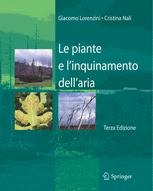
Il volume approfondisce il complesso tema dei rapporti tra vegetazione e inquinanti dell’aria, affrontandone in modo capillare e ben documentato sia gli aspetti scientifici sia le implicazioni storico-culturali. La ricca iconografia a colori, l’approccio didattico, gli aggiornamenti normativi nazionali e comunitari, così come la dettagliata trattazione di tematiche quali la fitotossicologia, l’ecologia, la patologia vegetale, il biomonitoraggio, l'educazione ambientale e la valutazione di impatto ambientale, rendono il testo un sussidio indispensabile per i laureandi e gli specializzandi nelle Facoltà di Agraria e di Scienze Biologiche, Ambientali e Naturali
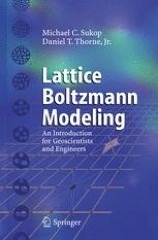
Lattice Boltzmann models have a remarkable ability to simulate single- and multi-phase fluids and transport processes within them. A rich variety of behaviors, including higher Reynolds numbers flows, phase separation, evaporation, condensation, cavitation, buoyancy, and interactions with surfaces can readily be simulated. This book provides a basic introduction that emphasizes intuition and simplistic conceptualization of processes. It avoids the more difficult mathematics that underlies LB models. The model is viewed from a particle perspective where collisions, streaming, and particle-particle/particle-surface interactions constitute the entire conceptual framework. Beginners and those with more interest in model application than detailed mathematical foundations will find this a powerful "quick start" guide. Example simulations, exercises, and computer codes are included. Working code is provided on the Internet.
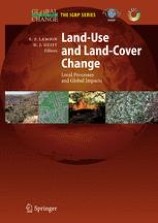
The book presents recent estimates of the rates in changes of major land classes such as forest, cropland and pasture. Among the causative mechanisms behind land change, synergetic factor combinations are found to be more common than single key factor explanations. Aggregated globally, multiple impacts of local land changes are shown to significantly affect central aspects of Earth System functioning. Innovative developments and applications in the fields of modeling and scenario construction are presented. Finally, conclusions are drawn about the most pressing implications for the design of appropriate intervention policies, and on new directions and frontiers of research.
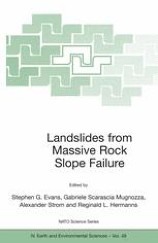
Amongst the thematic topics discussed are global frequency, impacts on society, analysis of initial rock slope failure, monitoring of rock slope movement, analysis and modeling of post-failure behaviour, volcanic landslides, and influences of massive rock slope failure on the geomorphological evolution of mountain regions. Regional contributions include reports on rockslides and rock avalanches in Norway, western Canada, the Andes of Argentina, the Karakoram Himalaya, the European Alps, the Appennines, and the mountains of Central Asia.
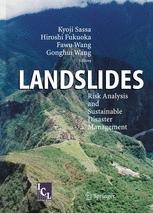
Based on contributions to the first General Assembly of the International Consortium on Landslides, this reference and status report emphasizes the mechanisms of different types of landslides, landslide risk analysis, and sustainable disaster management. It comprises the achievements of the ICL over the past three years, since the Kyoto assembly. It consists of three parts: research results of the International Programme on Landslides (IPL); contributions on landslide risk analysis; and articles on sustainable disaster management. The contributions reflect a wide range of topics and concerns, randing from field studies, identification of objects of cultural heritage at landslide risk, as well as landslide countermeasures.
This book presents a collection and synthesis of many of these perspectives — perhaps it could only be produced in a land urb- ised in the tiniest of pockets, and yet so daunting with respect to the way non-populated landscapes dwarf its cities. Many travel to Australia to its cities and never see the landscapes — but it is these that give the country its power and imagery. It is the landscapes that so impress on us the need to consider how our intervention, through activities ranging from resource exploitation and settled agriculture to climate change, poses one of the greatest crises facing the modern world. In this sense, Australia and its landscape provide a mirror through which we can glimpse the extent to which our intervention in the world threatens its very existence.
Land use and land-cover change research over the past decade has focused mainly on contemporary primary land-cover conversions in the tropics and sub-tropics, with considerable resources dedicated to the explanation and prediction of tropical deforestation and often ignoring the dynamism in the world’s agro-pastoral landscapes. This collection integrates cutting-edge research in the social, biogeophysical, and geographical information sciences to understand the human and environmental dynamics that change the type, magnitude and location of land uses and land covers in the changing countryside.This book describes the monitoring of land-cover changes, explains the processes through which land is altered, and describes the development of spatially-explicit models to predict land change. This book illustrates how practitioners have integrated knowledge from the three scientific realms - social, biophysical, and GIScience - that underpin land-change science.
Land-use change is one of the main drivers of many environmental change processes. It influences the basic resources of land use, including the soil. Its impact on soil often occurs so creepingly that land managers hardly contemplate initiating ameliorative or counterbalance measures. Poor land management has degraded vast amounts of land, reduced our ability to produce enough food, and is a major threat to rural livelihoods in many developing countries. To date, there has been no single unifying volume that addresses the multifaceted impacts of land use on soils. This book has responded to this challenge by bringing together renowned academics and policy experts to analyze the patterns, driving factors and proximate causes, and the socioeconomic impacts of soil degradation. Policy measures to prevent irreversible degradation and rehabilitate degraded soils are also identified.
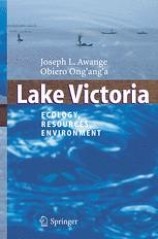
Recently, there has been, and continues to be, a tremendous interest on Lake Victoria and its environs, both locally and internationally. A casual browsing on the Internet indicates that the entries on the Lake have been rising phenomenally. At the same time, the issues discussed are as diverse as they are varied in their treatment of the subject, both in terms of depth and comprehensiveness. The information on Lake Victoria and its environ is scattered, isolated, and sometimes confusing even though documentation on the subject are available. Despite this situation, the fact remains that various people (e. g. , secondary and universitystudents,researchers,practitioners,etc. ,)wouldliketoaccess and know more about the Lake and its environs. Aware of the existing information gap about this world’s second largest fresh water Lake, this book is intended to provide readers with up-to-date information pertaining the Lake. The book gives an in-depth coverage of environmental issues, - source endowment, poverty amidst plenty, development opportunities, challenges and other related issues facing the Lake and its environs. It aims at providing information on the above variables, which hopefully will address the needs of various users.
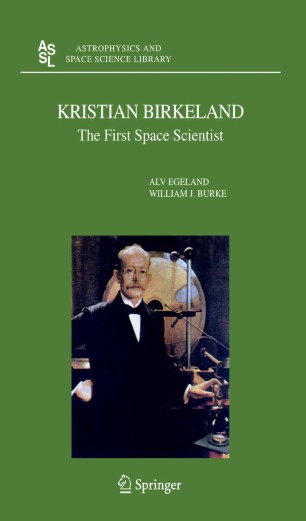
PREFACEThisscientific biography of Kristian Birkeland (1867–1917) was written to bring the story ofa Norwegian national hero to the attention ofthe English-speaking world. Birkeland’sheroic stature was established not on a field of military battle,but in the bitter cold of the Artic wilderness ashe sought to answer basic questions abouthow the Sun controlled northern lights andmag-netic storms. He was also afather of Norsk Hydro one ofNorway’s largest industries. Birkel and died before reaching the age of 50.Because Birkel and never kept adiary, documented information about his family and private life is sparse. Before he died, Olaf Devik, the last of Birke-ffland’s close friends, gave along interview and graciously transferred his personal archive to A.E. Birkeland’s 82 scientific papers and three book-length publications map the progress of his investigations. addressed this book questions that had vexed European scientists for centuries. Why do the northern lights appear overhead when the Earth’s magnetic field is disturbed? How are magnetic storms connected to disturbances on the Sun? To answer these questions Birkeland interpreted his advance laboratory simulations and daring campaigns in the Arctic wilderness in the light of Maxwell’s newly discovered laws of electricity and magnetism. Birkeland’s ideas were dismissed for decades, only to be vindicated when satellites could fly above the Earth’s atmosphere.
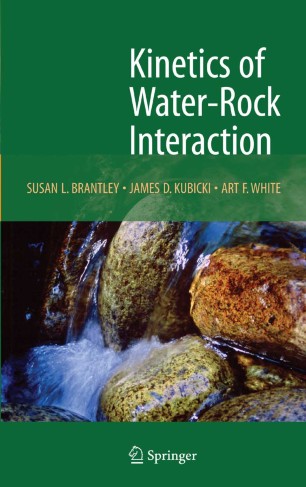
Systems at the surface of the Earth are continually responding to energy inputs derived from solar radiation or from the radiogenic heat in the interior. These energy inputs drive plate movements and erosion, exposing metastable mineral phases at the Earth’s surface. In addition, these energy fluxes are harvested and transformed by living organisms. As long as these processes persist, chemical disequilibrium at the Earth’s surface will be perpetuated. Chemical disequilibrium is also driven by human activities related to production of food, extraction of water and energy resources, and burial of wastes. To understand how the surface of the Earth will change over time, we must understand the rates at which reactions occur and the chemical feedbacks that relate these reactions across extreme temporal and spatial scales. This book addresses fundamental and applied questions concerning the rates of water-rock interactions driven by tectonic, climatic, and anthropogenic forcings.
Biological invasions are a global problem whose local impact can be of great magnitude. The prevention and minimization of the impact of invasive alien species has become a priority because of their negative impact on biodiversity, economy and public health. Issues in Bioinvasion Science contains key contributions of this conference. The themes included cut across different aspects of non-native species invasions. This volume is essential reading for anyone seeking an understanding of non-native species invasions.
This monograph presents state of the art applications and new developments of isotopes in hydrology, environmental disciplines and climate change studies. Coverage ranges from the assessment of groundwater resources in terms of recharge and flow regime to studies of the past and present global environmental and climate changes.
This thorough reference shows how stable isotopes can be applied to understanding the palaeoenvironment, with chapters on the interpretation of isotopes in water, tree rings, bones and teeth, lake sediments, speleothems and marine sediments.
This book explores the possibilities of applying the theories of complexity and self-organization developed to account for various phenomena in the natural science to artifacts traditionally the realm of humanities and social sciences. The emphasis of this volume is on the development of cities and the impact of these methods on urban simulation methods.

سوريا - اتستراد درعا - غباغب
+963-15 2050 - 15 860 380 /1/2/3 - 11 662 3900