


تحسين النتائح
ترتيب حسب
من
الى


This volume, written by experts in the field, is the first to deal with the relationship between human disease and the actin cytoskeleton. It provides overviews of actin and selected actin-binding proteins, and then focuses on diseases that involve these proteins. Specific chapters deal with actin, cofilin, profilin, gelsolin and thymosin ¾4. Other chapters discuss the roles of multiple actin-binding proteins in cancer and metastasis, leukocyte disorders, and heart failure, and there is a chapter that describes how intracellular pathogens use the host actin cytoskeleton. This seminal volume is intended for researchers, clinicians, physicians, and graduate students in the fields of biochemistry, cell biology, microbiology, immunology, and genetics.

The actin cytoskeleton plays a central role in many cellular processes including cell motility, cytokinesis, endocytosis and phagocytosis. The structure and dynamics of the actin cytoskeleton is regulated by a large number of proteins that interact with monomeric and/or filamentous actin. Actin monomer binding proteins provides a comprehensive view on actin monomer-binding proteins and the mechanisms by which they contribute to actin dynamics and various actin-dependent cellular processes. This new title contains chapters that describe the basic mechanisms of actin dynamics as well as the structural principles by which various actin-binding proteins interact with actin.

Accelerated partial breast irradiation (APBI) is being rapidly introduced into the clinical management of early breast cancer. APBI, in fact, encompasses a number of different techniques and approaches that include brachytherapy, intraoperative, and external beam techniques. There is currently no single source that describes these techniques and their clinical implementation. This text will be a concise handbook designed to assist the clinician in the implementation of APBI.

Seduced by the idea of commenting on the clinical experience they have acquired during their career, the authors have deliberately approached their specialty by describing the symptoms that give the chapters their titles. They nevertheless described the differential diagnoses, the diseases involved and the treatments. After a chapter devoted to the examination of the patient, including the detours of the interrogation, back pain or scrotal pain are analyzed. The authors then turned to voiding disorders and their causes. The peculiarities of hematuria, depending on their level of origin, are described and commented on. The semiology of tumor masses is carefully detailed and, conversely, the problem of prostate cancer screening by PSA is dealt with in a separate chapter. Erectile dysfunction and penile diseases are the last chapters. In the line of the “Clinical approach” collection, this manual is easy to consult thanks to a detailed index, easy to understand because it is written in clear language and, moreover, well illustrated (21 diagrams and 2 tables). In this little book, the authors have approached urology from a perspective close to how patients feel.
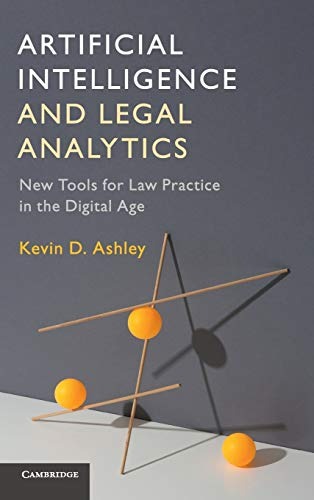
The field of artificial intelligence (AI) and the law is on the cusp of a revolution. This book - designed to explain computational processes to non-programmers - describes how text analytic programs will change the practice of law, specifically by connecting computational models of legal reasoning directly with legal text.
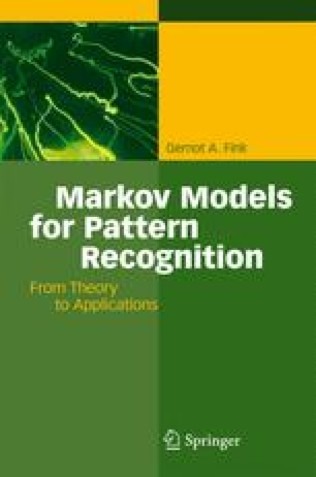
Describes the underlying theoretical concepts - covering Hidden Markov models and Markov chain models - and presents the techniques and algorithmic solutions essential to creating real world applications. The actual use of Markov models in their three main application areas - namely speech recognition, handwriting recognition, and biological sequence analysis - is presented with examples of successful systems.
Examine the evolving enterprise security landscape and discover how to manage and survive risk. While based primarily on the author’s experience and insights at major companies where he has served as CISO and CSPO, the book also includes many examples from other well-known companies and provides guidance for a management-level audience. Managing Risk and Information Security provides thought leadership in the increasingly important area of enterprise information risk and security. It describes the changing risk environment and why a fresh approach to information security is needed. Because almost every aspect of an enterprise is now dependent on technology not only for internal operations but increasing as a part of product or service creation, the focus of IT security must shift from locking down assets to enabling the business while managing and surviving risk. This edition discusses business risk from a broader perspective, including privacy and regulatory considerations. It describes the increasing number of threats and vulnerabilities and offers strategies for developing solutions. These include discussions of how enterprises can take advantage of new and emerging technologies—such as social media and the huge proliferation of Internet-enabled devices—while minimizing risk.
This open access book presents the outcomes of the “Design for Future – Managed Software Evolution” .The different lifecycles of software and hardware platforms lead to interoperability problems in such systems. Instead of separating the development, adaptation and evolution of software and its platforms, as well as aspects like operation, monitoring and maintenance, they should all be integrated into one overarching process. Accordingly, the book is split into three major parts, the first of which includes an introduction to the nature of software evolution, followed by an overview of the specific challenges and a general introduction to the case studies used in the project. The second part of the book consists of the main chapters on knowledge carrying software, and cover tacit knowledge in software evolution, continuous design decision support, model-based round-trip engineering for software product lines, performance analysis strategies, maintaining security in software evolution, learning from evolution for evolution, and formal verification of evolutionary changes. In turn, the last part of the book presents key findings and spin-offs. The individual chapters there describe various case studies, along with their benefits, deliverables and the respective lessons learned. An overview of future research topics rounds out the coverage.
Describes traditional as well as advanced machine learning algorithms / Enables students to learn which algorithm is most appropriate for the data being handled / Includes numerous, practical case-studies; implementation codes in Python available for readers
Key to our culture is that we can disseminate information, and then maintain and access it over time. While we are rapidly advancing from vulnerable physical solutions to superior, digital media, preserving and using data over the long term involves complicated research challenges and organization efforts. Uwe Borghoff and his coauthors address the problem of storing, reading, and using digital data for periods longer than 50 years. They briefly describe several markup and document description languages like TIFF, PDF, HTML, and XML, explain the most important techniques such as migration and emulation, and present the OAIS (Open Archival Information System) Reference Model. To complement this background information on the technology issues the authors present the most relevant international preservation projects, such as the Dublin Core Metadata Initiative, and experiences from sample projects run by the Cornell University Library and the National Library of the Netherlands. A rated survey list of available systems and tools completes the book.
Natural phenomena can be visually described with fractal-geometry methods, where iterative procedures rather than equations are used to model objects. With the development of better modelling algorithms, the efficiency of rendering, the realism of computer-generated scenes and the interactivity of visual stimuli are reaching astonishing levels. Iterated Function Systems for Real-Time Image Synthesis gives an explanation of iterated function systems and how to use them in generation of complex objects.
Component-based software development regards software construction in terms of conventional engineering disciplines where the assembly of systems from readily-available prefabricated parts is the norm. Because both component-based systems themselves and the stakeholders in component-based development projects are different from traditional software systems, component-based testing also needs to deviate from traditional software testing approaches. Gross first describes the specific challenges related to component-based testing like the lack of internal knowledge of a component or the usage of a component in diverse contexts. He argues that only built-in contract testing, a test organization for component-based applications founded on building test artifacts directly into components, can prevent catastrophic failures like the one that caused the now famous ARIANE 5 crash in 1996. This book is the first comprehensive treatment of the intricacies of testing component-based software systems. With its strong modeling background, it appeals to researchers and graduate students specializing in component-based software engineering. Professionals architecting and developing component-based systems will profit from the UML-based methodology and the implementation hints based on the XUnit and JUnit frameworks.
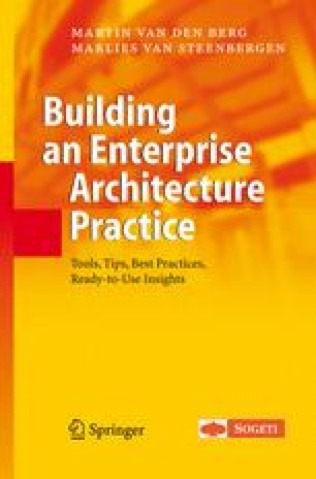
This book clearly describes how to establish an architecture practice that delivers value for an organization. The authors demonstrate a wealth of experience and a deep understanding of the multifaceted nature of this challenging task and they provide sound advice on how to avoid the many pitfalls that may be encountered along the way. Building an Enterprise Architecture Practice provides practical advice on how to develop your enterprise architecture practice.
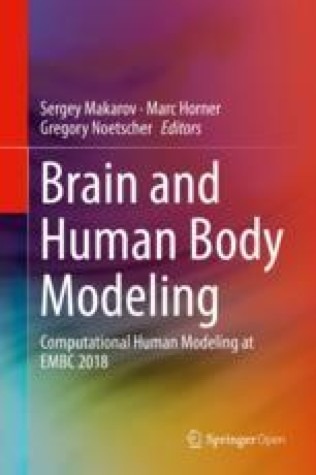
This book describes modern applications of computational human modeling with specific emphasis in the areas of neurology and neuroelectromagnetics, depression and cancer treatments, radio-frequency studies and wireless communications. Special consideration is also given to the use of human modeling to the computational assessment of relevant regulatory and safety requirements. Readers working on applications that may expose human subjects to electromagnetic radiation will benefit from this book’s coverage of the latest developments in computational modelling and human phantom development to assess a given technology’s safety and efficacy in a timely manner.
Solving modern biological problems requires advanced computational methods. Bioinformatics evolved from the active interaction of two fast-developing disciplines, biology and information technology. The central issue of this emerging field is the transformation of often distributed and unstructured biological data into meaningful information. This book describes the application of well-established concepts and techniques from areas like data mining, machine learning, database technologies, and visualization techniques to problems like protein data analysis, genome analysis and sequence databases. Chen has collected contributions from leading researchers in each area. The chapters can be read independently, as each offers a complete overview of its specific area, or, combined, this monograph is a comprehensive treatment that will appeal to students, researchers, and R&D professionals in industry who need a state-of-the-art introduction into this challenging and exciting young field.
In this textbook present mathematical models in bioinformatics and they describe the biological problems that inspire the computer science tools used to handle the enormous data sets involved. The first part of the book covers the mathematical and computational methods, while the practical applications are presented in the second part. The mathematical presentation is descriptive and avoids unnecessary formalism, and yet remains clear and precise. Emphasis is laid on motivation through biological problems and cross applications. Each of the four chapters in the first part is accompanied by exercises and problems to support an understanding of the techniques presented. Each of the six chapters of the second part is devoted to some specific application domain: sequence alignment, molecular phylogenetics and coalescence theory, genomics, proteomics, RNA, and DNA microarrays. Each chapter concludes with a problems and projects section, to deepen the reader's understanding and to allow for the design of derived methods. Many of the projects involve publicly available software and/or Web-based bioinformatics depositories. Finally, the book closes with a thorough bibliography, reaching from classic research results to very recent findings, providing many pointers for future research.Overall, this volume is ideally suited for a senior undergraduate or graduate course on bioinformatics, with a strong focus on its mathematical and computer science background.
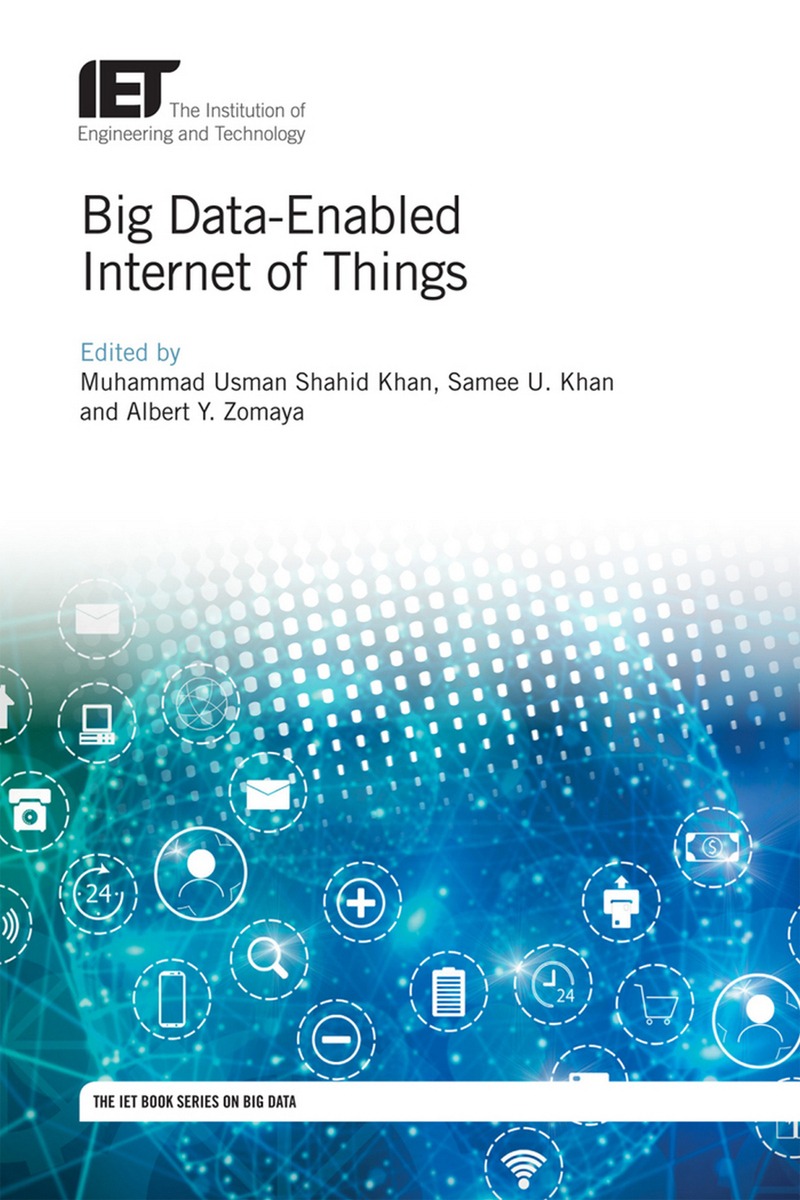
Covers analytical techniques for handling the huge amount of data generated by the Internet of Things, from architectures and platforms to security and privacy issues, applications, and challenges as well as future directions. The fields of Big Data and the Internet of Things (IoT) have seen tremendous advances, developments, and growth in recent years. The IoT is the inter-networking of connected smart devices, buildings, vehicles and other items which are embedded with electronics, software, sensors and actuators, and network connectivity that enable these objects to collect and exchange data. The IoT produces a lot of data. Big data describes very large and complex data sets that traditional data processing application software is inadequate to deal with, and the use of analytical methods to extract value from data. This edited book covers analytical techniques for handling the huge amount of data generated by the Internet of Things, from architectures and platforms to security and privacy issues, applications, and challenges as well as future directions.

Probabilistic graphical models and decision graphs are powerful modeling tools for reasoning and decision making under uncertainty. As modeling languages they allow a natural specification of problem domains with inherent uncertainty, and from a computational perspective they support efficient algorithms for automatic construction and query answering. This includes belief updating, finding the most probable explanation for the observed evidence, detecting conflicts in the evidence entered into the network, determining optimal strategies, analyzing for relevance, and performing sensitivity analysis. The book introduces probabilistic graphical models and decision graphs, including Bayesian networks and influence diagrams.It contians two parts. The first part focuses on probabilistic graphical models. Compared with the previous book, the new edition also includes a thorough description of recent extensions to the Bayesian network modeling language, advances in exact and approximate belief updating algorithms, and methods for learning both the structure and the parameters of a Bayesian network. The second part deals with decision graphs, and in addition to the frameworks described in the previous edition, it also introduces Markov decision processes and partially ordered decision problems.
This book demonstrates how nonlinear/non-Gaussian Bayesian time series estimation methods were used to produce a probability distribution of potential MH370 flight paths. It provides details of how the probabilistic models of aircraft flight dynamics, satellite communication system measurements, environmental effects and radar data were constructed and calibrated. The probability distribution was used to define the search zone in the southern Indian Ocean. The book describes particle-filter based numerical calculation of the aircraft flight-path probability distribution and validates the method using data from several of the involved aircraft’s previous flights. Finally it is shown how the Reunion Island flaperon debris find affects the search probability distribution.
Autonomy Oriented Computing explores the important theoretical and practical issues in AOC, by analyzing methodologies and presenting experimental case studies. The book serves as a comprehensive reference source for researchers, scientists, engineers, and professionals in all fields concerned with this promising new development in computer science. It can also be used as a main or supplementary text in graduate and undergraduate programs across a broad range of computer-related disciplines, including Robotics and Automation, Amorphous Computing, Image Processing and Computer Vision, Programming Paradigms, Computational Biology, and many others. The first part of the book, Fundamentals, describes the basic concepts and characteristics of an AOC system, and then it enumerates the critical design and engineering issues faced in AOC system development. The second part of the book, AOC in Depth, provides a detailed analysis of methodologies and case studies to evaluate the use of AOC in problem solving and complex system modeling. The final chapter reviews the essential features of the AOC paradigm and outlines a number of possibilities for future research and development.

سوريا - اتستراد درعا - غباغب
+963-15 2050 - 15 860 380 /1/2/3 - 11 662 3900